What is Robotics?
Robotics involves the use of mechanical engineering, artificial intelligence, electronics, sensors, and software applications in designing and running intelligent machines which perform certain operations with minimum involvement of humans. Robots find widespread applications in manufacturing, healthcare, logistics, agricultural, military, and service industries for boosting productivity and safety of people in those places. Due to the fast development of AI technologies, machine learning techniques, IoT connection, and robotics software, intelligent robotic machines become more and more autonomous helping organizations simplify operations and speed up their digital transformation.
Robotics Market Size and Growth:
According to SNS Insider, the value of the global Robotics Market in 2024 reached USD 63.24 billion and the market will increase to USD 200.87 billion in 2032 at a CAGR of 15.59% for the forecast period of 2025–2032. The key factors influencing growth of the market include the growing use of automation in manufacturing, healthcare, logistics, and industrial industries, along with fast advancement of AI, IoT, machine vision, and robotics software. Investments in smart factories and Industry 4.0 initiatives contribute to fast adoption of robotics in many industries around the world. It is important to mention that over 60% of industrial robots introduced to industries recently are equipped with AI capabilities.
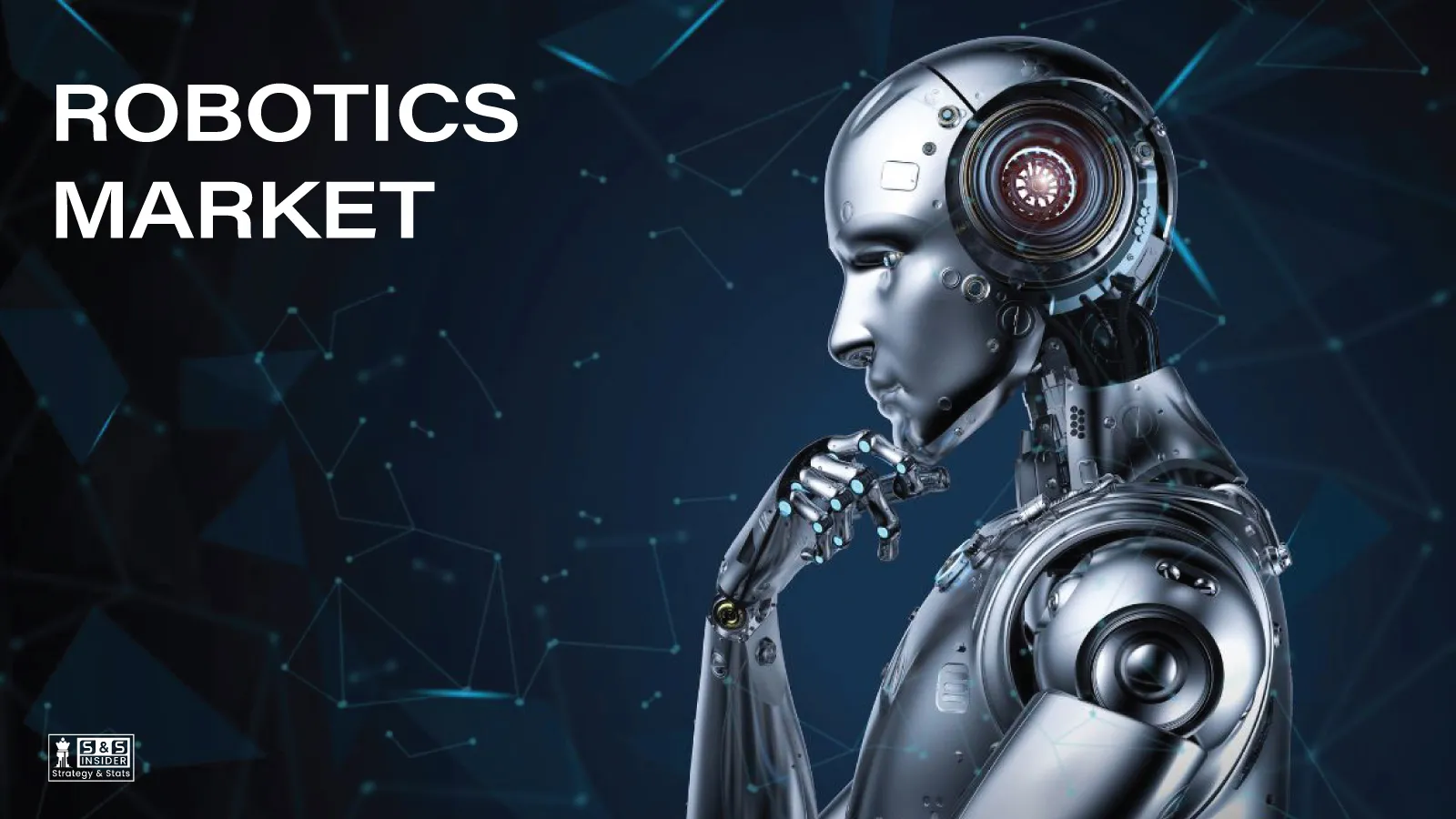
How AI and Intelligent Automation are Revolutionizing Robotics?
Robotics of the future will be driven by artificial intelligence since AI will help them to take smart decisions and perform complex operations and tasks. Robotics that use AI rely on such features as machine learning, computer vision, predictive analytics, and sensors in order to enhance their navigation and object identification, quality control, and decision-making capabilities. IoT connectivity can be added to the robotics system in order to provide real-time performance monitoring, predictive maintenance, and optimization of operations. With the increasing need for efficiency and agility in organizations, robotics will revolutionize manufacturing, health care, warehouse, and logistics operations.
Key Trends Driving the Robotics Market
There are several trends in technology that are constantly evolving in the field of robotics. One such trend includes cobots that have made it possible for humans to work safely alongside robots in manufacturing, healthcare, and warehouses. Another trend includes AI-enabled robots that are used in processes such as assembly, welding, packaging, and inspection. Additionally, robotics coupled with IoT is making robotics more efficient through predictive maintenance, remote monitoring, and smart factory integration. Moreover, humanoid robots are gaining popularity in industries such as healthcare, customer service, and research.
Strategic Developments & Industry Innovations:
-
Continuous innovation continues to be a critical growth strategy in the robotics sector. In May 2025, Kawasaki Heavy Industries unveiled its latest high-precision welding robot, known as the BA006L, at MACHAUTO Expo 2025, showcasing its ability to automate industrial welding processes and intelligent manufacturing operations.
-
In April 2024, Mitsubishi Electric launched the MELFA RV-12CRL, which is an innovative vertical articulated robot capable of reaching up to 1,504 mm and carrying a payload of up to 12 kg. This latest robotic innovation was designed to increase efficiency and flexibility of industrial automation operations.
-
Robotic manufacturers have been increasingly allocating resources towards the development of artificial intelligence-based robotics platforms, autonomous mobile robots, and intelligent software solutions.
Leading Companies in the Robotics Market:
1. ABB Ltd.: Advancing Intelligent Industrial Automation
 ABB offers world-class industrial robotics and automation technology products in the form of advanced robotic systems that help in manufacturing, logistics, electronics, and automotive industries. ABB’s AI robotics solution enhances productivity and helps in achieving digitalization of factories and other manufacturing sites.
2. FANUC Corporation: Driving AI-Powered Manufacturing Excellence
 FANUC is famous for producing some of the most reliable industrial robots, CNCs, and factory automation technologies. Artificial intelligence and intelligent automation have been integrated in robotic solutions to enhance the quality of production, downtime management, and overall performance of the production process.
3. KUKA AG: Enabling Smart Manufacturing Through Robotics
 KUKA specializes in offering robotic automation technologies for various industrial, logistics, and healthcare uses. Its robotics solutions ensure flexible automation, collaboration, and intelligent production processes that help achieve high levels of productivity.
With all of the advances that have been made in technology, there are still several problems that the robotics market faces, including the issues of system integration and interoperability, expensive implementation and the lack of skilled workers who can program, operate, and maintain complex robot technologies. In addition to this, companies need to resolve the issue of compatibility of robotics technology, software and current infrastructure to fully leverage their investments in automation.
In terms of future prospects, the Robotics Market will experience continuous growth because more industries will adopt AI, IoT, cloud technologies and intelligent automation. The growing popularity of cobots, AMRs and humanoid robotics will provide more opportunities for the use of these technologies in manufacturing, health care, logistics and other industries.