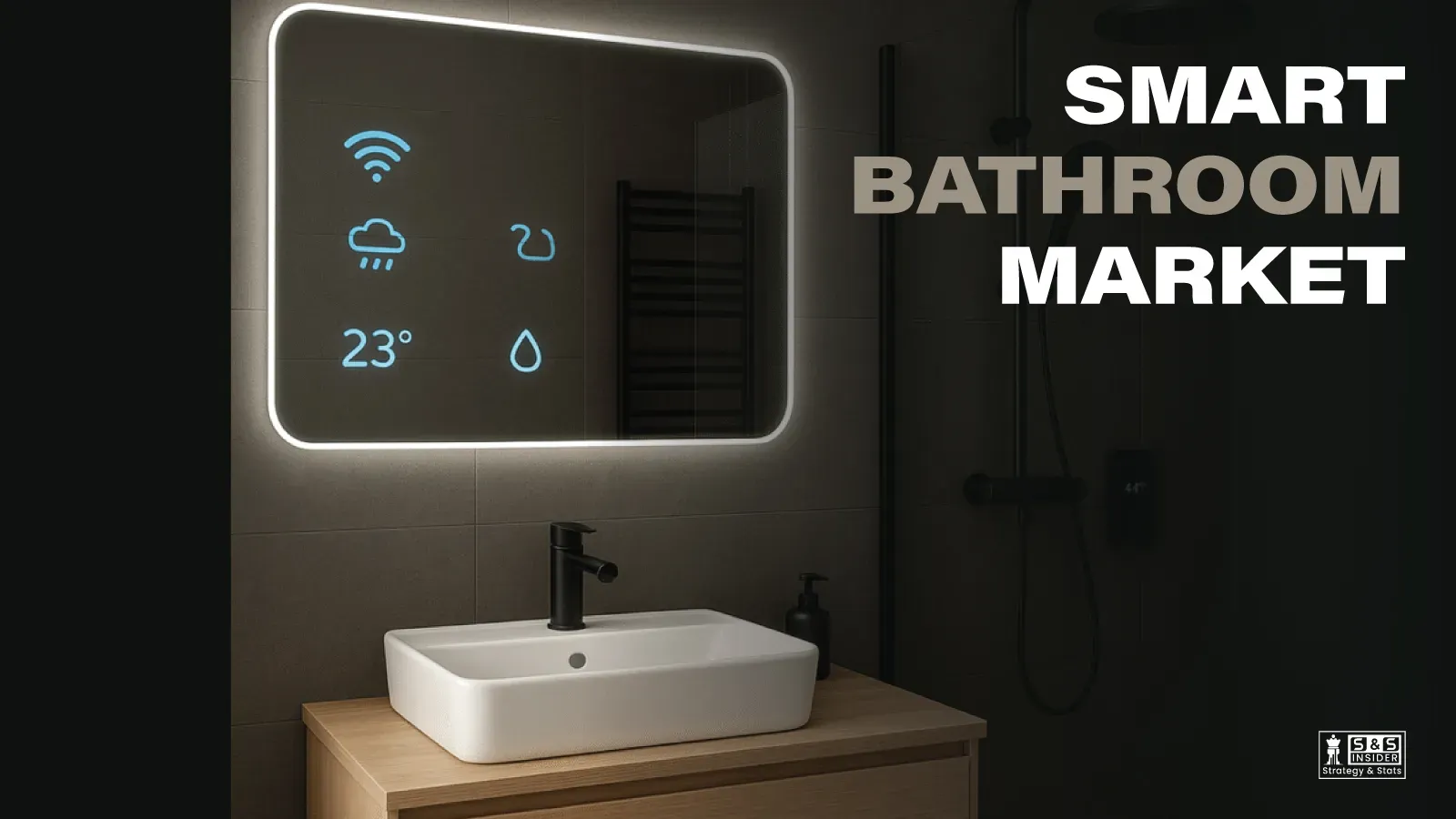
The increase in adoption of smart home gadgets, urbanization, and demand for energy-saving solutions is revolutionizing bathrooms today, making them into interconnected and automated rooms. Modern bathrooms are equipped with smart toilets, faucets, mirrors, showers and other smart devices since they provide greater hygiene, convenience, customization and water management. In addition, high disposable incomes coupled with the growing demand by consumers for luxury home solutions is another factor that is driving investments in bathrooms technologies.
As per SNS Insider, the Smart Bathrooms Market was valued at USD 9.48 billion in 2024 and is forecasted to grow to USD 25.10 billion by 2032, registering a CAGR of 13.0% during the forecast period of 2025 to 2032. The incorporation of Internet of Things (IoT) connectivity, sensors, voice control, automation of temperature control and water savings is contributing to the market growth. Growing awareness about water savings and demand for luxurious bathrooms is motivating manufacturers to innovate.
To Get more information On Smart Bathroom Market - Request Free Sample Report
Below are 5 Companies Making Significant Contributions to Innovation in The Global Smart Bathroom Market.
Kohler Co.
 Kohler is among the top manufacturers of bathroom fixtures and is developing an array of innovative and smart solutions that provide greater comfort, hygiene and personalization. The list of its smart bathroom solutions includes smart toilets, showers, mirrors and other fixtures that utilize sensors, voice control and programming options. Products like Numi 2.0 prove that Kohler is developing its line of smart products with the goal of creating luxury bathroom experiences. The rising demand for automated and water-efficient bathroom solutions contributes to the popularity of its smart products in residential and commercial sectors.
Jacuzzi Brands, LLC
 Jacuzzi Brands, LLC, is broadening its range of bathroom products through the creation of smart products that are expected to make bathroom usage more convenient, hygienic, and comfortable. The firm is increasingly embracing the concept of smart technologies in bathroom installations due to increasing consumer interest in automation and connectivity. For example, in 2024, the company came up with an innovative line of smart toilets that have such features as automatic flush, heated seat, and bidet. The move not only shows how the firm seeks to satisfy the demand for hygienic and convenient bathrooms but also illustrates the company’s commitment to the adoption of smart technologies in bathrooms.
Moen Incorporated
 Moen manufactures cutting-edge faucets, showers, and other bathroom systems that are highly automated, integrated and water management-oriented. Its collection of smart bathrooms consists of products designed to enable hands-free use, accurate temperature regulation, personalization features and voice-enabled capabilities. The U by Moen Smart Faucet and Moen Smart Shower are two such products that are produced by Moen to meet the current demands of customers. Smart faucets have been projected to be among the fastest growing product categories due to rising demands for hands-free usage and water conservation.
Delta Faucet Company
 Delta Faucet Company manufactures bathroom equipment that is designed using touchless, sensor and smart water management technologies. The products are intended to provide users with better convenience and hygiene alongside the effective use of water resources. The Touch2O technology offers a user convenience of the faucet operation and effective management of water use. The rising demand for hands-free products in residential and commercial bathrooms presents favorable market conditions. Delta Faucet Company's approach to automation and water efficiency corresponds with smart bathrooms market trends.
Villeroy & Boch AG
 Villeroy & Boch provides bathroom products that are designed with sophistication along with technological innovation and functionality. As its portfolio is growing due to increased demand, the company is now offering its customers sophisticated bathroom solutions. In March 2024, the company acquired Ideal Standard, which has helped to strengthen its bathroom business and its presence throughout Europe and internationally. Through this acquisition, the company has got the opportunity to increase its product range and meet the growing demand for connected, smart and sustainable bathrooms.
The Road Ahead
Smart Bathrooms Market is anticipated to sustain its growth because of the increasing trend of adopting smart homes and technology along with sustainable living solutions that impact the consumer’s purchase decision. The smart toilet segment is anticipated to retain its significance due to advanced hygienic and comfort-related offerings, whereas smart faucets segment is forecasted to witness significant growth due to rising preference for touch-free solutions among the consumers and organizations.
The commercial use cases are going to be a significant contributor to the demand, especially in hotels, restaurants, offices, and other buildings where hygiene, water conservation, and minimal maintenance are required. In addition, the residential adoption of the product is anticipated to increase owing to the adoption of advanced technology and the need for a luxurious bathroom experience. North America is expected to dominate the market due to high levels of consumer spending and widespread use of smart homes. The Asia Pacific region will lead the way in terms of growth rate due to increasing urbanization, higher incomes, infrastructure, and rising interest in energy efficient technologies. Europe will get a boost from water efficiency and sustainability trends and Mideast & Africa and Latin America will grow steadily through luxury real estate and commercial construction.