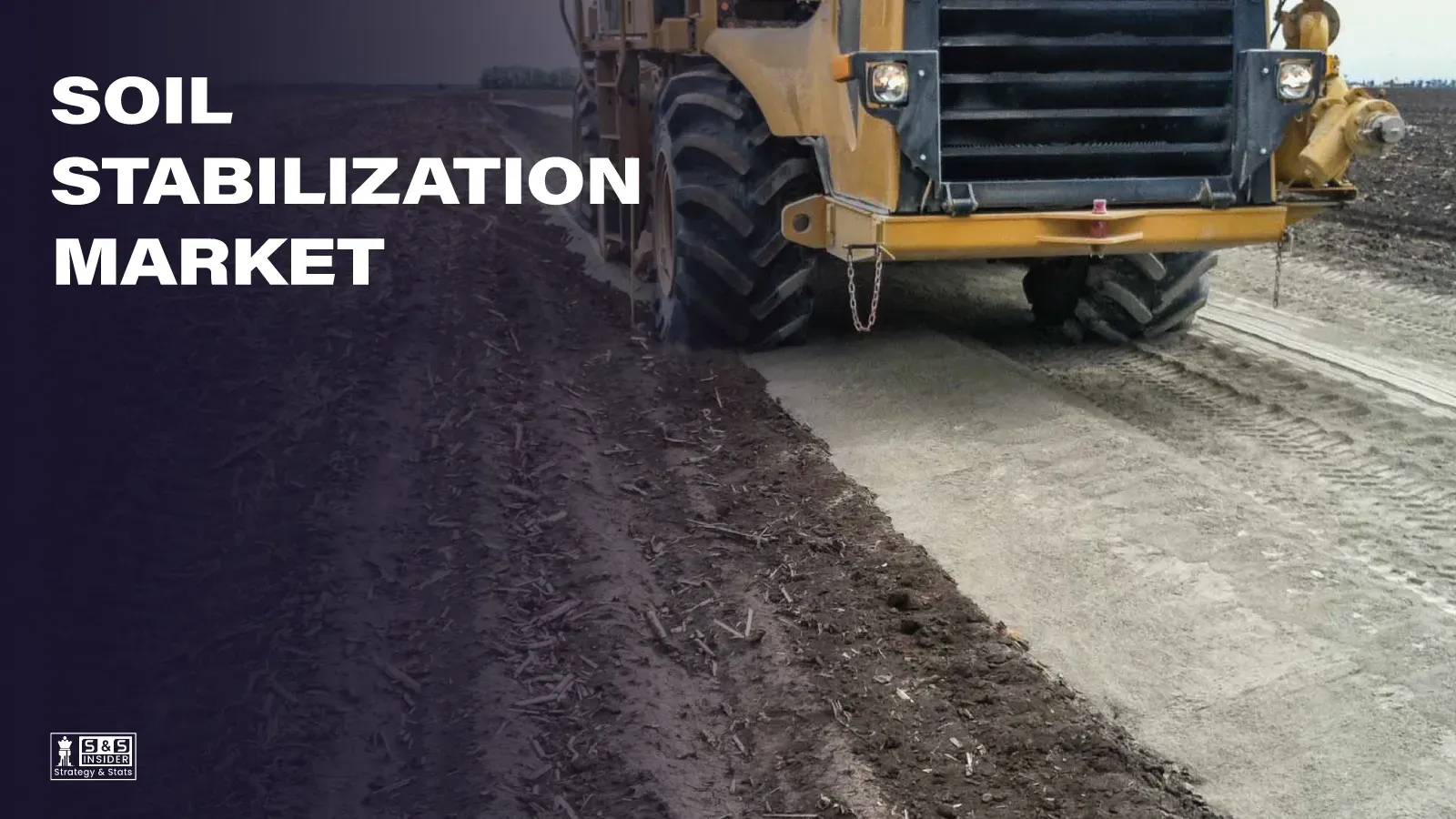
Soil Stabilization market holds a very significant position in modern infrastructure development since its main aim is to improve engineering characteristics of weak soils applied in construction of roads, highways, railway systems, airports, mining industry, and commercial constructions. Nowadays, with the continuous development of the transportation infrastructure and further urbanization of countries worldwide, there is a need for more innovative solutions in soil stabilization to help contractors increase soil strength and prolong lifetime of constructions.
According to SNS Insider, the Soil Stabilization Market was valued at USD 28.71 billion in 2025 and is projected to reach USD 47.35 billion by 2035, expanding at a CAGR of 5.13% during 2026–2035. Market growth is being fueled by rising investments in highways, railways, airports, industrial facilities, and urban infrastructure. One of the biggest trends influencing the industry is the increasing use of sustainable stabilization techniques that do not harm the environment while enhancing the performance of the road. This trend is characterized by an increase in the integration of mechanical stabilization with advanced chemicals for customizing the solution according to the different situations.
Gain Actionable Intelligence on the Soil Stabilization Market - Request a Sample Report
Major Key Companies:
1. Caterpillar Inc.
 Caterpillar Inc. is a major player in the manufacture of heavy construction equipment, having a significant presence in the worldwide soil stabilization market. The company manufactures a range of reclaimer/stabilizer machines suitable for use in full-depth reclamation, road rehabilitation and large-scale infrastructure projects. The equipment from Caterpillar has been utilized in highway construction, airport expansion, mining projects and civil engineering projects owing to their reliability, productivity, and intelligent machine capabilities. The company continues to develop intelligent machine technology to increase efficiency, minimize fuel usage, and cut down on maintenance costs.
2. AB Volvo
 AB Volvo has managed to position itself as one of the top manufacturers of equipment used for modern infrastructure construction throughout the world. The soil compaction and stabilization equipment manufactured by AB Volvo has found widespread use in road construction projects, railway construction, airports and major commercial construction projects. The company concentrates on producing construction equipment which is characterized by high durability, low fuel consumption and good operator conditions. Moreover, the company develops innovations in the field of intelligent construction equipment and machine control systems in order to ensure more environmentally-friendly construction.
3. Wirtgen Group
 Wirtgen Group is known throughout the world for its specialization in road construction, cold recycling, and soil stabilization technologies. It manufactures advanced stabilizers and recyclers capable of helping contractors enhance their soil quality while saving construction time and material usage. The equipment manufactured by the company is commonly used in highway construction, airport development, industrial development projects, and construction projects where high-performance soil stabilizer technology is needed. Wirtgen Group invests heavily in modernizing its machine design and automation technologies to optimize construction work and mixing processes. During Bauma 2025, Wirtgen Group unveiled the new WR 200, WR 240, and WR 250 X cold recyclers and soil stabilizers that include improved cab ergonomics, advanced controls, and increased mixing capacity.
What is Driving the Future of the Soil Stabilization Industry?
Increasing development of transportation infrastructure continues to be the key factor in the growing global soil stabilization needs. Various governments continue to invest significantly in building highways, railways, airports, logistics routes, and smart cities, and the mentioned infrastructures require stable grounds capable of carrying increasing load and ensuring effective operation. Stabilization techniques can increase bearing capacity, lower costs of construction, decrease number of materials and ensure pavement durability, hence they become an important part of civil engineering works.
The second major trend influencing the industry is the rising use of environmentally friendly stabilization solutions. The contractors are using more and more such techniques as fly ash, polymers, recycled materials and others to reduce CO2 emission while improving soil properties. Simultaneously, advancements in construction machinery, machine control systems, project management software, and engineering become helpful for contractors in optimizing the stabilization process.
The Road Ahead
In the coming years, the Soil Stabilization Market is expected to see growth because of the increased investments in infrastructure, sustainable engineering, and innovations in construction equipment and stabilization materials. With the focus of governments around the world on building sustainable transport systems, the use of intelligent construction equipment and environment-friendly additives is likely to grow in the years ahead. The constant advancement in engineering techniques and emphasis on the longevity of the infrastructure will make sure that the soil stabilization market is an integral part of global construction, transportation, and urban development in the next decade.