
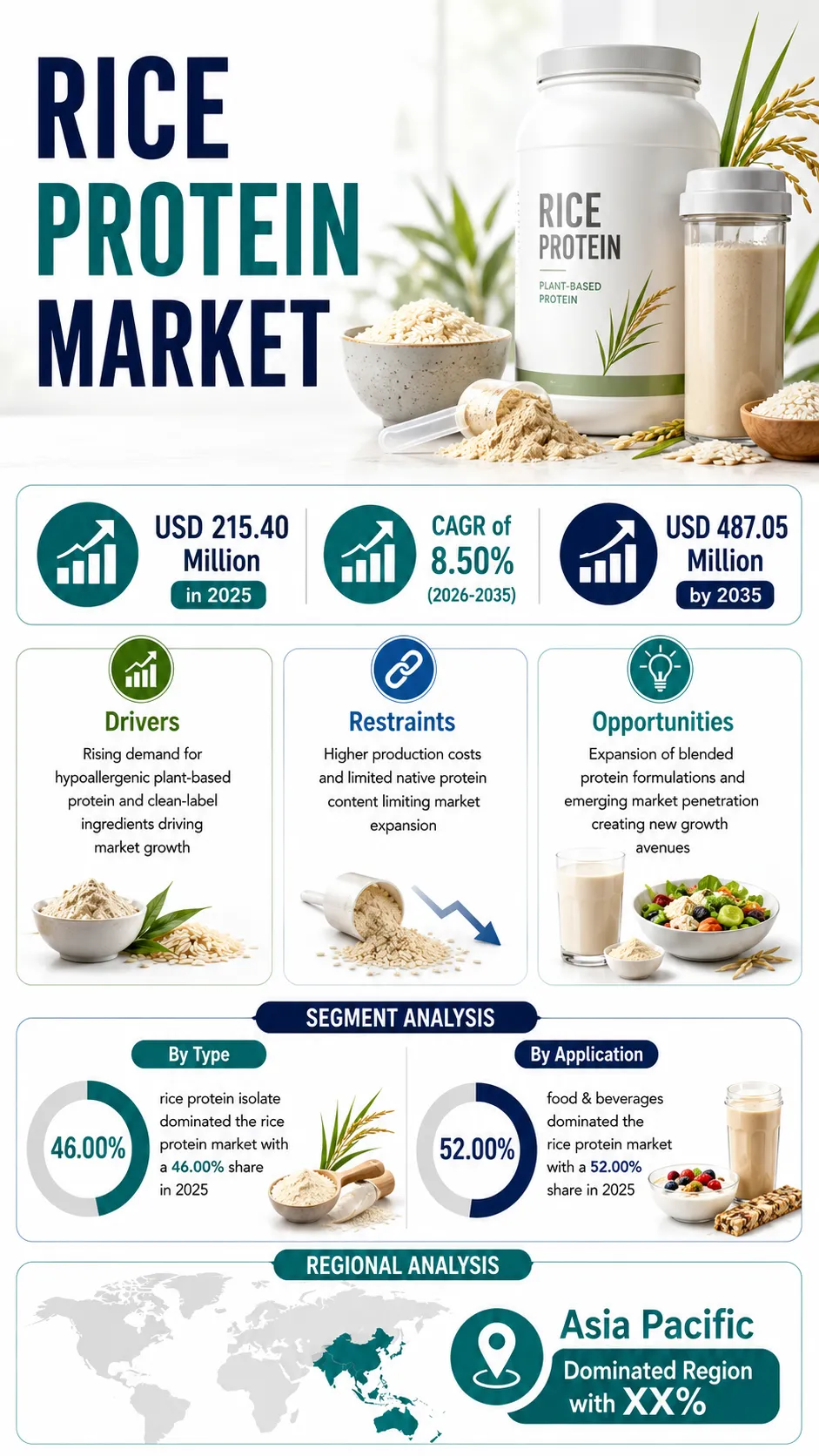
The rice protein market is set for significant expansion as hypoallergenic protein demand and clean-label ingredient adoption continue to reshape food and sports nutrition formulation sourcing worldwide. “According to a recent study by SNS Insider, the Rice Protein Market size valued at USD 215.40 million in 2025, is anticipated to grow to USD 487.05 million by 2035, registering a CAGR of 8.50% over the 2026–2035 forecast period.”
There have been notable advances within rice protein extraction and purification technology over time, enabling manufacturers focused on improving purity and functionality to capitalize on this trend. This includes the need for more consistent enzymatic hydrolysis and filtration methods that provide food, beverage, and supplement companies with access to reliable, high-purity rice protein supply, applicable across sports nutrition, infant formula, and plant-based dairy alternative formulations. Manufacturers are continuously refining processing techniques to ensure their rice protein products meet evolving formulation, taste, and regulatory requirements.
To Get Detailed Insights on the Rice Protein Market – Request a Sample Report
Clean-Label and Hypoallergenic Positioning Creates New Demand
From being a unique line of allergen-free protein, the rice protein industry has evolved into one where more and more plant-based nutrition protein ingredients are produced each day. The increased investment in enzyme hydrolysis, the process of protein blends formation and the validation of the organic ingredients by both small and big companies has resulted in the development of more and more innovative rice proteins.
The new approaches to extraction and processing of the rice proteins have led to higher purity, better solubility, improved taste, and a wider variety of applications in food and beverage production, supplement manufacturing, and skin care industries.
There is growing cooperation between rice protein makers, food companies, and sports nutrition companies in creating new blends of protein for use in future formulations.
Key Market Findings Highlight High-Growth Segments
Segment-wise, the rice protein isolates segment has captured the highest market share among all segments in the rice protein market revenue share of 46.00% in 2025 on account of extensive applications of rice protein isolates in the field of sports nutrition, foods, and beverages. The fastest-growing segment will be hydrolyzed rice protein with a CAGR of 9.85% during the period of forecast till 2035.
By application, food & beverages held more than 52.00% of total market revenue in 2025 due to rising incorporation into plant-based dairy alternatives and functional foods. Dietary supplements & sports nutrition will see the fastest growth at a CAGR of 10.20%, driven by increasing athlete and fitness consumer adoption of hypoallergenic protein powders.
By form, the revenue share of powder reached 88.00% in 2025 due to long shelf life and convenient handling. The liquid rice protein form will grow at the highest CAGR of 9.40% during the forecast period, driven by rising consumption of RTD protein beverages.
The offline channel will capture 68.00% revenue share in 2025 due to pre-existing ties between retailers and buyers. The online channel will register the highest growth rate of 10.47% during the forecast period, powered by rising e-commerce and subscription purchasing of supplements.
Purity, Functionality, and Blended Formulation Gain Importance
Manufacturers of food, drinks, and supplements have become increasingly focused on obtaining rice protein ingredients which not only offer higher levels of purity but are also highly versatile to formulate, along with taste and solubility benefits.
Development in enzyme-based hydrolysis techniques, formulation of different proteins, and validation of sourcing of organic ingredients has made it possible for companies to manufacture those products which can attract quality-conscious food and nutrition manufacturers. Sustainable sourcing of rice and traceable supply chains are also becoming important trends in this context, and are expected to gain more prominence in future.
Asia Pacific Emerges as the Largest Market Amid China's Production Leadership
The Asia Pacific region represented the largest share of regional market revenue in 2025, owing to China's position as a major rice protein producer supported by abundant rice cultivation and expanding food processing infrastructure. On the other hand, North America is the fastest-growing market during the forecast period through 2035, driven by strong sports nutrition infrastructure and expanding plant-based food manufacturing.
Leading Companies Drive Innovation and Competition
The environment continues to stay dynamic as players continue innovating on enzymatic hydrolysis technology and blended protein formulation as well as forming partnerships to enhance their position in the industry. Some of the major companies that operate in the rice protein market are Axiom Foods, RiceBran Technologies, BENEO, Kerry Group, Ingredion, ET Chem, Südzucker AG, Golden Grain Group, Foodchem International Corporation, and The Scoular Company.
An SNS Insider analyst Parry Kardani commented, “The growing convergence of hypoallergenic protein demand and clean-label formulation requirements is creating sustained demand for high-purity, functionally versatile rice protein ingredients. Producers that successfully combine enzymatic processing innovation, blended formulation expertise, and sustainable sourcing transparency will be best positioned to capitalize on emerging opportunities across food, sports nutrition, and clinical nutrition segments.”
About the Author

Get in touch




