
Rice Protein Market Report Scope & Overview:
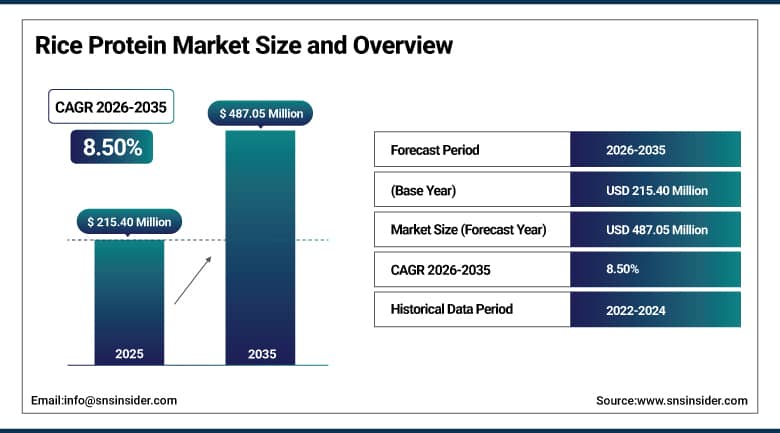
The Rice Protein Market was valued at USD 215.40 Million in 2025 and is expected to reach USD 487.05 Million by 2035, growing at a CAGR of 8.50% from 2026 to 2035.
There is an upward trend in the market for rice proteins owing to the increased number of customers who tend to go for hypoallergenic and plant proteins. The growth of rice proteins could be achieved because of the hypoallergenic nature of rice proteins and the ability of rice proteins to complement plant proteins by offering all the nine essential amino acids. The process of enzymatic hydrolysis of brown rice leads to the formation of rice proteins, which are hypoallergenic. Vegan diet trends, increasing awareness of lactose intolerance, and use in meat analogues and protein-enriched beverages will drive growth.
The food and beverage sector is responsible for more than half of the total consumption of rice proteins due to the increase in the usage of this ingredient as an alternative in beverages and snacks, while at the same time sports nutrition products and baby formulas use rice protein isolates as a result of being hypoallergenic and highly digestible.
To Get More Information On Rice Protein Market - Request Free Sample Report
Rice Protein Market Trends
- Rising demand for allergen-free and clean-label protein ingredients is boosting rice protein adoption across mainstream food categories.
- Growing use of rice protein isolates in plant-based meat and dairy alternatives is expanding formulation applications.
- Increasing enzymatic hydrolysis and extraction technology advances are improving solubility, taste, and functional performance.
- Expanding sports nutrition and clinical nutrition applications are driving demand for high-purity rice protein isolates.
- Strategic capacity expansions and partnerships among manufacturers are strengthening organic and non-GMO rice protein supply chains.
The U.S. Rice Protein Market Outlook
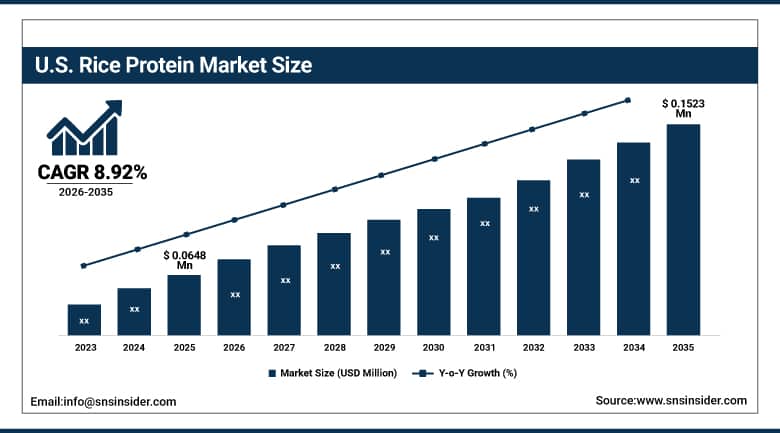
The U.S. Rice Protein Market was valued at USD 0.06 Million in 2025 and is projected to reach USD 0.15 Million by 2035, growing at a CAGR of 8.92% during 2026–2035.
Rice protein producers in the sports nutrition space and clean label food producers throughout the country keep on increasing their usage of rice protein as the desire for allergen-free, plant-based products continues to grow rapidly in both the mainstream retail stores and specialty nutrition stores. The trend of vegan protein shakes and increased use of rice protein isolates in infant formula and medical nutrition products will add to the ongoing domestic demand. Increased reach through online sales and health food stores and increased investment by manufacturers in organic and non-GMO rice proteins will only strengthen the country's position as a leading consumer of rice proteins.
North America has established itself as the fastest-growing regional market for rice protein, supported by strong sports nutrition infrastructure and expanding plant-based food manufacturing, with the region registering accelerating demand across both dietary supplement and functional food applications through the forecast period.
Rice Protein Market Segment Analysis
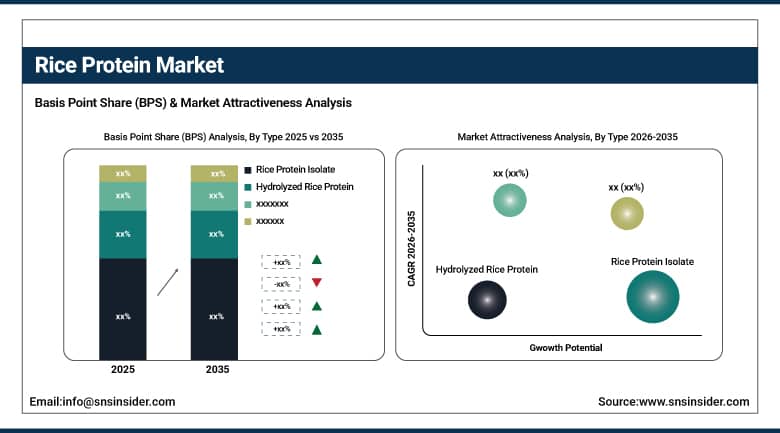
- By Type, rice protein isolate dominated the rice protein market with a 46.00% share in 2025, while hydrolyzed rice protein is the fastest-growing type segment with a CAGR of 9.85% from 2026–2035.
- By Application, food & beverages dominated the rice protein market with a 52.00% share in 2025, while dietary supplements & sports nutrition is the fastest-growing application segment with a CAGR of 10.20% from 2026–2035.
- By Form, powder dominated the rice protein market with an 88.00% share in 2025, while liquid is the fastest-growing form segment with a CAGR of 9.40% from 2026–2035.
- By Distribution Channel, offline dominated the rice protein market with a 68.00% share in 2025, while online is the fastest-growing distribution channel with a CAGR of 9.60% from 2026–2035.
By Type, rice protein isolate dominated the rice protein market, while hydrolyzed rice protein is the fastest-growing segment.
Protein isolate derived from rice emerged as the leader in the market with more than 46.00% of market share owing to its high protein content, which was more than 80%, good solubility, and low amount of residual starches and fibers making it the most preferred option for the manufacture of sports nutrition powder, protein bars, and beverages. Isolates are preferred due to their neutral flavor profile and ability to easily mix with peas and hemp proteins in order to create full-spectrum amino acids. Manufacturers are continuously focusing on developing better technologies to refine isolates.
Hydrolyzed rice protein is anticipated to have the highest CAGR of 9.85% from 2022 to 2035 owing to the increasing preference for pre-digested and quick-absorbing protein types in the infant nutrition, clinical nutrition, and post-workout nutrition segments. Enzymatic digestion makes the protein molecules more easily digestible and quickly absorbed by the body, thus, the hydrolyzed rice protein will continue to gain popularity among the manufacturers of clinical nutrition and high-end sports recovery products in order to achieve a faster supply of amino acids into the bloodstream.
By Application, food & beverages dominated the rice protein market, while dietary supplements & sports nutrition is the fastest-growing segment.
Food & beverages held the highest market share of over 52.00% in 2025, driven by rising incorporation of rice protein into plant-based dairy alternatives, protein-fortified snacks, bakery products, and meat analog formulations. Clean labels and absence of allergens in consumer preferences have been a driving factor for the adoption of proteins obtained from rice instead of soy and whey proteins in general food product formulations. The growing retail availability of beverages and functional foods with rice protein ingredients is helping to solidify their supremacy in the wider world of plant-based nutrition ingredients.
Dietary supplements & sports nutrition is expected to grow at the fastest CAGR of 10.20% during the forecast period, supported by increasing athlete and fitness consumer adoption of rice protein powders as a hypoallergenic alternative to whey and soy-based formulations. Growing consumer awareness of digestive tolerance and allergen sensitivity is prompting supplement brands to reformulate flagship products around rice and blended plant protein systems, while expanding e-commerce distribution of specialty sports nutrition brands continues to accelerate segment growth across performance and recovery-focused consumer categories worldwide.
By Form, powder dominated the rice protein market, while liquid is the fastest-growing segment.
Powder format was the dominant market format for this product type with an 88.00% share in 2025, as it offered enhanced shelf life, easy transportability, and simple addition to dry mixes of dietary supplements, breads, and concentrated beverages. Powder continues to be the format of choice in the manufacture of both food and supplements, due to the reduced water content, less chance of microbial contamination, and ability to work on existing machinery for dry blending processes. Manufacturers are continuing to work on spray drying and micronization technologies for improved mouthfeel and solubility of powders.
It is expected that the liquid category will have the fastest CAGR of 9.40% till 2035 due to increasing usage of ready-to-drink formulations of protein-rich plants and liquids with nutritional content in clinical and infant nutrition areas. Increased preference for quick and easy-to-take protein drinks is prompting companies to formulate liquid formulations of rice proteins, which have greater dispersibility, thus making it more acceptable for functional drinks, meal replacement, and medical nutrition categories.
By Distribution Channel, offline dominated the rice protein market, while online is the fastest-growing segment.
Offline retailing channels such as supermarkets, health food shops, and specialty nutrition retailers held the major market share of 68.00% in 2025 due to the preference of consumers for buying items after physical inspection and easy availability of the products through the network of food and nutritional supplement retailers. The strong relations maintained between the manufacturers of the ingredients of rice protein and the large grocery chains along with the availability of shelf space for the products further bolstered the importance of offline retail as the dominant channel of purchase.
The online distribution channel is projected to register the fastest CAGR of 9.60% during the forecast period, driven by expanding e-commerce penetration and growing consumer preference for subscription-based supplement purchasing. Specialty nutrition brands are increasingly prioritizing direct-to-consumer online platforms to reach health-conscious buyers seeking allergen-free and plant-based protein products, while digital marketing and influencer-driven promotion of sports nutrition brands continues to accelerate online channel growth across younger, digitally engaged consumer demographics worldwide.
Regional Analysis
|
Region |
Major Country |
Share within Region, 2025 (%) |
|---|---|---|
|
North America |
United States |
82.00% |
|
Europe |
Germany |
26.80% |
|
Asia Pacific |
China |
30.20% |
|
Middle East & Africa |
UAE |
24.40% |
|
Latin America |
Brazil |
35.50% |
Asia Pacific Rice Protein Market Insights
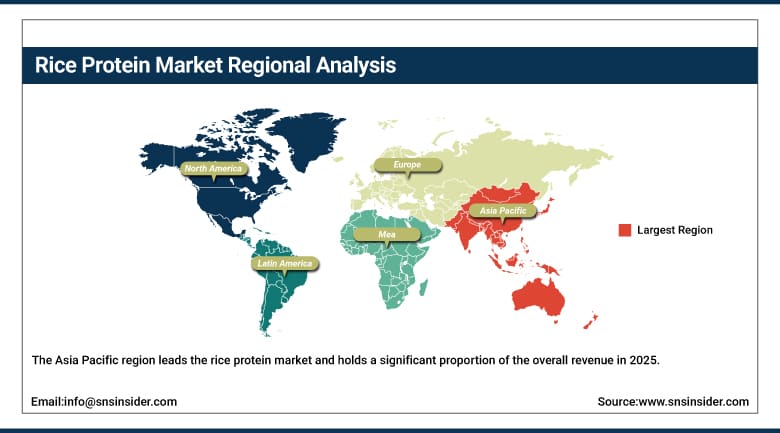
The Asia Pacific region leads the rice protein market and holds a significant proportion of the overall revenue in 2025. China is one of the largest producers and exporters of rice protein due to rich rice cultivation in the country, increased food processing facilities, and investments in extraction and purification technology of proteins.
One of the important factors behind the growth of the China rice protein market is the status of the country as one of the largest global producers of rice protein with substantial processing facilities. India and Japan are other regions that are contributing to the growth of the region due to increased protein extraction capacity and demand for plant-based food products.
Get Customized Report as Per Your Business Requirement - Enquiry Now
North America Rice Protein Market Insights
North America emerges as the most rapidly developing region in the market for rice protein with a CAGR of 8.92%. The reason behind it is the presence of highly advanced infrastructure in sports nutrition, development in plant-based food manufacturing industries, and high consumer awareness about allergen-free protein ingredients in the region.
The United States dominated the North America rice protein market in 2025 because of its highly advanced manufacturing base in sports nutrition and rising consumer demand for clean-label allergen-free protein ingredients. Canada is playing an important role in boosting regional growth due to advancements in plant-based food processing and specialty nutrition ingredients manufacturing industries.
Europe Rice Protein Market Insights
In 2025, the Europe market for rice protein held an important place due to the presence of a robust manufacturing base of plant-based foods in the region, coupled with clean label regulations and consumer preference for allergen-free and sustainable proteins.
Germany is one of the key markets in Europe due to its sophisticated manufacturing base of plant-based foods and growing demand for organic and non-GMO proteins among consumers. Other regions such as France and the Netherlands, where there are new manufacturers of specialty nutrition ingredients, are making contributions to market growth through rising production capabilities.
Middle East & Africa and Latin America Rice Protein Market Insights
Middle East & Africa and Latin American regions are gradually expanding rice protein adoption as plant-based food manufacturing and sports nutrition retail investment grows across both regions, supported by increasing consumer awareness of allergen-free and clean-label protein alternatives.
Brazil is set to be a prominent Latin American market fueled by growing functional food manufacturing capacity and rising consumer demand for plant-based protein products. The Middle East & Africa region has the UAE and Saudi Arabia investing in modern food processing and specialty nutrition infrastructure that is gradually increasing demand for rice protein across their expanding retail sectors.
Market Dynamics
Growth Drivers: Rising demand for hypoallergenic plant-based protein and clean-label ingredients driving market growth
Increasing consumer preference for hypoallergenic, allergen-free protein sources and rising demand for clean-label, non-GMO ingredients across food, beverage, and dietary supplement categories are among the primary drivers of the rice protein market. With the increasing occurrence of lactose intolerant people and soy allergy sufferers, there will be an increase in the need for rice protein products by companies in order to meet the needs of such consumers, as well as with the growth in the number of vegans globally and the adoption of plant-based diets, which will increase the consumer base of rice protein in both mainstream and specialized dietary products on a global scale.
Rice protein will be fueled by an increase in uses in sports nutrition and functional beverages, where sports enthusiasts and fitness consumers prefer to take protein made from rice, because of its ability to be easily digested and contain all the essential amino acids when combined with protein from peas or hemp.
Restraints: Higher production costs and limited native protein content limiting market expansion
One of the factors that acts as a barrier to market growth is the comparatively lower native protein content of rice relative to soy and pea sources, requiring more extensive processing to achieve isolate-grade purity. This increases production costs and can restrict usage in price-sensitive food and beverage formulation segments.
Moreover, the fact that consumers know less about rice protein than more popularly known plant proteins such as soy and pea protein is also an obstacle to its wider adoption especially in developing nations. The reliance on regions where rice is cultivated, which are subject to climate variations, also adds to the instability in ingredient procurement and prices.
Opportunities: Expansion of blended protein formulations and emerging market penetration creating new growth avenues
In the market, there are new growth opportunities resulting from growing interest among manufacturers to produce blended protein ingredients using rice along with pea, hemp, or pumpkin seed proteins to ensure that complete amino acids are present in the formulation while also keeping the hypoallergenicity benefits of rice proteins.
There are high potential areas for growth in terms of expanding the share of rice proteins in emerging Asia Pacific and Latin American countries, where the health awareness level along with the uptake of plant-based diets is still low. There is great potential in investing in the production of rice protein products locally.
Recent Developments:
- 2025: Axiom Foods launched Oryzatein Organic 90, an upgraded high-purity organic rice protein isolate designed for sports nutrition and clean-label beverage formulators.
- 2025: BENEO expanded its Remypro rice protein ingredient line with new functional variants tailored for plant-based dairy alternative applications.
- 2026: RiceBran Technologies scaled production capacity for its rice protein concentrate portfolio to meet growing clean-label demand across North American retail channels.
- 2026: ET Chem partnered with regional food manufacturers to introduce a new organic-certified rice protein hydrolysate formulated for infant and clinical nutrition applications.
Rice Protein Market key players are:
- Axiom Foods, Inc.
- RiceBran Technologies
- ET Chem
- BENEO GmbH
- Kerry Group plc
- Ingredion Incorporated
- Südzucker AG
- Golden Grain Group Limited
- Shafi Gluco-Chem (Pvt.) Ltd.
- Jiangxi Golden Agriculture Biotech Co., Ltd.
- Wuxi Jinnong Biotechnology Co., Ltd.
- Panjin Hetian Food Co., Ltd.
- Foodchem International Corporation
- The Scoular Company
- Sagarmatha Overseas
- Sichuan Vibrant Bio-Products Co., Ltd.
- Green Labs LLC
- NOW Health Group, Inc.
- ADIP Inc.
- Growing Naturals LLC
Rice Protein Market Report Scope :
| Report Attributes | Details |
|---|---|
| Market Size in 2025 | USD 215.40 Million |
| Market Size by 2035 | USD 487.05 Million |
| CAGR | CAGR of 8.50% From 2026 to 2035 |
| Base Year | 2025 |
| Forecast Period | 2026-2035 |
| Historical Data | 2022-2024 |
| Report Scope & Coverage | Market Size, Segments Analysis, Competitive Landscape, Regional Analysis, DROC & SWOT Analysis, Forecast Outlook |
| Key Segments | • By Type (Rice Protein Isolate, Rice Protein Concentrate, Hydrolyzed Rice Protein) • By Application (Food & Beverages, Dietary Supplements & Sports Nutrition, Animal Feed, Personal Care & Cosmetics) • By Form (Powder, Liquid) • By Distribution Channel (Online, Offline) |
| Regional Analysis/Coverage | North America (US, Canada), Europe (Germany, UK, France, Italy, Spain, Russia, Poland, Rest of Europe), Asia Pacific (China, India, Japan, South Korea, Australia, ASEAN Countries, Rest of Asia Pacific), Middle East & Africa (UAE, Saudi Arabia, Qatar, South Africa, Rest of Middle East & Africa), Latin America (Brazil, Argentina, Mexico, Colombia, Rest of Latin America). |
| Company Profiles | Axiom Foods, Inc., RiceBran Technologies, ET Chem, BENEO GmbH, Kerry Group plc, Ingredion Incorporated, Südzucker AG, Golden Grain Group Limited, Shafi Gluco-Chem (Pvt.) Ltd., Jiangxi Golden Agriculture Biotech Co., Ltd., Wuxi Jinnong Biotechnology Co., Ltd., Panjin Hetian Food Co., Ltd., Foodchem International Corporation, The Scoular Company, Sagarmatha Overseas, Sichuan Vibrant Bio-Products Co., Ltd., Green Labs LLC, NOW Health Group, Inc., ADIP Inc., Growing Naturals LLC. |

Frequently Asked Questions
The Rice Protein Market is expected to grow at a CAGR of 8.50% from 2026 to 2035.
The Rice Protein Market was valued at USD 215.40 Million in 2025.
The market is driven by rising demand for hypoallergenic, plant-based protein sources and increasing consumer preference for clean-label, allergen-free food and supplement ingredients.
The Food & Beverages segment dominated the Rice Protein Market in 2025, accounting for more than 52.00% market share.
The Asia Pacific region dominated the Rice Protein Market in 2025, accounting for the largest share of total revenue.
