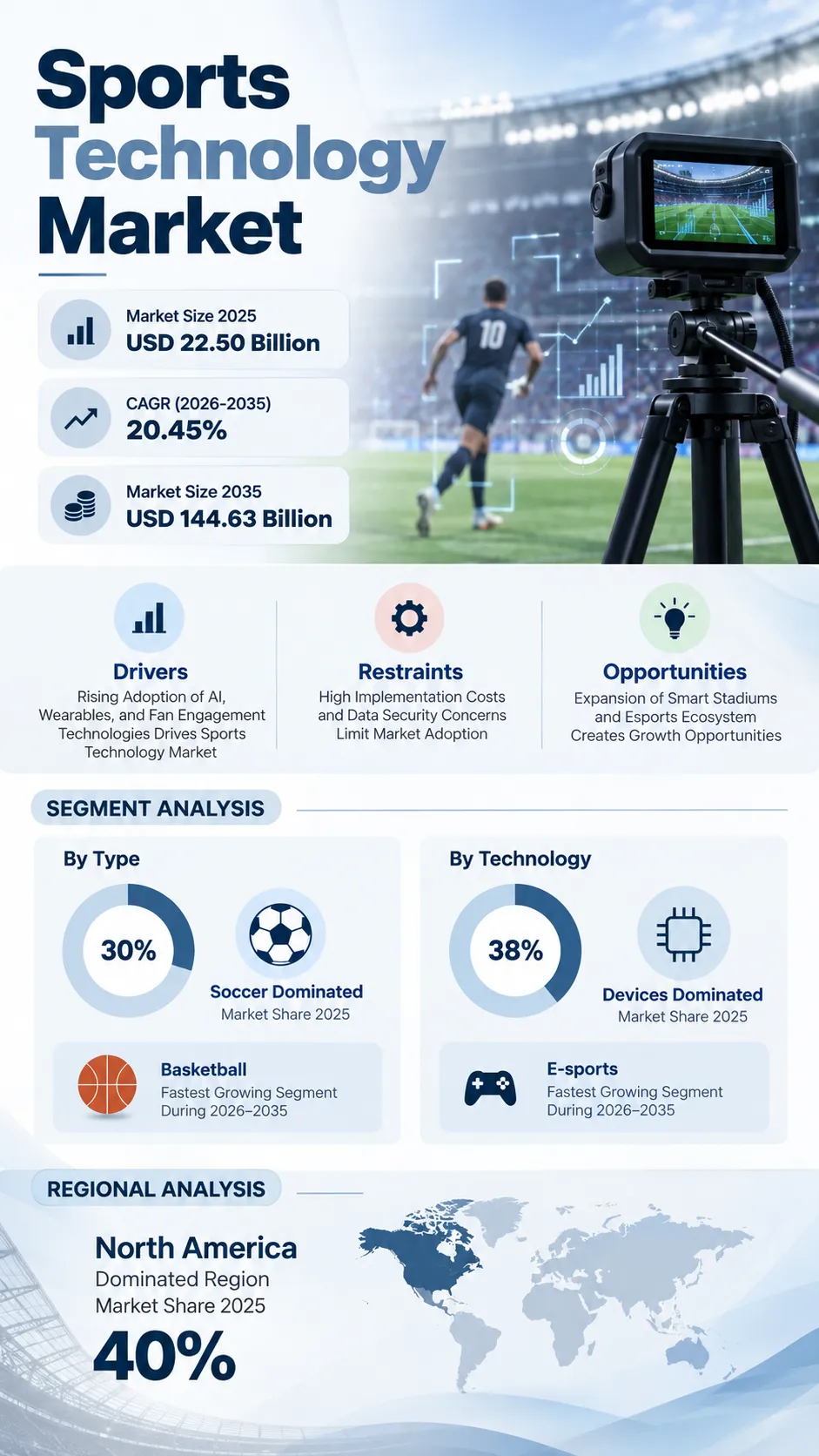
The Sports Technology Market is experiencing a growth stage owing to the rising adoption of technology by teams, leagues, athletes, and broadcasters for their operational improvement and enhanced engagement of audience. “According to a recent study by SNS Insider, the global Sports Technology Market size valued at USD 22.50 billion in 2025, is anticipated to grow to USD 144.63 billion by 2035, registering a CAGR of 20.45% over the 2026–2035 forecast period.”
The usage of connected devices, artificial intelligence, advanced analytics, and cloud services in sports organizations is growing fast and allowing decision-making to be more rapid and data-driven. In addition, real-time athlete tracking becomes very critical when it comes to optimizing training regimens and managing workloads and injuries. Digital media platforms change the way sports consumption happens.
This revolution goes beyond the sports grounds. Technology investments made by broadcasters, stadium owners, sports teams, leagues help build smarter stadiums, more personalized content, and better sports management experience. The growth of esports makes one more technology consumer.
To Get Detailed Insights on the Sports Technology Market – Request a Sample Report
Digital Transformation Creates New Growth Opportunities
With the increased presence of advanced data, there are new possibilities emerging in the sporting environment. With the help of wearable devices, cameras, sensors, and other connected tools, teams can make use of all this information to understand more about the performance and strategy of athletes.
Smart stadiums will also be an area of growth. Stadiums are using connected technologies, digital ticketing, immersive displays, apps, and analytics in order to increase efficiency and enhance spectator experience.
Additionally, the rise in popularity of esport gaming is leading to the increased need for advanced technological infrastructure, broadcasting platforms, analytics, and other interactive technologies. Technology is becoming a vital component in the strategic plans of many sports organizations in search of business opportunities.
Key Market Insights Highlight Shifting Demand Patterns
By type, soccer is estimated to contribute 30% of total revenue from the market globally in 2025, driven by the large global fan base of the sport and investments made in performance analysis, broadcast, and digital fan experiences. Basketball is set to be the fastest-growing segment in the coming years until 2035, owing to connected sports equipment used by players in their teams.
Based on technology, devices will account for a market share of 38%. The importance of wearables, sensors, and smart devices in the monitoring of the athlete’s performance and safety cannot be understated. It is expected that e-sports will experience the highest rate of growth amongst technological innovations due to rising competition in the gaming sector.
By end user, sports leagues will account for 35% of total market revenues by 2025. Extensive spending in areas such as broadcast technology, analytics, stadium technology, and fan engagement systems have contributed to their segment leadership position. Sports clubs will exhibit the highest growth rate as companies of various sizes invest in sports technologies.
AI and Wearable Technologies Reshape Sports Performance
Artificial intelligence and data analysis are becoming crucial in sports decisions in the current era. Coaches and performance departments are relying on very complex data to assess workload for players and develop training programs accordingly.
Wearable technology is equally making its way in the same fashion as teams and athletes want to continuously monitor their performances. Wearable technology can provide customized training methods for athletes while simultaneously identifying any threats related to high workload.
On a consumer basis, AR, VR, mobile applications, live streaming, and digitalized content are facilitating fans in terms of interacting with sports organizations.
North America Leads Sports Technology Market with 40% Share as Asia Pacific Emerges as the Fastest-Growing Region
The North American region is forecasted to capture approximately 40% of the revenue share of the Sports Technology Market in 2025 and hold its position as the top performing region in the world. Investments made by top professional sporting bodies and the deployment of advanced technologies including AI and wearables along with smart stadiums infrastructure development are helping drive growth in the region.
The Asia Pacific region is becoming one of the fastest growing regions in the market due to growing investments in the digitization of sports, e-sports, monitoring of athletes and venues by countries such as China, Japan, India, South Korea, and Australia. Expanding professional sports ecosystems and growing technology adoption across grassroots and elite sports are creating substantial opportunities.
Europe also remains an important innovation center, with football clubs and sports organizations adopting optical tracking, AI analytics, video technologies, and immersive fan-engagement platforms.
Industry Participants Focus on Innovation and Strategic Expansion
Competition in the global Sports Technology Market is intensifying as technology providers develop increasingly integrated solutions spanning athlete performance, broadcasting, venue management, analytics, and fan engagement. Companies are combining connected hardware with software and data platforms to provide sports organizations with broader digital capabilities.
Key companies operating in the global Sports Technology Market include Catapult Sports, Zebra Technologies, STATSports, Hudl, IBM, SAP SE, Stats Perform, Hawk-Eye Innovations, Second Spectrum, Genius Sports, SportRadar, Whoop, Polar Electro, Fitbit, ChyronHego, PlaySight Interactive, ShotTracker, KINEXON, Garmin, and Oracle.
An SNS Insider analyst Sushant Kadam commented, “The convergence of artificial intelligence, connected devices, analytics, and immersive digital platforms is fundamentally changing how sports organizations operate and engage audiences. Technology providers that can deliver actionable performance intelligence, scalable digital infrastructure, and compelling fan experiences are positioned to benefit from the industry's accelerating digital transformation.”
About the Author

Get in touch