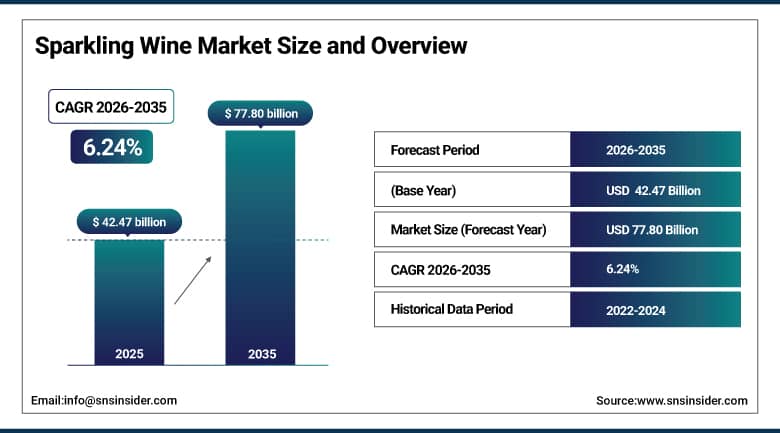
As per the SNS Insider Report titled, Sparkling Wine Market by Type, Product, Price Point, Sales Channel, and Region, Global Forecast 2026–2035, “The global Sparkling Wine Market size was estimated at USD 42.47 billion in 2025, is anticipated to grow to USD 77.80 billion by 2035, registering a CAGR of 6.24% during the forecast period 2026–2035.”
Key Takeaways
-
White sparkling wine dominated the market with a 78% revenue share in 2025, driven by strong consumer preference and widespread availability across premium and mainstream categories.
-
Rosé sparkling wine is projected to witness the fastest growth during 2026–2035 due to rising popularity among younger consumers and growing demand for premium rosé offerings.
-
Prosecco accounted for the largest product segment with a 29% market share in 2025, supported by its affordability, versatility, and increasing global consumption.
-
Prosecco is also expected to register the fastest CAGR during the forecast period owing to expanding international distribution networks and rising demand across emerging markets.
-
Luxury and Premium sparkling wines held approximately 55% of total market revenue in 2025 as consumers increasingly favored high-quality and premium beverage experiences.
-
The Luxury and Premium segment is anticipated to remain the fastest-growing price category through 2035, fueled by premiumization trends and rising disposable incomes.
-
Supermarkets and Hypermarkets dominated the sales channel segment with a 50% share in 2025 due to extensive product availability, promotional activities, and consumer convenience.
-
On-trade sales channels are forecast to record the fastest CAGR during 2026–2035, driven by the recovery of hospitality, tourism, fine dining, and social event consumption.
-
Europe accounted for the largest regional share of approximately 45% in 2025, supported by strong wine-producing countries and established consumer traditions.
-
Asia Pacific is projected to emerge as the fastest-growing regional market, expanding at a CAGR of 8.58% during 2026–2035.
Why Sparkling Wine Market is Growing?
There have been several drivers that are responsible for growth in the Sparkling Wine market. These include evolving lifestyles among consumers, rising demand for premium alcoholic beverages, and higher involvement in celebrating social events. Sparkling wine remains highly favored by consumers requiring sophisticated and flexible alcoholic beverages for various occasions.
The rise in disposable income levels and premiumization in developing and advanced countries is motivating consumers to upgrade their spending habits by choosing superior sparkling wines over conventional alcoholic beverages. The demand for premium and luxury sparkling wines remains strong due to high consumer willingness to pay.
The increased development in the hospitality industry, including tourism and entertainment businesses, also represents a major driver for market growth. The incorporation of sparkling wines in restaurants, hotels, bars, and other event places increases consumption of these beverages.
Furthermore, social media influence, growth in wine tourism, and awareness about global wine cultures represent other major factors affecting growth of the market.
Sparkling Wine Market Statistics:
-
Premium alcohol beverage sales keep climbing due to the increasing preference for quality products by consumers.
-
Tourism involving wine tasting activities in various wine-growing areas has seen an increase in numbers of participants.
-
A new trend emerging in younger consumers is the increased interest in premium rose and flavoured sparkling wines.
-
The hospitality industry remains one of the biggest drivers of growth for sparkling wine products.
-
There have been advances in e-commerce and digital retail that improve accessibility to premium and imported wine products.
-
Increasing trends in urbanization and middle-class populations in Asia Pacific boost premium wine sales.
-
Innovation, sustainability, and eco-friendly products, such as organic wines become important purchasing criteria for eco-conscious consumers.
Emerging Trends
There are many transforming trends in the Sparkling Wine Market, including the increasing demand for rose sparkling wine and high-quality Prosecco drinks. The consumer's desire to experience new flavors and unique product editions is making an increasing contribution to the competition in the market.
Another transforming trend in the industry includes sustainability and producers' increasing attention to sustainable and environmentally responsible viticulture, light-weight packaging, and minimizing their carbon footprint. The rise of organic and biodynamic sparkling wines has also been seen due to increased consumer awareness.
Another important trend influencing the industry includes digital trade as many wineries use e-commerce opportunities to sell their products and communicate with customers. In addition, premiumization has emerged as one of the main trends since consumers tend to consider sparkling wine to be a luxurious and special beverage.
Top 10 Companies
-
LVMH Moët Hennessy Louis Vuitton
-
Pernod Ricard
-
Freixenet Copestick
-
Rotkäppchen-Mumm Group
-
Constellation Brands
-
Treasury Wine Estates
-
Accolade Wines
-
Gruppo Italiano Vini
-
La Marca Prosecco
-
Ferrari Trento
About the Author

Get in touch