
Aviation Headsets Market Report Scope & Overview:
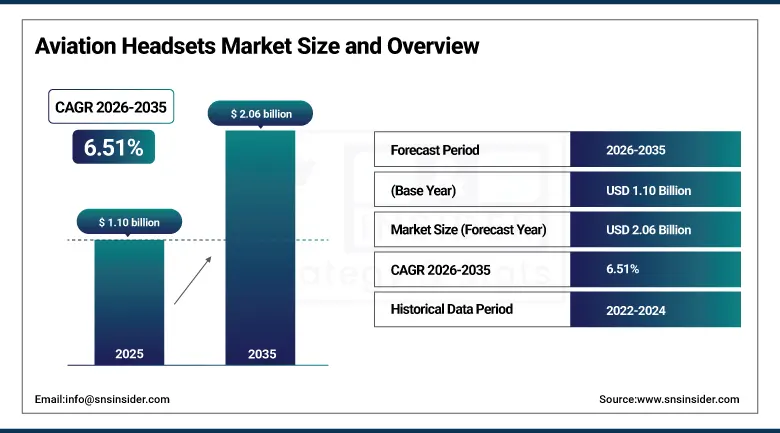
The Aviation Headsets Market was valued at USD 1.10 Billion in 2025 and is expected to reach USD 2.06 Billion by 2035, growing at a CAGR of 6.51% from 2026–2035.
The Aviation Headsets Market can be attributed to the increase in global air traffic, expansion of commercial and private aviation fleet, increased pilot training activities and growing attention for cockpit communication efficiency and pilot safety. The demand for advanced, comfortable aviation headsets is primarily driven by the increasing implementation of communication systems in civil and military aviation. As a result, the development of efficient noise suppression capacity, clearer audio signals & wireless connectivity, lightweight ergonomic designs and long-lasting comfort functionalities have hastened the adoption of innovative aviation headset solutions across commercial and recreational aviation applications. These include more advanced, market adaptable active noise reduction (ANR) technology, improved Bluetooth-equipped communication systems that support digital signal processing and battery savings in wireless headsets, all of which further enhance both flight operational performance and pilot experience while creating a safer and more efficient cockpit communication environment.
In 2026, aviation industry trends showed increasing adoption of premium Active Noise Reduction (ANR) aviation headsets such as Bose A30 and Light speed Zulu series among airline and general aviation pilots, driven by demand for fatigue reduction, cockpit communication clarity, and long-duration flight comfort.
To Get more information on Aviation Headsets Market - Request Free Sample Report
Aviation Headsets Market Trends
-
Rising adoption of Active Noise Reduction (ANR) aviation headsets improving pilot communication clarity, reducing cockpit fatigue, and enhancing operational safety during long-duration flights.
-
Increasing connectivity between cockpit avionics, mobile technologies and flight management systems through wireless communication technologies including Bluetooth-enabled communications port.
-
Rising need for lightweight and ergonomic aviation headsets to ensure improved comfort, pressure-free fatigue and increased flight hours.
-
Expansion of global pilot training programs and flight schools driving strong demand for cost-effective and durable aviation communication headsets across training aircraft fleets.
-
Increasing growth in private aviation as well as recreational flying and helicopter operations is supporting the demand for high-end aviation headsets with enhanced audio performance capabilities.
-
Technological advancements in digital signal processing (DSP), battery-efficient wireless systems, and smart audio management improving communication reliability in high-noise cockpit environments.
-
Growing military modernization programs and defense aviation investments driving demand for secure connectivity, improved situational awareness, and mission-critical endurance of ruggedized aviation headsets.
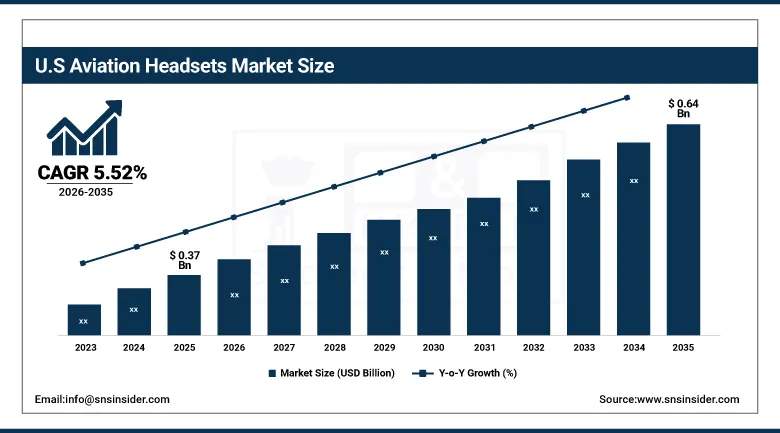
The United States Aviation Headsets Market was valued at USD 0.37 Billion in 2025 and is expected to reach USD 0.64 Billion by 2035, growing at a CAGR of 5.52% over the forecast period of 2026–2035.
The US Aviation Headsets Market is the largest regional market in the world, owing to a strong aviation ecosystem, large number of commercial and private aircraft operators in the US, well-developed pilot training infrastructure, and presence of advanced cockpit communication technologies. Further anticipated growth is expected through the adoption of Active Noise Reduction (ANR), Bluetooth-enabled, wireless, and digitally integrated aviation headsets by major manufacturers in commercial airlines, military aviation, flight schools, and general aviation operations.
According to aviation safety and pilot communication standards, growing emphasis on reducing cockpit noise, improving communication clarity, and enhancing pilot comfort is accelerating the adoption of technologically advanced aviation headsets across aviation facilities. Market growth in the country is also gaining momentum due to rising aircraft deliveries, expanding private aviation activity, and increasing investments in aviation modernization and pilot training programs.
Jan 2026: Supporting growth in the U.S. Aviation Headsets Market is rising demand for advanced aviation communication equipment, driven by high-performance aviation headsets as highlighted by Federal Aviation Administration (FAA) and U.S. aviation industry reports revealing pilot training activity, airline pilot hiring, and fleet modernization trends across commercial and general aviation segments.
Aviation Headsets Market Segment Highlights
-
By Product Type, Fixed-Wing Aviation Headsets dominated the Aviation Headsets Market with 62.5% share in 2025; Unmanned Aircraft System (UAS) Aviation Headsets fastest growing (CAGR).
-
By Application, Commercial Aviation dominated the Aviation Headsets Market with 47.80% share in 2025; Recreational Activities fastest growing (CAGR).
-
By Deployment, Aftermarket Aviation Headsets dominated the Aviation Headsets Market with 49.20% share in 2025 and it is also fastest growing (CAGR).
-
By Noise Cancellation Mode, Active Noise Reduction (ANR) dominated the Aviation Headsets Market with 56.80% share in 2025 and it is also fastest growing (CAGR).
-
By End User, Commercial Airlines dominated the Aviation Headsets Market with 42.10% share in 2025; Private Aviation fastest growing (CAGR).
Aviation Headsets Market Segment Analysis
By Product Type, Fixed-Wing Aviation Headsets segment dominates the Aviation Headsets Market, Unmanned Aircraft System (UAS) Aviation Headsets segment expected to grow fastest.
Fixed-Wing Aviation Headsets segment dominated the Aviation Headsets Market with the highest revenue share of about 62.5% in 2025 due to the extensive global commercial airline fleet, growing pilot training activities, and high usage across general aviation aircraft. Strong adoption of advanced communication systems and ANR technologies in fixed-wing aircraft further supported segment dominance globally.
Unmanned Aircraft System (UAS) Aviation Headsets segment is expected to grow at the highest CAGR in the upcoming period owing to increase deployment of military drones, expansion of commercial drone operations and escalating demand for remote pilot communication systems during 2026–2035. Increasing investments in autonomous aviation technologies and defence modernization programmes are further driving the growth of the demand for dedicated UAS-compatible headsets.
By Application, Commercial Aviation segment dominates the Aviation Headsets Market, Recreational Activities segment expected to grow fastest.
Commercial Aviation segment dominated the Aviation Headsets Market with the highest revenue share of about 47.80% in 2025 due to the large global commercial aircraft fleet, rising air passenger traffic, increasing pilot communication requirements, and strong adoption of advanced cockpit audio systems by airlines focused on operational safety, communication clarity, and pilot comfort during long-duration flights.
Recreational Activities segment is expected to grow at the fastest CAGR from 2026–2035 due to increasing participation in private flying, adventure aviation, and leisure pilot training activities. Rising affordability of aviation training programs, expanding aero clubs, and growing demand for lightweight wireless headsets with enhanced comfort and connectivity features are further accelerating segment growth globally.
By Deployment, Aftermarket Aviation Headsets segment dominates the Aviation Headsets Market and are also expected to grow fastest.
Aftermarket Aviation Headsets segment dominates the Aviation Headsets Market and is also expected to grow at the fastest rate during the forecast period. The segment accounted for the highest revenue share of about 49.20% in 2025 due to strong replacement demand and increasing preference for advanced cockpit communication solutions among aviation operators globally.
Growth of the segment is supported by rising adoption of ANR-enabled, Bluetooth-integrated, lightweight, and wireless aviation headsets across commercial aviation, private aviation, and flight schools. Increasing pilot focus on communication clarity, comfort, and upgraded audio technologies is accelerating aftermarket purchases across both developed and emerging aviation markets worldwide.
By Noise Cancellation Mode, Active Noise Reduction (ANR) Aviation Headsets segment dominates the Aviation Headsets Market and are also expected to grow fastest.
Active Noise Reduction (ANR) Aviation Headsets segment dominated the Aviation Headsets Market with the highest revenue share of about 62.50% in 2025 due to increasing demand for superior cockpit communication, pilot comfort, and operational safety across commercial, military, and private aviation sectors. Growing preference for premium aviation communication technologies continues to support strong segment adoption globally.
Active Noise Reduction (ANR) Aviation Headsets segment is expected to grow at the fastest CAGR from 2026–2035 driven by rising adoption of wireless connectivity, Bluetooth-enabled systems, digital audio processing technologies, and increasing pilot training activities. Expanding demand for lightweight, high-performance, and noise-reduction aviation communication systems is further accelerating market growth worldwide.
By End User, Commercial Airlines segment dominates the Aviation Headsets Market, Private Aviation segment expected to grow fastest.
Commercial Airlines segment dominated the Aviation Headsets Market with the highest revenue share of about 42.10% in 2025 due to the large global commercial aircraft fleet, high pilot communication requirements, and strong adoption of advanced ANR headsets for enhanced cockpit safety, communication clarity, passenger operations, and long-duration flight comfort across major airline operators worldwide.
Private Aviation segment is expected to grow at the fastest CAGR from 2026–2035 owing to rising private jet ownership, increasing recreational flying activities, expanding pilot training programs, and growing demand for premium wireless and Bluetooth-enabled aviation headsets offering superior comfort, lightweight design, advanced noise reduction, and enhanced in-flight communication experiences.
Aviation Headsets Market Regional Analysis
|
Region |
Major Country |
Share (%) |
|---|---|---|
|
North America |
United States |
38.40% |
|
Europe |
Germany |
22.30% |
|
Asia Pacific |
China |
24.60% |
|
Middle East & Africa |
UAE |
7.60% |
|
Latin America |
Brazil |
7.10% |
North America Aviation Headsets Market Insights
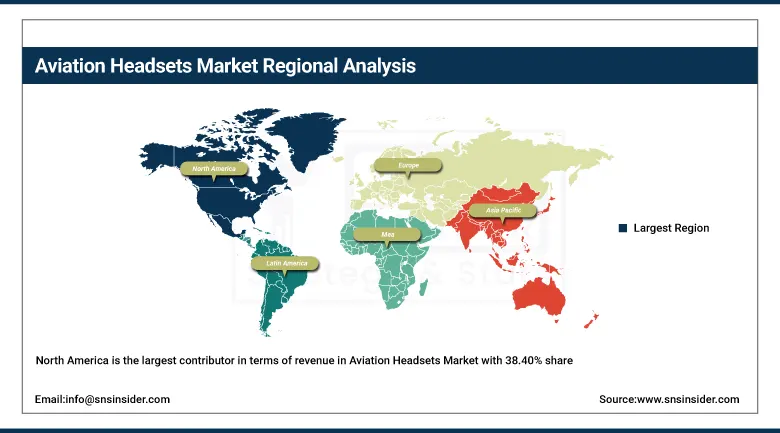
North America is the largest contributor in terms of revenue in Aviation Headsets Market with 38.40% share due to highly developed aviation ecosystem, early adoption of Active Noise Reduction (ANR) systems and increasing utilization of Bluetooth-enabled aviation headsets supporting wireless cockpit communication. Strong demand across commercial airlines, military aviation, flight schools and general aviation operations are driving growth in the region. The US is the largest country-level market in North America, owing to widespread acceptance of premium aviation headset technologies from leading domestic providers.
The Federal Aviation Administration (FAA) supports aviation safety and cockpit communication standards, driving adoption of advanced aviation headsets across commercial and private aviation sectors.
The Aircraft Owners and Pilots Association (AOPA) highlights the importance of clear cockpit communication and noise reduction technologies, increasing demand for advanced aviation headsets across general aviation and flight training operations.
Get Customized Report as per Your Business Requirement - Enquiry Now
Asia Pacific Aviation Headsets Market Insights
The Asia Pacific is projected to be the fastest-growing region in the forecast period at a CAGR of 8.93% from 2026–2035 owing to swift expansion of commercial aviation fleets, intensifying pilot training programs and killing air passenger traffic together with high government investments in aviation infrastructure development potential over the coming years. Countries such as China, India, Japan, South Korea and Australia hold some of the highest regional contribution rates in our analysis China representing 53% of revenues in APAC. Demand for aviation headset is expected to increase in the region due shortage of airline operations, private aviation activity and increasing defense aviation modernization programs.
Supporting this growth, the Civil Aviation Administration of China (CAAC) continues to support aviation infrastructure modernization and advanced aviation communication technologies aimed at improving operational efficiency and flight safety. Japan’s aviation authorities have also strengthened pilot training and aviation safety initiatives, encouraging broader adoption of advanced cockpit communication technologies across commercial and general aviation sectors.
Europe Aviation Headsets Market Insights
Europe held the third largest revenue contributing region to the global Aviation Headsets Market, which accounted for 22.30% in 2025 primarily due to strong aerospace industry in Europe and increasing adoption of advanced cockpit communication systems at high rate coupled with demand for lightweight, high performance aviation headsets in this region. National implementations performed by Germany, the United Kingdom, France, Italy and Spain are the prime contributors, in addition to public demand for ANR enabled & wireless aviation headsets throughout all verticals related to commercial, military and helicopter aviation..
Supporting this position, the European Union Aviation Safety Agency (EASA) continues strengthening aviation communication and operational safety standards, supporting adoption of advanced aviation communication equipment across airlines and pilot training institutions. In addition, ongoing aerospace modernization initiatives and investments in aviation technologies are encouraging deployment of advanced cockpit communication systems throughout the region.
Middle East & Africa and Latin America Aviation Headsets Market Insights
The Middle East & Africa (MEA) region is witnessing steady growth in the Aviation Headsets Market, supported by expanding airline fleets, rising defense aviation investments, improving aviation infrastructure, and increasing demand for advanced pilot communication systems. Countries such as the UAE, Saudi Arabia, and South Africa are leading adoption due to government initiatives focused on aviation modernization and aerospace sector development. The UAE is emerging as a regional hub for premium aviation operations with increasing deployment of advanced cockpit communication technologies across commercial and private aviation fleets. Saudi Arabia’s Vision 2030 further supports aviation expansion, pilot training investments, and procurement of technologically advanced aviation equipment.
Latin America will continue to expand at a steady pace, as Brazil is still the dominant voice in regional demand. Commercial aviation networks are also expanding, recreational flying activities are increasing across the region and access to pilot training programs is improving which in turn supports growth in adoption of aviation headsets. These advances are further supported by modernization of regulatory requirements and increased investments in infrastructure for aviation safety.
Aviation Headsets Market Growth Drivers:
-
Growing adoption of active noise reduction and wireless cockpit communication technologies is enhancing pilot comfort and operational performance across aviation sectors.
The Active Noise Reduction (ANR) aviation headsets is another major growth factor as they help to reduce cockpit noise, reducing pilot fatigue and increasing voice communication accuracy in prolonged flights compared to passive noise cancelling helmets. Light, Bluetooth-enabled, digitally connected headsets are being used by aviation operators for quality audio and easier integration to cockpit systems and smart devices. Battery efficiency technology upgrades, ergonomic design of the headset and wireless communication functions are also improving user experience and operational reliability. Growing emphasis on pilot safety, operational efficacy and in-cockpit comfort is creating positive outlook for global aviation headset solutions which is further triggering replacement demand of advanced premium aviation headsets.
2026: The International Air Transport Association (IATA) reported continued expansion in global aviation activity and pilot demand, supporting increased procurement of advanced cockpit communication equipment including ANR-enabled aviation headsets across airlines, pilot training academies, and private aviation operators.
Aviation Headsets Market Restraints:
-
High cost of premium active noise reduction aviation headsets limits adoption among small flight schools and budget-conscious general aviation users.
The high pricing of technologically advanced aviation headsets continues being a barrier for market growth, particularly among small aviation operators, recreational pilots and flight instruction institutes with budget constraints. High-Performance ANR-enabled and Wireless Aviation Headsets most essentially include audio components made of digital signal processors, high performance microphones, all timeliness composite materials, and wireless Bluetooth communication equipment, which contribute to increased product costs. For affordability reasons, many users in developing regions are still reliant on traditional lower-cost passive noise reduction headsets. In addition, the high ownership cost due to constant need for servicing and replacement of batteries makes adoption of advanced technologies in aviation headsets difficult especially in low-cost aviation segments.
Aviation Headsets Market Opportunities:
-
Increasing adoption of unmanned aircraft systems and next-generation military aviation platforms is expanding opportunities for specialized communication headsets.
Increasing investments in unmanned aircraft systems (UAS), Military aviation modernization, and advance defense communication technologies are pushing the global aviation headset manufacturers to explore huge opportunities. Defense organizations are now demanding for ruggedized, secure yet mission critical Communication Headsets and hear able that can perform in highest noisy as well as complicated operational environments. The rise in deployment of drones, surveillance aircraft, and new generation combat aviation systems is adding to the growing demand for integrated aviation communication solutions, with enhanced situational awareness. Moreover, the demand for electronic aviation headsets is escalating for use in military, helicopter, and unmanned aviation across global defense sectors due to developments of digital cockpit systems coupled with AI-enabled communication technologies..
In July 2026: Growing investments in unmanned aerial systems (UAS), advanced military aviation platforms, and secure airborne communication technologies formed driving demand for ruggedized aviation headsets offering enhanced situational awareness coupled with mission critical communication capabilities.
Recent Developments:
-
2026: Light speed Aviation introduced the Zulu 4 aviation headset featuring dual Bluetooth connectivity, AI-enhanced audio, improved comfort for glasses users, and upgraded cockpit communication performance, highlighting growing demand for wireless connectivity and advanced ANR technologies.
-
2025: David Clark upgraded its DC ONE-XH helicopter aviation headset with Bluetooth connectivity and enhanced electronic noise cancellation to improve rotorcraft communication efficiency and operational flexibility across military and helicopter aviation applications.
-
2024: Bose strengthened its aviation headset market presence through wider adoption of the Bose A30 Aviation Headset. Growing demand for lightweight design, advanced ANR, Bluetooth connectivity, and improved pilot comfort reflected the shift toward premium digitally integrated cockpit communication systems.
Aviation Headsets Market Key Players
Some of the Aviation Headsets Market Companies
-
Bose Corporation
-
David Clark Company
-
Lightspeed Aviation Inc.
-
Sennheiser Electronic GmbH & Co. KG
-
Telex Communications Inc.
-
Faro Aviation LLC
-
Flightcom Corporation
-
Pilot Communications USA
-
Sigtronics Corporation
-
Clarity Aloft Technologies Inc.
-
AKG Acoustics GmbH
-
Sonova Communications AG
-
MicroAvionics UK Ltd.
-
KORE Headset LLC
-
Rugged Air Headsets
-
ASA (Aviation Supplies & Academics)
-
Plantronics Inc. (Poly)
-
Bosch Sicherheitssysteme GmbH
-
3M Company
-
Avcomm International
Aviation Headsets Market Report Scope:
| Report Attributes | Details |
|---|---|
| Market Size in 2025 | USD 1.10 Billion |
| Market Size by 2035 | USD 2.06 Billion |
| CAGR | CAGR of 6.51% From 2026 to 2035 |
| Base Year | 2025 |
| Forecast Period | 2026-2035 |
| Historical Data | 2022-2024 |
| Report Scope & Coverage | Market Size, Segments Analysis, Competitive Landscape, Regional Analysis, DROC & SWOT Analysis, Forecast Outlook |
| Key Segments | • By Product Type (Fixed-Wing Aviation Headsets, Helicopter Aviation Headsets, Unmanned Aircraft System (UAS) Aviation Headsets) • By Application (Commercial Aviation, Military Aviation, Flight School, Helicopter Operations, Recreational Activities) • By Deployment (OEM-Installed Aviation Headsets, Aftermarket Aviation Headsets, Rental Aviation Headsets) • By Noise Cancellation Mode (Active Noise Reduction (ANR) Aviation Headsets, Passive Noise Reduction (PNR) Aviation Headsets) • By End-User (Commercial Airlines, Private Aviation, Military, General Aviation) |
| Regional Analysis/Coverage | North America (US, Canada), Europe (Germany, UK, France, Italy, Spain, Russia, Poland, Rest of Europe), Asia Pacific (China, India, Japan, South Korea, Australia, ASEAN Countries, Rest of Asia Pacific), Middle East & Africa (UAE, Saudi Arabia, Qatar, South Africa, Rest of Middle East & Africa), Latin America (Brazil, Argentina, Mexico, Colombia, Rest of Latin America). |
| Company Profiles | Bose Corporation, David Clark Company, Lightspeed Aviation Inc., Sennheiser Electronic GmbH & Co. KG, Telex Communications Inc., Faro Aviation LLC, Flightcom Corporation, Pilot Communications USA, Sigtronics Corporation, Clarity Aloft Technologies Inc., AKG Acoustics GmbH, Sonova Communications AG, MicroAvionics UK Ltd., KORE Headset LLC, Rugged Air Headsets, Aviation Supplies & Academics Inc. (ASA), Plantronics Inc. (Poly), Bosch Sicherheitssysteme GmbH, 3M Company, Avcomm International. |
Frequently Asked Questions
North America dominated the Aviation Headsets Market in 2025.
The Fixed-Wing Aviation Headsets segment dominated the Aviation Headsets Market in 2025.
Rising adoption of Active Noise Reduction (ANR) technologies, increasing pilot training activities, expanding commercial aviation fleets, and growing demand for advanced cockpit communication systems are major growth drivers of the market.
The Aviation Headsets Market was valued at USD 1.10 Billion in 2025.
The Aviation Headsets Market is expected to grow at a CAGR of 6.51% from 2026 to 2035.
