
Brain Ischemia Market Report Scope & Overview:
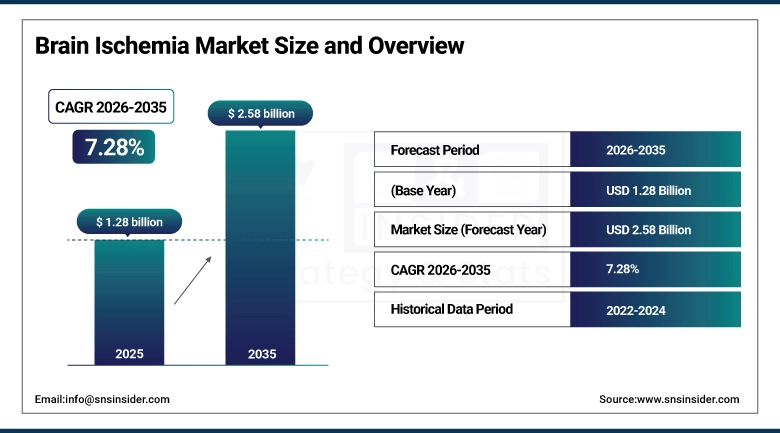
The Brain Ischemia Market Size is valued at USD 1.28 Billion in 2025 and is projected to reach USD 2.58 Billion by 2035, growing at a CAGR of 7.28% during the forecast period 2026–2035.
The Brain Ischemia Market analysis report provides an overview of diagnosis and treatment options for diseases resulting from reduced brain perfusion, such as ischemic stroke and transient ischemic attack. The brain ischemia market is projected to grow from 2026 to 2035 due to an increased incidence of cardiovascular diseases, an aging population, and progress in imaging and therapy technologies.
The Brain Ischemia Market served over 18 million patients in 2025, driven by rising stroke incidence, aging populations, and increased adoption of advanced diagnostics and treatments.
To Get more information on Brain Ischemia Market - Request Free Sample Report
Brain Ischemia Market Trends:
-
Rising prevalence of ischemic stroke and transient ischemic attacks is driving demand for early diagnosis and rapid intervention therapies.
-
Increasing aging population and lifestyle-related risk factors (hypertension, diabetes, obesity) are contributing to higher incidence rates.
-
Growing adoption of advanced imaging technologies such as MRI and CT angiography is improving early detection and treatment planning.
-
Expanding use of thrombolytics, thrombectomy, and minimally invasive procedures is enhancing treatment outcomes and recovery rates.
-
Rising focus on neuroprotective therapies and rehabilitation care is supporting long-term patient management and quality of life.
-
Increasing healthcare investments and development of stroke centers and emergency care infrastructure are improving access to timely treatment.
U.S. Brain Ischemia Market Insights:
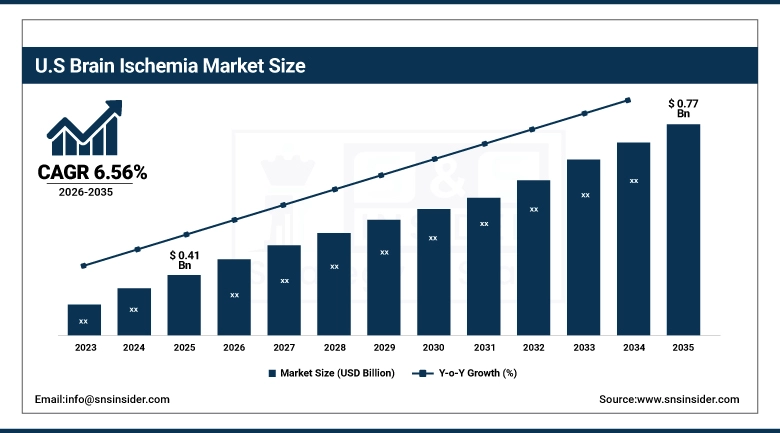
The U.S. Brain Ischemia Market is projected to grow from USD 0.41 Billion in 2025 to USD 0.77 Billion by 2035, at a CAGR of 6.56%. The growth is driven by the increasing incidence of stroke, an aging population, an increase in the adoption of advanced diagnostic imaging, awareness of early intervention technologies and growing access to specialized stroke care and treatment facilities.
Brain Ischemia Market Growth Drivers:
-
Rising incidence of stroke, aging populations, and lifestyle diseases is driving demand for brain ischemia diagnosis and treatment.
The rising incidence rate of stroke, the aging population, and lifestyle disorders are the main factors driving the growth in the brain ischemia market. The rising prevalence rate of hypertension, diabetes, and cardiovascular diseases has increased the risk of brain ischemia. Increased awareness about the early signs and symptoms and the importance of seeking timely treatment for brain ischemia has also increased the growth rate in the brain ischemia market. Improved imaging and treatment options have also helped in the management and treatment of brain ischemia.
Over 60% of ischemic stroke cases in 2025 occurred in individuals aged above 60, highlighting the strong link between aging populations and rising brain ischemia burden.
Brain Ischemia Market Restraints:
-
High treatment costs, limited acute care access, and delayed diagnosis restrict effective brain ischemia management and adoption.
The high cost of treatment, lack of access to acute facilities for brain ischemia patients, and delayed early diagnosis are some factors impeding the Brain Ischemia Market. Patients are often faced with challenges in accessing acute facilities for brain ischemia patients, especially those living in low- and middle-income areas. Moreover, there is a sense of urgency required for effective management of brain ischemia patients. This complexity in management often proves to be a challenge in areas where such facilities are scarce.
Brain Ischemia Market Opportunities:
-
Expansion of AI-enabled diagnostics and stroke centers enables faster detection, personalized care, and improved treatment outcomes.
The expansion of AI-based diagnostics and stroke centers provides a robust opportunity for the Brain Ischemia Market. Advanced imaging technologies with the aid of artificial intelligence have the potential to speed up and accurately detect ischemic events, thus facilitating better decision-making. Personalized treatment planning with the aid of data-driven information is likely to ensure better patient outcomes, thus encouraging the use of advanced treatments and supporting healthcare providers to provide efficient and effective ischemia treatments.
Around 35% of stroke diagnoses in 2025 benefited from AI-assisted imaging, improving early detection and supporting faster clinical intervention in brain ischemia cases.
Brain Ischemia Market Segmentation Analysis:
-
By Type, Focal Cerebral Ischemia held the largest market share of 68.45% in 2025, while Global Cerebral Ischemia is expected to grow at the fastest CAGR of 8.12% during 2026–2035.
-
By Cause / Etiology, Thrombotic held the largest share of 42.37% in 2025, whereas Embolic is projected to grow at the fastest CAGR of 7.96% during the forecast period.
-
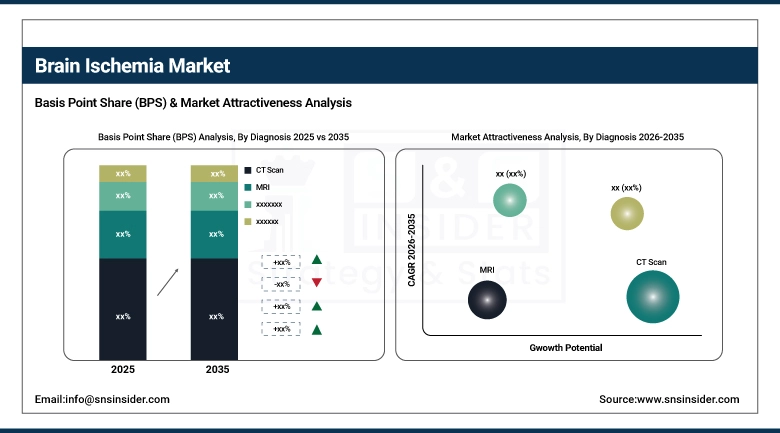
By Diagnosis, CT Scan accounted for the highest market share of 31.58% in 2025, while MRI is anticipated to record the fastest CAGR of 8.45% through 2026–2035.
-
By Treatment, Antiplatelets dominated with a 26.74% market share in 2025, whereas Thrombectomy is expected to grow at the fastest CAGR of 9.18% during the forecast period.
-
By End User, Hospitals held the largest share of 54.62% in 2025, while Ambulatory Surgical Centers are projected to grow at the fastest CAGR of 8.67% through 2035.
-
By Age Group, Geriatric segment dominated with a 61.39% share in 2025 and is also expected to grow steadily at a CAGR of 7.84% during 2026–2035.
By Type, Focal Cerebral Ischemia Dominated While Global Cerebral Ischemia Fastest Growing:
Focal Cerebral Ischemia dominated the market due to the relative high prevalence of ischemic stroke and TIA, with existing established hospital-based treatment pathways. More than 12 million cases were recorded in 2025. To top that, its robust clinical recognition and standardized diagnosis protocols helps it maintain a leadership position.
Global Cerebral Ischemia is the fastest growing segment due to increasing number of cardiac arrests, trauma and hypoperfusion cases. Enhanced emergency response systems, and increasing awareness have been improving its detection and management. Over 3 million cases were reported in 2025, and increasing intensive care capacity supported the efforts.
By Cause / Etiology, Thrombotic Dominated While Embolic Fastest Growing:
Thrombotic segment dominated the market owing to its strong corollary with atherosclerosis, hypertension and lifestyle related disorders. It is still the most frequent cause of ischemic events around the world. The aging populations supported over 9 million thrombotic cases in 2025.
Embolic is the fastest growing segment due to rising cases of atrial fibrillation and cardiac disorders, that cause the formation and migration of clots. Cardiac monitoring, imaging and anticoagulant therapies are also advancing in ways that improve detection. In 2025, there were around 4 million embolic cases diagnosed as clinical awareness increased.
By Diagnosis, CT Scan Dominated While MRI Fastest Growing:
CT Scan dominated the market as the primary first-line diagnostic examination among patients with stroke who were seen in emergency settings due to its rapid availability and ability to quickly exclude hemorrhagic stroke. More than 20 million CT scans were performed in 2025 for suspected ischemia cases.
MRI is the fastest growing segment due to its higher sensitivity for early ischemic changes and smaller lesions. In 2025 there were 14 million MRI scans performed, aided by increasing demand for accurate and early diagnosis.
By Treatment, Antiplatelets Dominated While Thrombectomy Fastest Growing:
Antiplatelet segment dominated the market owing to their high applicability in both acute management and long-term prevention of recurrent ischemic events. Drugs such as aspirin and clopidogrel are commonly prescribed. In 2025, more than 25 million patients got antiplatelet therapy due to low cost and proven clinical effectiveness.
Thrombectomy is the fastest growing segment as mechanical clot removal procedures expand in acute ischemic stroke management. Expansion of stroke centers, inclusion in treatment guidelines is speeding up adoption. In 2025, over 1.5 million thrombectomy procedures were performed in this population, demonstrating increasing dependence on interventional therapies.
By End User, Hospitals Dominated While Ambulatory Surgical Centers Fastest Growing:
Hospitals dominated the market as the main locations for emergency diagnosis, acute treatment and intensive care management. Hospitals, which have sophisticated imaging systems and specialists in neurology, treat most ischemia cases. In 2025, brain ischemia was associated with more than 30 million hospital visits.
Ambulatory Surgical Centers are the fastest growing segment owing to the rising adoption of minimally invasive procedures and the outpatient care models. Growth is being fuelled by cost efficiency and enhanced procedural technology. In 2025, these centers managed 6 million procedures, underscoring the shift toward decentralized care delivery.
By Age Group, Geriatric Dominated While Also Fastest Growing:
Geriatric segment dominated the market as they are considered to be more susceptible to ischemic related conditions especially given age-related vascular degeneration and comorbidities. Most strokes and IS cases are in older populations. As of 2025, there were over 18 million cases reported in persons above the age of 60 years.
It is also the fastest growing segment owing to increasing life expectancy, demographic aging and rising prevalence of hypertension and cardiovascular diseases. With over 10 million new cases arising annually in this demographic, the growing geriatric population is continuously driving demand for diagnosis and rehabilitation services.
Brain Ischemia Market Regional Analysis:
North America Brain Ischemia Market Insights:
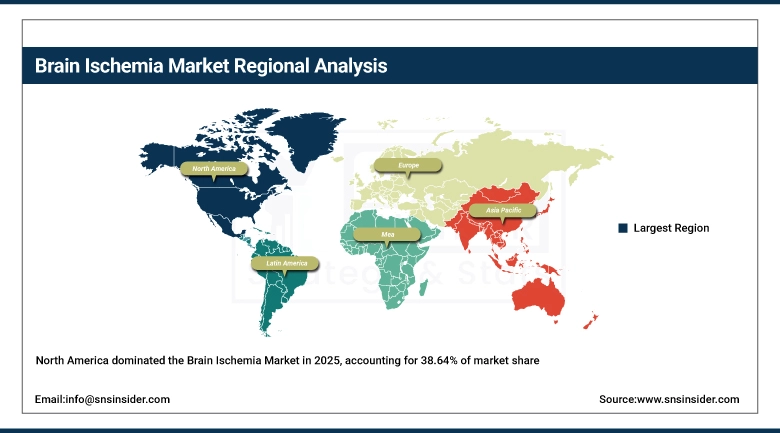
The North America brain ischemia market, which holds a 38.64% share, is influenced by the high incidence rate of brain ischemias, favorable healthcare infrastructure, and advanced emergency medical services. This market also has access to MRI and CT scans, well-established stroke centers, and access to qualified neurologists. In addition, brain ischemias have high awareness levels, high treatment-seeking behavior, and favorable insurance cover. Furthermore, investments in AI-based diagnosis, quick intervention treatments, and rehabilitation services are also contributing positively to the growth of the brain ischemia market in the United States and Canada.
Get Customized Report as per Your Business Requirement - Enquiry Now
U.S. Brain Ischemia Market Insights:
The U.S. Brain Ischemia market is influenced by the high rate of stroke cases, a robust healthcare infrastructure, and the prevalence of advanced diagnostic imaging techniques such as CT and MRI. Emphasis on timely treatment, the expansion of stroke centers, and the support of insurance cover and interventional treatments and neuro-rehabilitation are fueling the U.S. Brain Ischemia market.
Asia-Pacific Brain Ischemia Market Insights:
The Asia-Pacific Brain Ischemia Market is projected to grow at a CAGR of 9.03% during 2026–2035. Factors such as the rising incidence of stroke, increased prevalence of hypertension, diabetes, cardiovascular diseases, the aging population, and the growing demand in countries such as China, India, Japan, and Southeast Asia are expected to drive the demand for brain ischemia diagnosis and treatment. Factors which is growing healthcare infrastructure, increased availability of advanced imaging techniques, and the rising number of stroke care centers are expected to drive the demand for brain ischemia diagnosis and treatment in the Asia-Pacific region.
China Brain Ischemia Market Insights:
The China Brain Ischemia Market is driven by the rising incidence of stroke, the rising age factor, and the rising incidence of hypertension and cardiovascular diseases. The rising healthcare infrastructure in the country, government initiatives in stroke care, easy access to advanced imaging techniques, and the rapid growth of specialized hospitals and indigenous medical technology are boosting the China Brain Ischemia Market.
Europe Brain Ischemia Market Insights:
The Europe Brain Ischemia Market is fueled by robust healthcare infrastructure, awareness of stroke symptoms, and high adoption rates for diagnostic imaging modalities in countries such as Germany, France, and the UK. Increasing prevalence rates for cardiovascular diseases, a growing geriatric population, and a rise in ischemic stroke cases are contributing to market demand. Government initiatives for early diagnosis, robust stroke management infrastructure, and reimbursement for treatments are additional market drivers. Moreover, investments in neurology services, rehabilitation facilities, and minimally invasive procedures are contributing to market growth.
Germany Brain Ischemia Market Insights:
Germany is an important market for the European Brain Ischemia industry due to the high standards of health care and the high standards of neurology. Stroke cases are increasing, and with the growing population and risk factors, demand is increasing. MRI and CT scans are very popular, and the country has good centers and government-backed health care access.
Latin America Brain Ischemia Market Insights:
The Latin America brain ischemia market is growing as the availability of healthcare services is increasing, and the awareness about the symptoms of brain ischemia is rising. The incidence of cardiovascular diseases is on the rise in Brazil, Mexico, and Argentina, thereby boosting the demand for brain ischemia diagnosis through imaging techniques and emergency services.
Middle East and Africa Brain Ischemia Market Insights:
The Middle East and Africa brain ischemia market is growing with the development in the healthcare infrastructure and the awareness about the risks associated with stroke. The prevalence of hypertension, diabetes, and the aging population are driving the brain ischemia market in the Middle East and Africa, specifically in the countries such as Saudi Arabia, the UAE, and South Africa.
Brain Ischemia Market Competitive Landscape:
Boehringer Ingelheim International GmbH is a leading pharmaceutical group in the world, focusing on cardiovascular and thrombolytic therapies used in brain ischemia treatment. Its dominance is largely attributable to alteplase (tPA), a commonly prescribed clot-dissolving agent for acute ischemic stroke. Its leadership has been cemented by early innovation in emergency stroke treatment, extensive clinical validation and robust hospital adoption. Through ongoing investment in the company’s R&D, partnerships with relevant healthcare providers, and a broad presence in both developed and emerging markets guarantee constant need generation for the population served by acute care.
-
In January 2025, Boehringer Ingelheim International GmbH advanced thrombolytic stroke therapies with improved formulations, focusing on faster clot dissolution and better emergency care outcomes, strengthening its hospital-based ischemic stroke treatment portfolio and clinical adoption.
Pfizer Inc. is an established leader in the pharmaceutical industry, with product lines spanning a range of therapeutics relevant to brain ischemia management, including antiplatelet and anticoagulant therapies. Research and Development, Clinical Trials and Distribution network supporting its dominance. Pfizer’s products have extensive use for stroke prevention/secondary and make the most of MD trust and national regulatory approvals. Continuous investment in innovation coupled with partnerships and scalable manufacturing allows the company to remain strongly competitive and poised for continued visibility across both preventive and therapeutic segments of ischemic disease treatment.
-
In March 2025, Pfizer Inc. expanded its cardiovascular and neurology portfolio by optimizing antiplatelet and anticoagulant therapies, improving accessibility, adherence, and global distribution, reinforcing its presence in ischemia prevention and long-term patient management.
Novartis AG is the largest healthcare company and important cardiovascular / neurological therapeutics related to brain ischemia. Its dominant position is fueled by an extensive portfolio of both vascular and antiplatelet agents, which are used for the prevention and treatment of stroke. Novartis has a deep neurological pipeline from strong internal R&D and supported with partnerships and acquisitions. The company also has international reach, considerable brand credibility and extensive relationships with health care providers. The focus toward innovation, precision medicine and long-term disease management solutions further fortifies its competitive strategy and enduring pathway in the domain of brain ischemia therapeutic landscape.
-
In February 2026, Novartis AG advanced its cerebrovascular pipeline through neuroprotective and vascular therapy innovations, focusing on R&D collaborations, improved efficacy, and expanded access, strengthening its competitive position in brain ischemia treatment.
Brain Ischemia Market Key Players:
Some of the Brain Ischemia Market Companies are:
-
Boehringer Ingelheim International GmbH
-
Pfizer Inc.
-
Novartis AG
-
Johnson & Johnson
-
Bayer AG
-
AstraZeneca plc
-
Bristol-Myers Squibb Company
-
Amgen Inc.
-
Merck KGaA
-
Abbott
-
Boston Scientific Corporation
-
Medtronic
-
Edwards Lifesciences Corporation
-
Taxus Cardium Pharmaceuticals Group
-
Cook Medical
-
H. Lundbeck A/S
-
GE Healthcare
-
Siemens Healthineers
-
Penumbra Inc.
-
BD (Becton, Dickinson and Company)
| Report Attributes | Details |
|---|---|
| Market Size in 2025 | USD 1.28 Billion |
| Market Size by 2035 | USD 2.58 Billion |
| CAGR | CAGR of 7.28% From 2026 to 2035 |
| Base Year | 2025 |
| Forecast Period | 2026-2035 |
| Historical Data | 2022-2024 |
| Report Scope & Coverage | Market Size, Segments Analysis, Competitive Landscape, Regional Analysis, DROC & SWOT Analysis, Forecast Outlook |
| Key Segments | • By Type (Global Cerebral Ischemia, Focal Cerebral Ischemia) • By Cause / Etiology (Thrombotic, Embolic, Systemic Hypoperfusion, Lacunar) • By Diagnosis (CT Scan, MRI, CT/MR Angiography, Carotid Ultrasound, ECG, Blood Tests / Biomarkers) • By Treatment (Thrombolytics, Antiplatelets, Anticoagulants, Neuroprotective Drugs, Thrombectomy, Carotid Endarterectomy, Angioplasty & Stenting, Supportive & Rehabilitation Care) • By End User (Hospitals, Neurology Clinics, Ambulatory Surgical Centers, Rehabilitation Centers, Emergency Care Settings) • By Age Group (Pediatric, Adult, Geriatric) |
| Regional Analysis/Coverage | North America (US, Canada), Europe (Germany, UK, France, Italy, Spain, Russia, Poland, Rest of Europe), Asia Pacific (China, India, Japan, South Korea, Australia, ASEAN Countries, Rest of Asia Pacific), Middle East & Africa (UAE, Saudi Arabia, Qatar, South Africa, Rest of Middle East & Africa), Latin America (Brazil, Argentina, Mexico, Colombia, Rest of Latin America). |
| Company Profiles | Boehringer Ingelheim International GmbH, Pfizer Inc., Novartis AG, Johnson & Johnson, Bayer AG, AstraZeneca plc, Bristol-Myers Squibb Company, Amgen Inc., Merck KGaA, Abbott, Boston Scientific Corporation, Medtronic, Edwards Lifesciences Corporation, Taxus Cardium Pharmaceuticals Group, Cook Medical, H. Lundbeck A/S, GE Healthcare, Siemens Healthineers, Penumbra Inc., Becton, Dickinson and Company |

Frequently Asked Questions
The Brain Ischemia Market is projected to grow at a CAGR of 7.28% during the forecast period 2026–2035.
The market is valued at USD 1.28 Billion in 2025 and is expected to reach USD 2.58 Billion by 2035.
Growth is driven by rising stroke prevalence, aging populations, increasing cardiovascular diseases, and advancements in diagnostic imaging and interventional treatments.
By Type, Focal Cerebral Ischemia dominated with a 68.45% share, while Global Cerebral Ischemia is expected to grow at the fastest CAGR of 8.12% during 2026–2035.
North America led the market with a 38.64% share in 2025, while Asia-Pacific is the fastest-growing region, projected to expand at a CAGR of 9.03% during 2026–2035.
