
Myocardial Ischemia Market Report Scope & Overview:
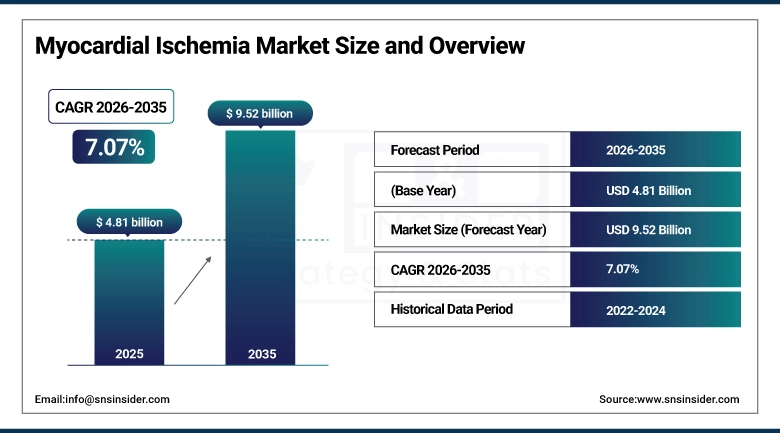
The Myocardial Ischemia Market is valued at USD 4.81 Billion in 2025 and is expected to reach USD 9.52 Billion by 2035, growing at a CAGR of 7.07% from 2026-2035.
The myocardial ischemia market is growing steadily due to the rising global burden of cardiovascular diseases driven by aging populations, sedentary lifestyles, obesity, smoking, and increasing diabetes prevalence. Greater awareness of early cardiac diagnosis, improved access to healthcare services, and advancements in diagnostic imaging and biomarker testing are supporting timely detection. Additionally, continuous innovation in drug therapies, interventional cardiology procedures, and minimally invasive treatments is improving patient outcomes. Expanding healthcare infrastructure in emerging economies and increased investment in cardiovascular research further contribute to sustained market growth worldwide.
86% of global cardiovascular care networks prioritized integrated myocardial ischemia solutions driven by escalating CVD prevalence, advances in diagnostics and minimally invasive therapies, and strengthened healthcare systems solidifying sustained worldwide market growth.
Market Size and Forecast:
-
Market Size in 2025: USD 4.81 Billion
-
Market Size by 2035: USD 9.52 Billion
-
CAGR: 7.07% from 2026 to 2035
-
Base Year: 2025
-
Forecast Period: 2026–2035
-
Historical Data: 2022–2024
To Get more information on Myocardial Ischemia Market - Request Free Sample Report
Myocardial Ischemia Market Trends:
-
Rising prevalence of cardiovascular diseases driving demand for advanced myocardial ischemia diagnostic and treatment solutions
-
Increasing adoption of minimally invasive interventional cardiology procedures for effective ischemia management and faster recovery
-
Growing use of high-sensitivity cardiac biomarkers for early detection and accurate risk stratification of ischemic conditions
-
Expansion of imaging technologies including cardiac MRI, CT angiography, and nuclear perfusion imaging for precise diagnosis
-
Rising investment in personalized and precision medicine approaches tailored to individual myocardial ischemia patient profiles
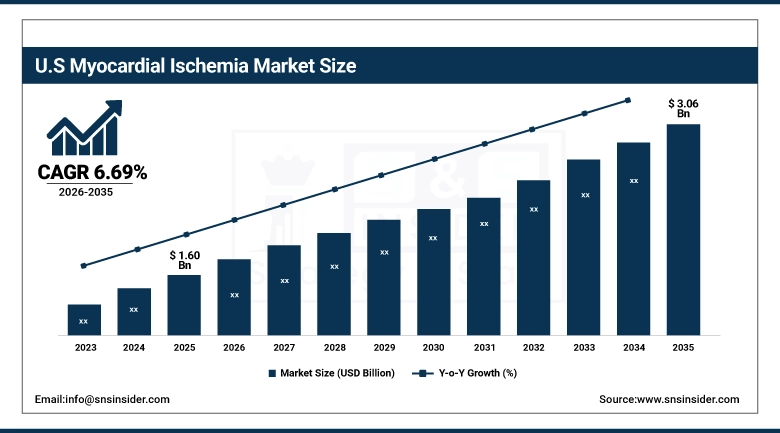
U.S. Myocardial Ischemia Market is valued at USD 1.60 billion in 2025 and is expected to reach USD 3.06 billion by 2035, growing at a CAGR of 6.69% from 2026-2035.
The U.S. myocardial ischemia market is driven by the high prevalence of heart disease, an aging population, and rising lifestyle-related risk factors such as obesity, diabetes, and hypertension. Strong healthcare infrastructure, widespread adoption of advanced diagnostics, ongoing drug innovations, and increased emphasis on early detection and preventive cardiology further support steady market expansion.
Myocardial Ischemia Market Growth Drivers:
-
Rising prevalence of cardiovascular diseases, sedentary lifestyles, and aging populations is driving demand for advanced diagnostic and therapeutic solutions for myocardial ischemia globally
The global burden of cardiovascular diseases continues to rise due to increasing sedentary lifestyles, unhealthy diets, smoking habits, and growing elderly populations. Myocardial ischemia remains a major contributor to morbidity and mortality worldwide, prompting higher demand for early diagnosis and effective treatment solutions. Aging populations are particularly vulnerable to coronary artery diseases, increasing patient volumes across healthcare systems. As awareness of heart health improves, hospitals and clinics are investing in advanced diagnostic tools, medications, and interventional procedures, significantly driving growth in the myocardial ischemia market across developed and emerging regions.
83% of healthcare systems reported surging demand for advanced myocardial ischemia solutions fueled by the rising global burden of cardiovascular disease, sedentary lifestyles, and aging populations accelerating adoption of next-generation diagnostics and therapeutics worldwide.
-
Technological advancements in imaging, minimally invasive procedures, and targeted drug therapies are fueling market growth by enabling accurate diagnosis and effective treatment of myocardial ischemia
Continuous innovation in cardiac imaging technologies, such as CT angiography, MRI, and nuclear imaging, has improved early and accurate detection of myocardial ischemia. Advances in minimally invasive procedures, including angioplasty and stent placement, reduce recovery time and procedural risks. Additionally, the development of targeted pharmacological therapies enhances treatment outcomes and patient compliance. These technological improvements enable personalized treatment approaches, improve clinical efficiency, and reduce hospitalization rates. As healthcare providers increasingly adopt advanced technologies, demand for innovative myocardial ischemia diagnostics and therapies continues to grow steadily.
81% of cardiovascular centers adopted advanced imaging modalities, minimally invasive interventions, and targeted pharmacotherapies enhancing diagnostic precision and therapeutic outcomes in myocardial ischemia and driving global market growth.
Myocardial Ischemia Market Restraints:
-
High cost of diagnostic tools, surgical procedures, and advanced therapeutics limits accessibility, especially in low-income and developing regions
The diagnosis and treatment of myocardial ischemia often require expensive imaging equipment, specialized facilities, and advanced medical devices. Surgical interventions and long-term drug therapies further increase treatment costs, placing a significant financial burden on patients and healthcare systems. In low-income and developing regions, limited reimbursement coverage and high out-of-pocket expenses restrict patient access to advanced care. These cost barriers result in delayed diagnosis and suboptimal treatment outcomes. Consequently, high treatment expenses remain a key restraint, limiting widespread adoption of advanced myocardial ischemia solutions and slowing market growth.
75% of patients in low-income and developing regions lacked access to advanced myocardial ischemia care due to the high cost of diagnostics, revascularization procedures, and novel therapeutics widening treatment gaps and constraining market expansion.
-
Lack of awareness, delayed diagnosis, and insufficient healthcare infrastructure in certain regions restrict timely treatment, hampering market growth
In many developing and underserved regions, limited awareness of cardiovascular symptoms leads to delayed medical attention for myocardial ischemia. Inadequate access to diagnostic facilities, trained cardiologists, and advanced healthcare infrastructure further exacerbates the issue. Rural populations are particularly affected due to poor healthcare connectivity and limited screening programs. Delayed diagnosis often results in disease progression, increasing mortality rates and reducing treatment effectiveness. These challenges limit the demand for advanced myocardial ischemia diagnostics and therapies, restraining market expansion in regions where healthcare systems remain underdeveloped.
70% of myocardial ischemia cases in low-resource regions faced delayed or missed diagnoses due to low public awareness, fragmented healthcare infrastructure, and limited access to specialists significantly impeding timely intervention and market growth.
Myocardial Ischemia Market Opportunities:
-
Growing adoption of preventive healthcare, early screening programs, and government initiatives for cardiovascular health offers opportunities for market expansion
Preventive healthcare is gaining importance as governments and healthcare organizations focus on reducing the long-term burden of cardiovascular diseases. National screening programs, public awareness campaigns, and lifestyle intervention initiatives encourage early detection of myocardial ischemia. Increased emphasis on routine cardiac checkups and risk assessment tools supports early-stage diagnosis and timely treatment. Government funding and policy support further strengthen preventive cardiology efforts. These initiatives create significant opportunities for diagnostic manufacturers, pharmaceutical companies, and healthcare providers to expand their offerings and improve patient outcomes in the myocardial ischemia market.
78% of countries strengthened cardiovascular care through national screening programs and preventive health policies spurring early detection of myocardial ischemia and creating robust opportunities for diagnostic and therapeutic market expansion.
-
Emerging markets with rising healthcare expenditure, increasing hospital infrastructure, and rising patient awareness present significant growth potential for myocardial ischemia diagnostics and treatment solutions
Rapid economic growth in emerging markets is driving increased healthcare spending and improved access to medical services. Governments and private investors are expanding hospital infrastructure, cardiac care centers, and diagnostic capabilities. Rising awareness of heart disease and improved affordability of healthcare services encourage more patients to seek timely treatment. Additionally, growing urbanization and lifestyle changes increase cardiovascular risk, expanding the patient pool. These factors collectively create strong growth opportunities for myocardial ischemia diagnostics, medical devices, and therapeutics in emerging economies across Asia-Pacific, Latin America, and the Middle East.
76% of cardiovascular care providers in emerging markets expanded access to myocardial ischemia diagnostics and therapies driven by rising healthcare spending, hospital infrastructure development, and growing patient awareness unlocking substantial growth for innovative cardiac solutions.
Myocardial Ischemia Market Segment Highlights:
-
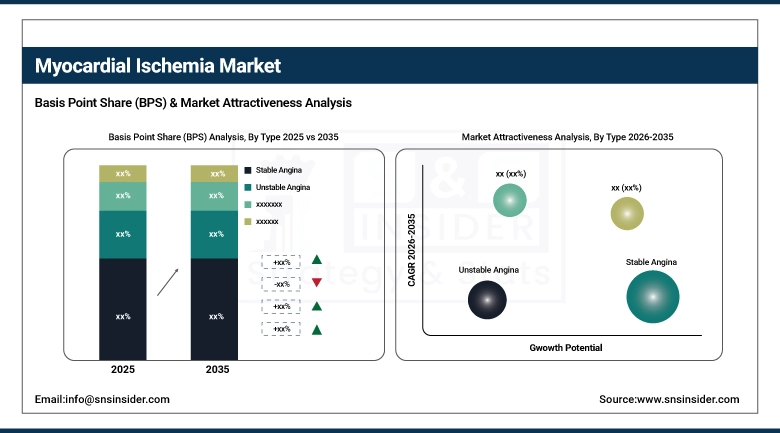
By Type: Stable Angina led with 38.7% share, while Silent Ischemia is the fastest-growing segment with CAGR of 9.8%.
-
By Diagnostic Method: Electrocardiogram (ECG) led with 36.5% share, while CT & MRI Imaging is the fastest-growing segment with CAGR of 10.2%.
-
By Treatment Type: Medication Therapy led with 40.1% share, while Percutaneous Coronary Intervention (PCI) is the fastest-growing segment with CAGR of 10.5%.
-
By End-User: Hospitals & Clinics led with 42.3% share, while Ambulatory Surgical Centers are the fastest-growing segment with CAGR of 9.7%.
Myocardial Ischemia Market Segment Analysis:
By Type: Stable Angina led, while Silent Ischemia is the fastest-growing segment
Stable Angina dominates the myocardial ischemia market as it is the most commonly diagnosed type, characterized by predictable chest pain during exertion. Its high prevalence, early detection, and established treatment pathways contribute to its dominant position. Patients frequently undergo routine monitoring and therapy, which sustains demand for diagnostic and treatment services. Clinical familiarity and established guideline-based management further strengthen its market share, making Stable Angina the primary focus of hospitals and cardiologists globally.
Silent Ischemia is the fastest-growing segment due to increasing awareness of asymptomatic cardiac events and improved screening technologies. Patients often remain undiagnosed until advanced stages, prompting adoption of advanced imaging and monitoring tools. Rising prevalence of diabetes, hypertension, and lifestyle-related cardiovascular risk factors in emerging markets drives growth. Healthcare providers and diagnostic centers are investing in non-invasive detection methods, accelerating market expansion for Silent Ischemia management.
By Diagnostic Method: Electrocardiogram (ECG) led, while CT & MRI Imaging is the fastest-growing segment
Electrocardiogram (ECG) dominates due to its simplicity, affordability, and widespread use for initial myocardial ischemia detection. It provides rapid results, is non-invasive, and is accessible across hospitals and clinics globally. ECG remains the first-line diagnostic tool in both routine checkups and acute care, contributing to its dominant market position. Its reliability, ease of use, and integration with standard treatment protocols ensure high adoption among clinicians and healthcare facilities worldwide.
CT & MRI Imaging is the fastest-growing diagnostic segment due to their ability to detect ischemic areas with high precision and anatomical detail. Technological advancements, increasing adoption of non-invasive imaging, and demand for accurate early-stage detection are driving growth. Rising investment in healthcare infrastructure and patient preference for advanced diagnostic solutions in Asia and other emerging regions accelerate this segment. These modalities enable detailed coronary visualization, risk stratification, and personalized treatment planning.
By Treatment Type: Medication Therapy led, while Percutaneous Coronary Intervention (PCI) is the fastest-growing segment
Medication Therapy dominates as the first-line treatment for myocardial ischemia, with widespread use of antiplatelets, beta-blockers, nitrates, and statins. Its accessibility, cost-effectiveness, and ability to manage symptoms and reduce complications drive high adoption across hospitals and clinics. Guideline-recommended protocols and continuous patient monitoring ensure consistent demand. Medication Therapy remains the backbone of ischemia management, sustaining the largest market share globally.
Percutaneous Coronary Intervention (PCI) is the fastest-growing treatment due to minimally invasive procedures, high success rates, and rapid recovery compared to surgical options. Rising prevalence of coronary artery disease, improved catheter-based technologies, and increasing patient awareness boost adoption. Expansion of cardiac care centers in emerging markets further accelerates PCI uptake. Its efficacy in reducing mortality, improving quality of life, and complementing medication therapy supports strong CAGR growth.
By End-User: Hospitals & Clinics led, while Ambulatory Surgical Centers are the fastest-growing segment
Hospitals & Clinics dominate as primary end-users due to comprehensive cardiac care facilities, availability of specialists, and high patient footfall. They manage diagnosis, treatment, and post-procedural follow-ups, offering both conservative and interventional care. Integration of advanced diagnostics, treatment modalities, and rehabilitation services ensures sustained dominance. Established healthcare networks and referral systems further strengthen hospitals’ position as the largest end-user segment.
Ambulatory Surgical Centers are the fastest-growing end-user segment due to rising preference for minimally invasive procedures like PCI in outpatient settings. Benefits include reduced hospitalization, lower costs, and quicker recovery. Increasing investment in outpatient cardiac care, technological advancements, and patient convenience drive adoption. Expansion of specialty cardiac centers and high patient throughput further accelerates growth, making these centers a rapidly expanding end-user category globally.
Regional Analysis:
North America Myocardial Ischemia Market Insights
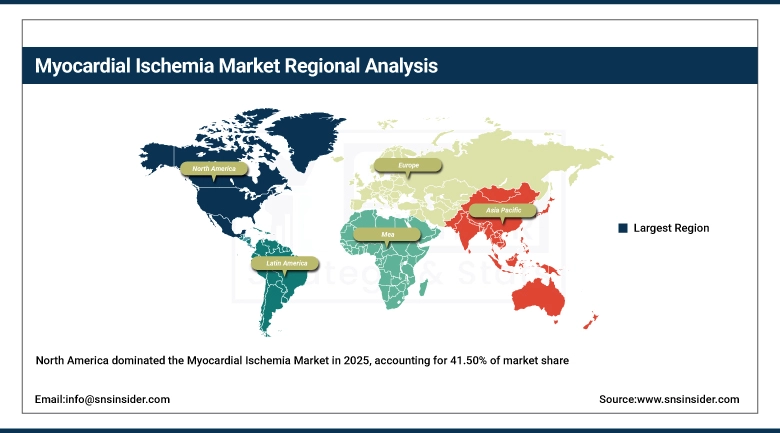
North America dominated the Myocardial Ischemia Market with a 41.50% share in 2025 due to advanced healthcare infrastructure, high prevalence of cardiovascular diseases, and strong adoption of early diagnostic and treatment technologies. Favorable reimbursement policies, widespread access to specialized cardiac care, and continuous innovation in therapeutics further reinforced regional market leadership.
Get Customized Report as per Your Business Requirement - Enquiry Now
Asia Pacific Myocardial Ischemia Market Insights
Asia Pacific is expected to grow at the fastest CAGR of about 9.00% from 2026–2035, driven by a rapidly aging population, rising incidence of lifestyle-related cardiac disorders, and improving access to healthcare services. Increasing awareness, expanding diagnostic capabilities, and growing investments in cardiovascular treatment infrastructure are accelerating market growth across the region.
Europe Myocardial Ischemia Market Insights
Europe held a significant share in the Myocardial Ischemia Market in 2025, supported by well-established healthcare systems, high awareness of cardiovascular disease management, and widespread adoption of advanced diagnostic and treatment technologies. Strong presence of leading pharmaceutical and medical device companies, along with favorable clinical guidelines, further strengthened Europe’s market position.
Middle East & Africa and Latin America Myocardial Ischemia Market Insights
The Middle East & Africa and Latin America together showed steady growth in the Myocardial Ischemia Market in 2025, driven by rising prevalence of cardiovascular diseases, improving healthcare infrastructure, and increasing access to cardiac diagnostics and treatments. Growing government initiatives, expanding private healthcare facilities, and rising awareness of early cardiac care supported gradual market expansion across these regions.
Competitive Landscape:
Pfizer Inc. is a leading global biopharmaceutical company with a strong presence in cardiovascular therapeutics, including treatments for myocardial ischemia. The company develops and markets innovative prescription medicines focused on improving cardiac outcomes, reducing ischemic events, and managing associated risk factors. Pfizer’s extensive research capabilities, global clinical trials, and established distribution network enable wide patient access. Its commitment to scientific innovation and evidence-based medicine supports advancements in ischemic heart disease management worldwide.
-
June 2024, the U.S. FDA approved an expanded indication for ELIQUIS (apixaban), co-developed with Bristol Myers Squibb, for secondary prevention of cardiovascular events in patients with high-risk chronic coronary disease (CCD) a condition often driven by myocardial ischemia.
Novartis AG is a multinational pharmaceutical company actively involved in cardiovascular disease management, including myocardial ischemia. The company emphasizes innovative drug development targeting heart function, vascular health, and ischemia-related complications. Through robust research programs and advanced clinical trials, Novartis focuses on improving patient outcomes and long-term disease management. Its global presence, strong pipeline, and commitment to precision medicine position the company as a key contributor to therapies addressing ischemic heart conditions.
-
November 2023, Novartis secured FDA and EMA approval for Leqvio (inclisiran) a twice-yearly siRNA therapy to reduce LDL cholesterol in adults with clinical atherosclerotic cardiovascular disease (ASCVD), including those with history of myocardial ischemia or MI.
AstraZeneca plc is a global biopharmaceutical company with a significant focus on cardiovascular and metabolic diseases, including myocardial ischemia. The company develops therapies aimed at reducing ischemic risk, improving cardiac performance, and preventing disease progression. AstraZeneca invests heavily in research, real-world evidence, and strategic collaborations to advance cardiovascular care. Its strong portfolio, innovative pipeline, and global reach make it a prominent player in the myocardial ischemia treatment landscape.
-
February 2025, AstraZeneca announced positive results from the THEMIS-2 extension study, reinforcing the role of BRILINTA (ticagrelor) 60 mg + aspirin in long-term secondary prevention for patients with stable coronary artery disease and type 2 diabetes a high-risk group for silent myocardial ischemia.
Myocardial Ischemia Market Key Players:
-
Pfizer Inc.
-
Novartis AG
-
AstraZeneca plc
-
Merck & Co., Inc.
-
Sanofi S.A.
-
Johnson & Johnson
-
Bayer AG
-
Bristol‑Myers Squibb Company
-
GlaxoSmithKline plc
-
AbbVie Inc.
-
Amgen Inc.
-
Boehringer Ingelheim GmbH
-
Teva Pharmaceutical Industries Ltd.
-
Daiichi Sankyo Company, Limited
-
Otsuka Holdings Co., Ltd.
-
Gilead Sciences, Inc.
-
Medtronic plc
-
Boston Scientific Corporation
-
Abbott Laboratories
-
Siemens Healthineers AG.
| Report Attributes | Details |
|---|---|
| Market Size in 2025 | USD 4.81 Billion |
| Market Size by 2035 | USD 9.52 Billion |
| CAGR | CAGR of 7.07% From 2026 to 2035 |
| Base Year | 2025 |
| Forecast Period | 2026-2035 |
| Historical Data | 2022-2024 |
| Report Scope & Coverage | Market Size, Segments Analysis, Competitive Landscape, Regional Analysis, DROC & SWOT Analysis, Forecast Outlook |
| Key Segments | • By Type (Stable Angina, Unstable Angina, Silent Ischemia, Variant (Prinzmetal) Angina) • By Diagnostic Method (Electrocardiogram (ECG), Echocardiography, Stress Testing, Coronary Angiography, CT & MRI Imaging) • By Treatment Type (Medication Therapy, Percutaneous Coronary Intervention (PCI), Coronary Artery Bypass Grafting (CABG), Lifestyle Management & Rehabilitation) • By End-User (Hospitals & Clinics, Ambulatory Surgical Centers, Diagnostic Laboratories, Research & Academic Institutes) |
| Regional Analysis/Coverage | North America (US, Canada), Europe (Germany, UK, France, Italy, Spain, Russia, Poland, Rest of Europe), Asia Pacific (China, India, Japan, South Korea, Australia, ASEAN Countries, Rest of Asia Pacific), Middle East & Africa (UAE, Saudi Arabia, Qatar, South Africa, Rest of Middle East & Africa), Latin America (Brazil, Argentina, Mexico, Colombia, Rest of Latin America). |
| Company Profiles | Pfizer Inc., Novartis AG, AstraZeneca plc, Merck & Co., Inc., Sanofi S.A., Johnson & Johnson, Bayer AG, Bristol‑Myers Squibb Company, GlaxoSmithKline plc, AbbVie Inc., Amgen Inc., Boehringer Ingelheim GmbH, Teva Pharmaceutical Industries Ltd., Daiichi Sankyo Company, Limited, Otsuka Holdings Co., Ltd., Gilead Sciences, Inc., Medtronic plc, Boston Scientific Corporation, Abbott Laboratories, Siemens Healthineers AG. |
Frequently Asked Questions
The myocardial ischemia market is valued at USD 4.81 billion in 2025.
The market is expected to reach USD 9.52 billion by 2035.
The market is projected to grow at a CAGR of 7.07% from 2026 to 2035.
Key drivers include rising cardiovascular disease prevalence, aging population, and advancements in diagnostic and treatment technologies.
Common treatments include medications, lifestyle changes, angioplasty, and coronary artery bypass surgery.
