
Pest Control Market Report Scope & Overview:
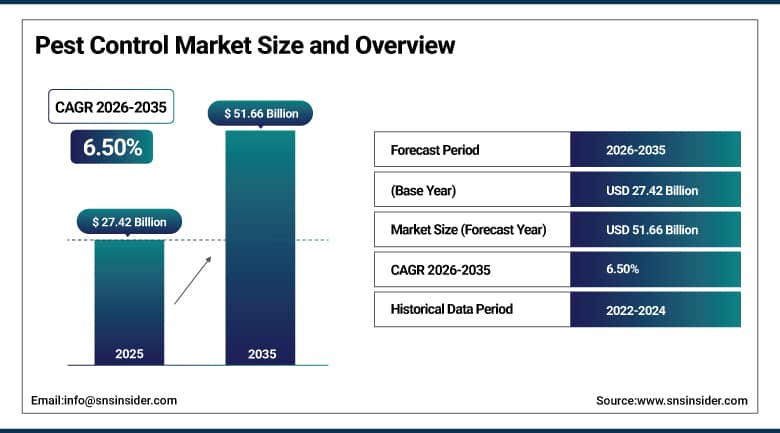
The Pest Control Market was valued at USD 27.42 billion in 2025 and is expected to reach USD 51.66 billion by 2035, growing at a CAGR of 6.50% from 2026 to 2035.
The pest control market is witnessing steady global growth due to rising demand for effective pest management solutions across residential, commercial, industrial, agricultural, healthcare, hospitality, and food processing applications, along with the increasing adoption of advanced technologies such as smart traps, biological control agents, eco-friendly pesticides, and IoT-enabled monitoring systems for improved efficiency, safety, and long-term infestation prevention. The expansion of urbanization, changing climate conditions, and increasing awareness regarding hygiene, sanitation, and vector-borne diseases, coupled with growing focus on food safety standards, property protection, and public health management, is also contributing to market growth.
The governmental regulations related to environmental safety standards such as EPA pesticide regulations in the United States, EU Biocidal Products Regulation (BPR), Food Safety Modernization Act (FSMA) requirements, and the EU Green Deal sustainability framework are significantly influencing pest control product development and usage. In addition, the U.S. OSHA workplace hygiene standards, India’s Central Insecticides Board & Registration Committee (CIBRC) regulations and Swachh Bharat initiatives, and China’s environmental protection and public health management policies are further accelerating market adoption.
To Get More Information On Pest Control Market - Request Free Sample Report
Pest Control Market Trends
-
Rapid urbanization and changing climate conditions are increasing pest infestation risks, driving higher demand for advanced pest control solutions globally.
-
Growing adoption of eco-friendly and biological pest control methods is transforming treatment practices across residential, commercial, and agricultural sectors.
-
Increasing use of smart pest monitoring systems and IoT-enabled traps is improving real-time detection and operational efficiency in pest management services.
-
Rising incidences of vector-borne diseases are accelerating demand for mosquito, rodent, and insect control services in urban and suburban regions.
-
Expanding implementation of integrated pest management (IPM) practices is supporting sustainable pest prevention while reducing dependence on chemical pesticides.
-
Growing digitalization of pest control services through mobile applications and subscription-based models is enhancing customer engagement and service management.
The U.S. Pest Control Market Size Outlook
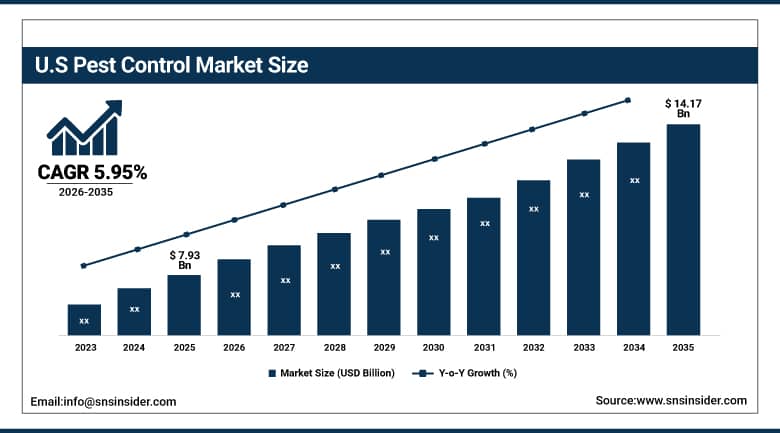
The U.S. Pest Control Market was valued at USD 7.93 billion in 2025 and is expected to reach around USD 14.17 billion by 2035, growing at a CAGR of 5.95% from 2026–2035.
The U.S. pest control market is considered one of the most advanced pest management markets globally owing to strong demand from residential, commercial, healthcare, hospitality, food processing, and agricultural sectors, along with widespread adoption of advanced pest control technologies such as smart traps, biological control agents, eco-friendly pesticides, and IoT-enabled monitoring systems for detection, prevention, and infestation management applications, along with increasing demand for safe, effective, sustainable, and regulation-compliant pest management solutions across urban infrastructure and industrial facilities. Major companies such as Rentokil Initial plc, Rollins, Inc., Ecolab Inc., Terminix Global Holdings, Inc., ORKIN LLC, Anticimex Group, Bell Laboratories, Inc., Massey Services, Inc., Truly Nolen of America, Inc., and Aptive Environmental are actively focusing on expanding pest control service networks, strengthening R&D capabilities, and enhancing treatment efficiency, sustainability, and compliance with advanced environmental and public health standards.
Governments' efforts to enhance public hygiene through EPA pesticide regulations, workplace safety through OSHA sanitation rules, food safety controls through the Food Safety Modernization Act (FSMA), chemical usage regulations through FIFRA rules, and backing through urban sanitation and public health initiatives are contributing to an increased demand for pest control solutions. Efforts towards minimizing vector-borne diseases, enhancing food protection standards, supporting sustainable pest management practices, and encouraging the use of eco-friendly treatment technologies are also playing a role in the area.
Pest Control Market Segment Analysis
-
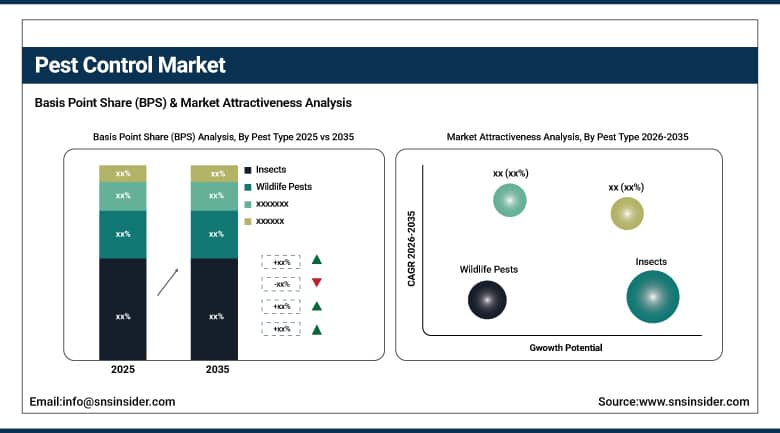
By Pest Type, insects dominated the pest control market with 38.45% share in 2025; while wildlife pests are the fastest growing segment.
-
By Control Method, chemical control dominated the pest control market with 46.80% share in 2025; while biological Control are the fastest growing segment.
-
By Application, residential dominated the pest control market with 34.60% share in 2025; while agricultural are the fastest growing segment.
-
By Service Type, extermination services dominated the pest control market with 36.75% share in 2025; while rodent control services are the fastest growing segment.
-
By End User, households dominated the pest control market with 38.25% share in 2025; while healthcare facilities are the fastest growing segment.
By Pest Type, insects dominated the pest control market, while wildlife pests are the fastest-growing segment.
Insect Segment is anticipated to dominate the pest control market in 2025 attributed to the extensive occurrence of insect pests like mosquitoes, cockroaches, ants, termites, and bed bugs in the residential, commercial, agricultural, and industrial sectors. The growing concerns related to diseases transmitted through vectors, food spoilage and contamination, structural damage, and hygiene management have escalated the demand for insect control and insecticides across the globe, especially in heavily populated cities and food processing plants.
Wildlife pest segment will experience fastest CAGR during 2026-2035 due to rising human-animal conflicts owing to factors such as rapid urbanization, deforestation, and effects of climate change. Infestation of animals such as raccoons, squirrels, birds, bats, and many others have led to growing demand for effective solutions in dealing with the same. Moreover, stringent government regulations on environmental issues and preference for humane removal of wildlife have aided in segment growth.
By Control Method, chemical control dominated the Pest Control Market, while biological control is the fastest-growing segment.
Chemical Control segment was the dominated segment in the pest control market during 2025 due to the highly effective nature of the segment, the ability of chemicals to eliminate pests, availability of multiple products, and their widespread use in residential, commercial, industrial, and agricultural purposes. Additionally, the presence of widespread adoption of chemical pesticides, insecticides, and fumigants to manage large pest infestations; low costs; immediate effects; and approval from governing authorities in various regions further fuels this segment.
Biological Control segment is projected to have the fastest CAGR from 2026-2035 owing to rising preference for green and natural methods of pest management, growing environmental concerns against chemicals used in the farming industry, and increasing sustainability trends within agriculture. The growing popularity of the segment can be attributed to innovations in bio-based pesticides, biological control through microbial action, and the use of natural predators to eliminate pests from long-term perspectives with limited environmental implications.
By Application, residential dominated the Pest Control Market, while agricultural is the fastest-growing segment.
Residential segment dominated the pest control market in 2025 owing to increasing urbanization, rising awareness regarding hygiene and sanitation, and growing concerns related to termites, mosquitoes, rodents, and other household pests. The expansion of apartment complexes, smart housing projects, and consumer preference for preventive pest management services, along with increasing adoption of eco-friendly residential pest control solutions, also contributed significantly to the segment’s market dominance.
Agricultural segment is expected to grow at the fastest CAGR from 2026-2035 due to rising concerns regarding crop protection, food security, and pest-related agricultural losses across developing and developed economies. Increasing adoption of biological pest control methods, integrated pest management practices, and sustainable farming techniques, along with growing government support for reducing chemical pesticide usage and improving agricultural productivity, is accelerating demand for advanced pest control solutions in the agricultural sector.
By Service Type, extermination services dominated the Pest Control Market, while rodent control services are the fastest-growing segment.
Extermination services segment occupied the top position in the global market for pest control market in 2025 due to the increasing demands for effective and instant eradication of insects, rodents, termites, and other types of pests. Rising urbanization levels, increasing awareness about hygiene standards, stringent food safety norms, and growing incidences of pest infestation in healthcare, hospitality, and food processing industries greatly fueled the higher use of professional extermination services.
Rodent Control Services segment will have the fastest growth rate (CAGR) from 2026 to 2035 as the prevalence of diseases transmitted by rodents is increasing, coupled with the rapid increase in urban waste and rodent population in commercial and residential structures. The escalating need for surveillance and preventive measures against rodents, particularly by food storage and hospitality industries, has been fueling the growth of the segment.
By End User, households dominated the Pest Control Market, while healthcare facilities are the fastest-growing segment.
Households segment occupied the dominated share in the global pest control market in 2025 because of increasing urbanization, high awareness about hygiene and sanitation, and increase in pest infestation cases in homes. Additionally, increased consumer expenditure on preventative pest management, termite treatments, mosquito control systems, and home-based smart pest monitoring systems have played an instrumental role in driving the growth of this segment in the global Pest Control Market.
Healthcare Facilities segment is projected to register the fastest growth rate during the forecast period due to strict hygiene guidelines, rising requirements for infection control, and the need to avoid contamination of healthcare facilities. Vector-borne diseases, increasing standards of patient safety, and regulatory compliance are also among the key factors contributing to increased demand for pest management services in healthcare facilities.
Regional Analysis:
|
Region |
Major Country |
Share within Region, 2025(%) |
|---|---|---|
|
North America |
United States |
78.45% |
|
Europe |
Germany |
38.65% |
|
Asia Pacific |
China |
41.80% |
|
Middle East & Africa |
UAE |
29.45% |
|
Latin America |
Brazil |
36.90% |
North America Pest Control Market Insights
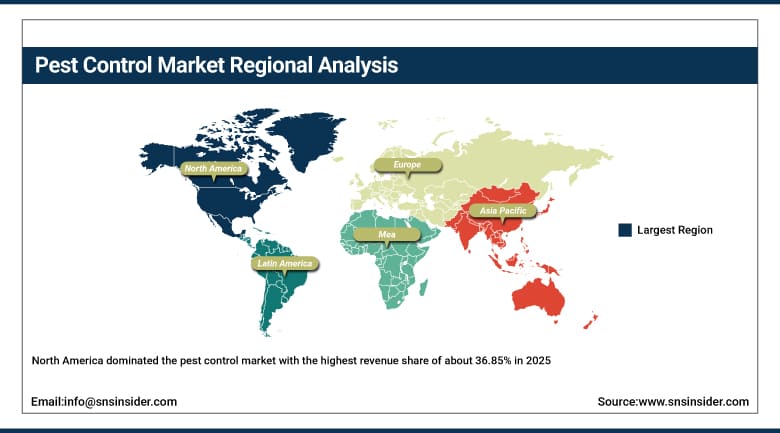
North America dominated the pest control market with the highest revenue share of about 36.85% in 2025 due to strong demand from residential, commercial, healthcare, and food processing sectors, along with high awareness regarding hygiene, sanitation, and vector-borne disease prevention. The region benefits from advanced pest management services, widespread adoption of integrated pest management (IPM), and high penetration of professional pest control providers such as Rentokil Initial plc, Rollins, Inc., and Ecolab Inc. Strict regulatory frameworks such as EPA pesticide regulations, OSHA workplace safety standards, and FIFRA compliance requirements further strengthen market dominance across the United States and Canada.
Get Customized Report as Per Your Business Requirement - Enquiry Now
Europe Pest Control Market Insights
Europe is an extremely significant region in the Pest Control Market, which can be attributed to their focus on sustainability, health safety, and regulation regarding the use of pesticides. The main European nations, including Germany, France, United Kingdom, Spain, and Italy, have been making huge contributions by offering high-end pest management solutions, food safety solutions, and urban sanitation solutions. There are several European regulations such as BPR (Biocidal Products Regulation), REACH (regulation of chemicals), and Green Deal that are helping Europe adopt more environmentally friendly pest control approaches.
Asia Pacific Pest Control Market Insights
Asia Pacific segment is expected to grow at the fastest CAGR of about 7.98% from 2026–2035 due to rapid urbanization, rising population density, and expanding commercial and residential infrastructure across emerging economies such as China, India, Japan, and Southeast Asia. Increasing pest-related health concerns, vector-borne disease outbreaks, and food safety requirements are driving strong demand for pest control services. Government initiatives like Swachh Bharat Mission, China’s public health programs, and urban sanitation projects are further accelerating growth. Increasing awareness and low service penetration also support rapid market expansion in the region.
Middle East & Africa and Latin America Pest Control Market Insights
The Middle East & Africa and Latin American regions are set to see continued growth within the pest control market because of the increased urbanization, development within the hospitality and tourism industry, and greater awareness about hygiene issues and the potential hazards related to pests. Nations like the United Arab Emirates, Saudi Arabia, and South Africa in the Middle East & Africa region are developing pest control techniques in construction projects, oil & gas industries, and commercial sectors. In the Latin American region, nations like Brazil and Mexico are creating a demand owing to urbanization, food safety standards, and adoption of professional pest control services.
Market Dynamics:
Growth Drivers: Rising Urbanization and Increasing Pest Infestation Risks Driving Pest Control Demand
Urbanization, increase in population density, and construction of residential infrastructures are creating high chances for pest invasion within the city and suburban environments. Moreover, poor waste management techniques, changing climatic factors, and temperature increases are increasing the breeding cycle of pests, resulting in more insect, rodents, and mosquito populations. Consumers' growing consciousness regarding their health and sanitation standards is driving the market toward more professional pest control services. Furthermore, the increasing use of preventive methods for pest control within homes, offices, and industries is helping the market grow. The government efforts toward cleanliness of cities and protection of public health are helping maintain steady demand for pest control measures.
Restraints: High Dependence on Chemical Pesticides and Environmental Concerns Restricting Market Growth
Over-reliance on the use of chemicals in pesticides and fumigation is becoming an environmental and health hazard, which is restricting growth in markets in many areas. The growing understanding of the effects associated with toxicity, soil and water pollution is forcing regulatory authorities to impose severe usage guidelines for dangerous chemicals. Moreover, the preference for green pest control techniques by consumers is further minimizing the use of chemical products. Adherence to strict environmental guidelines raises operating expenses for companies providing such services and manufacturing such products. Furthermore, the development of resistance to chemicals by pests has become an issue for pest management programs.
Opportunities: Growing Adoption of Eco-Friendly and Biological Pest Control Solutions Creating Growth Potential
Increasing consciousness regarding the environment has provided a lot of scope in terms of adopting biological and botanical means for the prevention of any kind of pests. The growing consumer awareness about sustainable and chemical-free measures against pest management is pushing forward the companies to introduce innovative products. Integrated Pest Management practices are also gaining popularity in the fields of agriculture, residences, and industry. The advancements made in technology concerning the use of biological control agents and repellents have provided new opportunities for their adoption. Initiatives by the government to promote green farming and green urban development have created growth opportunities for pest control companies.
Recent Developments
-
2026: Rentokil Initial plc expanded AI-enabled smart pest monitoring systems and digital pest control platforms across global markets. Focused on real-time detection, predictive analytics, and improved residential and commercial service efficiency.
-
2025: Rollins, Inc. strengthened its Orkin service network and expanded residential pest control operations across North America. Focused on technology-driven inspection systems and preventive pest management solutions.
-
2025: Ecolab Inc. enhanced integrated pest elimination programs for food safety, healthcare, and hospitality sectors. Focused on data-driven hygiene solutions and contamination prevention systems.
-
2024: Anticimex Group expanded deployment of smart traps and IoT-based pest monitoring systems across Europe and North America. Emphasized preventive pest management and digital transformation of pest control services.
Pest Control Market Key Players are:
-
Rentokil Initial plc
-
Rollins, Inc.
-
Ecolab Inc.
-
Terminix Global Holdings, Inc.
-
Bayer AG
-
BASF SE
-
Syngenta AG
-
FMC Corporation
-
Bell Laboratories, Inc.
-
Arrow Exterminators
-
Massey Services, Inc.
-
Dodson Pest Control
-
ORKIN LLC
-
Truly Nolen of America, Inc.
-
Hawx Pest Control
-
Cook’s Pest Control
-
Abell Pest Control
-
Aptive Environmental
Pest Control Market Report Scope:
| Report Attributes | Details |
|---|---|
| Market Size in 2025 | USD 27.42 Billion |
| Market Size by 2035 | USD 51.66 Billion |
| CAGR | CAGR of 6.50% From 2026 to 2035 |
| Base Year | 2025 |
| Forecast Period | 2026-2035 |
| Historical Data | 2022-2024 |
| Report Scope & Coverage | Market Size, Segments Analysis, Competitive Landscape, Regional Analysis, DROC & SWOT Analysis, Forecast Outlook |
| Key Segments | • By Pest Type (Insects, Rodents, Termites, Wildlife Pests, Others) • By Control Method (Chemical Control, Biological Control, Mechanical Control, Physical Control) • By Application (Residential, Commercial, Industrial, Agricultural, Government & Institutional) • By Service Type (Extermination Services, Fumigation Services, Rodent Control Services, Termite Control Services) • By End User (Households, Food Processing Facilities, Healthcare Facilities, Hospitality Sector, Warehouses & Storage Facilities) |
| Regional Analysis/Coverage | North America (US, Canada), Europe (Germany, UK, France, Italy, Spain, Russia, Poland, Rest of Europe), Asia Pacific (China, India, Japan, South Korea, Australia, ASEAN Countries, Rest of Asia Pacific), Middle East & Africa (UAE, Saudi Arabia, Qatar, South Africa, Rest of Middle East & Africa), Latin America (Brazil, Argentina, Mexico, Colombia, Rest of Latin America). |
| Company Profiles | Rentokil Initial plc, Rollins, Inc., Ecolab Inc., Anticimex Group, Terminix Global Holdings, Inc., Bayer AG, BASF SE, Syngenta AG, FMC Corporation, Bell Laboratories, Inc., Arrow Exterminators, Massey Services, Inc., Dodson Pest Control, Pelsis Group Ltd, ORKIN LLC, Truly Nolen of America, Inc., Hawx Pest Control, Cook’s Pest Control, Abell Pest Control, Aptive Environmental |

Frequently Asked Questions
The pest control market is expected to grow at a CAGR of 6.50% from 2026 to 2035.
The pest control market was valued at USD 27.42 billion in 2025.
Rising urbanization, pest infestation risks, climate change, and growing hygiene awareness are driving the pest control market. Increasing adoption of integrated pest management, eco-friendly solutions, and smart monitoring technologies is further supporting market growth.
The Residential segment dominated the pest control market in 2025.
North America dominated the pest control market in 2025.
