
Plant-based Beverages Market Report Scope & Overview:
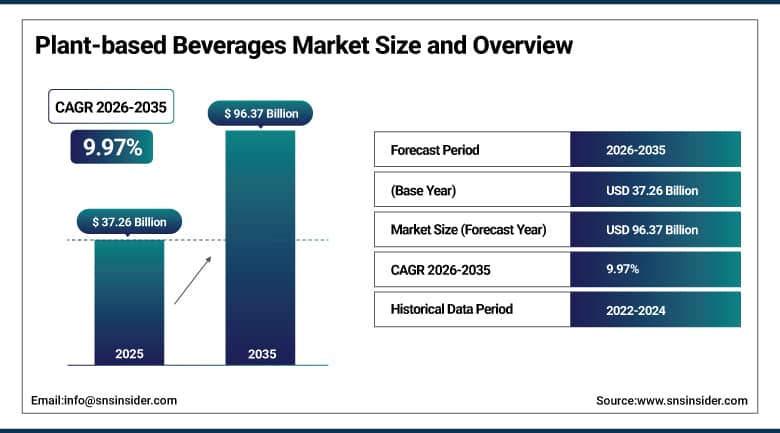
The Global Plant-based Beverages Market was valued at USD 37.26 Billion in 2025 and is expected to reach USD 96.37 Billion by 2035, growing at a CAGR of 9.97% from 2026 to 2035.
The global Plant-based Beverages Market is experiencing strong growth, owing to increasing demands from consumers towards healthy, sustainable, and plant-based beverages that are substitutes for conventional beverages. Increased incidences of lactose intolerance, veganism, and clean label nutrition is encouraging consumers towards consumption of soy, almond, oat, coconut, and pea-based beverages. Innovations like fortification, functional, flavored, and low sugar drinks are opening up market opportunities further. Increased investments from leading beverage manufacturers, increased availability through retail outlets, and expansion through online sales are making this market penetrate into its surroundings further. Besides this, increased disposable incomes, urbanization, and environmental concerns about dairy farming are contributing to this trend.
Danone agreed to acquire functional nutrition brand Huel in a deal valued at approximately EUR 1 billion in 2026, reflecting the food giant's continued strategic expansion as consumers increasingly seek functional plant protein alongside traditional plant-based beverage offerings, reinforcing the broader industry shift toward protein-enriched, functionally differentiated plant-based nutrition beyond conventional dairy-alternative positioning.
To Get More Information On Plant-based Beverages Market - Request Free Sample Report
Plant-based Beverages Market Trends:
-
Growing matcha-flavored ready-to-drink launches are expanding rapidly, appearing in more than twice as many products in 2025 as in 2023.
-
Rising whole-ingredient, protein-boosted formulations are transitioning the category from automatic growth toward a more nuanced, premium-oriented market.
-
Expanding coconut and oat milk online conversation share, together comprising a majority of category discussion, continues to shape new product development priorities.
-
Increasing plant-based menu options across foodservice and quick-service restaurants are broadening category accessibility beyond retail grocery channels.
-
Growing hybrid dairy and plant-based milk blend products are emerging as retailers respond to consumers seeking gradual transition options.
U.S. Plant-based Beverages Market Outlook:
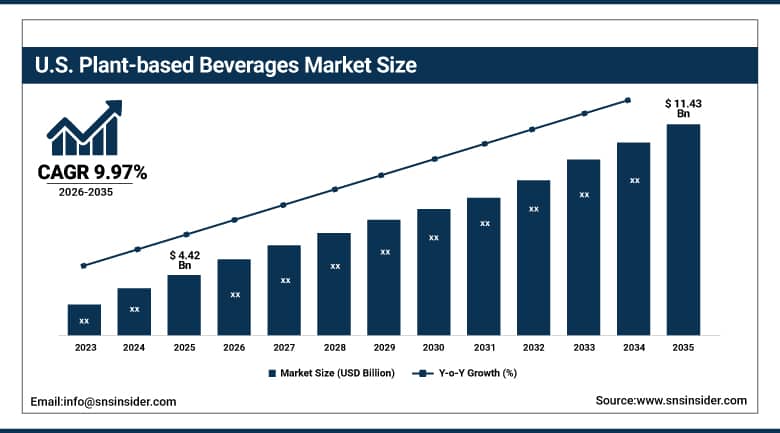
The U.S. Plant-based Beverages Market was valued at USD 4.42 Billion in 2025 and is projected to reach USD 11.43 Billion by 2035, growing at a CAGR of 9.97% during 2026-2035.
The U.S. Plant-based Beverages Market is growing steadily, due to the rising preference of consumers for healthy, plant-based, and eco-friendly beverages. The increased adoption of vegan and flexitarian diets, as well as increased lactose intolerance awareness, is contributing to the growth of consumption. Oat, almond, soy, coconut, and pea-based beverages are gaining popularity among households and food service providers. Innovations such as fortification and functionalities, as well as low sugar and flavored variants, are driving consumer choice options. Robust distribution networks through supermarkets, specialty stores, convenience stores, and e-commerce sites are increasing product availability. Furthermore, increasing investments by beverage producers and shifting consumer preferences towards clean-label beverages are opening up new growth avenues.
Kraft Heinz released its first plant-based dessert in the United States in June 2025, a Jell-O chocolate pudding made with oat milk, aimed at consumers who are allergic to dairy, unable to digest lactose, or who don't eat animal products, reflecting continued mainstream legacy food manufacturer entry into plant-based product categories beyond conventional beverage formats.
Plant-based Beverages Market Segment Analysis:
-
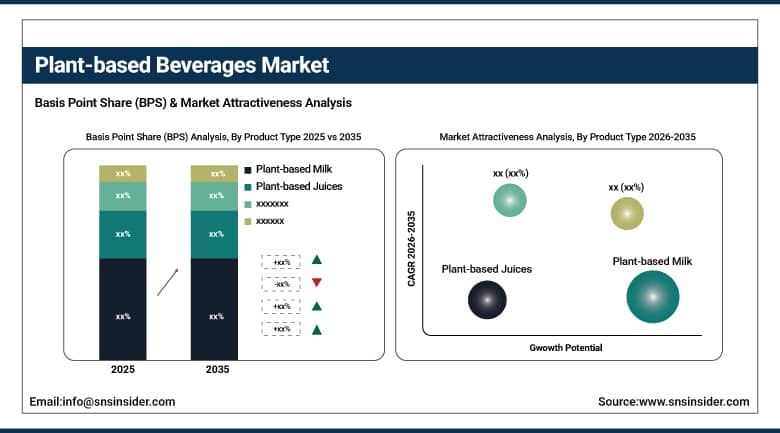
By Product Type, Plant-based Milk segment dominated the Plant-based Beverages Market in 2025 with 68% share; Plant-based Functional Beverages segment is the fastest-growing segment.
-
By Source, Soy segment dominated the market in 2025 with 31% share; Oat segment is the fastest-growing segment.
-
By Application, Direct Consumption segment dominated the market in 2025 with 61% share; Food & Beverage Processing segment is the fastest-growing segment.
-
By Distribution Channel, Supermarkets/Hypermarkets segment dominated the market in 2025 with 43% share; Online segment is the fastest-growing segment.
By Product Type, Plant-based Milk Dominates the Plant-based Beverages Market While Plant-based Functional Beverages Register the Fastest Growth
Plant-based Milk dominates the Plant-based Beverages Market owing to the fact that it has gained wide acceptance among consumers as a substitute for traditional milk products at home, cafes, restaurants, and food service operations. Soy milk, almond milk, oat milk, coconut milk, and other types of plant-based beverages have become popular and widely used in breakfasts, beverages, cooking, and baking processes. Lactose intolerance concerns, vegan lifestyles, and increasing demand for dairy alternatives are driving consumption. The wide availability, extensive variety of products, and ongoing innovations in flavors and formulations are reinforcing the market leadership of this category.
Plant-based Functional Beverages are growing rapidly driving the growth of the Plant-based Functional Beverages. Manufacturers are including such functional plant-based ingredients as proteins, vitamins, minerals, antioxidants, probiotics, adaptogens, and others in order to cater to the demands of consumers for more functional beverages. Increased interest towards improving the state of immunity, digestive health, energy level, and overall physical activity are spurring innovation and premiumization of these products.
By Source, Soy Dominates the Plant-based Beverages Market While Oat Emerges as the Fastest-Growing Source
Soy dominates the Plant-based Beverages Market as a traditional replacement for dairy products and provides a good nutrient profile, especially with regard to protein. Soy beverages are accessible from supermarkets, foodservice operations, and institutional sales through established manufacturing capabilities and distribution systems. Their flexibility makes it possible for them to be used for direct consumption, smoothies, coffee, and cooking purposes. Consumer familiarity, competitive pricing, and wide availability will keep soy beverages in the leadership position among plant-based beverages.
Oat is experiencing rapid growth driven by the increasing preference for plant-based beverages that offer creaminess, subtle taste, and sustainability. Oat beverages have found great favor in coffee drinks, smoothies, breakfast items, and for direct consumption by younger and more health-conscious consumers. Their ability to be used with specialty coffee and premium beverages is driving the adoption of oat beverages in cafes and foodservice outlets. Veganism, flexitarian diets, clean labeling, innovation, and retail availability are contributing to the rise in demand for oat beverages.
By Application, Direct Consumption Dominates the Plant-based Beverages Market While Food & Beverage Processing Experiences the Fastest Growth
Direct Consumption dominates the Plant-based Beverages Market due to the increasing trend amongst the consumer population that purchases plant-based drinks as ready-to-consume substitutes to dairy beverages. Various plant-based milk, flavored beverages, smoothies, and ready-to-drink products are consumed across home, office, café settings, among others. The growing popularity of vegan and flexitarian diets, growing awareness regarding lactose-free substitutes, and increased requirement of convenient nutrition are driving consumption. Widespread retail availability, increased range of products, and improved taste and texture are further fueling demand in this application space.
Food & Beverage Processing is growing rapidly on account of increasing usage of plant-based beverages and ingredients in various bakery products, confectionery, desserts, ready-to-drink beverages, sauces, and other processed foods. Increasing demand for dairy-free and vegan food products is compelling food companies to adopt plant-based beverages. Advances in ingredient functionality, formulation technology, and processing technology are opening up several opportunities for commercial utilization. Increasing preference for clean label, product launches in the plant-based sector, and rising investment from food manufacturers are further driving growth in this segment.
By Distribution Channel, Supermarkets and Hypermarkets Dominate the Plant-based Beverages Market While Online Distribution Registers the Fastest Growth
Supermarkets and hypermarkets dominate the Plant-based Beverages Market due to the provision of good product visibility, product variety, price competitiveness, and easy accessibility. Such stores give customers access to a wide range of varieties of plant-based beverages from various brands, origins, flavors, and nutrition levels, allowing them to compare products. Existing networks of such retailers and their constant promotions also contribute to sales. The popularity of the physical shopping of everyday beverages, as well as the growing shelf space for plant-based beverages, ensures the dominance of the channel in the market.
Online distribution is growing rapidly because of the convenience of ordering, home delivery, product variety, and access to unique brands of plant-based beverages. E-commerce websites enable the comparison of product nutrition levels, ingredients, prices, and customer feedback before making a purchase. Online channels are especially useful for unique, functional, and premium plant-based beverages that may be difficult to obtain in physical stores. The increased adoption of smartphones, improved delivery infrastructure, subscription-based buying, digital marketing efforts, and increased use of online grocery shopping by consumers facilitate the growth of this channel.
Regional Analysis:
|
Region |
Country |
Share (2025) |
|---|---|---|
|
Asia Pacific |
China |
42.60% |
|
North America |
United States |
84.60% |
|
Europe |
Germany |
24.80% |
|
Middle East & Africa |
UAE |
20.60% |
|
Latin America |
Brazil |
24.60% |
Asia Pacific Plant-based Beverages Market Insights
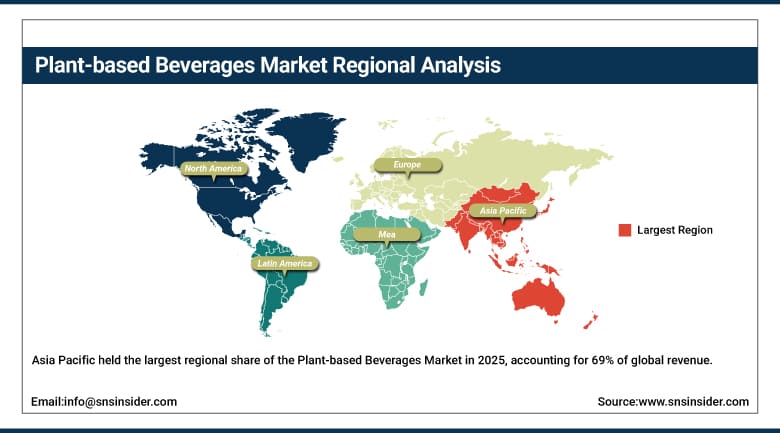
Asia Pacific held the largest regional share of the Plant-based Beverages Market in 2025, accounting for 69% of global revenue. The region’s leadership is supported by a growing vegan and flexitarian consumer base, particularly among millennials seeking plant-based and natural products. A large lactose-intolerant population is also encouraging demand for dairy alternatives. Rapid urbanization, rising health awareness, and expanding modern retail and e-commerce infrastructure are improving product accessibility and further strengthening Asia Pacific’s dominant position in the global market.
China accounted for approximately 42.60% of the Asia Pacific market in 2025, supported by its massive population base and deeply established tradition of plant-based beverage consumption, particularly soy milk. Japan, India, and South Korea are also contributing meaningfully to regional growth, with India benefiting from rapidly expanding health-conscious consumer awareness and vegetarian dietary culture.
Get Customized Report as Per Your Business Requirement - Enquiry Now
North America Plant-based Beverages Market Insights
North America represented a significant share of the global Plant-based Beverages Market in 2025, supported by strong consumer demand for dairy alternatives and the presence of leading plant-based beverage brands across the region. Increasing adoption of vegan and flexitarian lifestyles is further supporting market expansion. Growing consumer interest in premium, functional, fortified, and clean-label beverages is encouraging product innovation. Well-established retail and e-commerce networks across the United States and Canada are also improving product accessibility and sustaining regional market development.
The United States accounted for approximately 84.60% of the North American market in 2025, reflecting its large health-conscious consumer base and extensive plant-based beverage retail and foodservice distribution infrastructure. Canada is contributing to regional growth through steady vegan and flexitarian diet adoption and growing consumer interest in functional, protein-enriched plant-based beverages.
Europe Plant-based Beverages Market Insights
Europe is expected to register the fastest CAGR in the Plant-based Beverages Market during 2026–2035, driven by changing dietary preferences and growing adoption among younger consumers. Oat, almond, and soy beverages are gaining strong acceptance as consumers seek dairy-free and sustainable alternatives. Increasing product innovation and the emergence of regional brands tailored to local tastes are further supporting market expansion. Rising demand for premium, functional, and clean-label beverages is also reinforcing Europe’s above-average growth trajectory compared with more mature markets.
Germany led the European market with a 24.80% regional share in 2025, supported by its strong health-conscious consumer base and growing plant-based beverage retail infrastructure. The United Kingdom, France, and the Netherlands are also contributing meaningfully to regional growth, supported by leading plant-based beverage brands headquartered across the region and growing hybrid dairy-plant blend product innovation.
Middle East & Africa and Latin America Plant-based Beverages Market Insights
The Middle East & Africa region is exhibiting steady growth as health and wellness awareness expands across the Gulf states, supported by growing modern retail infrastructure. Latin America is similarly benefiting from expanding urban health-conscious consumption and growing consumer interest in dairy-alternative beverages across major regional urban centers.
The UAE led the Middle East & Africa market with a 20.60% regional share in 2025, supported by growing health-conscious consumer demand and expanding modern retail penetration. Brazil represented 24.60% of the Latin American market in 2025, driven by expanding plant-based beverage consumption, with Mexico also contributing to regional growth through rising interest in dairy-alternative products.
Market Dynamics:
Growth Drivers: Health Consciousness and Lactose Intolerance Awareness Driving Market Growth
The main factors that are influencing the growth of the Plant-based Beverages Market include increasing wellness and health consciousness, high preference for vegan and vegetarian diets, increasing incidences of lactose intolerance and lactose allergy and increasing innovations in new product variants. As soy milk, oat milk and coconut based drinks are perceived as healthy and calorie-free products, people are increasingly realizing the benefits of dairy alternatives, contributing to the growth of the global market for this product category.
Increasing launches of ready-to-drink products with matcha flavor continue to grow rapidly in the product category. Increasing whole-ingredient and protein fortified product variants are changing the nature of this product category from that of an automatic growth product category to a premium product category. Increased coconut and oat milk online discussion share is influencing new product development trends in the overall plant-based beverages market.
Restraints: Restaurant Distribution Decline and Nutritional Comparison Challenges Limiting Market Expansion
Despite favorable underlying demand, the market faces meaningful restraints related to U.S. restaurants serving alternative milks falling 8.1% over the past year to roughly 103,900 locations, reflecting category consolidation even as remaining operators lean more heavily into plant-based offerings. Ongoing nutritional comparison challenges relative to dairy milk, particularly around protein content and micronutrient fortification, continue to require sustained manufacturer investment in reformulation.
High production costs associated with premium ingredient sourcing and functional fortification continue to constrain price competitiveness relative to conventional dairy alternatives in price-sensitive markets. Growing competitive intensity among an expanding roster of legacy and challenger brands also continues to compress margins across mainstream plant-based beverage categories, particularly amid rapid category maturation and consolidation.
Opportunities: Functional Protein Innovation and Foodservice Expansion Creating New Growth Avenues
Substantial opportunity exists in continued development of high-quality plant protein formulations addressing one of the biggest nutritional gaps in the category relative to dairy milk. Companies that successfully commercialize protein-enriched, functionally differentiated plant-based beverages stand to capture significant share of category growth as the market transitions toward premium, wellness-oriented positioning beyond basic dairy substitution.
Growing plant-based menu options across foodservice and quick-service restaurants present a further significant growth avenue, as operators increasingly adapt to consumer demand for healthier, more sustainable meal options. Expanding matcha and functional beverage innovation, alongside growing hybrid dairy-plant blend product development, also represent meaningful untapped opportunity for manufacturers seeking differentiated category positioning.
Recent Developments:
-
2026: Alpro launched the UK's first matcha-flavored coconut and soy milk ready-to-drink beverage, responding to explosive growth in the matcha category.
-
2026: Califia Farms opened the year with a new Simple & Organic Soymilk variety made with just three ingredients: organic soybeans, water, and sea salt.
-
2026: Danone invested USD 49 million to convert a French dairy factory into a dedicated oat milk production facility under its Alpro brand.
-
2026: Dutch supermarket chain Albert Heijn started selling hybrid dairy and plant-based milk blends, reflecting growing product category innovation in the Netherlands.
Plant-based Beverages Market key players are:
-
Danone S.A.
-
Nestlé S.A.
-
PepsiCo, Inc.
-
The Coca-Cola Company
-
Oatly Group AB
-
Califia Farms, LLC
-
Blue Diamond Growers
-
SunOpta Inc.
-
The Hain Celestial Group, Inc.
-
Kikkoman Corporation
-
Marusan-Ai Co., Ltd.
-
Vitasoy International Holdings Limited
-
Sanitarium Health and Wellbeing Company
-
Eden Foods, Inc.
-
Ripple Foods PBC
-
Alpro
-
Minor Figures
-
Elmhurst 1925
-
Califia Farms
-
Good Karma Foods, Inc.
Plant-based Beverages Market Report Scope:
| Report Attributes | Details |
|---|---|
| Market Size in 2025 | USD 37.26 Billion |
| Market Size by 2035 | USD 96.37 Billion |
| CAGR | CAGR of 9.97% From 2026 to 2035 |
| Base Year | 2025 |
| Forecast Period | 2026-2035 |
| Historical Data | 2022-2024 |
| Report Scope & Coverage | Market Size, Segments Analysis, Competitive Landscape, Regional Analysis, DROC & SWOT Analysis, Forecast Outlook |
| Key Segments | • By Product Type (Plant-based Milk, Plant-based Yogurt Drinks, Plant-based Juices, Plant-based Functional Beverages, Others) • By Source (Soy, Almond, Oat, Coconut, Rice, Pea, Others) • By Application (Direct Consumption, Foodservice, Food & Beverage Processing) • By Distribution Channel (Supermarkets/Hypermarkets, Convenience Stores, Specialty Stores, Online) |
| Regional Analysis/Coverage | North America (US, Canada), Europe (Germany, UK, France, Italy, Spain, Russia, Poland, Rest of Europe), Asia Pacific (China, India, Japan, South Korea, Australia, ASEAN Countries, Rest of Asia Pacific), Middle East & Africa (UAE, Saudi Arabia, Qatar, South Africa, Rest of Middle East & Africa), Latin America (Brazil, Argentina, Mexico, Colombia, Rest of Latin America). |
| Company Profiles | Danone S.A., Nestlé S.A., PepsiCo, Inc., The Coca-Cola Company, Oatly Group AB, Califia Farms, LLC, Blue Diamond Growers, SunOpta Inc., The Hain Celestial Group, Inc., Kikkoman Corporation, Marusan-Ai Co., Ltd., Vitasoy International Holdings Limited, Sanitarium Health and Wellbeing Company, Eden Foods, Inc., Ripple Foods PBC, Alpro, Minor Figures, Elmhurst 1925, Califia Farms, Good Karma Foods, Inc. |
Frequently Asked Questions
The Plant-based Beverages Market is expected to grow at a CAGR of 9.97% from 2026 to 2035.
The Plant-based Beverages Market was valued at USD 37.26 Billion in 2025.
The market is driven by growing health and wellness trends, rising preferences for vegan and vegetarian diets, and increasing cases of lactose intolerance and dairy allergies.
The Soy segment dominated the Plant-based Beverages Market in 2025.
The Asia Pacific region dominated the Plant-based Beverages Market in 2025, accounting for approximately 69% market share.
