
Weapon Locating Radar Market Report Scope & Overview:
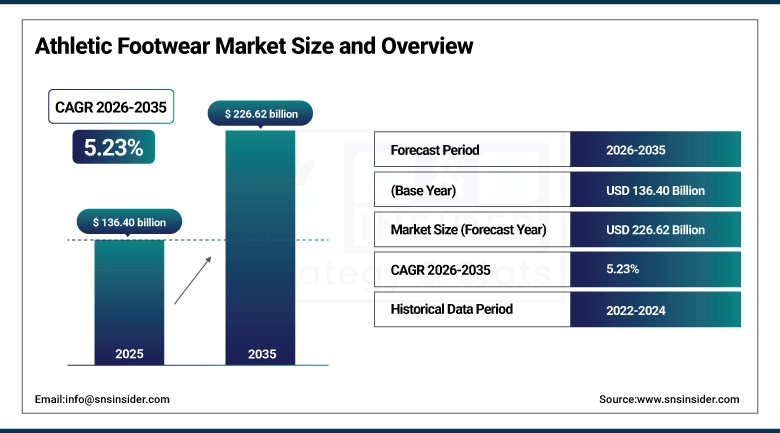
The Weapon Locating Radar Market was valued at USD 1.83 billion in 2025 and is expected to reach USD 3.83 billion by 2035, growing at a CAGR of 7.72% from 2026–2035.
The Weapon Locating Radar (WLR) Market is experiencing considerable growth due to rising geopolitical instability, border disputes, advancements in artillery systems, and investments in high-tech battlefield monitoring systems. Contemporary armies have started using weapon locating radars for rapid detection, tracking, classification, and identification of the origin of incoming artillery rounds, rockets, mortar attacks, and missiles. Technologies such as active electronically scanned array (AESA), artificial intelligence-assisted target classification, digital beamforming, and advanced signal processing technologies are considerably improving the efficiency of detection systems.
In recent industry developments, in March 2025, Saab AB expanded international deployment programs for its ARTHUR weapon locating radar platform, strengthening interoperability and rapid counter-battery capabilities across allied defense forces. Similarly, defense organizations increasingly accelerated procurement discussions surrounding next-generation mobile and AESA-enabled counter-fire radar systems designed for higher mobility, faster deployment, and improved survivability in contested operational environments.
Additionally, in 2024–2025, multiple defense contractors including RTX Corporation, Lockheed Martin Corporation, and Thales Group intensified investment in AI-assisted battlefield sensing technologies and integrated sensor fusion architectures.
To Get more information on Weapon Locating Radar Market - Request Free Sample Report
Weapon Locating Radar Market Trends
-
Rising adoption of AESA-based weapon locating radars is improving target detection and tracking precision.
-
Increasing network-centric warfare integration is accelerating deployment of connected battlefield radar systems.
-
Rapid adoption of AI-enabled target recognition is enhancing threat identification and response accuracy.
-
Growing demand for mobile and vehicle-mounted radar systems is improving tactical deployment flexibility.
-
Increasing defense modernization investments are driving global procurement growth.
-
Rising use of digital beamforming technologies is expanding long-range detection capabilities.
-
Expanding multi-sensor battlefield integration is advancing next-generation surveillance solutions.
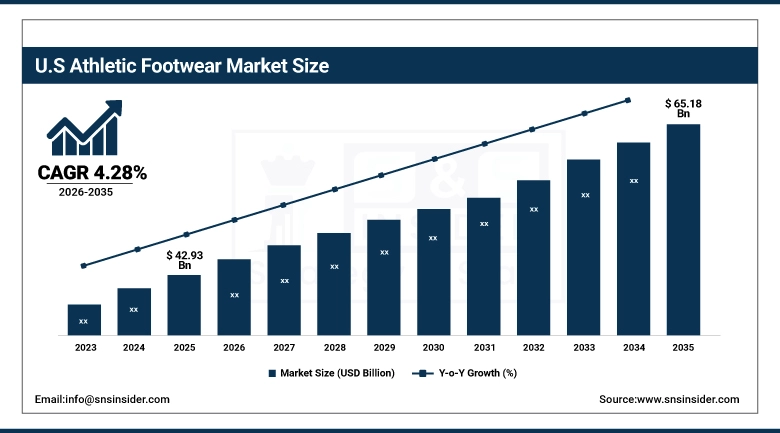
The U.S. Weapon Locating Radar Market was valued at USD 0.50 billion in 2025 and is expected to reach USD 1.00 billion by 2035, growing at a CAGR of 7.38% from 2026–2035
The United States Weapon Locating Radar Market is considered to be the largest national market in the world due to large-scale defense spending, modern battlefield initiatives, and the availability of leading defense technology companies such as RTX, Lockheed Martin, Northrop Grumman, and L3Harris. The emphasis on counter-battery applications and battlefield awareness in multi-domain operations remains a key factor behind the growth of this market.
Supporting this trend, the U.S. Army continues accelerating investments in long-range precision fires and next-generation battlefield sensing capabilities to improve artillery threat detection and response efficiency. Growing emphasis on integrated command-and-control networks and tactical sensor fusion systems further supports demand for advanced weapon locating radars.
In recent developments, the U.S. Army continued modernization initiatives involving advanced AN/TPQ-series counter-fire radars, focusing on enhanced mobility, target tracking, and electronic warfare resilience. Additionally, defense contractors expanded investments in AI-enabled battlefield sensing and multi-sensor integration technologies to improve real-time targeting accuracy and tactical decision support.
Weapon Locating Radar Market Segment Insights
-
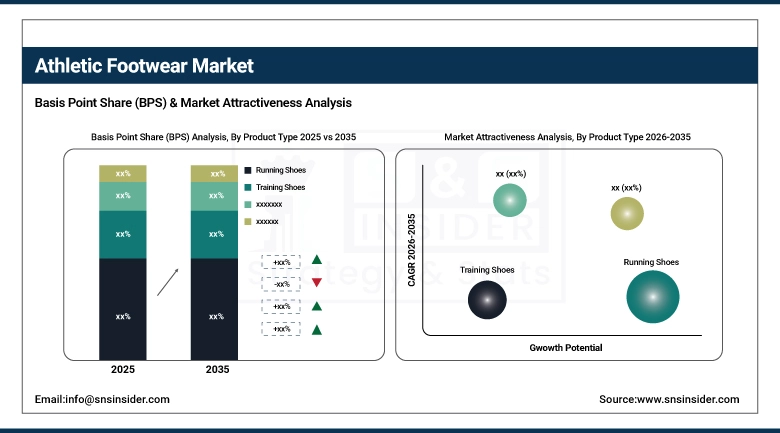
By Platform: Land-Based Systems (Vehicle-mounted, Towed, Fixed) dominated the market with 67.84% share in 2025; Airborne Systems (Limited/experimental deployments) recorded the fastest growing CAGR.
-
By Radar Type: Active Electronically Scanned Array (AESA) dominated the market with 51.29% share in 2025; AESA also showed the fastest growing CAGR.
-
By Range: Medium Range (30–80 km) dominated the market with 39.54% share in 2025; Long Range systems also registered the fastest growing CAGR.
-
By Application: Counter-Battery Fire Detection dominated the market with 42.46% share in 2025; Battlefield Awareness & Target Acquisition also had the fastest growing CAGR.
-
By End User: Army / Ground Forces dominated the market with 56.45% share in 2025; Homeland Security Agencies recorded the fastest growing CAGR.
By Platform, Land-Based Systems segment dominates the Weapon Locating Radar Market, Airborne Systems expected to grow fastest
In 2025, the Land-Based Systems (Vehicle-mounted, Towed, Fixed) segment maintained its dominant position in the Weapon Locating Radar Market, accounting for 67.84% of total revenue. This leadership is primarily driven by widespread deployment across artillery regiments, border surveillance units, and counter-battery operations requiring rapid detection of incoming rockets, mortars, and artillery fire.
From 2026 to 2035, the Airborne Systems (Limited/Experimental Deployments) segment is projected to record the highest CAGR. This development is fueled by rising requirements for advanced battlefield surveillance, increased airborne surveillance initiatives, and the incorporation of weapon location capability into unmanned systems and multidomain intelligence systems.
By Radar Type, Active Electronically Scanned Array (AESA) segment dominates the Weapon Locating Radar Market, AESA expected to grow fastest
In 2025, the Active Electronically Scanned Array (AESA) segment held the largest share of 51.29% in the Weapon Locating Radar Market, backed by superior target tracking capabilities, rapid beam steering, and increased immunity from electronic warfare disruptions. The military industry now favors AESA-enabled technology because of its potential for simultaneously tracking several targets while providing superior detection and flexibility in complex battlefield conditions.
The AESA segment is expected to register the highest CAGR during 2026–2035. The growth can be attributed to higher procurements of next generation battlefield surveillance systems, increasing defense modernization programs, and higher requirements for highly accurate radars along with AI-enabled targeting and digital signal processing technology.
By Range, Medium Range segment dominates the Weapon Locating Radar Market, Long Range expected to grow fastest
In 2025, the Medium Range (30–80 km) segment dominated the Weapon Locating Radar Market with a 39.54% share, driven by its widespread deployment across tactical military operations requiring balanced detection coverage, operational flexibility, and cost-efficient battlefield monitoring capabilities.
From 2026 to 2035, the Long Range (80+ km) segment is expected to record the highest CAGR. This growth is fueled by increasing demand for extended threat detection capabilities, growing deployment of long-range precision artillery systems, and rising investments in strategic border surveillance infrastructure.
By Application, Counter-Battery Fire Detection segment dominates the Weapon Locating Radar Market, Battlefield Awareness & Target Acquisition segment expected to grow fastest
In 2025, the Counter-Battery Fire Detection segment maintained its dominant position in the Weapon Locating Radar Market, accounting for 42.46% of total revenue. The growth in this sector can be attributed mainly to the growing use of radars for quick detection of firing positions of artillery, rockets, and mortars to launch counter fire. There is an increased need for such counter-battery radars due to geopolitical tension and advancement in the artillery itself.
From 2026 to 2035, the Battlefield Awareness & Target Acquisition segment is projected to record the highest CAGR. Growth will be propelled by growing adoption of network-centric warfare techniques, increasing need for real-time situational awareness, and growing use of weapon location systems integrated into overall battle space surveillance and command systems.
By End User, Army / Ground Forces segment dominates the Weapon Locating Radar Market, Homeland Security Agencies segment expected to grow fastest
In 2025, the Army / Ground Forces segment maintained its dominant position in the Weapon Locating Radar Market, accounting for 56.45% of total revenue. This dominance is primarily driven by large-scale deployment of weapon locating systems across artillery brigades, tactical combat units, and land-based surveillance operations requiring rapid threat detection and counter-battery capabilities.
From 2026 to 2035, the Homeland Security Agencies segment is projected to record the highest CAGR. Growth is driven by rising border security requirements, increasing focus on critical infrastructure protection, and growing adoption of surveillance technologies to address evolving asymmetric threats and cross-border security challenges.
Market Regional Analysis:
|
Region |
Major Country |
Share within Region (%) |
|---|---|---|
|
North America |
United States |
88.54% |
|
Europe |
Germany |
29.54% |
|
Asia Pacific |
China |
43.54% |
|
Middle East & Africa |
UAE |
26.59% |
|
Latin America |
Brazil |
41.19% |
North America Weapon Locating Radar Market Insights
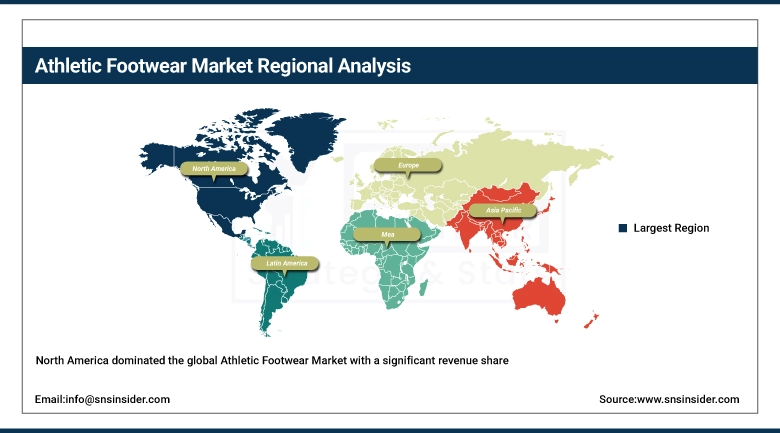
North America held the dominant position in the global Weapon Locating Radar Market with 30.59% revenue share in 2025,backed by robust defense budgets, cutting-edge modernization programs for the armed forces, and widespread adoption of battle field surveillance and counter battery capabilities. The region is aided by the existence of large defense contractors, state-of-the-art command and control structures, and sustained investment in cutting edge battlefield surveillance technology. The dominant leadership within North America is exerted by the US, which continues to emphasize precision long-range fires, artillery modernization, and battlefield awareness capabilities within its defense community.
Additionally, recent developments such as the U.S. Army continuing upgrades to AN/TPQ-series counter-fire radar systems for improved mobility and target tracking, and increasing investments in AI-enabled battlefield sensing and sensor-fusion technologies, are strengthening innovation and operational effectiveness across North America’s defense surveillance ecosystem.
Get Customized Report as per Your Business Requirement - Enquiry Now
Asia Pacific Weapon Locating Radar Market Insights
The Asia Pacific region is projected to register the highest CAGR of 8.70% from 2026–2035, As a result of the increasing border tension, enhanced efforts in military modernization, and accelerated procurement of sophisticated surveillance and artillery detection systems. Nations like China, India, South Korea, Japan, and Australia are among the key contributors, backed by growing defense expenditure and investments in battlefield intelligence solutions. The nations of India and China are expected to become the driving forces for growth owing to the ongoing indigenous development of radars and modernization of artillery systems.
Recent developments include Bharat Electronics Limited (BEL) expanding indigenous battlefield radar programs to strengthen domestic defense capabilities, while several Asia-Pacific nations accelerated procurement programs involving mobile counter-battery and long-range tactical radar systems for border surveillance and strategic force readiness.
Europe Weapon Locating Radar Market Insights
Europe remains an important player in the global Weapon Locating Radar Market owing to rising defense preparedness in the region, modernization of artillery detection systems, and increasing investments in tactical surveillance solutions. Countries like Germany, UK, France, Poland, and the Nordic countries are leading the market demand for weapon locating radar systems and counter-battery radars. Defense organizations in Europe are concentrating more on improving operational preparedness and electronic warfare capability.
Recent developments include expanded deployment activities surrounding Saab’s ARTHUR weapon locating radar systems across allied defense environments, while European defense organizations accelerated investments in advanced radar modernization programs emphasizing mobility, rapid deployment, and enhanced multi-target tracking capabilities.
Latin America, Middle East & Africa (LAMEA) Weapon Locating Radar Market Insights
The LAMEA region is seeing a consistent rise in the market size of Weapon Locating Radars owing to defense modernization trends, increasing demands in border security, and advancements in surveillance systems in emerging economies. Countries like Brazil, Mexico, Saudi Arabia, UAE, South Africa, and Israel play an important role in creating demand in the region due to border surveillance and tactical defense operations.
In the Middle East, regional defense agencies expanded procurement efforts involving mobile battlefield surveillance and counter-artillery systems to strengthen tactical readiness and territorial defense capabilities.
In Latin America, increasing military modernization partnerships and surveillance infrastructure upgrades supported demand for advanced radar and battlefield monitoring technologies.
Market Dynamics:
Growth Drivers: Rising geopolitical tensions, cross-border conflicts, and increasing artillery modernization programs accelerating demand for advanced battlefield surveillance and counter-battery capabilities
The increase in regional conflict, border dispute, and asymmetric warfare cases has become one of the significant structural factors contributing to the growth of the Weapon Locating Radar Market. The need for systems that can quickly detect and identify the source of artillery shells, rockets, and mortar fire is on the rise among defense departments. This trend is fueled by the increasing focus of modern armies on building battlefield awareness capability through investment in advanced radars.
Supporting this trend, recent conflict environments have demonstrated the strategic value of counter-battery technologies in enhancing response effectiveness and improving battlefield intelligence. Increasing deployment of long-range precision fires and mobile artillery platforms has intensified demand for radar systems capable of delivering accurate projectile trajectory calculations and rapid source-location capabilities.
Additionally, Lockheed Martin Corporation delivered its 500th AN/TPQ-53 counter-fire radar for the U.S. Army, reflecting growing military investments in mobile radar systems capable of detecting and tracking indirect fire threats across modern combat environments.
Restraints: High procurement costs and complex integration requirements for advanced weapon locating radar systems creating deployment barriers for cost-sensitive defense organizations
The high cost involved in acquiring and maintaining weapon locating radars is another problem that poses a serious barrier to the expansion of this market, especially in emerging markets with underdeveloped militaries. Radar equipment with AESA technology, signal processing capability, and electronic warfare resistance capacity is usually costly to acquire and needs sophisticated maintenance facilities. The difficulty is further compounded by integration issues in relation to control and command systems and communications in the battle zone.
Opportunities: Accelerating development of AI-enabled radar architectures and multi-sensor battlefield integration creating new growth pathways for next-generation defense ecosystems
In terms of the development process for the future of Weapon Locating Radar Market growth, an emerging trend is to integrate artificial intelligence into battlefield systems through sensor integration and network-centric operations. Defense agencies have been looking into combining their radar technology with unmanned aircraft surveillance systems, electro-optical technologies, and other real-time command network technologies to develop effective battlefield systems. The rapid evolution of digital beamforming, target classification via machine learning, and threat analysis technologies has enabled advanced radar technology beyond projectile detection systems.
Recent Developments:
-
2026: RTX Corporation expanded development activities around next-generation AI-enabled counter-fire radar architectures, focusing on enhanced target classification, sensor fusion integration, and improved battlefield survivability for future multi-domain operations.
-
2026: Lockheed Martin Corporation advanced modernization initiatives for mobile battlefield radar platforms with upgraded tracking algorithms and enhanced electronic warfare resilience capabilities designed for rapidly evolving combat environments.
-
2025: Saab AB received a major order valued at approximately SEK 1.1 billion for its ARTHUR weapon locating radar systems, strengthening artillery detection and counter-battery capabilities for modern land force operations.
-
2025: Lockheed Martin Corporation delivered its 500th AN/TPQ-53 counter-fire radar system to the U.S. Army, reinforcing growing global demand for mobile radar platforms supporting precision targeting and rapid battlefield threat identification.
Weapon Locating Radar Market Key Players
-
RTX Corporation
-
Lockheed Martin Corporation
-
Northrop Grumman Corporation
-
Thales Group
-
Saab AB
-
Leonardo S.p.A.
-
HENSOLDT AG
-
Elbit Systems Ltd.
-
Israel Aerospace Industries
-
BAE Systems plc
-
Bharat Electronics Limited
-
General Dynamics Corporation
-
Rheinmetall AG
-
ASELSAN A.Ş.
-
Indra Sistemas S.A.
-
L3Harris Technologies Inc.
-
Rostec
-
SRC Inc.
-
Textron Systems
-
Kongsberg Defence & Aerospace
Weapon Locating Radar Market Report Scope:
| Report Attributes | Details |
|---|---|
| Market Size in 2025 | USD 1.83 Billion |
| Market Size by 2035 | USD 3.83 Billion |
| CAGR | CAGR of 7.72% From 2026 to 2035 |
| Base Year | 2025 |
| Forecast Period | 2026-2035 |
| Historical Data | 2022-2024 |
| Report Scope & Coverage | Market Size, Segments Analysis, Competitive Landscape, Regional Analysis, DROC & SWOT Analysis, Forecast Outlook |
| Key Segments | • By Platform (Land-Based Systems (Vehicle-mounted, Towed, Fixed), Naval-Based Systems, Airborne Systems (Limited/Experimental Deployments)) • By Radar Type (Active Electronically Scanned Array (AESA), Passive Electronically Scanned Array (PESA), Phased Array Radars, Doppler-Based Radars) • By Range (Short Range (0–30 km), Medium Range (30–80 km), Long Range (80+ km)) • By Application (Counter-Battery Fire Detection, Border Surveillance, Force Protection, Battlefield Awareness & Target Acquisition) • By End User (Army / Ground Forces, Air Defense Units, Homeland Security Agencies, Special Forces Units) |
| Regional Analysis/Coverage | North America (US, Canada), Europe (Germany, UK, France, Italy, Spain, Russia, Poland, Rest of Europe), Asia Pacific (China, India, Japan, South Korea, Australia, ASEAN Countries, Rest of Asia Pacific), Middle East & Africa (UAE, Saudi Arabia, Qatar, South Africa, Rest of Middle East & Africa), Latin America (Brazil, Argentina, Mexico, Colombia, Rest of Latin America). |
| Company Profiles | RTX Corporation, Lockheed Martin Corporation, Northrop Grumman Corporation, Thales Group, Saab AB, Leonardo S.p.A., HENSOLDT AG, Elbit Systems Ltd., Israel Aerospace Industries, BAE Systems plc, Bharat Electronics Limited, General Dynamics Corporation, Rheinmetall AG, ASELSAN A.Ş., Indra Sistemas S.A., L3Harris Technologies Inc., Rostec, SRC Inc., Textron Systems, Kongsberg Defence & Aerospace. |

Frequently Asked Questions
The Weapon Locating Radar Market is expected to grow at a CAGR of 7.72% from 2026 to 2035.
The Weapon Locating Radar Market was valued at USD 1.83 billion in 2025.
Active Electronically Scanned Array (AESA) dominated the Weapon Locating Radar Market in 2025 with 51.29% of revenues, driven by its superior target detection accuracy, rapid electronic beam steering capabilities, multi-target tracking performance, and enhanced resistance to electronic warfare interference.
Land-Based Systems (Vehicle-mounted, Towed, Fixed) dominated the Weapon Locating Radar Market in 2025 with 67.84% of revenues, driven by extensive deployment across artillery brigades, tactical combat operations, and counter-battery missions requiring rapid detection and tracking of rockets, mortars, and artillery fire.
North America dominated the Weapon Locating Radar Market in 2025 with 30.59% of global revenues, led by the United States with its substantial defense budget, extensive battlefield modernization initiatives, and strong presence of major defense contractors including RTX, Lockheed Martin, Northrop Grumman, and L3Harris.
