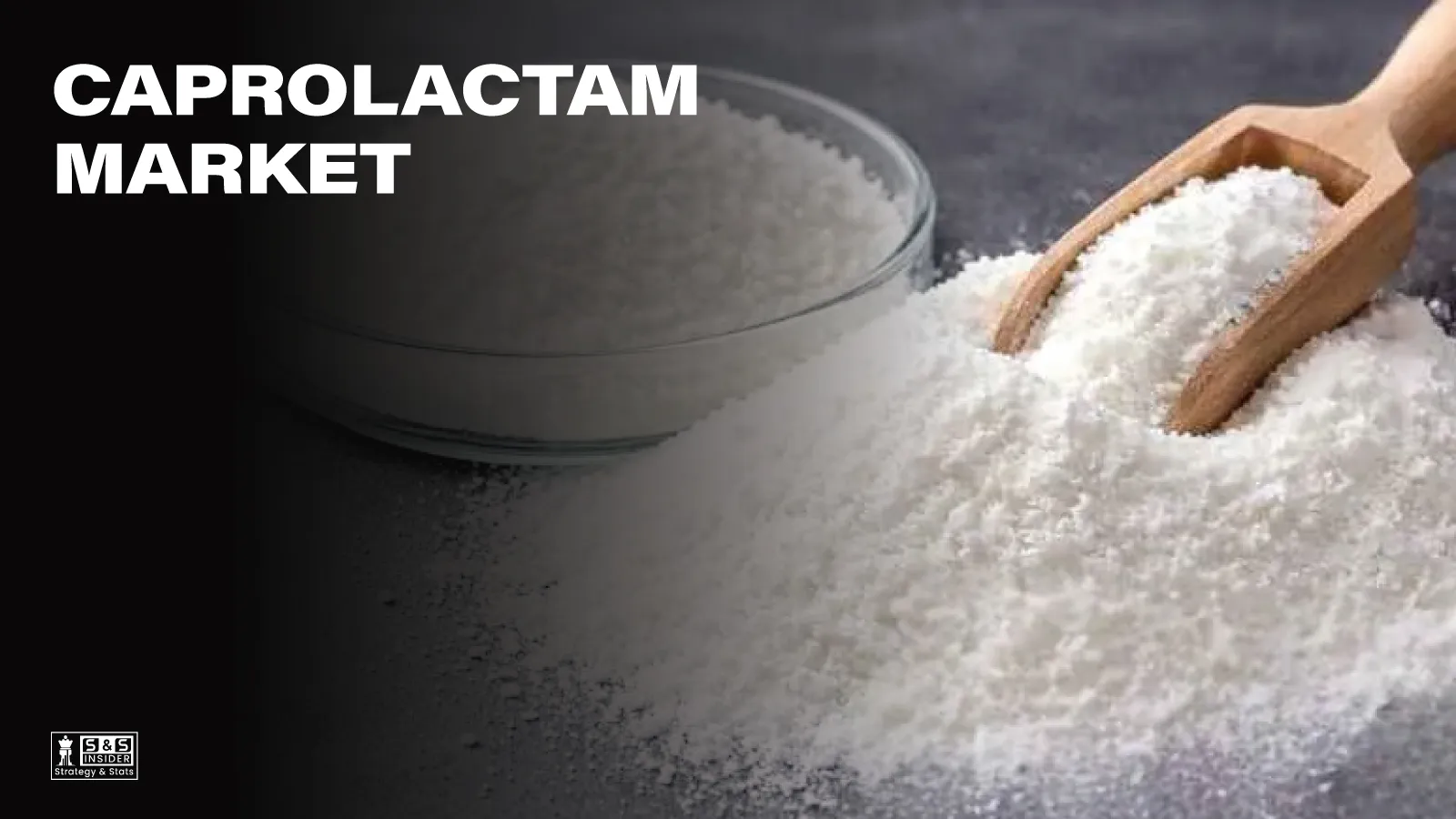
The Caprolactam Market at the global level is still on the rise since the production of synthetic fiber, automotive lightweighting program, and the manufacturing process of engineering plastic continue to drive the market demand of this basic material of nylon-6. Caprolactam is one of the key materials to produce synthetic fibers for textile and carpets, as well as engineering plastics is gaining ground owing to automakers’ transition towards using polymers rather than metals.
As reported by SNS Insider, the global Caprolactam Market size amounted to USD 16.43 Billion in 2024 and is projected to achieve USD 23.71 Billion by 2032, posting a growth rate of 4.70% due to increasing demand for synthetic fiber in textile and carpet, fast-growing automotive lightweighting programs, and increasing adoption of biodegradable feedstocks in leading producing areas.
Gain Actionable Intelligence on Caprolactam Market – Request a Sample Report
Automotive Lightweighting Is Reshaping Demand
The continued growth of electric vehicles, along with general programs on light weighting in the vehicles, is increasing the use of nylon-6 in engineering applications, resulting in a steady expansion of caprolactam usage outside its primary textiles market. The U.S. and European automakers are increasingly using nylon-6 reinforced compounds for various structural and engine compartments components, leading to diversification of caprolactam usage profiles.
This strong demand has resulted in pricing strength for producers. In March 2024, BASF increased prices by USD 0.20/lb, and then in May 2024, an additional increase of USD 0.15/lb was announced, citing the recovery of demand in high-value-added segments and the increase of feedstock prices. Producers are also increasingly setting up their capacities near the centers of car production.
Sustainability Regulation Is Reshaping Supply Dynamics
Increasing carbon emissions rules and bioeconomy policies in Europe and Asia Pacific regions are promoting the development of bio-based caprolactam processes, progressively changing the economics of the sector. As part of the EU Green Deal, the government is offering subsidies for the use of renewable chemicals technology, which is putting pressure on large players like BASF to look for alternative circular feedstock.
The Chinese integrated production plants of nylon-6 in Shandong and Hebei provinces are adopting lignocellulosic feedstock in accordance with the national policy of reducing dependence on crude oil and decreasing the carbon emissions in material production.
Regional Landscape
The Asia Pacific continues to lead as well as grow fastest, with a share of 41.2%. Industrialization, growth in the automotive and textile industries in China, India, and Japan, as well as strong government support of chemical manufacture and infrastructure developments under the Ministry of Industry and Information Technology, continues to spur demand.
Secondly, North America has a 25.1% share in which the US is the largest single-country market at USD 2.97 Billion in 2024. In 2032, the US will have reached USD 4.24 Billion, accounting for 72.1% of regional revenue. Initiatives from the U.S. Department of Energy towards environmentally-friendly manufacturing processes will continue to help this growth. The fastest growing region is Canada, with expanding chemical manufacturing infrastructure investments.
Thirdly, Europe follows with a 20.3% share where there is high demand for engineering plastics due to automobile and electronic engineering applications in Germany, aided by regulations by European Chemicals Agency to allow safer and innovative use of chemicals. Lastly, the LAMEA is the emergent region, with Brazil leading in the textile and automotive markets, while Saudi Arabia and the UAE are developing capacities in petrochemicals and textiles as part of Saudi Vision 2030 initiatives.
Companies Driving the Market
BASF SE
 Back-to-back price hikes by BASF for 2024 have been driven both by demand and increasing feedstock costs, signaling that the company is a trendsetter for how the entire industry is handling cost pressures while meeting the demands of automotive lightweighting. BASF continues to invest in developing circular feedstocks, thanks to incentives under the EU Green Deal.
Sumitomo Chemical
 Sumitomo recently developed new technology for caprolactam production in November 2024 in order to reduce emissions and energy consumption – tackling one of the greatest challenges faced by the industry: The high energy requirement in the production of caprolactam. The company has developed this innovation under growing regulatory pressure on carbon emissions.
DOMO Chemicals

DOMO conducted planned maintenance work on its caprolactam and nylon-6 plant in May 2025. The project increased operational efficiency and ensured supply continuity for clients. DOMO Chemicals is a reputable manufacturer of automotive nylon and this development will help meet the demands of the growing automotive industry and engineering plastic segment.
Other significant producers shaping the global supply landscape include AdvanSix, China Petroleum & Chemical Corporation (Sinopec), Alpek, UBE Corporation, and Zhejiang Hengyi Group.
Market Dynamics and Outlook
The volatility in the prices of feedstocks continues to be the key constraint for the industry because the caprolactam manufacturing process is highly contingent on the availability and prices of benzene and cyclohexanone, which are affected by the energy market as well. This makes producers with smaller capacities and without feedstock integration struggle with margins more, discouraging investments even at the times of increased demand.
In the coming years, the growth of auto-lightweighting applications, development of bio-based feedstocks, as well as increasing demand for films and packaging products, will ensure continued growth of the caprolactam industry up to 2032. Companies that can balance profit-taking and sustainable practices in production will be the biggest winners in the market.