Every cream, shampoo and lotion has to stay safe from the day it is made until the last use. Preservatives make this possible. As beauty brands launch more products and consumers read labels more closely, the choice of preservative has become a commercial decision as well as a technical one. That choice affects product claims, approval timelines and brand trust.
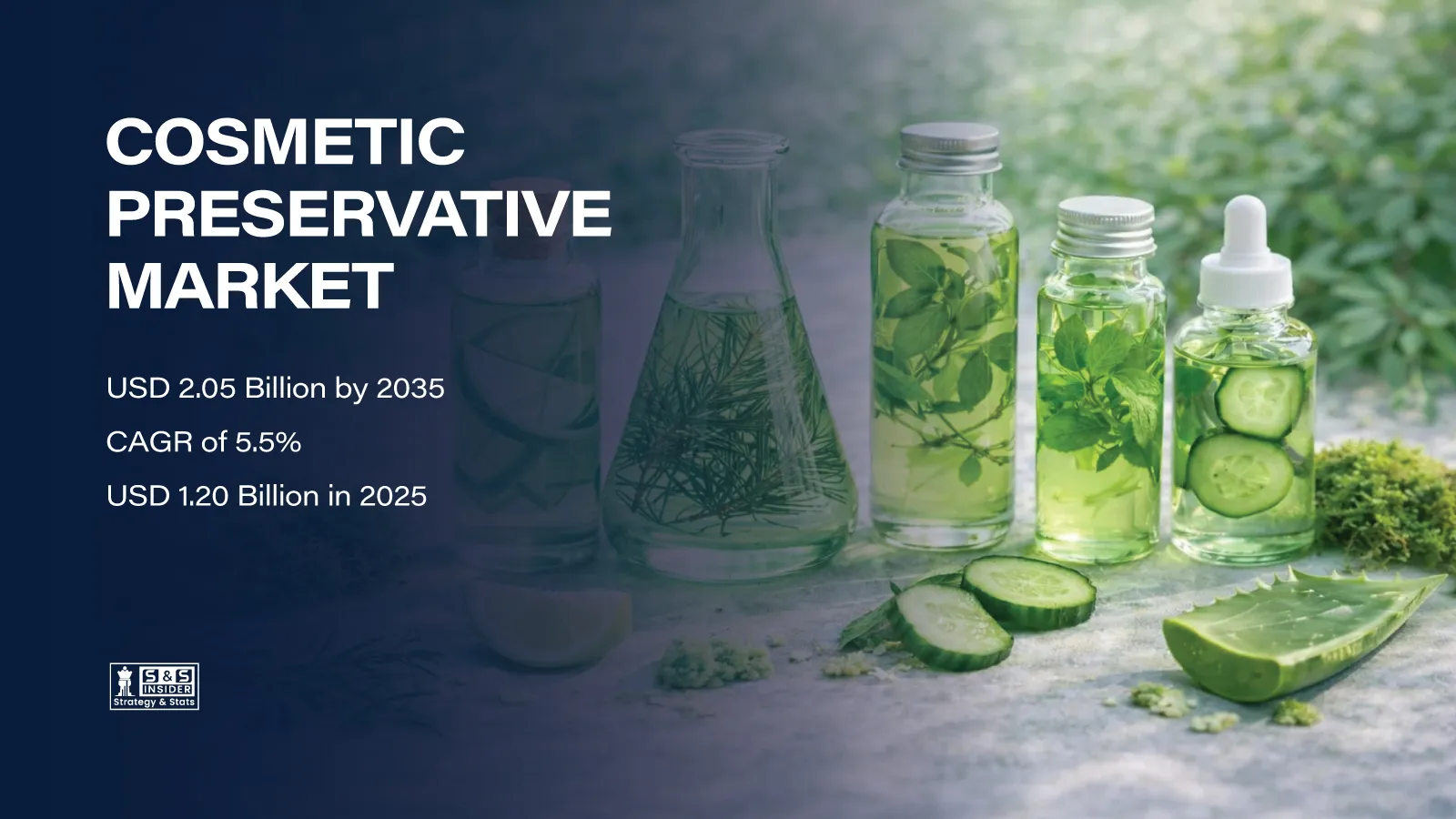
According to a recent study by SNS Insider, the global Cosmetic Preservative Market was valued at USD 1.20 Billion in 2025 and is expected to reach USD 2.05 Billion by 2035, growing at a CAGR of 5.5% over 2026–2035. The market is estimated at USD 1.27 Billion in 2026.
Gain Actionable Intelligence on the Cosmetic Preservative Market - Request a Sample Report
Label-Conscious Buyers Change the Formulation Brief
Shoppers now look at ingredient lists before they buy. Many avoid names they do not recognize or have seen criticized online. Brands respond by asking suppliers for preservatives that are effective but easy to explain on a label.
This puts new pressure on formulators. They must protect the product without weakening its "clean" positioning, and they must often do so with fewer ingredients.
Suppliers that offer ready-tested blends, clear safety data and help with claims are well placed. They save brands time and lower the risk of reformulating late in development.
Regulation Rewards Preparation
Rules on cosmetic ingredients keep tightening, and approved lists can change. When an ingredient faces new limits, brands may have to reformulate many products at once. This creates sudden demand for alternatives.
Companies that track rules closely and keep compliant options ready can turn these changes into sales. Brands value suppliers that help them move early rather than react under deadline.
Testing and documentation services add value too. Smaller brands often lack in-house regulatory teams and will pay for support that keeps their products on shelves.
Cosmetic Preservative Market Segmentation Highlights
By Type: Synthetic preservatives held about 68.4% of the market in 2025, because they are proven and cost-effective. Natural and organic preservatives are growing fastest, at an 8.1% CAGR, as brands look for cleaner positioning.
By Application: Skincare is both the largest application and the fastest-growing one, at an 8.5% CAGR. Water-rich formulas and active ingredients in this category need reliable protection.
North America Leads with 36.8% Market Share as Asia Pacific Grows Fastest
North America held about 36.8% of global revenue in 2025, and the U.S. accounted for 80.55% of the region. The U.S. market was about USD 0.31 Billion in 2025 and is expected to reach about USD 0.52 Billion by 2035, at a CAGR of about 5.4%.
Asia Pacific is the fastest-growing region, and China held 31.75% of regional demand. Rising spending on beauty and personal care, and on hair care in particular, supports local and regional product launches.
Within their regions, Germany held 23.90% of Europe, Brazil 34.20% of Latin America and the UAE 26.35% of the Middle East & Africa.
Bio-Based Preservation Opens a Premium Space
Natural options still have limits. Many cannot protect against as wide a range of microbes as synthetic options can, and this is where the commercial opportunity sits. Suppliers that close that gap with bio-based systems can charge more and win long-term contracts.
Brands with sustainability targets want ingredients that support their environmental claims. A preservative that is both effective and bio-based helps them meet those goals without risking product safety.
Partnerships between ingredient makers and contract manufacturers can speed adoption. Shared testing and faster sampling help new systems reach market sooner.
Competitive Outlook: Performance with Proof
Competition focuses on broad protection, skin compatibility and strong supporting data. Concerns about irritation and allergic reactions mean buyers want evidence, not just claims.
Suppliers with wide portfolios can offer both synthetic and natural options, which lets brands balance cost and positioning. Smaller specialists compete through niche natural systems and close technical service.
Cosmetic Preservative Market Outlook Through 2035
The market is set to grow from USD 1.20 Billion in 2025 to USD 2.05 Billion by 2035. Growth will come from skincare, cleaner labels and tighter rules. Suppliers that combine reliable protection with safe, sustainable and well-documented ingredients will be best placed to capture this demand.