
The worldwide market for radiopharmaceutical injectors is growing as hospitals and imaging centers look for safer, more accurate, and faster ways to deliver radioactive tracers to patients. These systems reduce radiation exposure for technologists, cut dose waste, and improve consistency in PET and SPECT imaging. Rising cancer diagnosis volumes, wider use of PET scans, and the growth of targeted radioligand therapies are increasing the need for reliable injection systems. Manufacturers are also adding automation and dose-tracking software, which will support market growth.
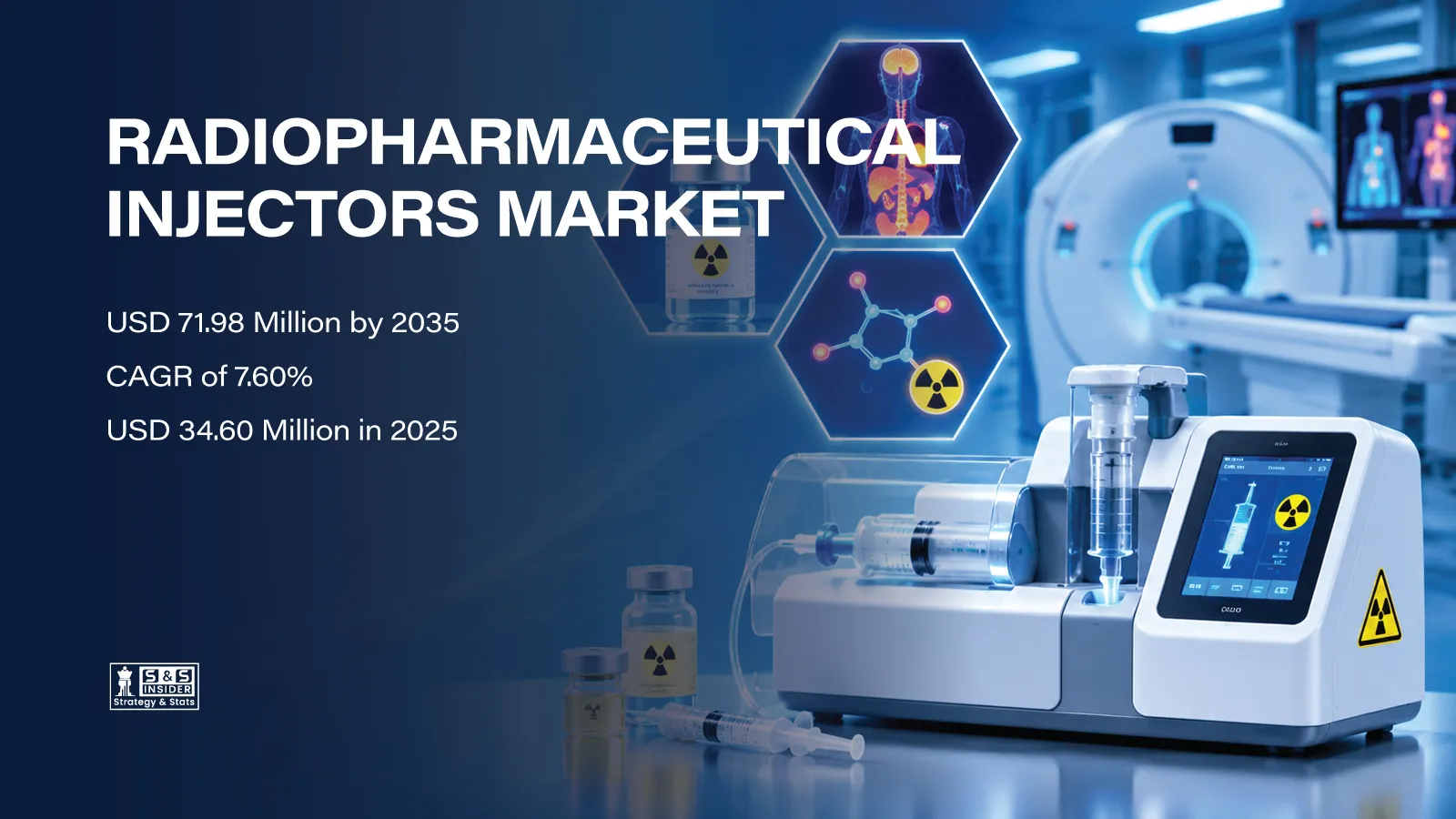
The Radiopharmaceutical Injectors Market value stood at USD 34.60 million in 2025 and is anticipated to grow to USD 71.98 million by 2035, growing at a CAGR of 7.60% in the forecast period of 2026-2035. PET injectors held around 72.40% of the market by type, while hospitals and clinics accounted for 74.80% of total demand in 2025.
Unlock exclusive market insights download the brochure to explore global Radiopharmaceutical Injectors Market trends, emerging opportunities, competitive developments, and forecasts through 2035.
Regional Analysis of the Radiopharmaceutical Injectors Market
The radiopharmaceutical injectors market is expanding across North America, Europe, Asia-Pacific, Latin America, and Middle East & Africa. North America dominated the market with around 38.40% share in 2025 owing to its large installed base of PET/CT scanners, strong radiation safety standards, and early adoption of new radiopharmaceuticals. North America is led by the US, which had a market valuation of USD 11.96 million in 2025 and is forecasted to grow at a CAGR of 7.38%. Europe accounted for around 31.20%, and Germany, France, and Italy were leading in nuclear medicine use and injector manufacturing.
Asia-Pacific will register the highest CAGR of 10.40% due to rising cancer cases, new nuclear medicine centers, and growing investment in isotope production, and the leading countries in Asia-Pacific include China, Japan, and India. Latin America and Middle East & Africa are witnessing stable growth due to improving hospital infrastructure, wider access to diagnostic imaging, and gradual adoption of PET services.
Top 10 Trends in the Radiopharmaceutical Injectors Market
-
Rising preference for automated injectors, which held 57.40% share by operation mode.
-
Fast growth of theranostic injectors, the quickest-growing type at a CAGR of 11.80%.
-
Continued leadership of oncology as the main clinical area of use.
-
Growing use of radiopharmaceuticals in neurology, including dementia and movement disorder imaging.
-
Increased focus on lowering radiation exposure for nuclear medicine staff.
-
Integration of dose tracking and reporting software with injection systems.
-
Expansion of lutetium-177 and other radioligand therapies needing precise dose handling.
-
Growing demand from research institutions for new tracer development.
-
Investment in local isotope production to secure supply.
-
Consolidation among radiopharmaceutical and nuclear medicine companies.
Radiopharmaceutical Injectors Market Growth Drivers and Opportunities
Growth prospects for the market are due to the rising number of PET and SPECT procedures for cancer, heart, and brain disorders. Manual handling of radioactive doses exposes staff to radiation and can lead to dosing errors, which is pushing hospitals toward automated systems. Regulatory approvals for new injector models are also widening product choice. For example, in May 2025, Tema Sinergie received CE marking for its ASTER automated lutetium-177 therapy dose handling system.
The growing potential is evident in theranostics, where one compound is used for both imaging and therapy. Expanding isotope capacity is also supporting wider use of these procedures. For example, in October 2026, Jubilant Radiopharma announced an expansion of its Kirkland, Quebec site to double RUBY-FILL rubidium generator capacity. High equipment costs, short isotope half-lives, strict radiation regulations, and a shortage of trained nuclear medicine staff are some challenges in this market.
Top 10 Companies in the Radiopharmaceutical Injectors Market
The radiopharmaceutical injectors industry is made up of medical device makers, radiation shielding specialists, and radiopharmaceutical producers. The competitive advantage for these companies lies in precise dosing technology, radiation safety design, regulatory approvals, and long-term relationships with hospitals and nuclear medicine centers.
-
Bayer AG (Medrad)
-
Bracco Imaging S.p.A. (ACIST Medical Systems)
-
Tema Sinergie S.p.A.
-
Eckert & Ziegler SE
-
Mirion Technologies, Inc. (Capintec)
-
Comecer S.p.A.
-
Lemer Pax
-
Curium Pharma
-
Jubilant Radiopharma
-
GE HealthCare Technologies Inc.
-
Bayer AG (Medrad)
Bayer AG is a German life sciences company active in pharmaceuticals, consumer health, and radiology. Through its Medrad brand, it supplies contrast and radiopharmaceutical injection systems to imaging centers worldwide. In February 2026, Bayer Medical Care received U.S. clearance for its MEDRAD MRXperion injector.
-
Bracco Imaging S.p.A. (ACIST Medical Systems)
Bracco Imaging S.p.A. is an Italian diagnostic imaging company offering contrast agents, nuclear medicine products, and injection systems. Its ACIST unit focuses on injection technology for imaging procedures. In November 2025, Bracco announced an expanded U.S. indication for its Max 3 syringeless injector.
-
Tema Sinergie S.p.A.
Tema Sinergie S.p.A. is an Italian company specialized in radiation shielding, hot cells, and automated dose handling systems for nuclear medicine. Its products help hospitals prepare and deliver radioactive doses safely. In May 2025, the company received CE marking for its ASTER automated lutetium-177 therapy dose handling system.
-
Eckert & Ziegler SE
Eckert & Ziegler SE is a German company focused on isotope technology for medicine, science, and industry. It supplies radioisotopes, generators, and related equipment used in nuclear imaging and therapy. In June 2026, the company opened a commercial medical isotope production site in Jintan, China, with partner DC Pharma.
-
Mirion Technologies, Inc. (Capintec)
Mirion Technologies, Inc. is a U.S. radiation detection and measurement company. Its Capintec brand provides dose calibrators and radiopharmacy equipment for nuclear medicine departments. In June 2025, Mirion Medical introduced new Capintec radiopharmacy products, including a phantom for dose calibrator testing.
Company Profile
A detailed company profile can cover:
-
Business overview and company snapshot
-
Product portfolio and application coverage
-
Market position and competitive analysis
-
Financial performance, where available
-
Recent developments, mergers, and acquisitions
-
SWOT analysis
The remaining companies can be assessed using the same framework in a comprehensive market research report.
Future Outlook of the Radiopharmaceutical Injectors Market
Growth in the radiopharmaceutical injectors industry is set to continue as PET imaging and radioligand therapies become more common in cancer and neurology care. Automated and theranostic injectors will gain wider use as hospitals focus on staff safety and dosing accuracy. Asia-Pacific will add strong new demand as nuclear medicine capacity expands. Companies offering safe, automated, and software-connected injection systems may gain a competitive edge over the forecast period.



