
The global Fiber Optic Cable industry is entering a phase of large-scale commercial expansion. Network owners now treat physical connectivity as long-life infrastructure rather than a short-cycle upgrade. Cable laid today may serve traffic for decades, so the choice of cable affects operating costs, upgrade flexibility, and service quality well into the future. This long-term view is moving fiber from a technical purchase to a strategic capital decision.
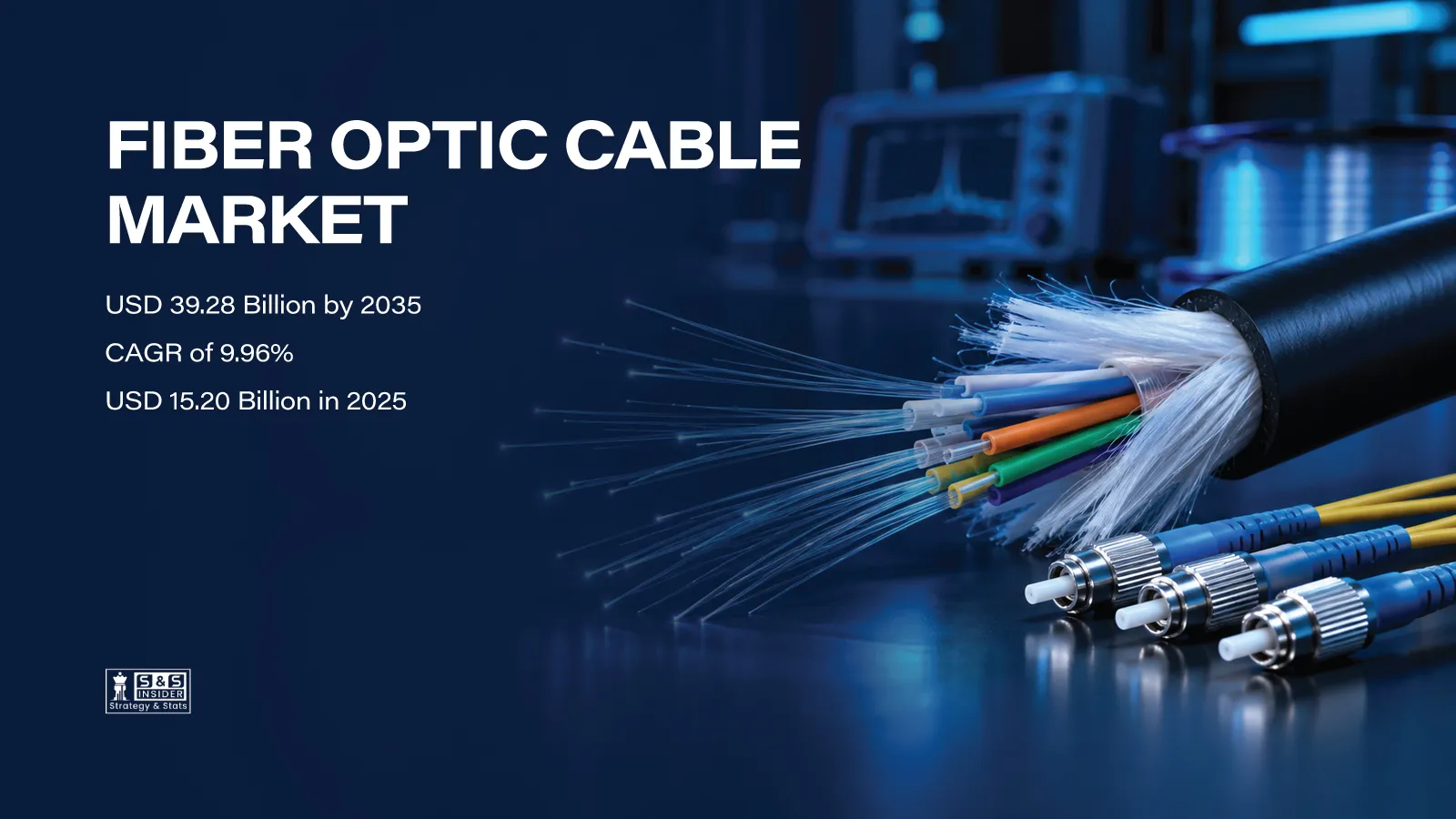
According to a recent study by SNS Insider, the global Fiber Optic Cable Market size was valued at USD 15.20 Billion in 2025 and is anticipated to reach USD 39.28 Billion by 2035, registering a CAGR of 9.96% over the forecast period 2026–2035. The market is estimated at USD 16.71 Billion in 2026.
Long-Life Network Economics Are Reshaping Purchase Decisions
Operators increasingly measure network investment by cost per connected user over many years. Labor, permits, and civil works often cost more than the cable itself. Once a trench is open or a duct is in place, adding extra fiber capacity costs relatively little.
This encourages buyers to install higher fiber counts than they need today, which protects them against future demand without repeating construction work. Cable suppliers benefit when they can show how their products lower the total cost of each deployment.
Products that install faster, need fewer splices, and fit into crowded ducts help operators finish projects sooner. Shorter build time also brings forward subscriber revenue.
To Get Detailed Insights on the Fiber Optic Cable Market – Request a Sample Report
Network Owners Are Creating Demand Beyond Traditional Carriers
Telecom operators are not the only ones buying fiber these days. Utilities, municipal bodies, private enterprises and cloud providers are all building their own networks to control capacity and cost.
The priorities of each group are different. Utilities want cable that can run alongside power lines. Cities want shared networks that can support public services and local providers. That variety allows vendors to build product lines and sales teams for specific types of buyers.
Besides the cable, design assistance, routing advice and installation training can add value. These services also assist suppliers to become a partner of choice for repeat business.
Fiber Optic Cable Market Segmentation Highlights
By Cable Type
Loose tube cable held the largest market share of 41.20% in 2025, supported by its proven use in outdoor long-distance and access routes. Ribbon cable is expected to register the fastest CAGR of 11.02%. This opens opportunities for suppliers serving high-fiber-count builds where faster mass splicing cuts installation time.
By Deployment
Underground deployment accounted for 54.60% of the market in 2025, as buried routes offer protection and long service life. Underwater deployment is anticipated to grow at the highest CAGR of 11.80%. It creates prospects for suppliers able to support subsea links between regions and data hubs.
By Application
Telecom accounted for the largest market share of 44.80% in 2025. The data center segment is expected to register a CAGR of 12.46%, driven by commercial opportunities in high-density links within and between computing facilities.
Asia Pacific Leads with 38.40% Market Share and the Fastest CAGR of 11.28%
Asia Pacific dominated the Fiber Optic Cable Market with the highest revenue share of 38.40% in 2025 and is projected to record the fastest CAGR of 11.28% over 2026–2035. Large national broadband programs and expanding cloud capacity are creating strong demand for high-volume cable supply, local production, and fast delivery.
North America held the revenue share of 28.60% in 2025. The U.S. market was valued at USD 3.83 Billion in 2025 and is expected to grow at a CAGR of 9.62%. The region offers attractive opportunities for suppliers to broadband builders, cloud operators and utilities . Here, buying decisions take into account domestic supply capacity and reliable delivery schedules.
Europe held a 20.40% share of the global market in 2025, followed by Latin America at 6.40% and the Middle East & Africa at 6.20%. Opportunities in these regions will depend on national connectivity targets, the pace of copper network shutdowns, and investment in cross-border routes.
Turnkey Supply Models Could Unlock New Commercial Opportunities
Many network builders, especially new regional providers and public bodies, lack in-house engineering depth. They want a single partner that can deliver cable, connectivity hardware, and deployment support together.
Manufacturers can reach these buyers through engineering contractors, installers and distributors . Bundled offerings translate to easier buying and reduced project risk for the customer.
The models also support recurring revenue from network expansion orders, maintenance supply agreements, technical training and testing services.
Competitive Outlook: Deployment Speed to Become a Key Differentiator
Competition in the Fiber Optic Cable industry is likely to be more than just price per kilometer in the future. Buyers want suppliers that help them build faster, secure supply on time, and minimize labor needs out in the field.
Suppliers with a combination of reliable products with stable production capacity, strong logistics and practical field support may be in a stronger position. Alliances with contractors, equipment makers and network operators can broaden commercial reach as well.
Fiber Optic Cable Market Outlook Through 2035
Over the next decade, Fiber Optic Cable is set to become the base layer for broadband, mobile, and cloud networks worldwide. Suppliers that can show clear savings in deployment cost, faster project delivery, and dependable long-term supply will be best placed to capture rising demand from carriers, data center operators, and public network programs.
About the Author

Get in touch




