
The fast development of artificial intelligence, cloud computing, and high-performance computing is rapidly changing the whole scenario of cooling for the world's data centres. Not only are modern data centres not constrained by just supporting enterprise workloads but now have the capability to perform GPU-intensive AI training, AI inference systems and edge computing that produce very high heat density. Consequently, the use of air cooling has hit its ceiling and is forcing the industry towards liquid cooling, direct chip cooling and even immersion cooling.
In today’s scenario, data centers account for a considerable amount of electricity consumption, where the amount of electricity used for cooling accounts for around a third to almost half of the entire energy consumed. Efficient cooling systems have emerged as critical investments with the increase in infrastructure expansion by hyperscale players and workloads pushing power densities above 30 to 60 kW per rack.
The data center cooling market size was estimated at USD 20.73 billion in 2025 and is anticipated to reach USD 83.54 billion by 2035, growing at a CAGR of 14.99%. The growth is highly influenced by the expansion of AI infrastructure, sustainability requirements, and increasing demand for efficient cooling solutions in hyperscale, colocation, and edge data centers.
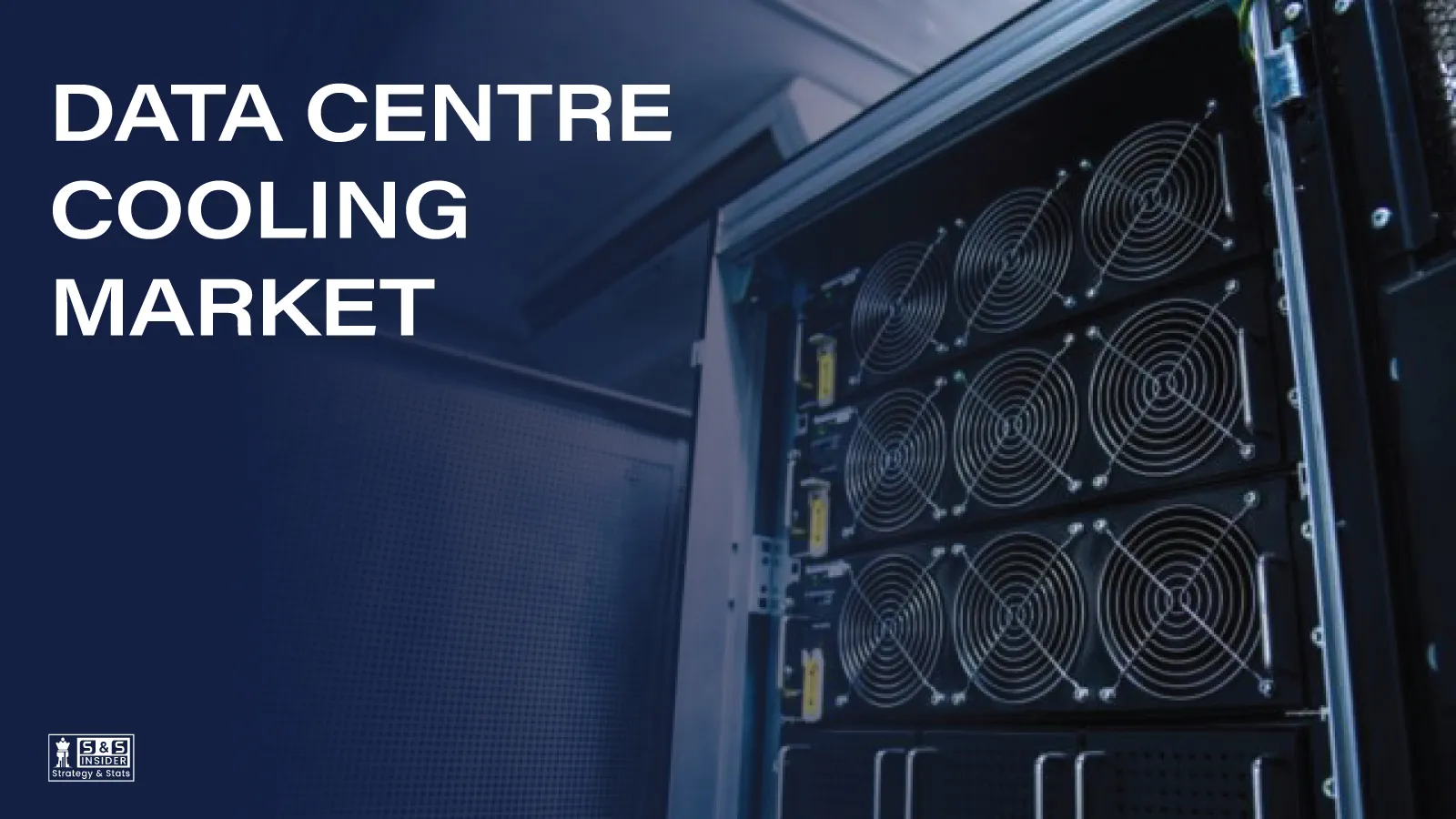
Top 5 Data Centre Cooling Companies:
1. Schneider Electric SE

Schneider Electric is a leading player in energy management and automation, serving an important role in the development of data centre cooling technology. It offers an integrated cooling solution that is an amalgamation of power distribution, heat dissipation, and digitization for large-scale data centers. The company’s cooling solution comprises precision air conditioning, liquid cooling infrastructure, and data centre infrastructure management software (DCIM) that helps in energy optimization. Schneider Electric’s products and services are widely used by cloud providers and enterprises in their search for efficient PUEs.
In 2024, Schneider Electric consolidated its role in AI cooling infrastructure through a collaboration with NVIDIA, offering optimized power and liquid cooling reference architecture for GPU-based data centres.
2. Vertiv Group Corp.

Vertiv is one of the leading companies in the supply of critical digital infrastructure and thermal management solutions for data centres globally. The company is specialized in designing cooling systems for high density computing, which include liquid cooling systems, thermal containment systems, and edge-ready cooling systems. The product offering of the company caters to hyperscale, colocation, and enterprise data centres with efficient solutions that enhance energy efficiency and cut down costs. Additionally, Vertiv is very focused on modular and prefabricated cooling systems for quick installation of the cooling system in data centres.
In 2025, Vertiv introduced the CoolPhase Flex direct liquid cooling system, which is intended for GPU workloads higher than 50 kW per rack.
3. Johnson Controls International plc

Johnson Controls offers highly efficient and effective products related to the building efficiency and heating, ventilation, and air conditioning sector. Specifically, the company specializes in cooling systems for the data center industry. Johnson Controls provides modern air handling units, chillers, and precision cooling equipment designed specifically for critical infrastructure.
Johnson Control’s cooling systems are commonly found in enterprise data centers, financial institutions, and governmental organizations with high requirements in terms of the reliability of the thermal regulation system. Additionally, Johnson Control utilizes smart buildings solutions to optimize the cooling operation through the use of predictive analytics and automation.
4. STULZ GmbH

STULZ is an expert designer of precision air-conditioning and cooling systems for data centers and industrial facilities. The company offers extremely reliable and flexible cooling solutions that are specifically designed for critical applications. These are direct expansion systems, chilled water-cooling systems, and special technologies that provide efficient airflow management in order to maintain optimum temperatures of the IT equipment. STULZ concentrates on providing efficient cooling performance with minimum energy consumption.
The company continues developing intelligent control systems and hybrid cooling systems for new generation data centers with high-density environments.
5. CoolIT Systems
 CoolIT Systems is an innovative company providing advanced solutions for liquid cooling systems used specifically for High Performance Computing and Artificial Intelligence applications. Its main focus is on providing direct chip liquid cooling solutions, which allow effective heat dissipation for systems with intensive GPU and CPU loads. CoolIT systems allow data centre companies to increase the density of racks while maintaining stability and energy efficiency. Its systems are used by many major cloud providers and AI infrastructures.
The company is constantly expanding its liquid cooling ecosystem, as more and more AI training clusters need extreme thermal efficiency.
Future Outlook
The developments within the cooling technology in data centres will be driven by the rapidly changing requirements of AI-based workloads and the development of energy-efficient digital infrastructure. With growing power density of GPUs, liquid cooling technology will move from niche to mainstream technology used in high performance data centres.
AI-based cooling technology will help optimize the cooling process, and thus minimize the power use, through dynamic control of thermal load according to the current requirements of the workload. Modular and pre-assembled cooling technologies will speed up the implementation of data centres.
Sustainability shall be another critical factor, with operators increasingly using low-carbon refrigeration technology, free cooling and improved methods for harnessing heat. Designs for water-efficient cooling solutions shall become vital in areas where there is resource limitation.
In summary, the organizations that embrace advanced cooling technologies coupled with intelligent software integration and effective infrastructures shall be the future of the data center industry, allowing the world’s digital ecosystem to cater for the requirements of AI and cloud computing.



