
U.S. military electro-optical and infrared industry is growing due to increased demands for sophisticated surveillance, reconnaissance, targeting, navigation, and situational awareness technologies in defense modernization efforts. EO/IR systems help conduct day and night operations on aerial platforms, unmanned platforms, land platforms, naval systems, and precision guided munitions. Enhancements in thermal imaging, high resolution sensors, multispectral detection systems, artificial intelligence and sensor fusion technologies are aiding in improving the detection capabilities of defense platforms.
According to SNS Insider, the U.S. Military Electro-Optical and Infrared (EO/IR) Systems Market was valued at USD 2.69 billion in 2025 and is expected to reach USD 3.98 billion by 2035, growing at a CAGR of 4.01% from 2026 to 2035. Globally, the market was valued at USD 8.93 billion in 2025 and is projected to reach USD 13.51 billion by 2035, registering a CAGR of 4.52%. Growth in the U.S. is fuelled by defense modernization, need for superior intelligence, surveillance and reconnaissance technology, and development of high-resolution sensing and night vision technologies. The combination of EO/IR payloads on unmanned vehicles and AI-driven analysis along with networking of command and control is aiding procurement and upgrading programs.
Gain Actionable Intelligence on this Market – Request a Free Sample Report
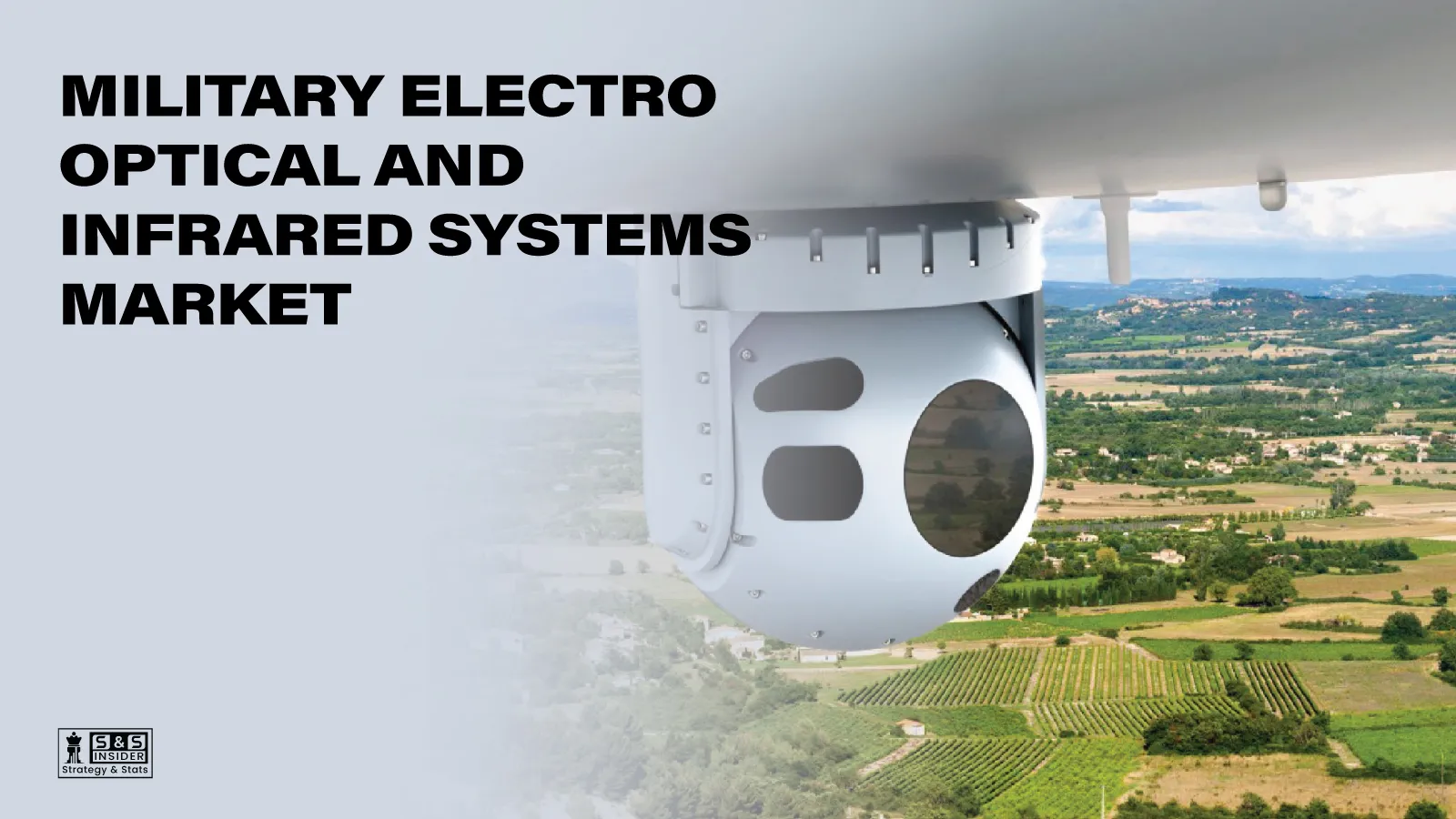
Modernization and Unmanned Platforms Are Shaping U.S. EO/IR Demand
North America occupied 36.80% of the total Military EO/IR Systems Market share in 2025 due to highly developed defense infrastructure, increased expenditure, defense majors, and investments in surveillance camera systems and targeting technology. The US has emerged as a key contributor as military wings are upgrading their sensor technology across different defense platforms. The airborne platforms contributed about 58% of the market in 2025, which can be attributed to the extensive usage of the EO/IR systems in fighter jets, reconnaissance platforms, transport aircrafts, and UAVs. The land platforms have emerged as the fastest growing segment due to the increased adoption of different types of sensing equipment by the land force.
Sensors & Detectors constituted about 34% of the market demand and are the key components in imaging and thermal detection systems. Laser Designators & Illuminators are seeing higher growth due to increasing requirements in precision targeting and guided munition systems, range finding and multi-platform compatibility. Infrared systems constitute about 35% of the market demand because of the use of infrared systems in night and low visibility operations, surveillance and target acquisition. Hyperspectral Systems are witnessing faster growth because of their superior target identification capabilities.
The applications of Surveillance and Reconnaissance constituted about 33% of the application demand and Navigation & Guidance are witnessing higher growth as EO/IR systems are increasingly becoming compatible with UAVs, Missiles, Autonomous Platforms and Precision Guided Platforms.
Companies Supporting U.S. EO/IR Modernization
Lockheed Martin Corporation
 Lockheed Martin specializes in next-generation EO/IR sensors, target acquisition systems, and surveillance equipment. Its range of EO/IR technology can be found in various situational awareness, passive detection, and precise target acquisition systems in the United States. In October 2024, Lockheed introduced upgrades to its Legion Pod IRST21 system, including long-range passive detection and artificial intelligence-based tracking features. It is currently integrating its system into the F-15EX and F-16 aircraft fleets.
Northrop Grumman Corporation
 Northrop Grumman manufactures EO/IR sensors, targeting pods, and surveillance systems for air, ground, and naval use. In March 2024, Northrop Grumman was awarded a USD 215 million contract by the United States Air Force to provide LITENING Advanced Targeting Pods that feature mid-wave and short-wave infrared sensors. The contract will help to perform precision-strike operations on F-16 and A-10 airplanes and shows continuous interest from the United States in advanced EO/IR sensors technology for its aircraft.
Raytheon Technologies Corporation
 Raytheon produces electro-optical/infrared sensors, target acquisition systems, thermal imaging systems, and surveillance systems for military aviation, naval and ground combat systems. The company's technology is used for target acquisition, intelligence gathering, and precision targeting. In May 2024, Raytheon won a USD 498 million Department of Defense (DoD) contract for AN/AAQ-28(V) LITENING G4+ targeting pods with improved thermal imaging, laser rangefinding, and artificial intelligence-based target recognition capabilities.
U.S. Military EO/IR Systems Outlook Through 2035
U.S. EO/IR systems market will see growth throughout the forecast period up to 2035 because of the modernization of aerial, terrestrial and maritime information market platforms coupled with rising investments in unmanned vehicles, sensor fusion, thermal imaging, hyperspectral sensing, and AI-based image processing. High cost of development, procurement, maintenance, and integration are key factors impacting the growth.
As the U.S. Military EO/IR Systems Market will reach USD 3.98 billion in 2035, demand is projected to focus on high resolution sensors, intelligence analysis capabilities, light weight payloads, upgrade of existing platforms, and lifecycle management capabilities. EO/IR solutions providers with advanced sensing and processing capabilities as well as reliable support will be crucial players in U.S. defense modernization.



