
The non-alcoholic beer market within the United States is becoming more prominent in everyday beverage consumption due to health conscious living, sober curious behavior, better brewing technology, and increased distribution. From being a product that was primarily considered an alternative, non-alcoholic beer has become one that competes against regular beer, functional drinks, and premium beverages. The taste improvement, greater range of styles, and increased acceptance by younger consumers have aided manufacturers in broadening the market beyond just times when alcohol is avoided.
According to SNS Insider, the U.S. Non-Alcoholic Beer Market was valued at USD 3.44 billion in 2025 and is projected to reach USD 6.41 billion by 2035, growing at a CAGR of 6.42% from 2026 to 2035. Globally, the Non-Alcoholic Beer Market was valued at USD 21.72 billion in 2025 and is expected to reach USD 41.70 billion by 2035, registering a CAGR of 6.74%.
Gain Actionable Intelligence on the Non-Alcoholic Beer Market – Request a Free Sample Report
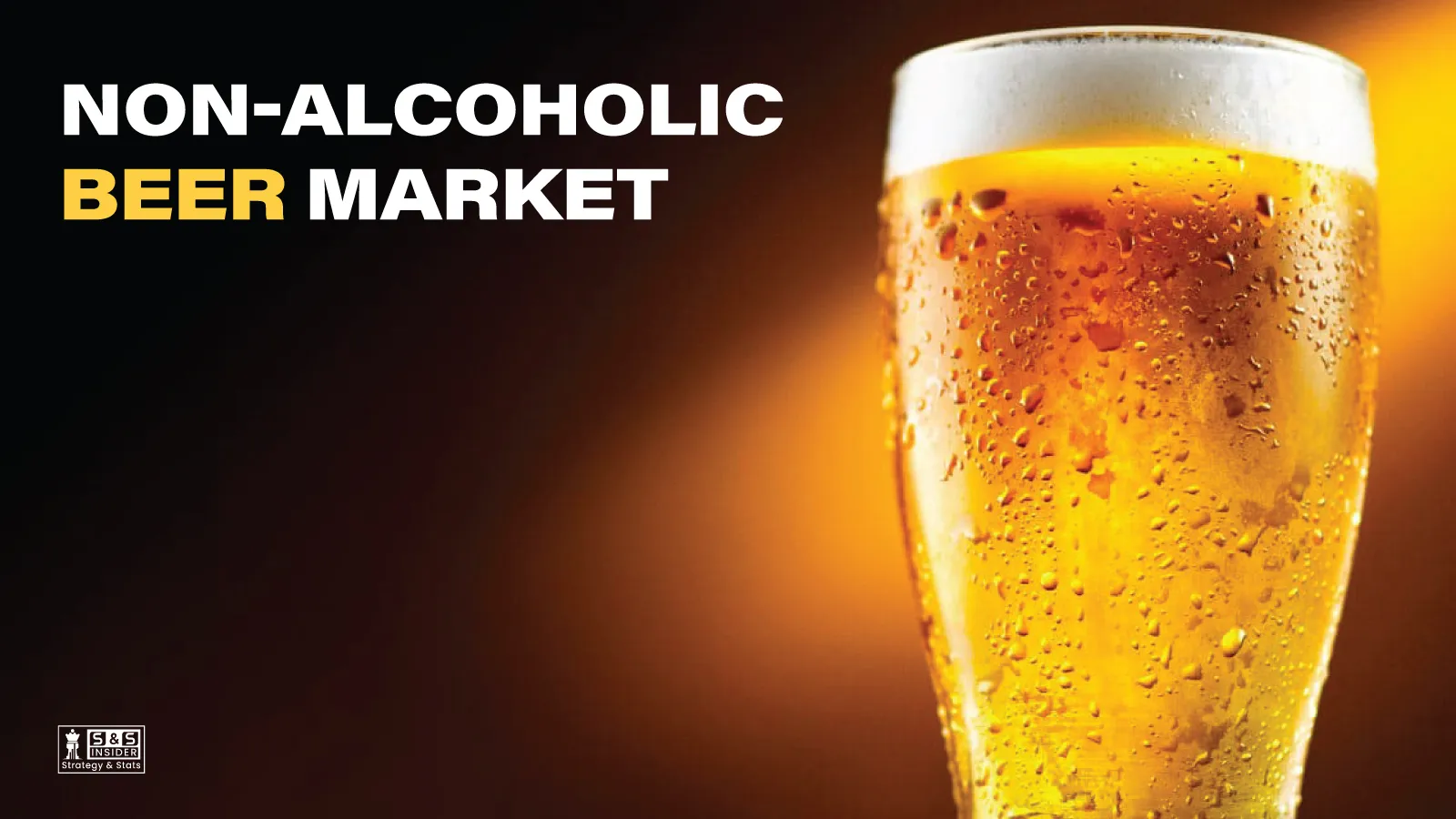
Mindful Drinking Is Reshaping U.S. Beer Consumption
The biggest change in the American market is the rising acceptance of sober drinking as a trend instead of a mere prohibition. The sober-curious population, adult population focused on wellbeing, young population, and population seeking moderation are increasingly adopting the idea of non-alcoholic beers in their social events. Advances in brewing technology and de-alcoholization techniques are also decreasing the difference in flavor between conventional and non-alcoholic beers. Vacuum distillation, controlled fermentation, reverse osmosis, and many others are among the developments in brewing that are helping firms produce better-tasting beverages.
Low-alcohol beers account for approximately 60.00% of market revenues in 2025 due to the unique features of both beer and lower levels of alcohol. Nevertheless, the fully non-alcoholic beverages are expected to experience much higher growth rates at 8.90% CAGR as demand for 0.0% rises. Packaging is also evolving alongside with changing demands. The bottles accounted for approximately 52.30% of revenues in 2025, but cans are expected to have much higher growth rate due to their convenience and recyclability. The supermarkets and hypermarkets still hold the biggest distribution channel position with approximately 48.60%, but online retailing is expected to see growth at 10.20%.
Companies Expanding the U.S. Non-Alcoholic Beer Category
Athletic Brewing Company
 The Athletic Brewing Company has become one of the key players in thes market for non-alcoholic craft beers in the United States through its ability to differentiate itself, diversify flavors, and increase its presence in the retail market. By 2026, the company had expanded production facilities and diversified flavors as a result of increased consumer demand for alcohol-free craft beers market. It is characteristic of the company to adopt the general trend toward producing premium non-alcoholic beverages with an emphasis on taste and diversity rather than elimination of alcohol content.
Heineken N.V.
 The Heineken brand remains resilient in non-alcoholic beers through the already existing Heineken 0.0 branding initiative and continuous investments in the production and distribution of the beverages internationally. In 2025, the company changed its Heineken 0.0 branding strategy and formulation in its efforts to bridge the gap that exists in flavor between alcoholic and non-alcoholic beers. Heineken enjoys significant brand name awareness and distribution channels, giving it an edge among Americans who view non-alcoholic drinks not only as substitutes but also for socialization and daily use.
Anheuser-Busch InBev
 Anheuser-Busch InBev has increased its involvement in the non-alcoholic beers market sector using proven brands as well as innovation of new products in this sector. In 2026, Anheuser-Busch InBev introduced new flavors to its Budweiser Zero line in order to address consumers' needs for traditional beer brands but without the alcohol content. This strategy is part of increased competition between leading brewers due to the rising importance of non-alcoholic beer as a drink market segment. Major breweries, including Anheuser-Busch InBev, have large distribution networks and high brand recognition.
Market Challenges and U.S. Outlook Through 2035
Even with great growth opportunities, taste continues to be a concern for some people. There are still many consumers who view non-alcoholic drinks as less flavorful than regular beer, despite the advances in the brewing technology. The manufacturing process itself may also entail the need to invest more in alcohol extraction or fermentation controls, hence becoming more costly compared to normal brewing processes. Nonetheless, wider distribution, innovations from craft breweries, e-commerce, high-end offerings, and consumer trends favoring moderation can drive future growth. Collaborations with restaurants, health-conscious shops, supermarkets, and food service providers can help make non-alcoholic beer a standard drink option.
In the United States, the non-alcoholic beer market is predicted to reach USD 6.41 billion through 2035, thanks to sober curious lifestyles, better-tasting non-alcoholic drinks, wider alcohol-free beer selections, and improved distribution. Drinks that provide good taste and a range of flavors together with convenience and distribution will stay relevant as non-alcoholic beer becomes mainstream in the U.S. beverages market.



