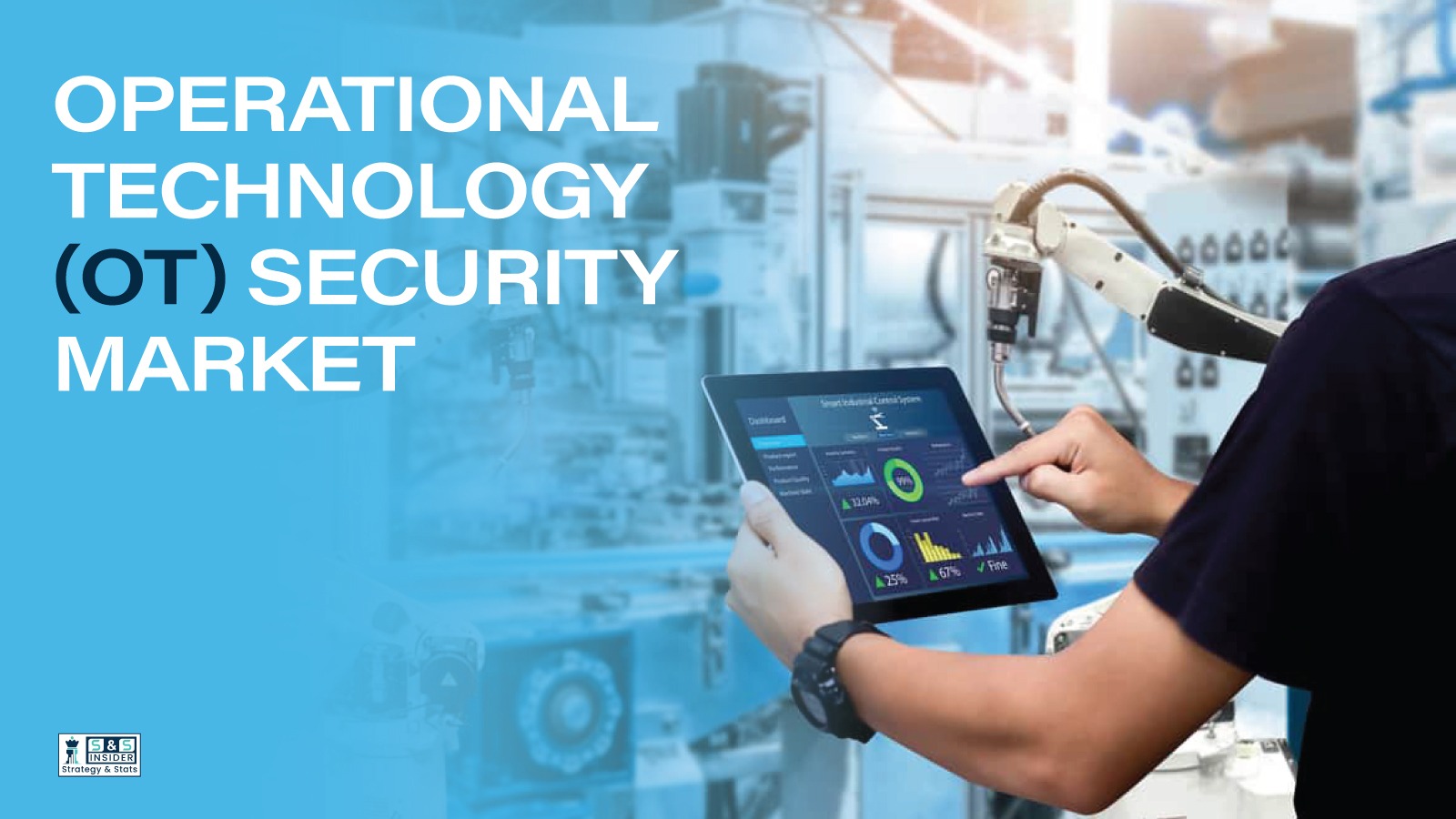
There is tremendous growth being observed within the OT Security Market. This is owing to cyberattacks targeting critical infrastructures, high adoption of Industrial IoT, smart manufacturing, initiatives under Industry 4.0, and IT/OT convergence. As companies continue to connect their industrial processes using the Internet of Things, there has been an immense investment in OT security technologies to ensure smooth business operations, meet regulatory obligations, and maintain cyber resilience. The latest OT security solutions include the use of artificial intelligence, machine learning, behavioral analytics, threat intelligence, and real-time monitoring of the network.
Global Operational Technology (OT) Security Market value stood at USD 44.34 Billion in 2025 and is projected to reach USD 178.93 Billion by 2035, recording a CAGR of 14.97% during the forecast period of 2026–2035. Market growth will be propelled by the increased number of cyberattacks against industrial control systems, increased deployment of connected infrastructures, stringent regulations, and the rising demand for predictive security solutions. Cloud-Based OT Security, Managed Security Services, and Artificial Intelligence-based threat detection are also adding momentum to market growth.
Key Players:
The major firms involved in the Operational Technology (OT) Security Market are Fortinet, Cisco, Tenable, Seckiot, Check Point, Broadcom, Trellix, Microsoft, Okta, Palo Alto Networks, Qualys, Zscaler, CyberArk, Rapid7, Kaspersky, SentinelOne, Thales, Armis, Darktrace, and Nozomi Networks.
Strategic Developments & Industry Innovations:
-
In March 2025, Fortinet added OT security platform capabilities that include improved OT threat visibility, hardened network segmentation, 5G security, and automation in compliance management for critical infrastructures.
-
In March 2025, Cisco completed the acquisition of Splunk to provide better cybersecurity, analytics, and AI in order to achieve smart threat detection and automation of security operations in OT systems.
-
In March 2025, Tenable announced the introduction of Tenable One for OT/IoT to manage the risks associated with all IT, OT, and IoT systems.
Top Companies Transforming Industrial Control System Cybersecurity Technologies:
1. Fortinet: Advancing AI-Powered OT Security and Critical Infrastructure Protection

Fortinet is a global cybersecurity giant that provides end-to-end OT security solutions for industrial control systems, critical infrastructures, manufacturing plants, utilities, transportation systems, and energy production systems. Its integrated services include network segmentation, threat detection, asset management, zero-trust security models, intrusion prevention, and security operation centers.
It keeps building its market leadership through initiatives such as AI-powered threat intelligence, automated incident response, industrial secure networking, and cybersecurity compliance. Fortinet’s commitment to securing operational environments has made it an ideal security partner for companies modernizing their industrial cybersecurity approaches across the globe.
2. Cisco: Securing Connected Industrial and Operational Technology Ecosystems
Cisco is an innovator in network security technologies, which help industries in their digital transformation efforts, including manufacturing, utility companies, transportation networks, and critical infrastructures. The organization offers security solutions in the domain of operational technology that offer features such as network visibility, threat intelligence, access control, industrial segmentations, and cloud security.
The organization continually invests in strengthening its security solutions for industries by developing AI-based analytics tools and advanced threat management capabilities. The organization’s acquisition of Splunk will allow it to integrate security analytics in its offerings.
3. Tenable: Driving Unified Exposure Management Across IT, OT, and IoT

Tenable is one of the top cybersecurity firms that focuses on exposure management, vulnerability assessment, asset discovery, and risk prioritization in industrial settings. Tenable OT security solution gives comprehensive visibility to industrial control systems, operational assets, Internet of Things (IoT), and infrastructure networks.
Further, Tenable is constantly improving its platform by incorporating sophisticated risk analysis, threat detection, vulnerability intelligence, and security management features. Increased focus by Tenable towards converged IT/OT security provides greater insights into cyber risks for companies.
How OT Security Technology is Transforming Industrial Cyber Defense?
Market growth for the Operational Technology (OT) Security market is likely to occur over a period of time because there will be an increase in industrial digitalization, smart manufacturing, critical infrastructure improvements, and Industrial Internet of Things implementations. Developments in artificial intelligence and machine learning, cloud security, predictive threat analytics, and automated incident responses will be some of the key factors that will continue to drive changes in industrial cybersecurity practices.
Some of the firms that have been playing major roles in developing new and innovative approaches to OT security include Fortinet, Cisco, and Tenable. These companies are coming up with integrated security platforms, AI-driven threat intelligence, industrial asset visibility tools, and resilient cybersecurity measures that can protect critical infrastructure assets from threats such as cyber attacks.