
The orthopedic prosthetic device industry is growing into a steady business. More people need artificial limbs, and they expect devices that fit better and last longer. Manufacturers, clinics and rehabilitation providers are seeing demand for both the device and the long-term care that comes with it. Each user becomes a relationship that can last for years.
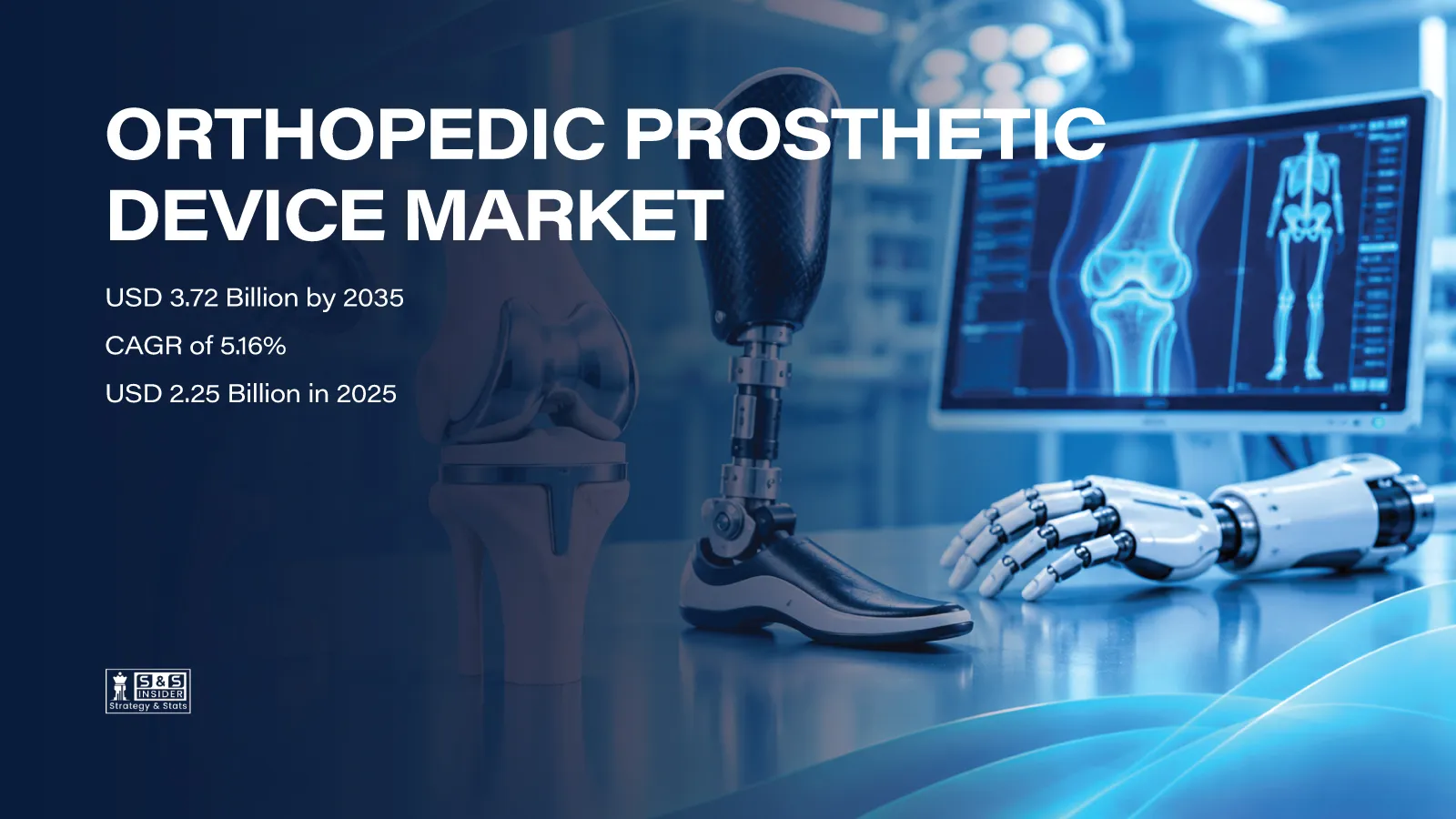
According to a recent study by SNS Insider, the global Orthopedic Prosthetic Device Market was valued at USD 2.25 Billion in 2025 and is expected to reach USD 3.72 Billion by 2035, growing at a CAGR of 5.16% over the forecast period 2026–2035.
Gain Actionable Intelligence on the Orthopedic Prosthetic Device Market - Request a Sample Report
A Product That Comes with a Long Service Life
A prosthetic limb is not a one-time purchase. Users return for fittings, adjustments, new sockets and replacement parts as their bodies and activity levels change. This creates repeat business for clinics and suppliers.
Providers that offer care across the full life of a device can earn more from each patient than those that only sell hardware. Service plans and scheduled check-ups help users and give providers more predictable income.
This also changes what buyers look for. Patients and clinics value suppliers that keep parts available, support older models and train local technicians. Reliability after the sale matters as much as the device itself.
Comfort and Fit Are Becoming Selling Points
Users judge a prosthesis by how it feels during a full day of use. Weight, socket comfort and ease of movement shape whether a device is worn or left unused. This puts design quality at the center of buying decisions.
Lighter materials and devices made to each user's body are gaining attention. They cost more, but users who stay active and comfortable see clear value in them.
Manufacturers that can produce custom fits quickly and at a fair price have an advantage. Digital scanning and faster production make this more practical for clinics of all sizes.
Orthopedic Prosthetic Device Market Segmentation Highlights
By Product Type: Lower limb prosthetics held 60.80% of the market in 2025. Custom vs. standard prosthetics are growing fastest, at a 6.16% CAGR, as users seek a better fit.
By Material: Titanium and alloys accounted for 37.12% in 2025. Carbon fiber is the fastest-growing material, at a 5.59% CAGR, because of its low weight.
By Technology: Conventional devices held 50.87% in 2025. Electric-powered devices are growing fastest, at a 5.47% CAGR, with demand for more natural movement.
By End User: Hospitals and clinics held 55.85% in 2025. Home care and personal use is the fastest-growing end user, at a 5.80% CAGR.
North America Leads with 38.60% Market Share as Asia-Pacific Advances at 6.04% CAGR
North America held 38.60% of the market in 2025. The U.S. was valued at USD 653.29 Million and is expected to reach USD 1,071.26 Million by 2035, at a 5.07% CAGR. Strong clinic networks and insurance support keep demand steady.
Asia-Pacific is the fastest-growing region, at a 6.04% CAGR, with China in the lead. Wider access to hospitals and rising incomes are bringing more patients into care.
Europe is the second-largest regional market, led by Germany. Latin America and the Middle East & Africa are smaller but growing steadily as care networks expand.
Home Care and Remote Rehabilitation Could Open New Revenue
Much of a prosthetic user's recovery happens after leaving the clinic. Home care and remote rehabilitation let providers stay in touch with patients without frequent visits. This suits elderly users and people far from specialist centers.
Remote check-ins, guided exercise programs and device monitoring can be sold as ongoing services. Providers keep patients engaged and spot problems early, before a device fails or stops being used.
For manufacturers, home care opens a new sales channel. Devices that are easy to adjust and maintain at home will appeal to this growing group of users.
Competitive Outlook: Fit, Cost and Long-Term Support
Competition centers on comfort, durability and the ability to serve users over many years. Suppliers with broad product ranges and strong clinic relationships hold an advantage, while smaller firms compete through custom designs and specialist devices.
Cost remains a challenge. Advanced powered devices are expensive to buy and maintain, especially in lower-income markets. Suppliers that offer durable mid-range options and flexible payment models can reach buyers that premium products cannot.
Orthopedic Prosthetic Device Market Outlook Through 2035
The market is set to grow from USD 2.25 Billion in 2025 to USD 3.72 Billion by 2035. Growth will come from rising demand for better-fitting, lighter devices and from wider use of home-based care. Companies that combine good design with reliable service and fair pricing are best placed to grow over the next decade.



