
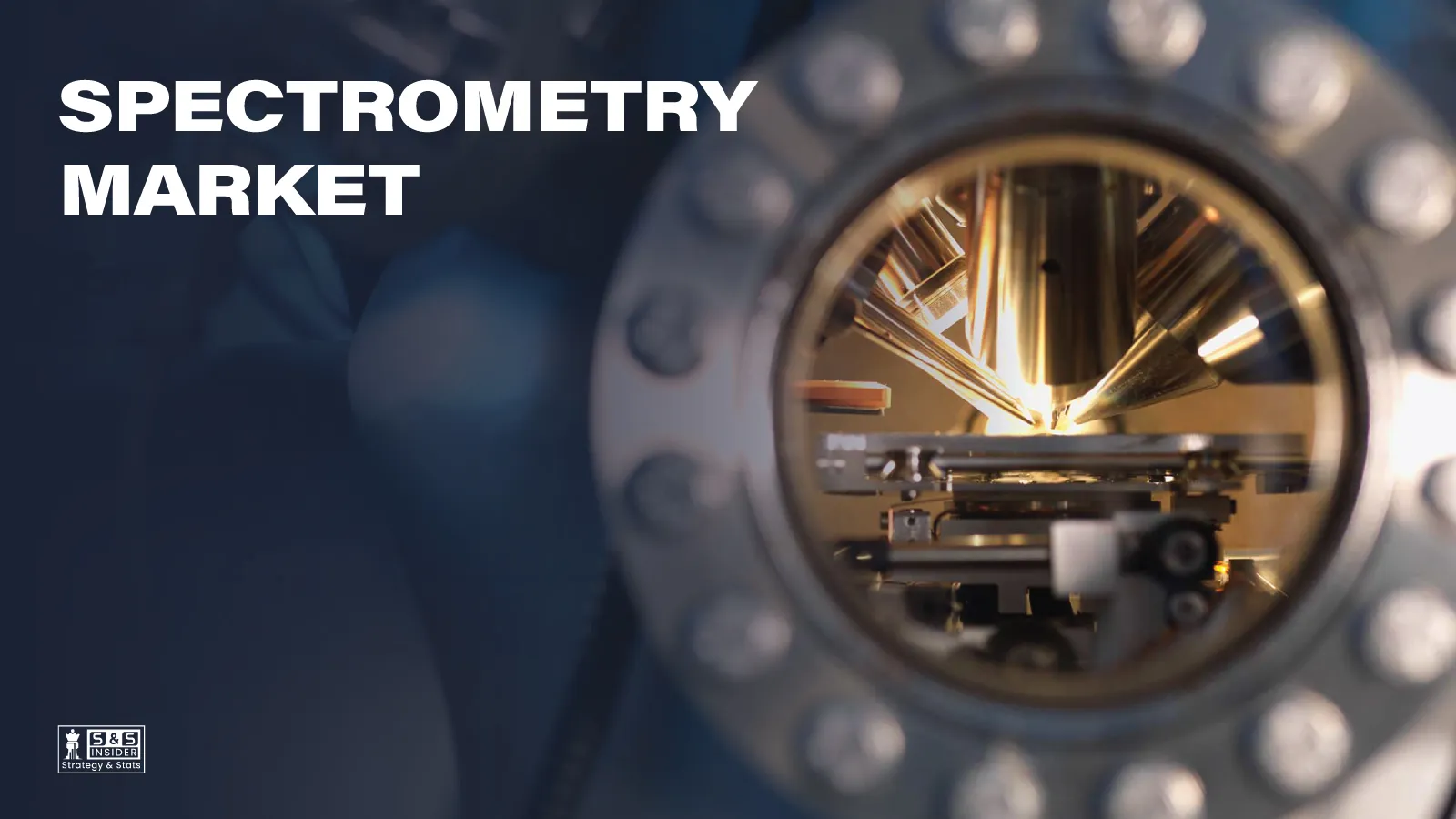
The global spectrometry market is growing, given the increasing reliance of pharmaceutical firms, biotechnology labs, environmental authorities, food producers, chemical firms, and research institutes on sophisticated analysis procedures. With the help of spectrometry, laboratory analysts can detect, measure, and classify chemicals in a wide variety of samples. This makes spectrometry vital in drug discovery and development, quality control processes, environmental monitoring, food safety, and material research. Increasing regulatory compliance, enhanced sensitivity demands, and need for speedy analytical processes are driving growth in the sector.
According to SNS Insider, the Spectrometry Market was valued at USD 20.04 billion in 2025 and is expected to reach USD 42.95 billion by 2035, registering a CAGR of 7.92% from 2026 to 2035. Demand for high-resolution and high-sensitivity spectrometers has increased by nearly 25% in recent years as regulatory and safety requirements become more stringent across major industries.
Gain Actionable Intelligence on the Spectrometry Market – Request a Free Sample Report
Advanced Analytics and High-Precision Testing Drive Market Demand
QA & compliance requirements continue to be significant factors for the usage of the technology. In pharmaceuticals, analytical devices are used to identify chemical compounds, analyze their purity levels, perform drugs characterization and testing, and develop new formulations. Organic Food and beverage companies use spectrometers to detect contaminants and ensure the safety of products. Environmental laboratories apply the technology for monitoring the content of pollutants, emissions, contaminants in water supplies, and other hazardous substances.
The share of molecular spectrometry was approximately 38.10% in 2025, which makes the technology one of the largest technology categories in the market. Application in pharmaceutical, environmental, food, chemical, and other industries guarantee further demand. The mass spectrometry market segment is forecasted to demonstrate the highest CAGR of approximately 9.34%. This growth will be driven by developments in proteomics, metabolomics, biotechnology, and pharmaceutical research. The share of instruments was approximately 60.70% in 2025 due to the large installed base that is needed in laboratories and industrial facilities. The consumption of consumables is expected to increase faster with CAGR of 9.60%.
Companies Advancing the Global Spectrometry Industry
Thermo Fisher Scientific, Inc.
 Thermo Fisher Scientific offers mass spectrometry, atomic absorption, infrared, and integrated analytical tools for pharmaceutical, biotech, environment, chemicals, and life sciences. These tools can be used to identify compounds, conduct quantitative analysis, quality control, and conduct research. In March 2025, Thermo Fisher introduced the new Orbitrap Ascend Spectrometer for better resolution and sensitivity of analysis in proteomics and pharmaceuticals. This is an indication of increasing needs for top-notch analytical tools that can handle research processes with improved sensitivity and performance in life sciences and biotechnology labs.
Agilent Technologies, Inc.
 Agilent Technologies is a supplier of products such as mass spectrometry, UV-Vis, atomic spectrometry, software, and workflow solutions that are used in the fields of pharmaceuticals, biotechnology, environmental analysis, and food safety. The company highlights such aspects as accuracy of analysis, reliability of systems and hardware-software workflow. In April 2025, the company launched the Ultivo Krios LC/MS system, which is a combination of a liquid chromatograph and mass spectrometry. This system was designed to provide faster and more reliable analytical workflow, considering the need for high-performance instruments with efficient laboratory use.
PerkinElmer, Inc.
 PerkinElmer offers mass, infrared, and atomic spectrometry technologies for use in healthcare, environmental monitoring, food testing, and industrial analysis. PerkinElmer’s instrumentation is complemented by automation, analysis software, and workflow tools which help achieve higher sensitivity and increase efficiency of laboratory work. In June 2024, PerkinElmer released the Clarus 690 GC MS with Enhanced Detection Suite which offers increased sensitivity for environmental and food safety analysis. This product release shows the continuous commitment of the company to provide analytical platforms which can help laboratories satisfy the regulation and offer better detection capabilities.
Global Spectrometry Outlook Through 2035
The spectrometry market is projected to continue experiencing healthy growth up to 2035 due to expanding applications in pharmaceutical studies, environmental analysis, food safety, precision medicine, and quality control. Portable spectrometers, artificial intelligence-driven analytics, high-resolution mass spectrometry, and automation will continue increasing the number of applications.
Expensive devices, high levels of technical knowledge needed to operate them, complicated maintenance, and the necessity for specialists can be regarded as some of the major obstacles in spectrometer use. The development of new, smaller instruments and software can potentially reduce barriers in the future. As the global Spectrometry Market reaches USD 42.95 billion by 2035, manufacturers who provide sensitivity, automation, portability, digital connectivity, and good technical support are projected to have competitive advantages.



