
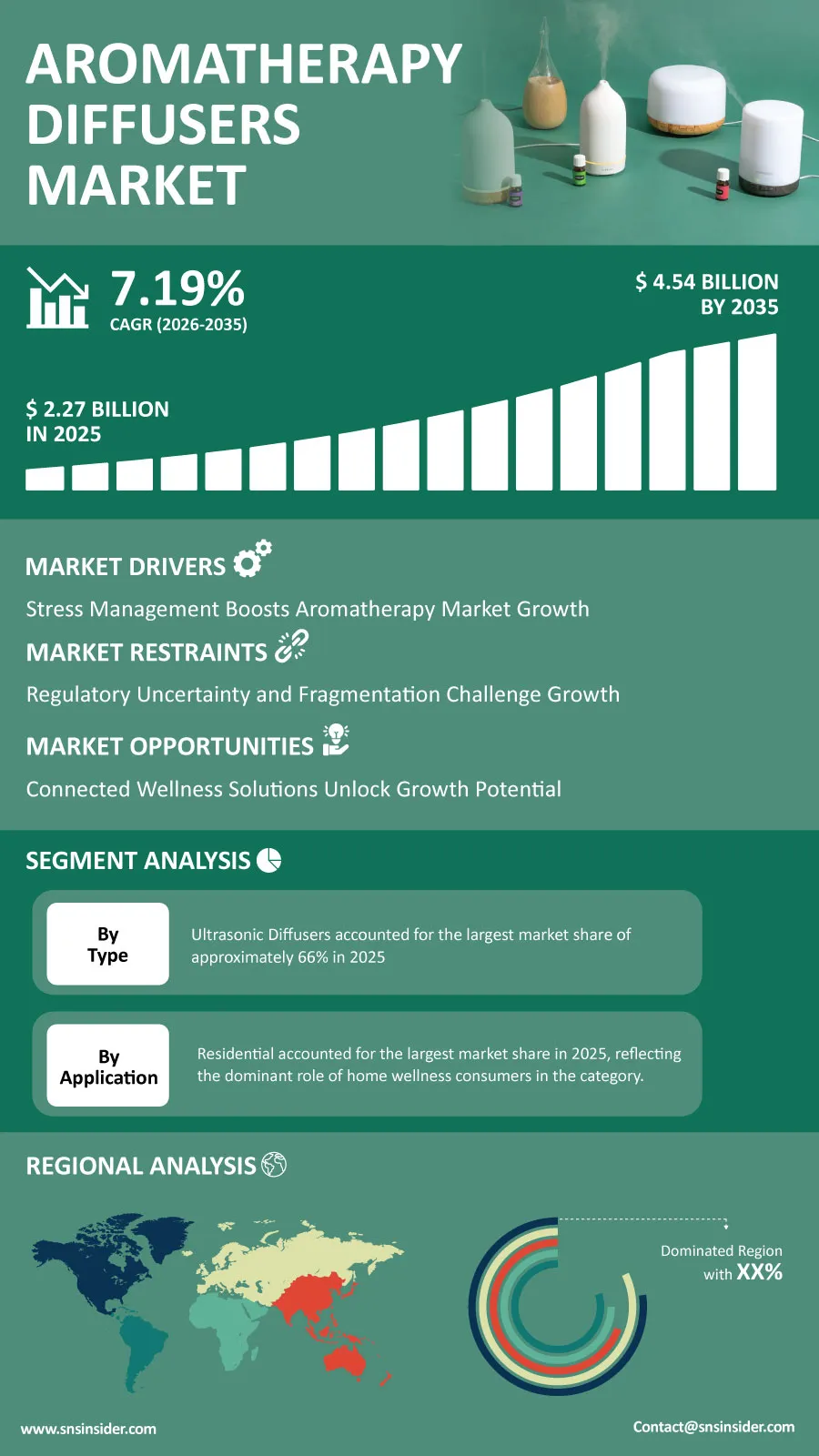
The global Aromatherapy Diffusers Market is currently experiencing continued growth since more consumers are becoming interested in purchasing wellness products that offer comfort and relaxation indoors. “According to a recent study by SNS Insider, the global Aromatherapy Diffusers Market size valued at USD 2.27 billion in 2025, is anticipated to grow to USD 4.54 billion by 2035, registering a CAGR of 7.19% over the 2026–2035 forecast period.”
The need for aroma therapy diffusers is steadily increasing due to the increased inclusion of well-being activities into daily life in homes, offices, hospitality institutions, and healthcare settings. Customers are demanding products that help manage stress, improve ambience indoors, and aid in holistic well-being practices. Increasing use of essential oils, along with increasing awareness about emotional well-being and improved living environment, is paving the way for growth in this market in the coming years.
Diffusers with elegant product design, quiet functioning, smart capabilities, and improved safety features are being introduced by manufacturers to cater to a larger customer base and increase adoption by non-traditional users of wellness products.
To Get Detailed Insights on This Market – Request a Sample Report
Home Wellness Trends and Smart Living Drive New Growth Opportunities
The increased importance placed on self-care and the creation of healthier surroundings is providing new opportunities within the market for aromatherapy diffusers. Consumers perceive products related to wellness as investments that will help them maintain an active and healthy lifestyle, leading manufacturers to design high-end equipment equipped with improved capabilities and personalization options.
Additionally, the rapid development of the concept of smart homes is driving market growth. Diffusers featuring technological capabilities allowing them to be remotely controlled via smartphones or even voice assistants can help customers automate their use of the fragrances based on their needs and preferences. This trend appeals to tech-savvy customers and helps manufacturers differentiate their products.
Aromatherapy diffusers also see increasing commercial use. More and more establishments such as hotels, wellness centers, luxury spas, fitness studios, and premium office spaces are utilizing the sense of smell to make customers' and employees' experience more pleasant and create a unique brand identity.
Key Market Insights Reflect Evolving Consumer Preferences
In terms of types, the share of the market revenue from Ultrasonic Diffusers was about 66% in 2025, because of their silent performance, cost-effectiveness, and suitability for a wide variety of essential oils. Nebulizing Diffusers will witness the fastest growth rate through 2035, due to the increased demand for highly concentrated aromatherapy systems.
In terms of applications, the segment of Residential segment will stay dominant in 2025 due to the rising consumer expenditure on household wellness products and lifestyle improvements. On the other hand, Spa and Relaxation segment will grow at the fastest rate because of increasing popularity of wellness tourism and high-end therapeutic practices worldwide.
As per distribution channels, Online Retail will dominate the market in terms of both market share and CAGR in 2025. The development of e-commerce sites, essential oil subscription services, digital marketing techniques, and the influence of influencers on customer purchasing behavior.
Innovation and Premium Product Development Shape the Future of the Industry
Product innovation has changed the definition of competition in the aromatherapy diffusers market as more companies launch innovative aromatherapy diffusers integrating wellness and smart functionalities into stylish devices. There is a significant emphasis on developing better operating features, including noise reduction and programmable operation, lighting and mist control.
Another notable trend shaping the market is the development of sustainable products. More and more manufacturers opt to use recyclable materials and environmentally friendly packaging in order to respond to the demand of environmentally conscious customers. In addition, the launch of high-end aromatherapy diffusers targeting luxurious settings, hotels, and professional wellness centers brings new income streams.
Smart home technologies are revolutionizing the market as well, allowing for customized scent scheduling, remote control, and integrating diffusers into smart home systems. These innovations will help attract more clients and encourage repurchases of complementary products.
North America Accounted for the Largest Market Share in 2025; Europe Forecast to Register Strong Growth Through 2035
North America retained its position as the top-performing regional market in 2025 due to a high level of consumer awareness regarding wellness products, buying power, and a fully-fledged system of brands and specialty stores dealing with essential oils. The United States still stands as the region's main revenue generator thanks to ongoing demand for home wellness products, e-commerce channels, and premium lifestyle solutions.
Europe will see substantial development over the forecast period due to a growing interest in natural wellness products and sustainable lifestyle. There will be ongoing demand for aromatherapy products in Germany, the UK, and France, which is due to their mature wellness industries and growth of spa tourism.
The Asia-Pacific region also offers an excellent opportunity for growth due to increasing disposable incomes and urbanization along with growing awareness about personal wellness, which will lead to greater expenses on home lifestyle products. In addition, the growth of digital retail infrastructure and increasing consumer interest in smart home products are expected to facilitate regional expansion in the future. Moreover, there will be new opportunities in Latin America and the Middle East & Africa due to growing wellness awareness, hospitality industry development, and availability of premium consumer products.
Industry Participants Focus on Smart Technology and Wellness Innovation
The competitive environment will continue to be volatile in terms of companies constantly improving their product ranges through innovations, digital connectivity, premium aesthetics, and sustainability programs. The companies will keep enhancing their digital reach by focusing on subscription models, working with health experts, and giving customized experiences to consumers. Differentiation through intelligent functioning, user-friendly experience, and sustainable production is likely to remain a core area for future competition.
Key companies operating in the global Aromatherapy Diffusers Market include doTERRA International LLC, Young Living Essential Oils, GreenAir Inc., InnoGear, Vitruvi, URPOWER, Saje Natural Wellness, NOW Foods, Organic Aromas, Puzhen, SpaRoom, Scentsy Inc., Nu Skin Enterprises Inc., Neal's Yard Remedies, Ellia (Homedics), Plant Therapy LLC, Aera Inc., VicTsing, Pilgrim Collection, and Airome.
An SNS Insider analyst Santosh Bhul commented, "Consumers are increasingly integrating wellness into their everyday lifestyles, creating sustained demand for innovative aromatherapy solutions that combine functionality, smart technology, and aesthetic appeal. Companies investing in premium product design, connected home capabilities, and sustainable manufacturing practices are expected to strengthen their market position as wellness-driven purchasing continues to expand across residential and commercial environments."
About the Author

Get in touch




