
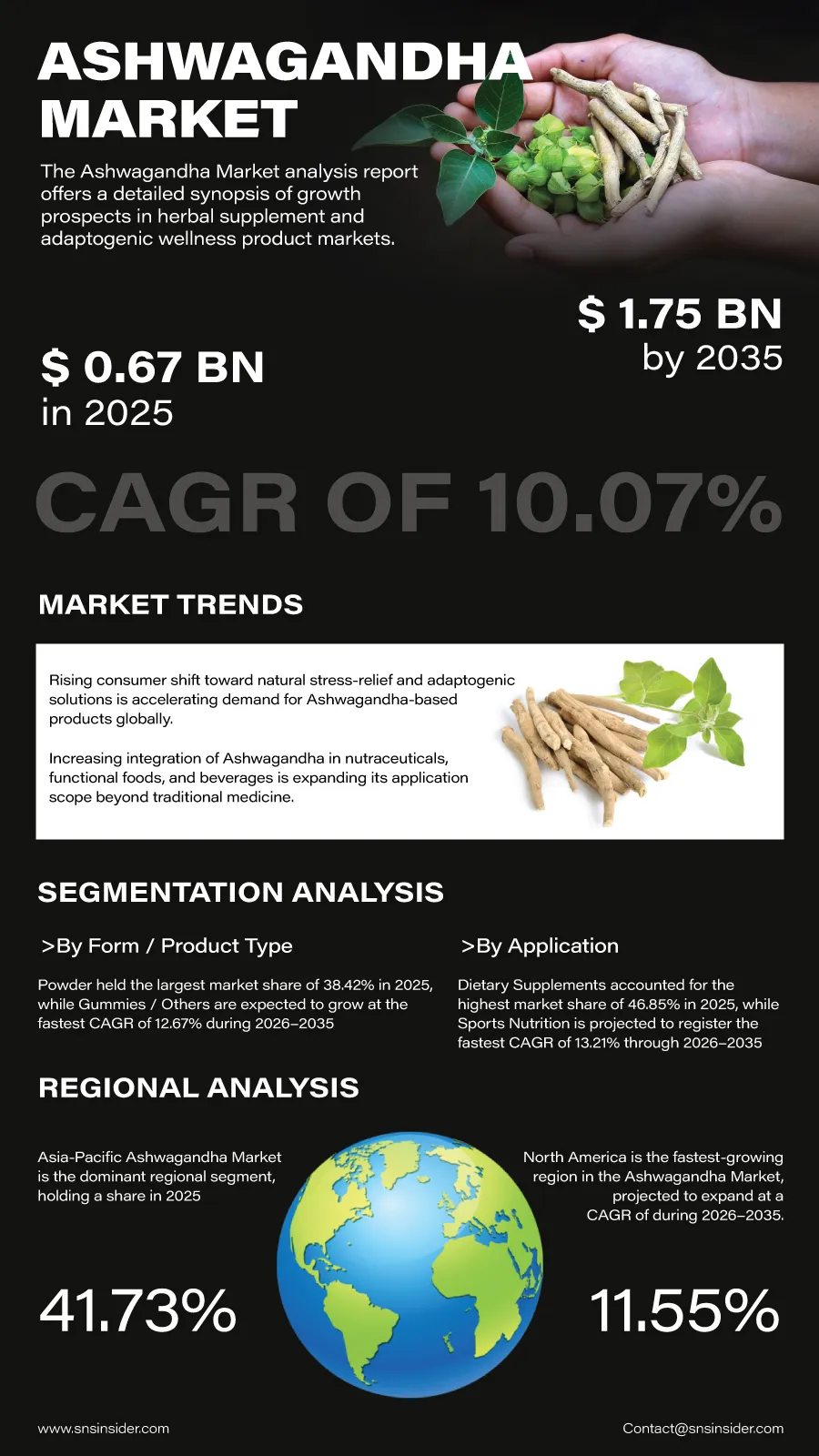
The global Ashwagandha Market is projected to witness significant expansion over the next decade as consumers increasingly embrace natural wellness solutions for stress management, cognitive support, and overall health. “According to a recent study by SNS Insider, the global Ashwagandha Market size valued at USD 0.67 billion in 2025, is anticipated to grow to USD 1.75 billion by 2035, registering a CAGR of 10.07% over the 2026–2035 forecast period.”
The growing importance of preventive healthcare, rising use of plant-based products, and increased trust in herbal medicines with scientific evidence are changing the face of the global wellness industry. With the rise in demand for natural health products among consumers, companies are incorporating novel formulations of Ashwagandha in a variety of product categories.
The market is also benefiting from broader retail availability through digital commerce platforms, specialty wellness stores, and pharmacy networks, enabling manufacturers to reach a wider consumer base worldwide.
Natural Wellness Movement Accelerates Product Innovation
The ongoing trend toward holistic health and nutrition based on lifestyles is continuously creating positive opportunities for adaptogens. There is a lot of emphasis by companies on formulations that are supported scientifically, standardization of botanicals, and providing consumers with high-quality products.
Convenient delivery methods, such as gummies, capsules, beverages, powders, and functional foods have also been introduced by manufacturers, thus increasing access for various consumers. Constant funding for scientific research and differentiation of products has also increased consumer confidence in the market, thereby ensuring its sustainability in the future.
Increasing cooperation among nutraceutical firms, ingredient providers, and wellness brands is also playing a role in the speedy development of next generation botanical products.
Key Market Findings Highlight Emerging Opportunities
With regards to product category, powdered formulation had the highest market revenue contribution in the year 2025, recording a share of 38.42%, thanks to its wide usage in traditional herbal products and nutritional products.
The convenient dosage formats such as gummies will be registering the highest compound annual growth rate of 12.67% through 2035 on account of consumer preference for convenient wellness products.
As far as application is concerned, dietary supplements formed the largest share of 46.85% in the total market revenue during the year 2025. On the other hand, sports nutrition is set to become the fastest-growing segment of the market, having a compound annual growth rate of 13.21% through 2035, owing to consumer interest in recovery, endurance and performance-based nutrition.
Conventional Ashwagandha products formed 57.36% of the total market revenue in 2025, while organic Ashwagandha products will witness the highest compound annual growth rate of 11.94% through 2035, driven by the increased demand for clean label, sustainable and high-quality botanical ingredients.
The health concerns of consumers continue to impact the market. In terms of revenue, stress and anxiety relief was responsible for 34.76% of the market revenue in 2025, while applications for cognitive and brain health will be witnessing the highest compound annual growth rate of 12.89% through 2035.
Wellness Trends Continue to Expand Global Demand
The inclusion of botanicals in the health regimen of consumers is increasing due to the emergence of preventive wellness practices around the globe. Increased knowledge about stress reduction, healthy aging, immunity boosting, and overall wellness is contributing to the wider adoption of botanicals by various consumers.
With the rise in the use of functional food products, nutritional products made from plants, personalized wellness programs, and technology-based health applications, there are more chances for manufacturers of novel Ashwagandha products. With increased consumer education and scientific evidence, the need for standardized herbal products will increase further.
Regional Markets Present Significant Growth Potential
In 2025, the Asia Pacific was responsible for a market revenue share of 41.73%, thanks to its ability to manufacture efficiently, herbal legacy, ample raw materials, and increased consumption. The region will still continue benefiting from export growth and investments into natural health products.
In contrast, North America is expected to witness the highest regional growth, recording a CAGR of 11.55% during the forecast period. Awareness among consumers, increased demand for adaptogens, increased use of e-commerce channels, and inclination towards natural health products in the region are driving regional growth.
Leading Companies Focus on Product Development and Brand Expansion
The Ashwagandha market is expected to become increasingly competitive in the coming years as manufacturers focus on innovations, scientific study, sustainable sourcing, and global market penetration. The manufacturers are beefing up their portfolio through botanical extracts, high-quality formulations, and wellness products for consumers.
Key companies operating in the global Ashwagandha market include Dabur India Ltd., Himalaya Wellness Company, Patanjali Ayurved, Ixoreal Biomed, Natreon, Arjuna Natural, Sabinsa Corporation, Organic India, NOW Foods, and Gaia Herbs.
An SNS Insider analyst Parry Kardani commented, "The convergence of preventive healthcare, botanical science, and consumer demand for natural wellness solutions is creating substantial opportunities across the Ashwagandha market. Companies that prioritize quality assurance, scientific validation, and product innovation are expected to strengthen their competitive position as global demand for adaptogenic ingredients continues to accelerate."
About the Author

Get in touch




