
The worldwide rugged tablet market is entering a period of steady commercial growth. For field-based organizations, mobile computing is no longer a luxury item. It is a critical component of day-to-day operations. A device failure in a remote site can halt work, slow down service delivery and add repair and downtime costs. Therefore, durable devices are moving from a niche purchase to a planned budget item for ops teams.
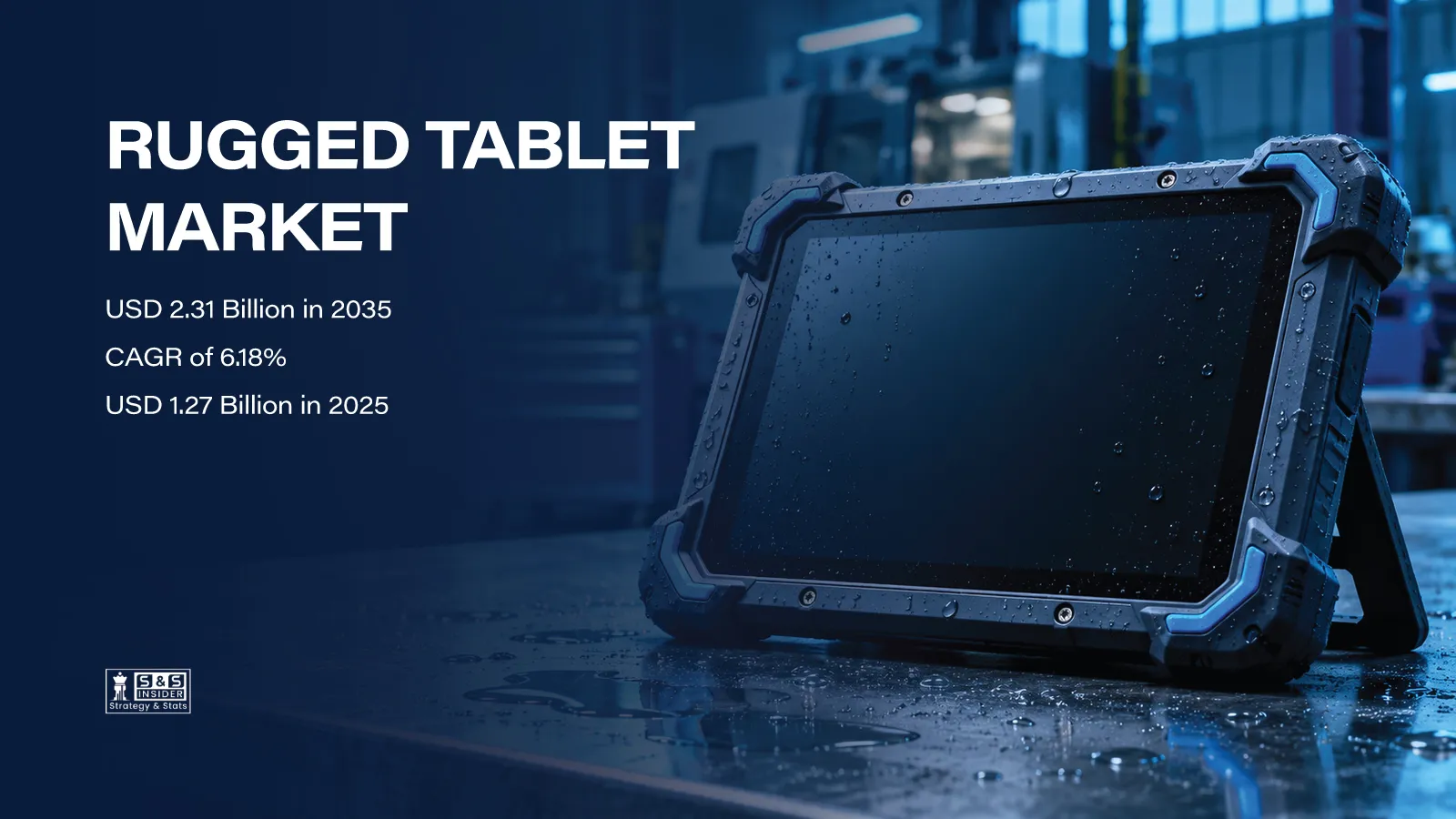
According to a recent study by SNS Insider, the global Rugged Tablet Market size was valued at USD 1.27 Billion in 2025 and is anticipated to reach USD 2.31 Billion by 2035, registering a CAGR of 6.18% over the forecast period 2026–2035. The market is estimated at USD 1.35 Billion in 2026.
Total Cost of Ownership Is Reshaping Device Buying Decisions
Field industry buyers are examining the total lifetime cost of each device more closely. Consumer tablets are cheaper to buy but the lost work hours, breakage and replacement can increase the real cost over time.
Procurement teams are now comparing failure rates, repair turnaround and service life as well as purchase price. This makes rugged devices more cost effective in fleets that operate in harsh environments.
Suppliers that can show lower lifetime cost per user are well placed to win larger fleet contracts. The sales focus moves from device specifications to operating savings.
To Get Detailed Insights on the Rugged Tablet Market – Request a Sample Report
Fleet Management Services Open Revenue Beyond Hardware Sales
Large organizations often have hundreds or thousands of devices in several locations. Continuous work for internal IT teams involves managing software updates, security settings and repairs across these fleets.
This drives demand for remote support, scheduled refresh programs and device management platforms. Suppliers can also provide these services in bundled contracts throughout the full life cycle of the device.
Extended warranties, managed services, accessory programs and software subscriptions can create recurring revenue and increased customer retention.
Rugged Tablet Market Segmentation Highlights
By Rugged Level
Fully rugged tablets held the largest share of 56.83% in 2025 indicating the need of high durability in tough field jobs. Ultra-rugged devices are projected to grow at a CAGR of 7.04%, presenting opportunities for vendors serving extreme operating conditions.
By Operating System
Windows had a 47.38% market share in 2025 and many enterprise and defense applications still run on this platform. Android is projected to have the fastest CAGR at 7.86%, opening up opportunities for lower cost deployments and app-based field workflows.
By Sales Channel
The offline channel had the highest market share of 67.84% in 2025. Online Sales is expected to grow at a CAGR of 8.12% . The opportunities in targeting small and mid-sized buyers through direct digital ordering are supporting the growth.
By End Use
The military and defense sector accounted for 23.84% of total market revenue in 2025. Manufacturing is expected to grow at a CAGR of 7.68%, with opportunities in shop-floor data capture, quality inspection, and maintenance tracking.
North America Leads with 35.12% Market Share as Asia Pacific Advances at 8.82% CAGR
North America dominated the Rugged Tablet Market with the highest revenue share of 35.12% in 2025. The U.S. market was valued at USD 380.64 Million in 2025 and is projected to grow at a CAGR of 6.41%. The region offers strong prospects for suppliers that serve defense agencies, public safety departments, and utility operators. For these buyers, security certification, service coverage, and long product support periods weigh heavily on purchase decisions.
Asia Pacific accounted for 24.37% of revenue in 2025 and is expected to witness the fastest CAGR of 8.82% in the forecast period 2026–2035. Demand is being driven by rising manufacturing output and expanding logistics networks for affordable rugged devices, local repair services and flexible supply terms.
Europe held a 26.84% share of the global market in 2025, followed by Latin America at 7.06% and the Middle East & Africa at 6.61%. Opportunities in these regions will vary with defense budgets, industrial investment, and the pace of field workforce digitization.
Device-as-a-Service Could Unlock New Commercial Opportunities
Many mid-sized firms find it hard to fund a full fleet refresh in one budget cycle. Leasing, subscription plans, and device-as-a-service models allow these buyers to spread costs over time and update hardware on a fixed schedule.
Manufacturers can reach a wider audience through partnerships with leasing companies, systems integrators and managed service providers. These partnerships allow us to reach out to customers who might otherwise defer buying.
Such models also provide recurring revenue through repair contracts, software support, accessory bundles and planned replacement programs.
Competitive Outlook: Field Productivity to Become a Key Differentiator
The future competition in the rugged tablet space is likely to hinge on more than just drop ratings and sealing standards. More and more customers are looking for devices that allow field staff to get the job done faster and transmit accurate data back to central systems.
Suppliers who offer durable hardware with strong software support, quick repair service and flexible buying options might be in a better market position. Commercial growth can also be driven through partnerships with software vendors, carriers and integrators.
Rugged Tablet Market Outlook Through 2035
Rugged tablets will be more important in field operations, asset maintenance, and mission-critical communications in the next decade. Suppliers who can demonstrate clear improvements in worker productivity, uptime and lifetime cost control will be best placed to capture new demand across defense, manufacturing, logistics and public services.
About the Author

Get in touch




