
According to the latest SNS Insider Operating Room Management Market report, Growth of the global market is occurring continuously due to the efforts made by hospitals and surgery centers to maximize efficiency of their current operating rooms. Backlogged surgeries, increased number of procedures being performed, and costly wasted surgery room time have led to the importance of operating room software in hospitals.
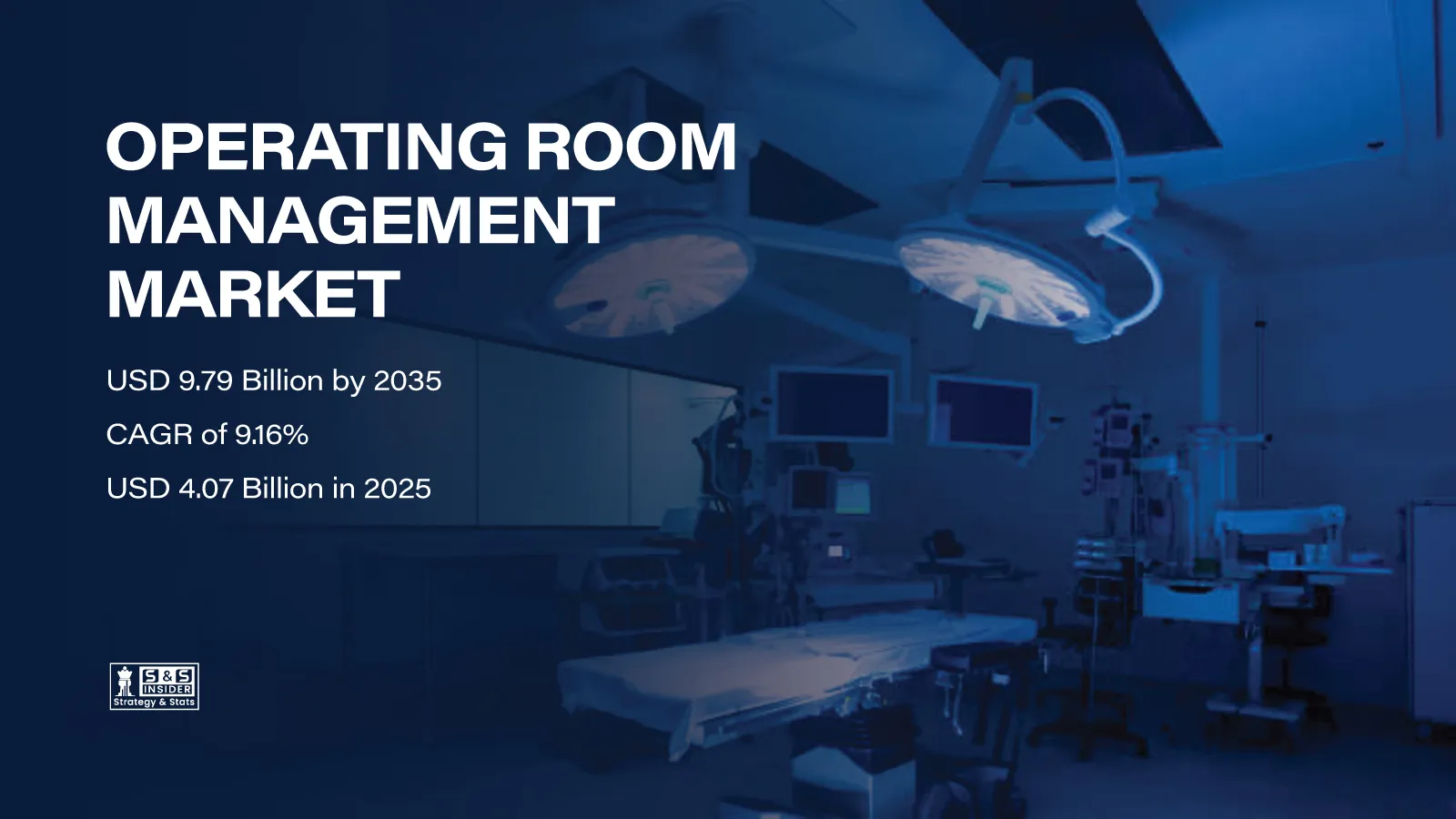
The global operating room management market was valued at USD 4.07 Billion in 2025 and is estimated at USD 4.45 Billion in 2026. It is expected to reach USD 9.79 Billion by 2035, at a CAGR of 9.16% during 2026–2035.
Cloud-based systems have become the primary method for purchasing these solutions. The cloud-based solution is inexpensive to implement, is easy to upgrade and allows hospitals to link multiple locations via the same platform.
Hospitals are leveraging the scheduling, data management and anesthesia solutions to reduce delays, reduce turnover time and optimize staffing. AI-enabled tools which predict the duration of the surgery and help predict any possible cancellation are becoming a reality out of pilots.
To Get Detailed Insights on the Operating Room Management Market – Request a Sample Report
The North American region is the largest regional market while the Asia-Pacific region offers the fastest growth potential.
Market Size and Forecast
|
Market Indicator |
Value |
|
Market Size, 2025 |
USD 4.07 Billion |
|
Market Size, 2026 |
USD 4.45 Billion |
|
Market Forecast, 2035 |
USD 9.79 Billion |
|
CAGR, 2026–2035 |
9.16% |
|
Leading Region, 2025 |
North America (41.92%) |
|
Fastest-Growing Region |
Asia Pacific (11.31% CAGR) |
Demand Drivers and Constraints
Primary Demand Drivers
-
Surgical backlogs: Long waiting lists push providers to run more cases through the operating rooms they already have.
-
Cost of idle time: Late starts, long turnovers and empty slots waste expensive staff and theater hours, so better scheduling pays back quickly.
-
AI-based planning: Tools that predict case length, flag cancellations and suggest staffing help managers plan days more accurately.
-
Aging populations: More older patients and more chronic disease raise the number of surgical procedures each year.
-
Shift to outpatient care: More procedures are moving to ambulatory centers, which need simple, low-cost scheduling and tracking tools.
Potential Growth Constraints
-
High setup costs and slow payback for small hospitals and public providers.
-
Difficult integration with older systems from several vendors.
-
Data security concerns over patient records and operating room video.
-
Shortages of IT and clinical informatics staff.
-
Surgeon reluctance to change set routines.
Demand Structure by Component
Software (2025 Market Share: 70.12%)
Software accounted for 70.12% of the operating room management market in 2025. Hospital operations rely on software to allocate the time schedule for cases, monitor patients going through the surgery process, anesthesia management, and inventory management. Through this software, management can be able to tell exactly how every operation theater is used, as well as time that may be wasted in some of them. Also, through the software, there is connectivity to the electronic health records system which allows transfer of data from one department to another.
Current trend: Wider use of integrated perioperative software linked to hospital records.
Major trends: AI scheduling, real-time case tracking, EHR integration, and performance dashboards.
Services (Forecast CAGR: 10.78%)
Services segment is expected to grow at a CAGR of 10.78% between 2026 and 2035. Hospitals often do not have the personnel that can be used to install and maintain the new operating room systems. This means that vendors will play an important role in setting up the systems, training people to use them, migrating the data, and offering ongoing services. Managed services are very helpful in the case of smaller hospitals and surgical centers that often lack IT personnel.
Current trend: Growing reliance on vendor-led implementation and managed support.
Major trends: Managed services, workflow consulting, staff training, and system integration support.
Demand Structure by Solution Type
Data Management and Communication Solutions (2025 Market Share: 46.15%)
The market share for data management and communication solutions was 46.15% in 2025. Surgical teams require accurate and shared information regarding the condition of patients, available rooms, and the status of surgical procedures. These solutions gather data from a variety of sources and make it available to nurses, surgeons, and management simultaneously. Efficient communication results in shorter intercase waiting times and fewer mistakes during handoffs. The use of historical data for performance review and future capacity planning ensures that these solutions remain the focus of investment.
Current trend: Rising use of shared status boards and real-time team messaging in surgery.
Major trends: Patient tracking, perioperative analytics, mobile alerts, and conversational data queries.
Anesthesia Information Management (Forecast CAGR: 10.64%)
Anesthesia information management is expected to grow at a CAGR of 10.64% through 2035. These systems record drug doses, vital signs and events during surgery automatically, which reduces manual charting. Accurate records support patient safety, billing and quality reporting. Hospitals are replacing paper and older standalone systems with tools that link directly to monitors and hospital records. Growth in surgical volume and stricter documentation rules are expected to keep demand strong.
Current trend: Replacement of paper and standalone anesthesia records with connected systems.
Major trends: Automated charting, device integration, quality reporting, and clinical decision support.
Demand Structure by Deployment
Cloud-Based (2025 Market Share: 62.80%)
The cloud delivery market held 62.80% share in 2025. The hospitals favor cloud solutions since they require minimum initial investment on servers and are easier to maintain. Cloud-based software allows for multiple locations of a healthcare system to use the same schedule and reports. New AI capabilities may be delivered much quicker via the cloud solution by vendors. These benefits make cloud the default choice for new projects across both large hospitals and surgical centers.
Current trend: Steady move of perioperative systems from local servers to cloud platforms.
Major trends: Subscription pricing, multi-site management, faster feature updates, and remote access.
Cloud-Based (Forecast CAGR: 11.71%)
Cloud-based deployment is also the fastest-growing segment, with a CAGR of 11.71% during 2026–2035. Ambulatory centers and mid-sized hospitals that once found these systems too costly can now buy them on subscription. Cloud tools also make it easier to add AI modules without replacing core systems. As data security tools improve and more providers trust hosted platforms, the share of cloud systems is expected to rise further.
Current trend: Rapid cloud adoption among ambulatory centers and mid-sized hospitals.
Major trends: AI add-on modules, secure hosting, low-cost subscriptions, and quick deployment.
Demand Structure by End User
Hospitals (2025 Market Share: 60.90%)
Hospitals accounted for 60.90% of the market in 2025. They perform most complex and inpatient surgeries and run the largest numbers of operating rooms. Even small gains in room use can save large amounts of money at this scale. Hospitals also face long waiting lists and staff shortages, which make better planning tools a priority. Large health systems are standardizing operating room software across sites, which supports steady purchasing.
Current trend: Standardization of operating room systems across multi-hospital networks.
Major trends: Enterprise scheduling, capacity planning, staff optimization, and backlog reduction tools.
Ambulatory Surgical Centers (Forecast CAGR: 13.01%)
Ambulatory surgical centers are projected to grow at the fastest end-user CAGR of 13.01% through 2035. More procedures are moving out of hospitals because outpatient surgery costs less and patients go home sooner. These centers handle high case volumes with small teams, so they need simple tools for booking, tracking and billing. Cloud-based offers suited to their size and budget are speeding up adoption.
Current trend: Fast uptake of scheduling and tracking software in outpatient surgery.
Major trends: Cloud scheduling, patient communication tools, case tracking, and revenue management.
Key Market Participants
The operating room management market includes electronic health record vendors, perioperative software specialists, AI analytics companies and medical technology suppliers.
Key participants include Epic Systems, Oracle Health, LeanTaaS, Qventus, Provation, Surgical Information Systems, Picis Clinical Solutions, Altera Digital Health, Getinge, TAGNOS, Surgimate, Censis Technologies, Brainlab, Surgical Safety Technologies, Theator, MEDITECH, LiveData, STERIS, Omnicell, and Medtronic.
Competition centers on AI features, ease of integration with hospital records, cloud delivery and proven gains in room use. Vendors that show clear time and cost savings and work smoothly with existing systems are best placed to win new contracts.
Regional Market Dynamics
North America (2025 Market Share: 41.92%)
The North America region held the leading position in the global market share for operating rooms management, with a market share of 41.92% in 2025. This region's market was dominated by the United States which had a market share of 81.06% due to the presence of major health care facilities, high number of surgeries, and use of AI technology. In the year 2025, the North American market was valued at USD 1.38 Billion and is forecasted to grow to USD 3.08 Billion by 2035, at a CAGR of 8.33%. Growth in outpatient surgery and pressure to control costs keep demand steady. Canada adds demand through efforts to cut surgical waiting times.
Direction: Continued leadership supported by AI adoption and outpatient surgery growth.
Europe
Europe is one of the biggest markets influenced by public health care organizations that aim at overcoming their existing backlog in surgical procedures. The leading country is Germany, where 27.43% of regional demand is registered owing to its vast network of hospitals and ongoing IT investments. Other key players in this market include the United Kingdom, France, and the Nordic countries that make investments in the field of theater planning and monitoring.
Direction: Steady growth driven by backlog reduction programs and hospital digitization.
Asia Pacific (Forecast CAGR: 11.31%)
According to projections, Asia Pacific will be the fastest-growing market with a CAGR of 11.31% between 2026 and 2035. This region has 40.18% of the total regional market share with China having the largest contribution. India, Japan, South Korea, and Australia have also invested in perioperative solutions. Higher volumes of surgeries, construction of new hospitals, and cloud-based solutions have opened new avenues of demand.
Direction: Fastest regional expansion supported by new hospital capacity and digital health spending.
Middle East & Africa
The Middle East and Africa market is developing as governments invest in modern hospitals. Saudi Arabia leads with 33.52% of regional demand, supported by national health programs and new surgical facilities. The United Arab Emirates is also adopting connected hospital systems. In Africa, private hospital groups drive most demand, while budget and infrastructure limits slow wider use.
Direction: Emerging opportunities driven by new hospital projects and national health programs.
Latin America
Latin America offers growing opportunities as hospitals upgrade surgical operations. Brazil leads with 51.07% of regional demand, supported by its large public and private hospital networks. Mexico, Chile and Colombia are also adding digital tools in major urban hospitals. Budget limits favor cloud and subscription offers that need little upfront spending.
Direction: Gradual growth supported by hospital modernization and low-cost cloud options.
Market Outlook (2026–2035)
The global operating room management market is forecast to reach USD 9.79 Billion by 2035, reflecting steady investment in surgical efficiency.
Surgical backlog, idle room time cost, and AI-powered scheduling will be the key factors for market growth. Adoption of cloud will see increasing penetration in order to achieve a flexible and affordable system. Procedure migration to ASCs will result in an expansion of the purchasing pool away from hospitals.
There will be uneven regional development in the forecast period. North America will continue to hold the largest market share, whereas Asia Pacific will post high CAGR. In general, the operating room management market is expected to witness consistent growth up to 2035 based on AI capabilities, ease of integration, cloud deployment, and increased OR utilization.
About the Author

Get in touch




