
According to the latest SNS Insider Track and Trace Solutions Market report, the global market is growing at a steady pace. Drug makers, food producers, packaging lines and distributors need to know where each product is at every stage. Rules on medicine traceability are spreading to more countries. Fake and diverted goods are also a growing problem. Because of this, product tracking has become a basic part of how supply chains run.
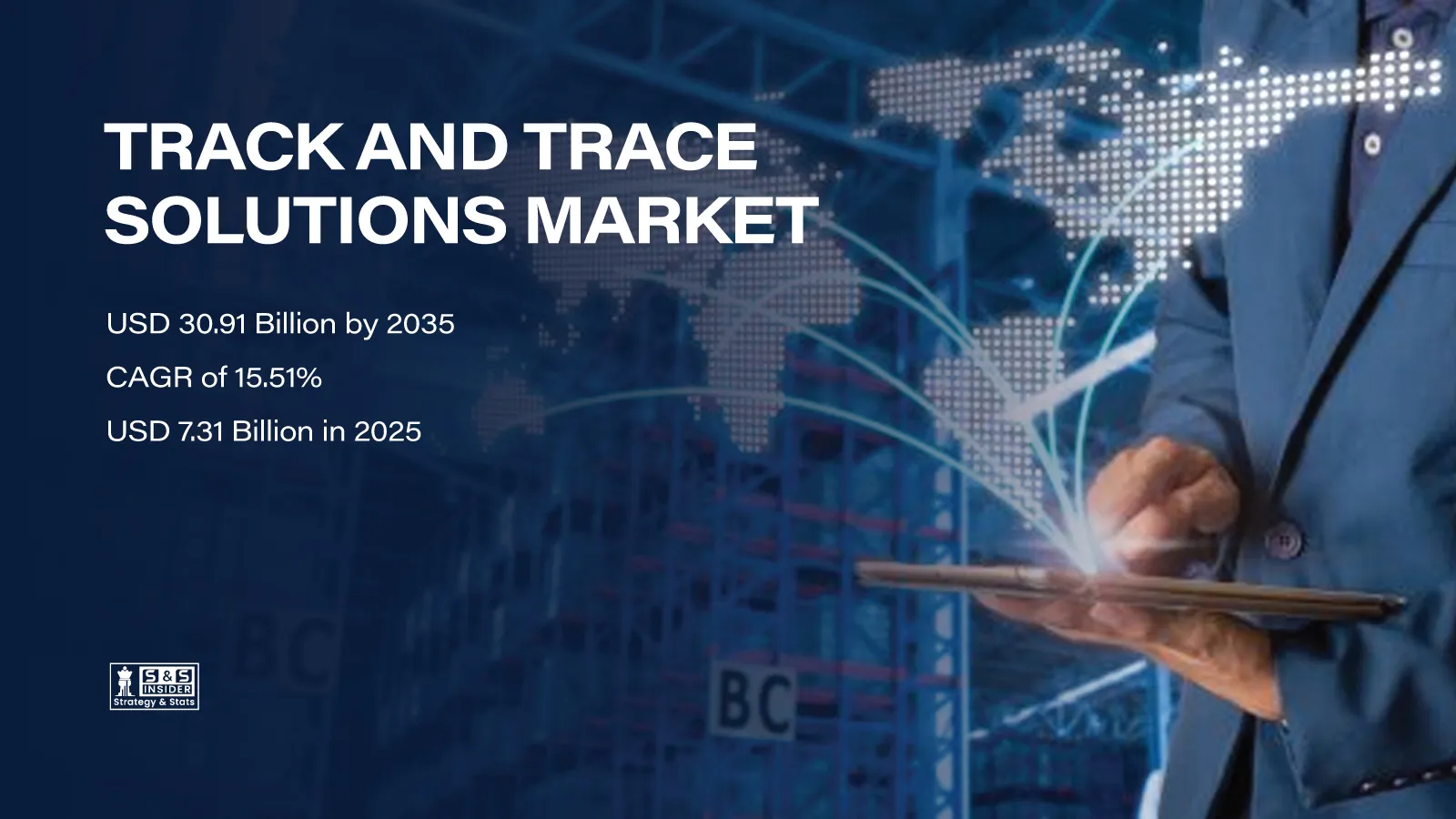
The global track and trace solutions market was valued at USD 7.31 Billion in 2025 and is estimated to reach USD 8.44 Billion in 2026. It is projected to reach USD 30.91 Billion by 2035, growing at a CAGR of 15.51% during 2026–2035.
Software makes up most of the market today. It manages serial numbers, event data and reports to regulators. Services are growing faster, because many companies need help to install, connect and run these systems across sites and partners.
Pharmaceutical serialization is still the main use. Food and beverage companies are adopting tracking quickly to manage recalls, prove where food comes from and meet safety rules. Shipments sent straight to patients and online sales also create new needs for visibility at the unit level.
To Get Detailed Insights on the Track and Trace Solutions Market – Request a Sample Report
North America is the largest regional market. Asia Pacific is growing fastest as countries bring in their own traceability rules and modernize production.
Market Size and Forecast
|
Market Indicator |
Value |
|
Market Size, 2025 |
USD 7.31 Billion |
|
Market Size, 2026 |
USD 8.44 Billion |
|
Market Forecast, 2035 |
USD 30.91 Billion |
|
CAGR, 2026–2035 |
15.51% |
|
Leading Region, 2025 |
North America (40.03%) |
|
Fastest-Growing Region |
Asia Pacific (16.66% CAGR) |
Demand Drivers and Constraints
Primary Demand Drivers
-
Global medicine traceability rules: More countries now require serial numbers and reporting for drugs, so makers and distributors must track products down to the single unit.
-
Counterfeit and diversion risks: Fake and diverted goods harm patients and brands, which pushes companies to verify each product as it moves.
-
Direct-to-patient and online sales: New ways of delivery need clear tracking from the warehouse to the person who receives the product.
-
Digital supply chains and cloud software: Cloud platforms make it easier to share tracking data with partners and regulators.
-
Shared data standards and 2D barcodes: Common formats help systems from different companies read the same product codes.
Potential Growth Constraints
-
Country rules that differ in timing and detail.
-
High cost of linking tracking systems to older packaging lines.
-
Data privacy and cybersecurity risks.
-
Limited payback for low-margin products.
-
Need for skilled staff to manage serialization projects.
Demand Structure by Component
Software (2025 Market Share: 53.59%)
Software accounted for 53.59% of the global track and trace solutions market in 2025. Companies use it to create serial numbers, store event data and send reports to regulators and trading partners. One platform can link plant lines, warehouses and distributors, so problems are found sooner. Cloud delivery lowers setup effort and makes updates easier when rules change. As more countries add reporting duties, companies need software that can handle many sets of rules at once. This keeps software at the center of most tracking programs.
Current trend: Shift from site-level tools to cloud platforms that cover the whole network.
Major trends: Cloud serialization platforms, regulatory reporting tools, partner data exchange, and AI-based exception handling.
Services (Forecast CAGR: 16.86%)
Services are projected to grow at the fastest rate, a CAGR of 16.86% during 2026–2035. Many companies do not have in-house teams to plan, install and test tracking systems. They hire outside experts to connect software with packaging lines, warehouse systems and partner networks. Each new country rule often means more setup work and validation. Ongoing support, managed operations and training also add steady service demand. Small and mid-sized firms rely on services most, because doing this work themselves would cost more.
Current trend: Rising use of managed and outsourced serialization support.
Major trends: System integration, validation services, managed operations, and line upgrade projects.
Demand Structure by Technology
Barcode (2025 Market Share: 65.19%)
Barcode technology held a 65.19% share of the market in 2025. Barcodes are cheap, easy to print and accepted by most regulators around the world. 2D codes can hold a serial number, batch, expiry date and product code in a small space. Packaging lines can print and check them at high speed. Common data standards let partners across the supply chain scan the same code. Because of their low cost and wide acceptance, barcodes remain the main way products are tagged.
Current trend: Wider use of 2D barcodes in place of linear codes.
Major trends: 2D DataMatrix codes, high-speed print and check systems, mobile scanning, and standard data formats.
RFID (Forecast CAGR: 14.70%)
RFID is expected to grow at a CAGR of 14.70% through 2035. Tags can be read without a direct line of sight, and many items can be read at once. This speeds up checks of cases, pallets and stock in warehouses and at receiving docks. Tag prices are falling, which makes RFID more practical for higher-volume goods. Companies that ship valuable or temperature-sensitive products value the extra detail RFID can give.
Current trend: Growing use of RFID at case and pallet level.
Major trends: Low-cost passive tags, automated warehouse reading, cold chain tracking, and combined RFID and barcode labels.
Demand Structure by Application
Serialization (2025 Market Share: 55.69%)
Serialization represented 55.69% of the market in 2025. It gives each saleable unit its own number, which is the base requirement of most drug traceability laws. Without serialization, a company cannot verify, report or recall single units. Drug makers have put large amounts of money into serialization across their plants and contract partners. New rules in more countries keep this work going. Serialization will remain the largest application as long as regulators build tracking laws around unit-level identity.
Current trend: Expansion of serialization into new markets and product types.
Major trends: Unit-level coding, line-level serialization systems, contract manufacturer links, and regulatory reporting.
Aggregation (Forecast CAGR: 12.97%)
Aggregation is projected to grow at a CAGR of 12.97% during 2026–2035. It links serial numbers on single units to the cases and pallets that hold them. This lets warehouses and distributors check a whole shipment with one scan instead of opening every box. More rules now ask for parent-child data, and companies want faster receiving and fewer errors. As serialization matures, companies turn to aggregation to get more value from the data they already collect.
Current trend: Adoption of aggregation to speed shipping checks.
Major trends: Parent-child data links, automated case packing, vision inspection, and pallet-level verification.
Demand Structure by End User
Pharmaceutical and Biotechnology (2025 Market Share: 46.05%)
Pharmaceutical and biotechnology companies accounted for 46.05% of global market revenue in 2025. Drug traceability laws are the strictest in any industry and apply in many countries. Companies must serialize products, report data and verify returned goods. Fake medicines put patients at risk, so drug makers also track products to protect their brands. Biologics, specialty drugs and direct-to-patient delivery add more need for careful tracking. This group will remain the largest end user through 2035.
Current trend: Extension of tracking across contract makers and specialty supply chains.
Major trends: Multi-country compliance, product verification, returns checks, and patient-level delivery tracking.
Food and Beverage (Forecast CAGR: 17.33%)
Food and beverage companies are expected to grow at the fastest end-user CAGR of 17.33% through 2035. Recalls are costly and can hurt consumer trust. Tracking lets companies find affected batches fast and remove only what is needed. Food safety rules increasingly ask for records of where products came from and where they went. Shoppers also want to know the origin of what they buy. These needs are moving tracking from large producers to a wider group of food firms.
Current trend: Faster adoption of lot and item tracking for recalls and origin claims.
Major trends: Farm-to-shelf tracking, recall management, origin proof, and cold chain monitoring.
Key Market Participants
The track and trace solutions market includes software platform providers, serialization equipment makers and system integrators.
Key participants include TraceLink, Antares Vision, OPTEL Group, Systech, Zetes, Kezzler and VISIOTT.
Competition centers on regulatory coverage, ease of connecting to packaging lines, cloud data sharing and support across many countries. Suppliers that can cover both software and line equipment, and keep up with new rules, are well placed to win larger programs.
Regional Market Dynamics
North America (2025 Market Share: 40.03%)
North America led the global track and trace solutions market with a 40.03% share in 2025. The United States holds 74.72% of regional demand, supported by strict drug supply chain rules, a large pharmaceutical base and high spending on brand protection. The U.S. market reached USD 2.19 Billion in 2025 and is projected to grow at a CAGR of 15.58% through 2035. Companies are moving from basic compliance to full network tracking that links makers, distributors and pharmacies.
Direction: Continued leadership supported by mature drug tracking rules and cloud platform adoption.
Europe (Second-Largest Regional Market)
Europe is the second-largest regional market, with a 27.70% share in 2025. Germany leads the region with 25.34% of regional demand, helped by a strong drug and packaging machinery base. Region-wide rules for medicine verification have made serialization standard practice. Food tracking and sustainability reporting are adding new demand beyond healthcare. Suppliers with local support and strong data protection practices are favored by buyers.
Direction: Steady growth driven by established drug rules and wider use in food and consumer goods.
Asia Pacific (Forecast CAGR: 16.66%)
Asia Pacific is expected to record the fastest regional growth, with a CAGR of 16.66% through 2035. China leads the region with a 36.58% share, supported by large drug and food production and national tracking programs. India, Japan, South Korea and Southeast Asian countries are adding or tightening their own traceability rules. Export-focused makers also need tracking to meet the rules of the markets they sell to.
Direction: Fastest expansion supported by new national rules and growing export production.
Middle East & Africa
The Middle East & Africa region held a 4.66% share in 2025. Saudi Arabia leads regional demand with a 31.92% share, supported by national drug tracking systems and healthcare investment. Other Gulf countries are building similar programs to fight fake medicines. In Africa, adoption is slower due to budgets and infrastructure, but donor-funded health programs are adding demand for product verification.
Direction: Emerging growth driven by national drug tracking programs and anti-counterfeit efforts.
Latin America
Latin America accounted for 6.54% of the market in 2025. Brazil is the largest country market, with a 52.17% share of regional demand, supported by its drug traceability rules and large pharmaceutical sector. Mexico, Argentina and Colombia are also moving toward unit-level tracking. Cost pressure leads many buyers to choose cloud software and managed services instead of large upfront projects.
Direction: Gradual growth supported by new drug rules and cost-effective cloud solutions.
Market Outlook (2026–2035)
The global track and trace solutions market is forecast to reach USD 30.91 Billion by 2035, reflecting steady investment in supply chain visibility. Traceability rules, counterfeit risks and digital supply chains will remain the main growth drivers. Services will grow fastest as companies look for outside help to install and run their systems.
Food and beverage, along with direct-to-patient delivery, will widen demand beyond traditional drug serialization. Growth will differ by region. North America will keep its lead, and Asia Pacific will offer the strongest growth. Overall, the track and trace solutions market is set for strong growth through 2035, with success depending on regulatory coverage, easy integration, reliable data sharing and support across many countries.
About the Author

Get in touch




