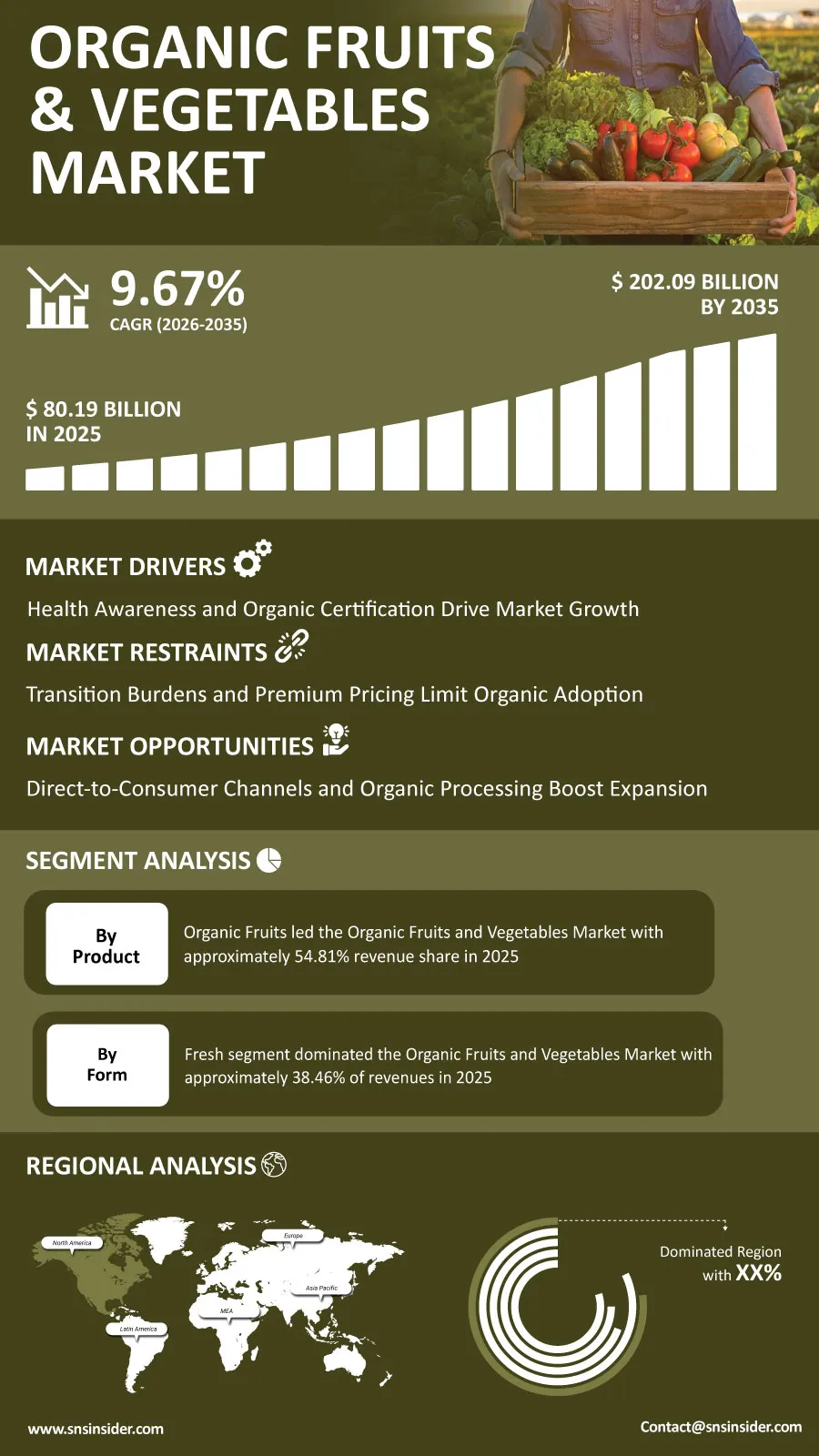
The global Organic Fruits and Vegetables Market is witnessing sustained momentum as consumers increasingly prioritize nutritious, sustainably produced food while retailers expand certified organic offerings across mainstream distribution channels. “According to a recent study by SNS Insider, the global Organic Fruits & Vegetables Market size valued at USD 80.19 Billion in 2025, is anticipated to grow to USD 202.09 Billion by 2035, registering a CAGR of 9.67% over the 2026–2035 forecast period.”
Demand for produce that is grown using organic methods is increasing since consumers are becoming increasingly interested in knowing where the ingredients come from, environmental issues, and the quality of the products. Organically-grown products have not only been adopted by individual consumers but also institutional purchasers and packaged foods manufacturers.
Furthermore, the market is getting assistance due to improved agriculture policy and improved certifications along with better farming practices which will help the availability of organic crops as well as building confidence among consumers. This is creating a very positive environment for investment in the organic foods supply chain.
To Get Detailed Insights on This Market – Request a Sample Report
Consumer Wellness and Sustainable Agriculture Create New Growth Opportunities
The rise in consumer consciousness regarding healthier eating has an impact on shopping behavior in grocery retail stores. More people want organic produce for their health-conscious lifestyles, resulting in more product diversity and availability throughout the year from retail outlets.
In the meanwhile, governments and agricultural agencies are promoting farming methods which lead to soil conservation, preservation of biodiversity, and food production that is environmentally sound. Technologies for digital traceability, logistics using cold chain, and direct delivery to consumers are helping in making available the organic produce.
The growing trend of e-grocery stores has created additional avenues for sales through the easy and convenient delivery service to consumers from local farmers and organic brand companies.
Key Market Insights Reflect Changing Consumer Preferences
Based on product, Organic Fruits accounted for 54.81% of global market revenue in 2025, supported by strong consumer demand across fresh berries, citrus fruits, apples, and tropical varieties. Organic Vegetables are expected to record the fastest growth through 2035 as plant-based eating patterns continue expanding worldwide.
By form, the Fresh segment represented 38.46% of market revenue in 2025 due to continued consumer preference for minimally processed produce. Meanwhile, Frozen Organic Products are gaining significant traction as buyers seek longer shelf life, convenience, and reduced food waste.
In terms of distribution channel, Supermarkets and Hypermarkets remained the leading sales channel, reflecting their broad product selection and established consumer trust. Online Retail is anticipated to deliver the strongest growth during the forecast period as digital grocery adoption continues rising across global markets.
Innovation Across Farming and Supply Chains Strengthens Market Development
Modern technology has revolutionized organic agriculture by introducing precise farming techniques, advanced irrigation systems, biological crop protection, and data-driven cultivation techniques. Such technological innovations help producers increase production levels without compromising on the standards of organic certification.
It is also vital to focus on improvements in the supply chain process through the introduction of refrigerated transport vehicles, warehouse technology, and inventory management. Modern adoption of regenerative farming practices is also increasing the productivity of the soil over a longer period and meeting the sustainable goals set by agriculture.
Companies will have to continue making significant investments in building traceable supply chains and premium quality organic products as consumers keep rewarding environmentally conscious businesses.
North America Accounted for the Largest Market Share in 2025; Asia Pacific Forecast to Expand at the Fastest CAGR by 2035
The North America region dominated the global organic market in 2025 owing to high consumer awareness, availability of certification systems for organics, and active involvement of the top food retailing companies. The region led by the US continued to be a leader in the demand for organic products thanks to its advanced organic retail infrastructure and increasing procurement in institutions such as health care facilities, educational institutions, and food service providers.
The Asia-Pacific region is set to exhibit the highest growth till 2035 as rising disposable incomes, urbanization, and growing awareness regarding food safety would help increase the consumption of certified organic produce. Increased domestic production, presence of favorable agricultural initiatives, and increasing penetration of e-commerce have been contributing to the growth of the market in China, India, and Southeast Asia.
Europe continues to represent a significant growth contributor due to strong sustainability policies and widespread acceptance of organic farming practices, while Latin America and the Middle East & Africa are steadily strengthening production capabilities and export opportunities.
Industry Participants Focus on Sustainable Production and Retail Expansion
Competition across the organic fruits and vegetables industry continues to intensify as manufacturers, marketers, and food processors are increasingly focusing on sustainability in cultivation, high-end products, and robust distribution channels. Partnerships with accredited farmers, increase in land under organic cultivation, and online marketing are still important components of competitiveness.
Key companies operating in the global Organic Fruits and Vegetables Market include Whole Foods Market (Amazon), Organic Valley Family of Farms, Driscoll's Inc., Nature Fresh Farms, Dole PLC, Calavo Growers Inc., Robinson Fresh Inc., Greenyard NV, General Mills, Inc., Green Organic Vegetable Inc., Earthbound Farm (Taylor Farms), Lakeside Organic Gardens, Pavich Family Farms, Cal-Organic Farms, Trader Joe's, Sprouts Farmers Market, Misfits Market, Imperfect Foods, Iceland Foods Ltd., and CSC Brands LP (Campbell Soup Company).
An SNS Insider analyst Santosh Bhul commented, "Growing consumer preference for healthier diets, combined with expanding investments in sustainable agriculture and transparent food supply chains, is creating strong long-term opportunities across the organic produce industry. Companies that strengthen certified production capacity, supply chain resilience, and digital retail capabilities are expected to be well positioned as global demand for organic fruits and vegetables continues to accelerate."
About the Author

Get in touch