
The outsourced global capability centers industry is growing quickly. Multinational firms now see offshore centers as strategic business units, not cost-saving outposts. Boards want new capabilities in place within months, not years, and setting up a fully owned center alone can take a long time and carry legal, hiring, and real estate risk. This gap is moving more enterprises toward partner-led models that deliver working teams faster.
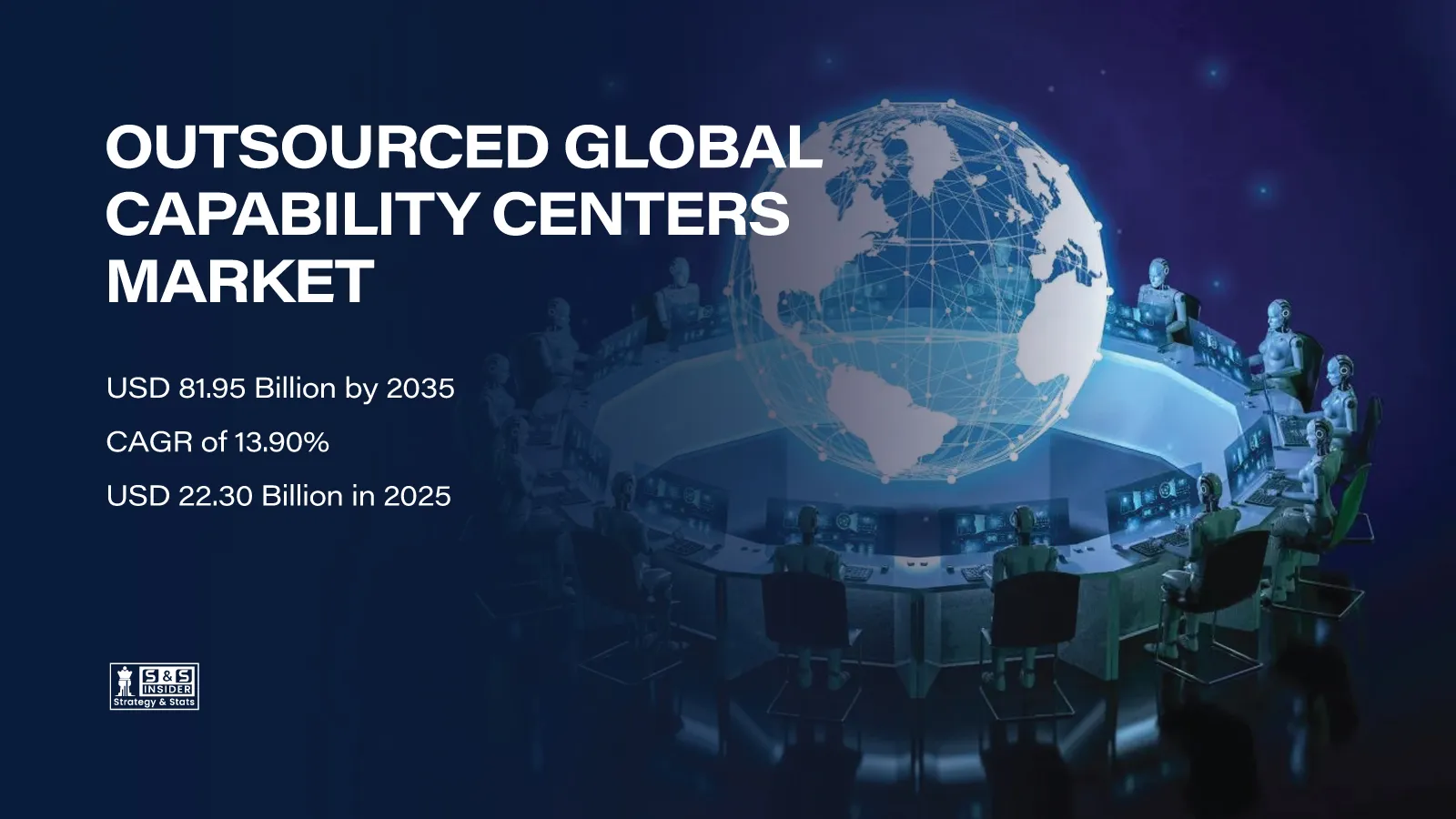
According to a recent study by SNS Insider, the global Outsourced Global Capability Centers Market size was valued at USD 22.30 Billion in 2025 and is anticipated to reach USD 81.95 Billion by 2035, registering a CAGR of 13.90% over the forecast period 2026–2035. The market is estimated at USD 25.40 Billion in 2026.
Execution Risk Is Reshaping How Enterprises Enter New Locations
A capability center that opens late or runs into compliance problems can delay product roadmaps and weaken the business case approved by leadership. Companies are therefore looking for ways to move into a new country without carrying every setup risk themselves.
Specialist partners give clients ready recruitment pipelines, office space, and local legal support. This lets enterprises focus on defining the work, not on building local infrastructure from scratch.
For providers, this opens a chance to position their services as risk management for global expansion. Their value lies less in cheaper labor and more in predictable launch timelines.
To Get Detailed Insights on the Outsourced Global Capability Centers Market – Request a Sample Report
Capability Transfer Creates Long-Term Revenue Beyond the Initial Setup
When a center is returned to the client, the partner does not have to leave. After ownership many enterprises still have challenges around governance, talent retention, process upgrades and technology refresh.
Advisory, shared services and managed support can keep providers involved in the full life cycle of a center they designed. This changes a one-time setup project into an ongoing relationship.
Transition consulting, workforce analytics, compliance services and platform support can also lead to new sources of income and improved client retention over time.
Outsourced Global Capability Centers Market Segmentation Highlights
By Service Model
In 2025, build-operate-transfer had the highest share of 44.70% because of the demand from businesses to have a clear pathway to eventual ownership. The hybrid model is expected to witness the highest CAGR of 15.60%. It offers providers the chance to create flexible arrangements that share control and operating responsibilities with the client.
By Function
In 2025, IT services accounted for 48.30% of the market, with software development and infrastructure work being the core activities of most centers. Engineering & R&D is expected to grow at highest CAGR of 16.90%, creating opportunities for partners with deep product design and testing talent.
By Enterprise Size
Large enterprises accounted for the largest share of 74.50% in 2025. Small & medium enterprises are expected to register a CAGR of 17.80%. Packaged, lower-cost center models can draw in firms that lack the scale to build offshore operations alone.
By End Use
Technology & Telecom accounted for 34.60% of total market revenue in 2025. BFSI is expected to grow at a CAGR of 15.40%, with opportunities in risk analytics, digital banking operations, and regulatory reporting support.
North America Leads with 35.80% Market Share as Asia Pacific Advances at 16.50% CAGR
North America dominated the Outsourced Global Capability Centers Market with the highest revenue share of 35.80% in 2025. The U.S. market was valued at USD 7.03 Billion in 2025 and is projected to grow at a CAGR of 13.62%. Demand in the region comes mainly from headquartered enterprises that sponsor offshore centers. Clear governance, data protection, and measurable business outcomes weigh heavily in their partner selection.
The Asia Pacific region was the highest revenue contributor with a share of 29.60% in 2025 and is projected to grow at a CAGR of 16.50% during the forecast period (2026–2035). New center investments are being attracted by deep talent pools and policy support for offshore operations. “We’re looking at local setup services, workforce programs and city growth beyond the core hubs.
Europe held a 22.40% share of the global market in 2025, followed by Latin America at 6.90% and the Middle East & Africa at 5.30%. Opportunities in these regions will depend on nearshore demand, language skills, and local labor rules.
Capability-as-a-Service Could Widen the Client Base
Not every company needs, or can fund, a dedicated center with hundreds of staff. Smaller programs, pilot teams, and shared delivery pods let these buyers test offshore operations with limited commitment.
Providers can access this segment through modular contracts, pay per team pricing and scale up options that evolve with the client’s needs.
These models also help generate recurring revenue via managed services, talent upskilling and technology support agreements.
Competitive Outlook: Speed and Talent Quality to Become Key Differentiators
The future of competition in the industry will probably be decided on more than price and headcount. Partners are increasingly being judged on how quickly they can get a center off the ground, how well they retain skilled staff and how smoothly they can hand over control.
Providers with strong local presence, sound governance tools, flexible contract terms and sector expertise may have a stronger position. Also, partnerships with real estate companies, technology providers and educational institutions can help scale up the business.
Outsourced Global Capability Centers Market Outlook Through 2035
In the next decade, global capability centers that are outsourced are expected to play a larger role in enterprise innovation, digital operations and global workforce planning. Providers that can demonstrate faster launches, stable talent and clear business value for sponsoring firms will be well positioned to capture new demand across technology, financial services and engineering programs.
About the Author

Get in touch




