
The global light field industry is moving from niche research labs into mainstream commercial use. Brands, hospitals, and manufacturers now want images that show real depth, not flat pictures that viewers must interpret. Capturing the full direction and intensity of light allows users to refocus, measure, and view scenes from new angles after the image is taken. This ability is turning light field systems from experimental tools into practical business investments.
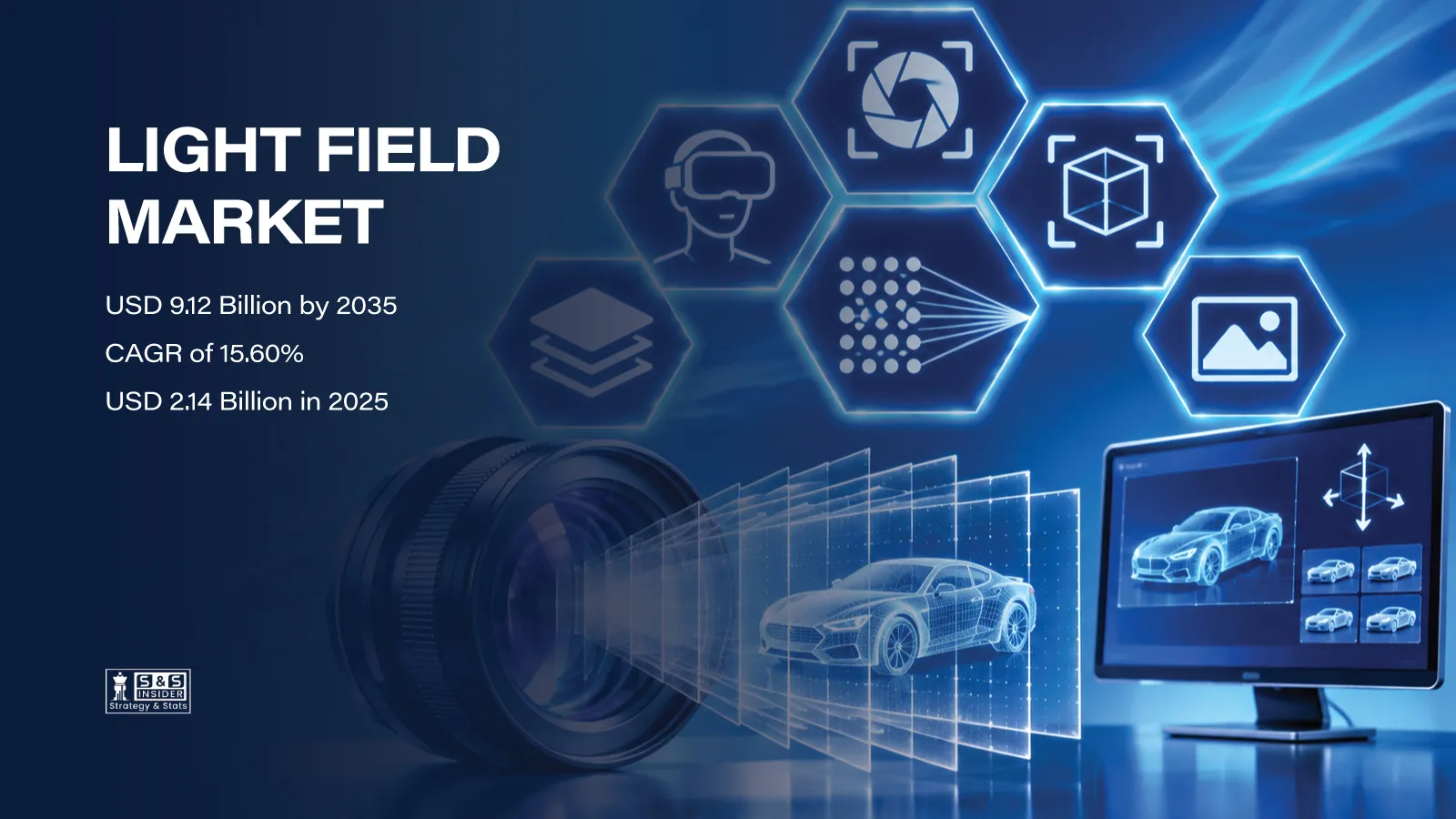
According to a recent study by SNS Insider, the global Light Field Market size was valued at USD 2.14 Billion in 2025 and is anticipated to reach USD 9.12 Billion by 2035, registering a CAGR of 15.60% over the forecast period 2026–2035. The market is estimated at USD 2.47 Billion in 2026.
Customer Attention Is Becoming the New Return on Display Spending
Retailers and advertisers compete for a few seconds of shopper attention. Standard screens have become common, and they no longer stand out in busy stores or public spaces. Depth-rich visuals that need no special glasses give marketers a new way to hold viewer interest.
For brand owners, the value of a display now depends on how well it lifts engagement and sales. Displays that draw longer viewing times can justify higher upfront prices.
Suppliers that can link their products to measurable results, such as foot traffic or product interaction, can move the sales discussion away from hardware cost. This creates room for premium pricing and long-term display contracts.
To Get Detailed Insights on the Light Field Market – Request a Sample Report
Reusable 3D Data Opens Revenue Beyond the First Capture
A single light field capture holds far more information than a standard photo. The same dataset can support later refocusing, depth measurement, and new viewing angles. This turns each capture into a reusable digital asset.
Companies in product design, inspection, and media production can store these datasets and return to them for new tasks. This creates demand for storage, processing, and content management tools built around light field data.
Software subscriptions, cloud rendering, and content conversion services can provide recurring income. They also help suppliers stay engaged with customers well after the hardware sale.
Light Field Market Segmentation Highlights
By Offering
Hardware accounted for the largest market share of 56.40% in 2025 due to the price of the customized equipment involved including the cameras, sensors and display panels. Software is projected to have the highest CAGR of 18.40%.
By Technology
Light field imaging solutions accounted for 52.80% of the market in 2025 because of their established use in inspection and research. Light field displays are anticipated to grow at the highest CAGR of 17.60%, opening prospects in retail signage, entertainment venues, and collaborative design rooms.
By Capture Method
Microlens arrays held the leading share of 44.80% in 2025 due to their compact design and single-sensor setup. Coded aperture systems are expected to post the fastest CAGR of 17.20%, offering openings for suppliers focused on lower-cost and lighter capture devices.
By Vertical
Media and entertainment accounted for the largest market share of 32.40% in 2025. Healthcare is projected to register a CAGR of 17.80%, with opportunities in surgical visualization, diagnostic imaging, and medical training.
North America Leads with 40.60% Market Share as Asia Pacific Advances at 18.20% CAGR
North America ruled the Light Field Market with the highest revenue share of 40.60% in 2025. The market value of the U.S. was reported at USD 755.89 million in 2025, and it is expected to rise at a CAGR of 15.20%. North America presents significant opportunities to players operating in studios, research centers, military projects, and luxury retail brands. This region’s buyers appreciate image quality, software capabilities, and success in business.
Asia Pacific held a share of 24.20% of revenues in 2025 and is expected to generate the highest CAGR of 18.20% during 2026-2035. Growth in the production of display products along with higher investments in consumer electronics is driving demands for low-cost panels and production solutions.
Europe held a 27.80% share of the global market in 2025, followed by Latin America at 4.40% and the Middle East & Africa at 3.00%. Opportunities in these regions will depend on industrial automation spending, healthcare investment, and adoption of digital retail formats.
Display-as-a-Service Could Lower the Barrier to Adoption
Advanced light field displays carry high upfront costs, and many retailers, event organizers, and small studios hesitate to buy them outright. Leasing plans, campaign-based rentals, and managed display services give these buyers access without a large capital outlay.
Companies can access these users via joint ventures with advertising, events, and digital signage companies. These will enhance their market coverage and help familiarize new users about the product being launched.
This model can also generate recurring income from such activities as content creation, remote monitoring, maintenance, and software upgrades.
Competitive Outlook: Content Readiness to Become a Key Differentiator
Future competition in the light field industry will depend on more than display resolution or sensor quality. Customers want complete solutions that include content creation tools, easy integration, and ready-made applications.
Suppliers that pair reliable hardware with simple software, content partnerships, and flexible ownership options may gain a stronger position. Alliances with game engine developers, medical device makers, and creative agencies can also speed up commercial growth.
Light Field Market Outlook Through 2035
In the coming years, the technology of light fields will have an increasingly important place in retail, medicine, industry, and entertainment. Those companies that demonstrate obvious benefits in terms of audience engagement, diagnostics, and process improvement will be the most successful in meeting the emerging needs.
About the Author

Get in touch




