
The global polyethylene foams industry is moving into a phase of steady commercial growth. Manufacturers across packaging, transport and construction now pay closer attention to the cost of product damage, weight and energy loss. Each of these costs affects margins directly. As a result, buyers increasingly see foam materials as a way to protect value across the supply chain rather than as a low-cost filler.
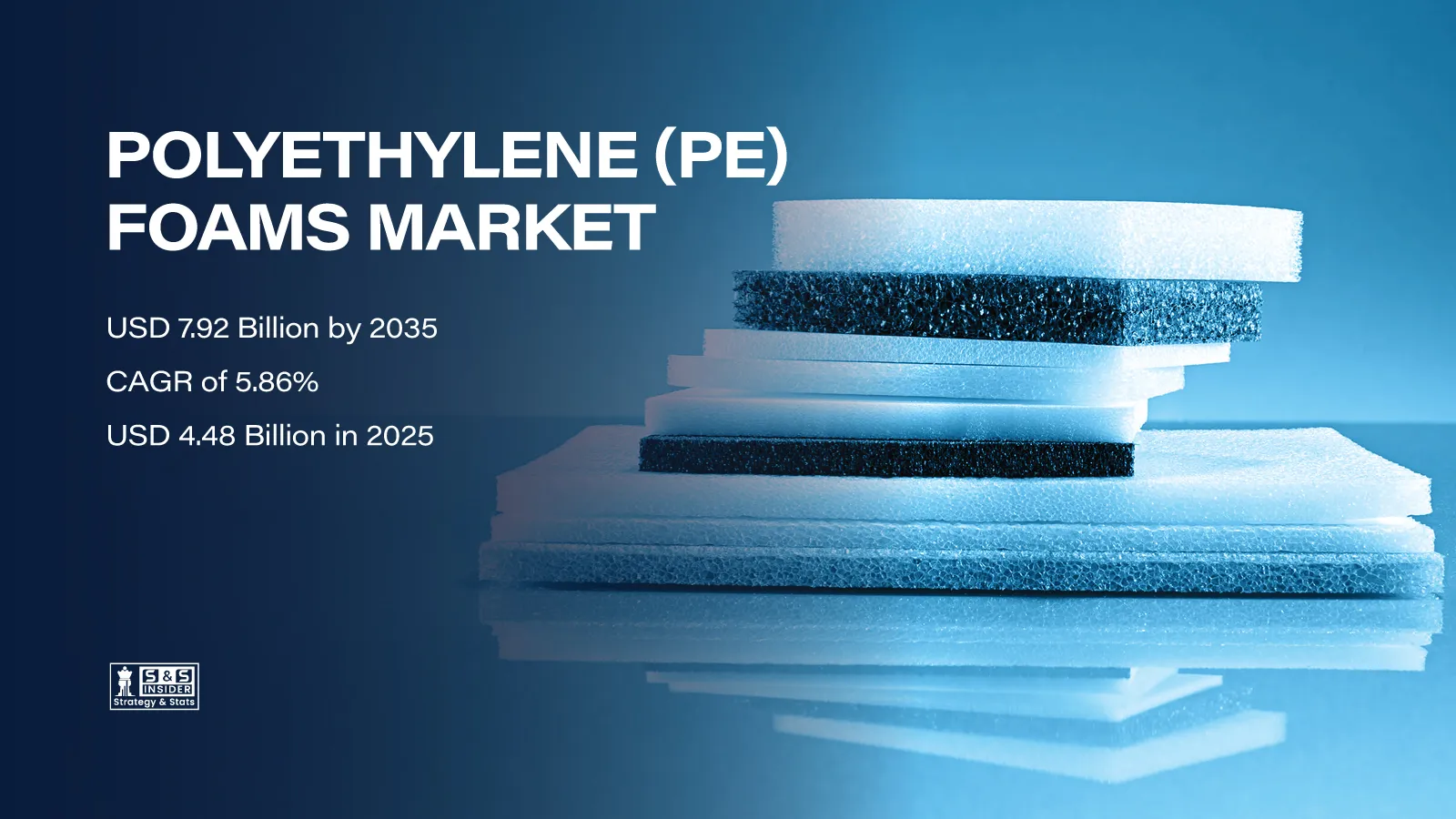
According to a recent study by SNS Insider, the global Polyethylene (PE) Foams Market size was valued at USD 4.48 Billion in 2025 and is anticipated to reach USD 7.92 Billion by 2035, registering a CAGR of 5.86% over the forecast period 2026–2035. The market is estimated at USD 4.74 Billion in 2026.
Damage Cost Control Is Creating New Demand for Engineered Cushioning
Product returns, replacement shipments and warranty claims carry real costs for brand owners and logistics firms. A damaged delivery also weakens customer trust and repeat sales. Foam protection that lowers breakage rates therefore offers a clear financial return.
Shippers of electronics, appliances and industrial parts are reviewing packaging specifications more closely. Many now test foam density and thickness against actual transit conditions rather than relying on standard inserts.
Foam converters that can design custom protective solutions and show measured reductions in damage claims are well placed to win long-term supply contracts.
To Get Detailed Insights on the Polyethylene (PE) Foams Market – Request a Sample Report
Weight and Energy Savings Open Doors Beyond Commodity Supply
Lighter materials help vehicle makers meet efficiency targets and help shippers reduce freight costs. Foam layers in buildings help to improve insulation and moisture control. In every case the material is worth more than the price paid for it.
The change enables the suppliers to sell on performance outcomes, such as weight saved per component or energy retained per square meter. Sales offer includes technical data and application testing.
Design support, custom fabrication and joint product development with customers can create higher margin business and closer customer ties.
Polyethylene (PE) Foams Market Segmentation Highlights
By Type
Non-cross-linked foams held the largest market share of 58.40% in 2025, owing to the low cost and broad applications in general packaging. Cross-linked foams are estimated to have the highest CAGR of 6.74%. This opens up opportunities in applications requiring higher strength, finer cell structure and improved heat resistance.
By Material
Low density polyethylene accounted for 59.30% of the market in 2025 due to its flexibility and ease of processing. High density polyethylene is expected to register the highest CAGR of 6.28%. This opens up possibilities in load-bearing and impact-resistant applications where stiffness is important.
By End Use
Protective packaging accounted for the largest market share of 34.46% in 2025. The automotive segment is expected to register a CAGR of 6.58%, supported by opportunities in acoustic insulation, thermal control and vibration damping for conventional and electric vehicles.
Asia Pacific Leads with 43.60% Market Share and Advances at the Fastest 6.92% CAGR
The Asia Pacific region held the largest revenue share of 43.60% in the Polyethylene (PE) Foams Market in 2025 and is projected to grow at the fastest CAGR of 6.92% from 2026 to 2035. The region is attractive to suppliers with local conversion capacity, competitive pricing and short lead times due to large electronics, automotive and consumer goods production bases.
In 2025, North America held 24.10% of the revenue. The U.S. market was valued at USD 896.13 Million in 2025 and is expected to grow at a CAGR of 5.34%. The regional buyers place a premium on consistent quality, regulatory compliance and reliable supply from domestic or nearby plants.
Europe held a 21.80% share of the global market in 2025, followed by Latin America at 5.90% and the Middle East & Africa at 4.60%. Opportunities in these regions will vary with packaging rules, construction activity, and the growth of local manufacturing.
Recycled Content and Take-Back Programs Could Unlock New Commercial Value
Brand owners are under increasing pressure to reduce plastic waste and disclose material use. The hunt is now on for foam products containing recycled content, or a clear end-of-life pathway. Preferred vendor status may be lost by suppliers who do not have these capabilities.
Foam makers can counter this by teaming up with recyclers, logistics companies and large customers to collect and reprocess used foam. Closed loop programs can provide a steady stream of recovered material and buffer exposure to resin price swings.
These programs also may provide incremental revenue from recycled-grade product lines, sustainability reporting services and long-term supply agreements.
Competitive Outlook: Application Expertise to Become a Key Differentiator
In the future, competition in the polyethylene foams industry will likely involve more than price per unit. Customers are looking more and more for suppliers that understand their products, test conditions and compliance needs.
If companies can combine reliable material supply with design support, rapid prototyping and sustainable product options, their market position may be stronger. Working with vehicle component manufacturers and construction material distributors and with packaging designers can also expand the market reach.
Polyethylene (PE) Foams Market Outlook Through 2035
Polyethylene foams are anticipated to have a greater involvement in supply chain protection, vehicle weight reduction and building energy performance in the coming decade.Suppliers that can show clear gains in damage prevention, material efficiency and recyclability will be best placed to capture new demand across packaging, automotive and construction markets.
About the Author

Get in touch




