
The global electric vehicle adhesives industry is entering a phase of fast commercial growth. Carmakers are redesigning vehicles around the battery, and many joints that once used bolts, rivets, or welds now depend on bonding. Each new platform therefore raises the value of adhesive supply contracts. Material choices made early in a program can lock in supplier revenue for the life of a vehicle model.
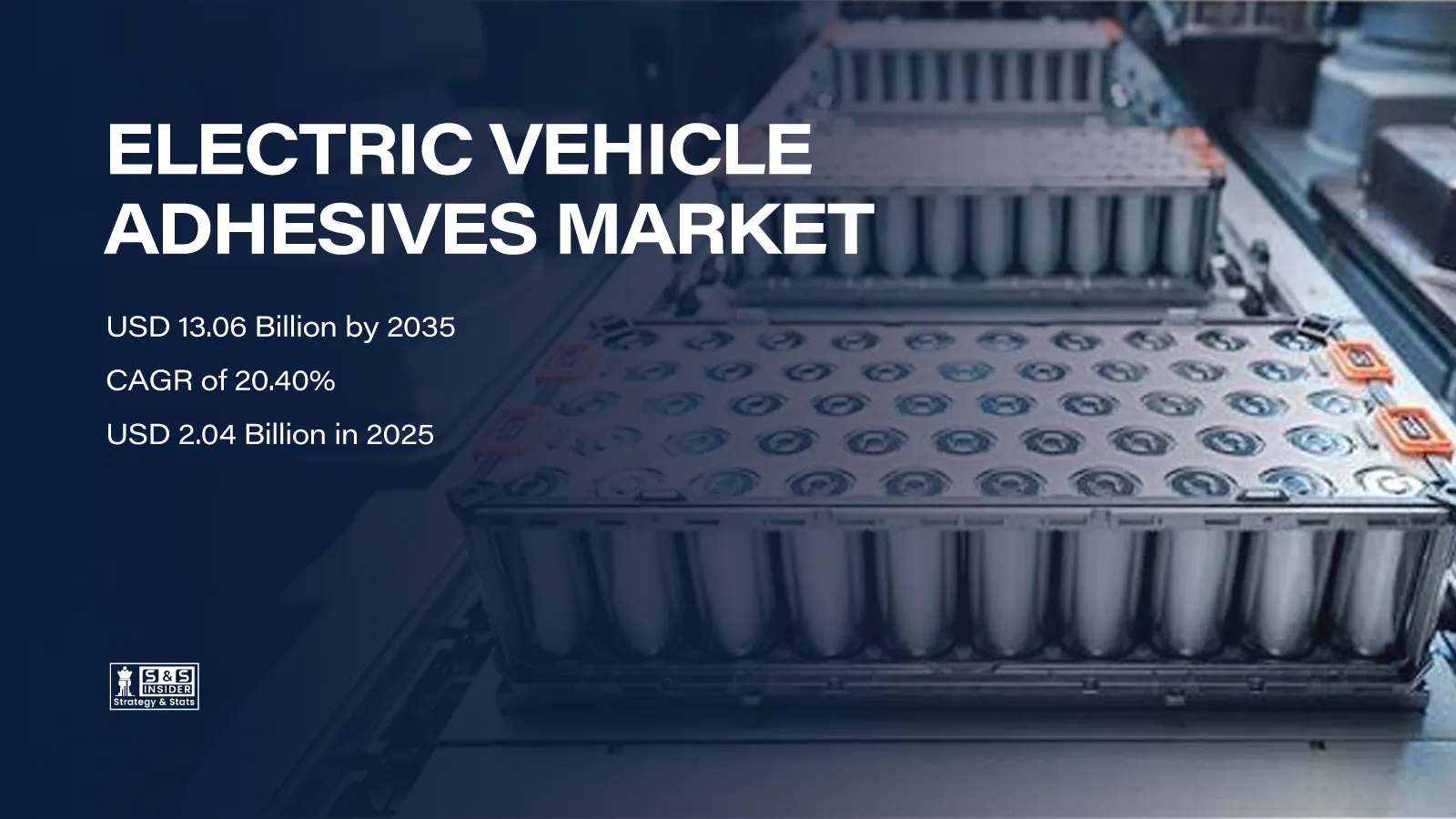
According to a recent study by SNS Insider, the global Electric Vehicle Adhesives Market size was valued at USD 2.04 Billion in 2025 and is anticipated to reach USD 13.06 Billion by 2035, registering a CAGR of 20.40% over the forecast period 2026–2035. The market is estimated at USD 2.46 Billion in 2026.
Early Design Involvement Is Becoming the Main Route to Revenue
Adhesive suppliers that join a vehicle program at the concept stage gain a clear advantage. Once a carmaker approves a material for a battery pack, switching suppliers means repeating long and costly validation work. For this reason, approved materials tend to stay in use for many years.
This puts application engineering at the center of the sales process. Suppliers that place technical teams with carmakers and battery makers can help shape joint designs and material specifications from the start.
The commercial return comes from multi-year supply positions rather than single orders. Suppliers that invest early in customer design work are more likely to secure a steady share of volume as production scales.
To Get Detailed Insights on the Electric Vehicle Adhesives Market – Request a Sample Report
Repair and Recycling Needs Open a New Value Stream
Battery packs are among the most expensive parts of an electric vehicle. Fleet owners, insurers, and recyclers all want packs that can be opened, repaired, or taken apart at end of life. Permanent bonding can make this work harder and more costly.
Adhesives that hold firmly in service but release under controlled conditions address this problem. They support battery repair, module replacement, and material recovery, which matter more as the early generations of electric vehicles age.
Suppliers of such materials and of process guidance to service centers and recyclers can reach buyers beyond the original vehicle assembly line.
Electric Vehicle Adhesives Market Segmentation Highlights
By Resin Type
Epoxy had the largest market share of 36.84% in 2025 due to its wide application in structural and battery bonding. Heat-resistant sealing and flexible bonding around battery and electronic parts is expected to create opportunities for silicone to grow at the fastest CAGR of 23.58%.
By Application
In 2025, the battery assembly held a 44.27% market share, with cell, module, and pack bonding continuing to be the main applications. Power electronics and motors are projected to register the highest CAGR of 22.74%, thereby providing an opportunity for potting compounds, thermal interface materials and magnet bonding products.
By Vehicle Type
Battery electric vehicles accounted for the largest market share of 62.91% in 2025. Commercial electric vehicles are expected to register a CAGR of 25.43%, supported by opportunities in electric buses, delivery vans, and trucks, where larger packs need more adhesive per vehicle.
By Form
Liquid adhesives held 58.76% of market revenue in 2025. Film and tape are expected to grow at a CAGR of 22.31%, opening opportunities in automated production lines that need clean, fast, and consistent application.
Asia Pacific Leads with 55.38% Market Share and the Fastest CAGR of 22.86%
Asia Pacific dominated the Electric Vehicle Adhesives Market with the highest revenue share of 55.38% in 2025 and is expected to witness the highest CAGR of 22.86% during the forecast period of 2026–2035. Suppliers that can support large battery plants and high volume vehicle production with local manufacturing, technical service and short delivery times have good prospects in the region.
Europe held a 24.12% share in 2025, while North America accounted for 15.84%. The U.S. market was valued at USD 277.57 Million in 2025 and is projected to grow at a CAGR of 18.64%. In both regions, new local battery plants are creating demand for qualified suppliers that can meet regional sourcing rules.
Latin America accounted for 2.46% and the Middle East & Africa for 2.20% of the market in 2025. Opportunities in these regions will depend on the pace of local vehicle assembly, fleet electrification, and charging network growth.
Supply Partnerships with Battery Makers Could Unlock New Commercial Opportunities
Battery production is often handled by specialist cell and pack makers rather than carmakers. These companies make many of the material decisions and run their own qualification programs. They are therefore an important customer group in their own right.
Adhesive suppliers can widen their reach by forming joint development agreements with battery makers and pack integrators. Such ties can lead to supply positions across several vehicle brands at once.
These partnerships also support recurring revenue through dispensing equipment support, process audits, on-site technical service, and custom formulation work.
Competitive Outlook: Thermal and Safety Performance to Become Key Differentiators
The future competitive landscape for electric vehicle adhesives will probably go beyond just bond strength. Customers want materials that manage heat, slow fire spread in battery packs and cure quickly on high speed production lines.
Suppliers with proven safety performance, rapid cure, stable pricing and strong technical support may have a stronger market position. Partnerships with dispensing equipment manufacturers and battery engineering companies can also support commercial growth.
Electric Vehicle Adhesives Market Outlook Through 2035
Over the next decade, adhesives are set to play a larger role in battery design, vehicle weight reduction, and end-of-life recovery. Suppliers that can show clear gains in safety, production speed, and lifetime cost will be best placed to capture new demand across passenger and commercial electric vehicles.
About the Author

Get in touch




