
The global bromine industry is embarking on a phase of controlled commercial growth. Security of supply is now more important to chemicals, electronics and energy buyers than short-term price advantages. Since bromine is made in only a handful of places, procurement teams are re-thinking the way they buy the chemical. This implies that long-term supply contracts and strong producer relationships are more strategically important than in years gone by.
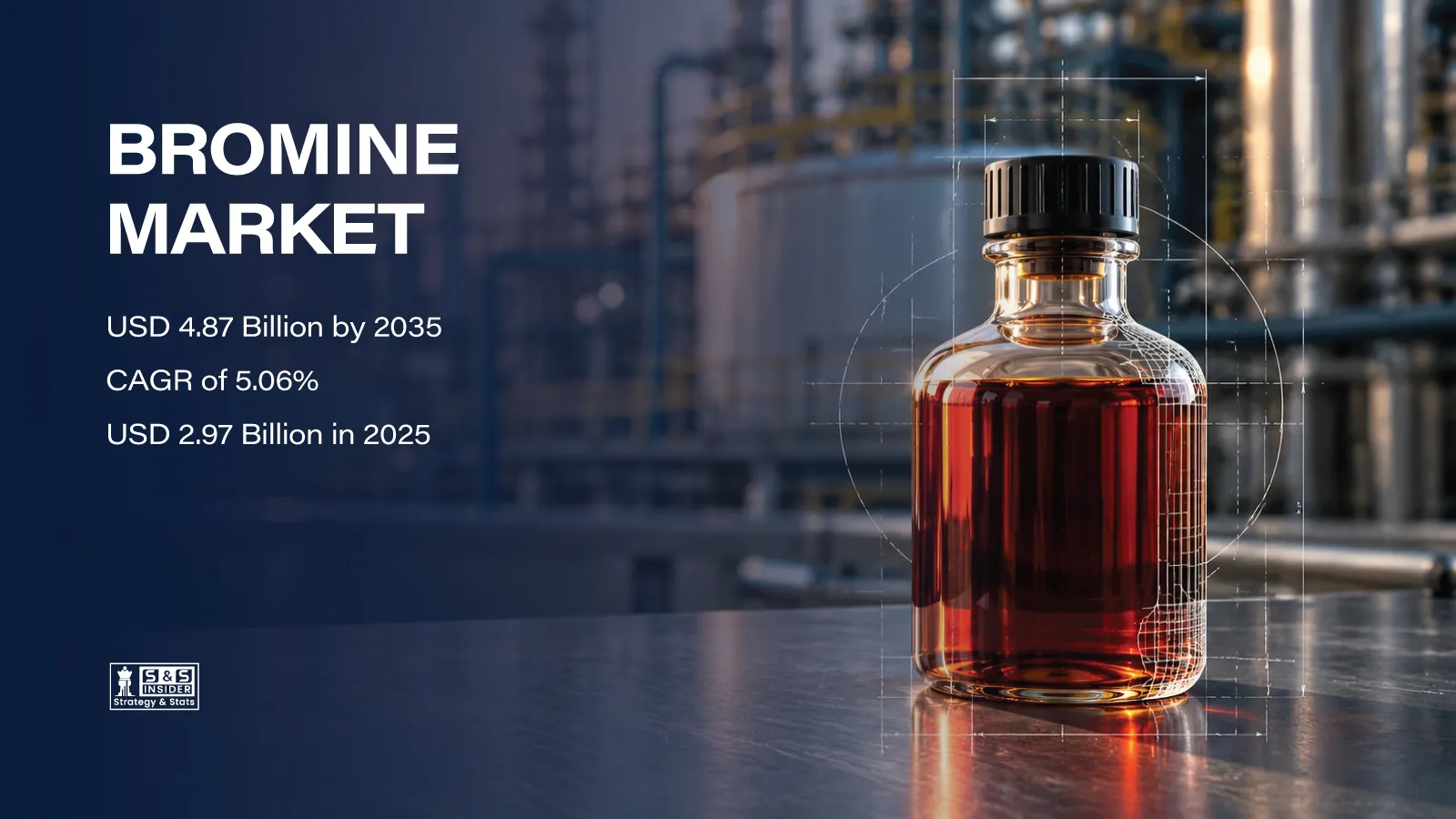
According to a recent study by SNS Insider, the global Bromine Market size was valued at USD 2.97 Billion in 2025 and is anticipated to reach USD 4.87 Billion by 2035, registering a CAGR of 5.06% over the forecast period 2026–2035. The market is estimated at USD 3.12 Billion in 2026.
Supply Concentration Is Making Sourcing Security a Commercial Priority
Bromine output depends on access to specific brine resources, and those resources are found in a small number of regions. If one producing area is disrupted, buyers across several industries can face higher costs and delivery delays.
Manufacturers that depend on bromine derivatives are therefore spreading their supplier base and signing longer contracts. Many now treat supply continuity as a risk management issue rather than a routine purchasing task.
Producers able to provide consistent volumes, clear contractual terms and back-up logistics are well placed to win multi-year deals. Hence they have a commercial edge beyond price competition.
To Get Detailed Insights on the Bromine Market – Request a Sample Report
Energy Storage and Resource Recovery Open Opportunities Beyond Traditional Uses
Bromine has long been tied to flame retardants and drilling fluids. New uses are now widening its commercial reach. Grid-scale storage developers are testing bromine-based battery chemistries that can store power for long periods.
At the same time, brine operations that recover several elements from the same resource are improving project economics. Producers that capture more than one product from a single brine stream can spread operating costs across several revenue lines.
These trends may support new supply partnerships, technology licensing, and joint ventures between chemical producers and energy companies.
Bromine Market Segmentation Highlights
By Derivative
Organobromine compounds accounted for the largest market share of 51.47% in 2025 due to their wide applications in flame retardants, pharmaceuticals, and specialty chemicals. Hydrogen bromide is expected to have the highest CAGR of 5.68%, creating opportunities in chemical synthesis and electronics processing.
By Application
Flame retardants accounted for 39.64% of the market in 2025, spurred by fire safety regulations for electronics and building materials. Bromine-based batteries are projected to have the highest CAGR at 8.18%, offering opportunities for suppliers to serve long-duration energy storage projects.
By End Use
The chemicals sector held the largest market share of 30.82% in 2025. The electronics and electrical segment is expected to register a CAGR of 6.32%. Opportunities exist in circuit boards, device housings, and semiconductor processing.
Asia Pacific Leads with 38.74% Market Share as North America Holds 26.84%
The Asia Pacific region held the largest revenue share of 38.74% in the Bromine Market in 2025 and is projected to grow with the fastest CAGR of 6.44% over the forecast period 2026–2035. Growing electronics production, chemical output and construction activities are driving demand for bromine derivatives. In this region, buyers are looking for a reliable supply, a competitive price and local distribution support.
North America contributed 26.84% of sales in 2025. U.S. Market was valued at USD 688.50 Million in 2025, and it is expected to grow at a CAGR of 5.21%. The region provides opportunities for oil and gas completion fluids, water treatment and energy storage development.
Europe held a 17.92% share of the global market in 2025, followed by the Middle East & Africa at 10.53% and Latin America at 5.97%. Opportunities in these regions will depend on regulatory direction, industrial investment, and access to local brine resources.
Regulatory Change Could Reward Product Innovation
Tighter regulations on some brominated flame retardants are changing what customers are buying. There are limits to some legacy compounds and buyers are seeking compliant alternatives that still meet fire safety standards.
Producers that invest in newer, compliant formulations, can protect existing customer accounts and unlock doors to new accounts. Close cooperation with makers of electronics and building materials can accelerate product approval.
This change may also generate revenues from provision of technical services, compliance support and co-development programs with downstream customers.
Competitive Outlook: Supply Reliability to Become a Key Differentiator
Competition in the bromine industry in the future will likely be based on more than just production capacity. Customers are looking for suppliers who can provide consistent volumes, help them meet regulatory compliance and develop new applications.
Producers who are able to combine secure access to brine with technical support, flexible contracts and product development capability could be stronger in the market. Partnerships with energy storage companies, oilfield service providers and specialty chemical makers can also help support commercial expansion.
Bromine Market Outlook Through 2035
Over the next decade bromine will have a more expanded role in fire safety, energy storage, oilfield operations and specialty chemical production. Companies that can provide supply security, regulatory readiness and support for new applications will be best placed to capture the emerging demand.
About the Author

Get in touch




