
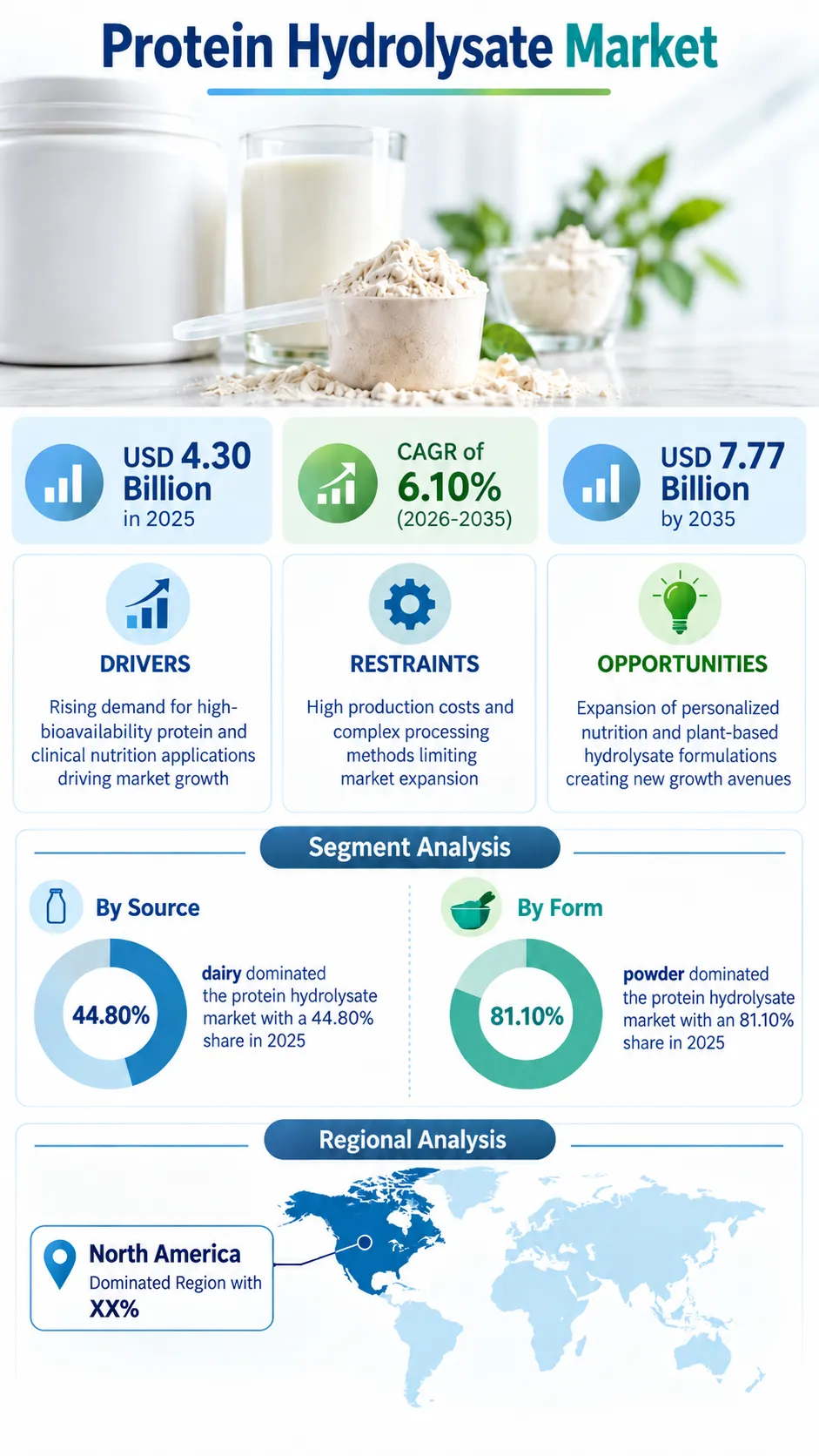
The protein hydrolysate market is set for significant expansion as demand for rapidly absorbable, high-bioavailability proteins continues to reshape sports, infant, and clinical nutrition formulation sourcing worldwide. “According to a recent study by SNS Insider, the Protein Hydrolysate Market Size valued at USD 4.30 billion in 2025, is anticipated to grow to USD 7.77 billion by 2035, registering a CAGR of 6.10% over the 2026–2035 forecast period.”
Hypoallergenic and Rapid-Absorption Positioning Creates New Demand
There have been notable advances within protein hydrolysate extraction and purification technology over time, enabling manufacturers focused on improving peptide purity and digestibility to capitalize on this trend. This includes the need for more consistent enzymatic hydrolysis and filtration methods that provide food, beverage, and clinical nutrition companies with access to reliable, high-purity hydrolysate supply, applicable across sports nutrition, infant formula, and medical feeding formulations. Manufacturers are continuously refining processing techniques to ensure their protein hydrolysate products meet evolving formulation, taste, and regulatory requirements.
From being just another clinical nutrition product to being an essential part of sports and functional nutrition products, the protein hydrolysate industry has come a long way indeed. Investment in the areas of enzymatic hydrolysis, plant-based formulation, and masking of taste among other things has played a huge role in shaping up the industry.
New extraction and processing techniques are improving ingredient bioavailability, enhancing taste and solubility, and enabling expansion into increasingly diverse food, beverage, supplement, and animal feed applications. This allows them to satisfy the increasing demand for protein ingredients that have lower levels of allergens, with clinical backing. Protein hydrolysate companies, food companies, and clinical nutrition companies are increasingly working together to develop hypoallergenic proteins and rapid absorption proteins.
To Get Detailed Insights on the Protein Hydrolysate Market – Request a Sample Report
Key Market Findings Highlight High-Growth Segments
In terms of market share, the leading market players are from the dairy segment, accounting for 44.80% of revenue share in 2025. This is due to high bioavailability of dairy-based protein hydrolysate and the availability of the supply chain for infants and medical nutrition purposes. The fastest-growing market segment through 2035 is anticipated to be plant-based proteins, with a CAGR of 8.90%. This can be attributed to the growing demand for hypoallergenic proteins.
In terms of form, the powder format accounted for more than 81.10% of the overall revenue share in 2025, owing to the high stability of the product and easy handling nature. The highest growth rate would be seen in the liquid protein hydrolysate form, at a CAGR of 6.80%.
The largest revenue contribution was made by the low DH category in 2025 due to its optimal functionalities and taste profiles. The high DH category is anticipated to be the fastest-growing category with a 11.72% CAGR owing to the growing demand in the sports recovery and clinical feeding uses.
The food & beverages category contributed 34.70% revenue share in 2025 due to increased use in functional beverages and fortified snacks. Clinical nutrition is expected to be the fastest-growing application category until 2035 due to growing usage of hydrolysate-based products in recovery and feeding.
Purity, Digestibility, and Taste Optimization Gain Importance
Manufacturers in the industry of food, beverages, and clinical nutrition have been making demands for protein hydrolysates that provide peptide consistency in purity levels, as well as increased digestibility and better flavor and solubility attributes.
Development of new technologies and innovations in enzyme hydrolysis, plant formulation, and flavor-masking validation is helping these companies come up with products that can satisfy the demands of more quality-oriented food and nutrition manufacturers. Increased focus on sustainability and traceability of protein sources is also helping manufacturers to cater to the changing requirements of regulations and consumers.
North America Leads the Market While Asia Pacific Emerges as the Fastest-Growing Region
North America represented the largest share of regional market revenue in 2025, supported by well-established sports nutrition infrastructure and extensive infant and clinical nutrition manufacturing systems. On the other hand, Asia Pacific is the fastest-growing market during the forecast period through 2035, driven by China's expanding dietary supplement manufacturing base and rising aquaculture feed demand across the region.
Leading Companies Drive Innovation and Competition
The environment continues to stay dynamic as players continue innovating on enzymatic hydrolysis technology and plant-based formulation as well as forming partnerships to enhance their position in the industry. Some of the major companies that operate in the protein hydrolysate market are Kerry Group, Glanbia, Fonterra, Arla Foods, DSM-Firmenich, Tate & Lyle, Ingredion, Roquette Frères, AMCO Proteins, and FrieslandCampina Ingredients.
An SNS Insider analyst Parry Kardani commented, “The growing convergence of high-bioavailability protein demand and clinical nutrition formulation requirements is creating sustained demand for high-purity, rapidly absorbable protein hydrolysate ingredients. Producers that successfully combine enzymatic processing innovation, plant-based formulation expertise, and allergen-free sourcing transparency will be best positioned to capitalize on emerging opportunities across sports, infant, and clinical nutrition segments.”
About the Author

Get in touch




