
Urology Devices Market is poised to enter an era of growth as healthcare facilities deal with the increased number of patients who require diagnosis and management of disorders pertaining to their kidneys, bladders, prostates, and urinary system. There is a growing emphasis among device makers on developing technologies that are minimally invasive, robotic surgeries, and treatments at home.
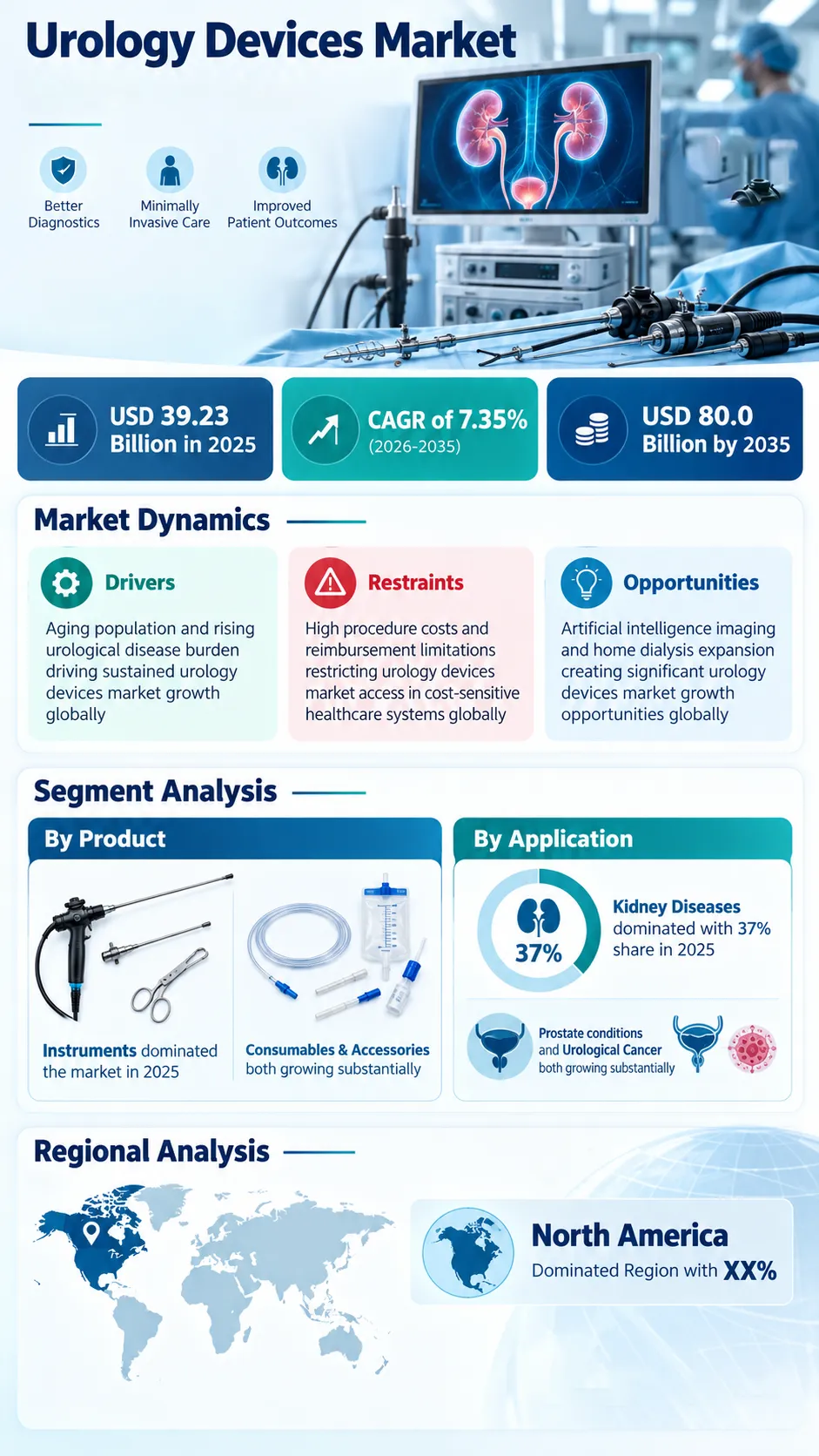
“According to a recent study by SNS Insider, the global Urology Devices Market size valued at USD 39.23 billion in 2025, is anticipated to grow to USD 80.0 billion by 2035, registering a CAGR of 7.35% over the 2026–2035 forecast period.”
The market will be helped by various things happening at the same time. High incidence of chronic kidney diseases, kidney stones, benign prostatic hyperplasia, urinary incontinence, and urological cancer cases will result in an increase in the number of procedures done. Advances in technology are changing the way these diseases are being detected and treated. There is a move to reduce the length of stay in hospitals.
To Get Detailed Insights on the Urology Devices Market – Request a Sample Report
Robotic Surgery and Digital Tools Reshape Urological Care
Robotic surgery is gaining more relevance in complicated urological procedures, especially prostate and kidney surgeries. The development of imaging, instrumentation, and minimal invasive methods is aiding the acceptance of robotic technologies among hospitals that have the infrastructure and expertise to perform complicated surgeries.
Other products, such as single-use digital ureteroscope, MRI ultrasound fusion for prostate biopsy, artificial intelligence assisted cystoscopy, and monitoring technology are also making an entry into the market.
Kidney Disorders Remain a Major Revenue Contributor
The kidney disease segment was the largest end user segment in terms of revenues, with a share of about 37% of the total market in 2025. Chronic kidney diseases, along with the need for renal replacement therapy, is driving the demand for dialysis-related devices and technologies.
Another major driver of device demand is kidney stones. Higher procedure volumes are boosting the adoption of devices like ureteroscopes and laser lithotripters, while disposables are increasingly popular due to their lower processing needs.
Cancer of the urological system and prostate diseases have been other major sources of demand for high-tech interventions. There has been an increasing shift from conventional surgery to robotic surgery and other types of surgeries that are less invasive.
Hospitals Lead While Specialty Centers Expand
Hospitals, ambulatory surgical centers, and clinics together accounted for about 45% of the market share in 2025. Hospitals will still perform complicated procedures that need the setting of the operating room, anesthesiology, and special postoperative care.
Specialty urology centers have become a promising growth segment as the trend towards procedural healthcare is increasing. Such centers will offer specific diagnostic and treatment services in a specialized environment while there will be increased home-care usage in cases requiring long-term care.
North America Holds a Strong Market Position
North America remained the leading regional market in 2025, with the United States accounting for approximately 89% of North American revenue. The U.S. market was valued at USD 17.0 billion in 2023 and is projected to reach USD 29.58 billion by 2032, reflecting a 7.35% CAGR.
The region's position is supported by substantial healthcare expenditure, advanced surgical infrastructure, high adoption of robotic technologies, and extensive dialysis services. According to the report data, U.S. hospitals performed more than 4.5 million urological procedures in 2023, demonstrating the scale of the country's clinical activity.
Europe remains an established market, with Germany representing 26% of regional revenue. Advanced healthcare infrastructure and established clinical pathways continue to support adoption of endoscopic, robotic, and laser-based technologies.
Asia Pacific Emerges as a Key Growth Market
Asia Pacific is projected to record the fastest growth through 2035. China accounted for approximately 42% of regional revenue, supported by its large patient population and expanding healthcare infrastructure.
Japan, South Korea, India, and other regional markets are also contributing to technology adoption. Rising healthcare investment, increasing access to specialist services, and greater availability of advanced medical equipment are creating opportunities for manufacturers across multiple urological applications.
In other emerging markets, Saudi Arabia accounted for 38% of Middle East & Africa revenue, while Brazil represented 50% of Latin American revenue. Healthcare infrastructure investment and private-sector expansion are supporting demand in both regions.
Home Treatment and AI Create New Opportunities
Home dialysis offers a significant potential avenue that will be explored by healthcare practitioners looking at alternatives to conventional facilities-based treatment modalities. Equipment connectivity and remote monitoring capabilities can assist in allowing clinicians to supervise their patients in non-conventional settings.
Another rapidly evolving area is that of artificial intelligence, where image and decision-support systems employing AI capabilities might offer some improvement in detecting and characterizing pathologies.
High prices of medical equipment and reimbursement issues still pose challenges, especially in the case of more advanced robotic systems and technologies.
Competitive Landscape
The Urology Devices Market includes Intuitive Surgical Inc., Boston Scientific Corporation, Medtronic plc, Karl Storz SE & Co. KG, Olympus Corporation, Richard Wolf GmbH, Fresenius Medical Care AG & Co. KGaA, Baxter International Inc., Becton Dickinson & Company, Johnson & Johnson MedTech, Teleflex Incorporated, Coloplast A/S, Cook Medical LLC, Dornier MedTech GmbH, Laborie Medical Technologies, Envision Scientific Pvt. Ltd., and Cogentix Medical Inc.
Recent industry activity includes developments involving Intuitive Surgical's da Vinci 5, Boston Scientific's WaveOne Dual-mode flexible ureteroscope, and Fresenius Medical Care's home dialysis technology, reflecting continued investment in robotic surgery, disposable visualization, and connected renal care.
About the Author

Get in touch




