
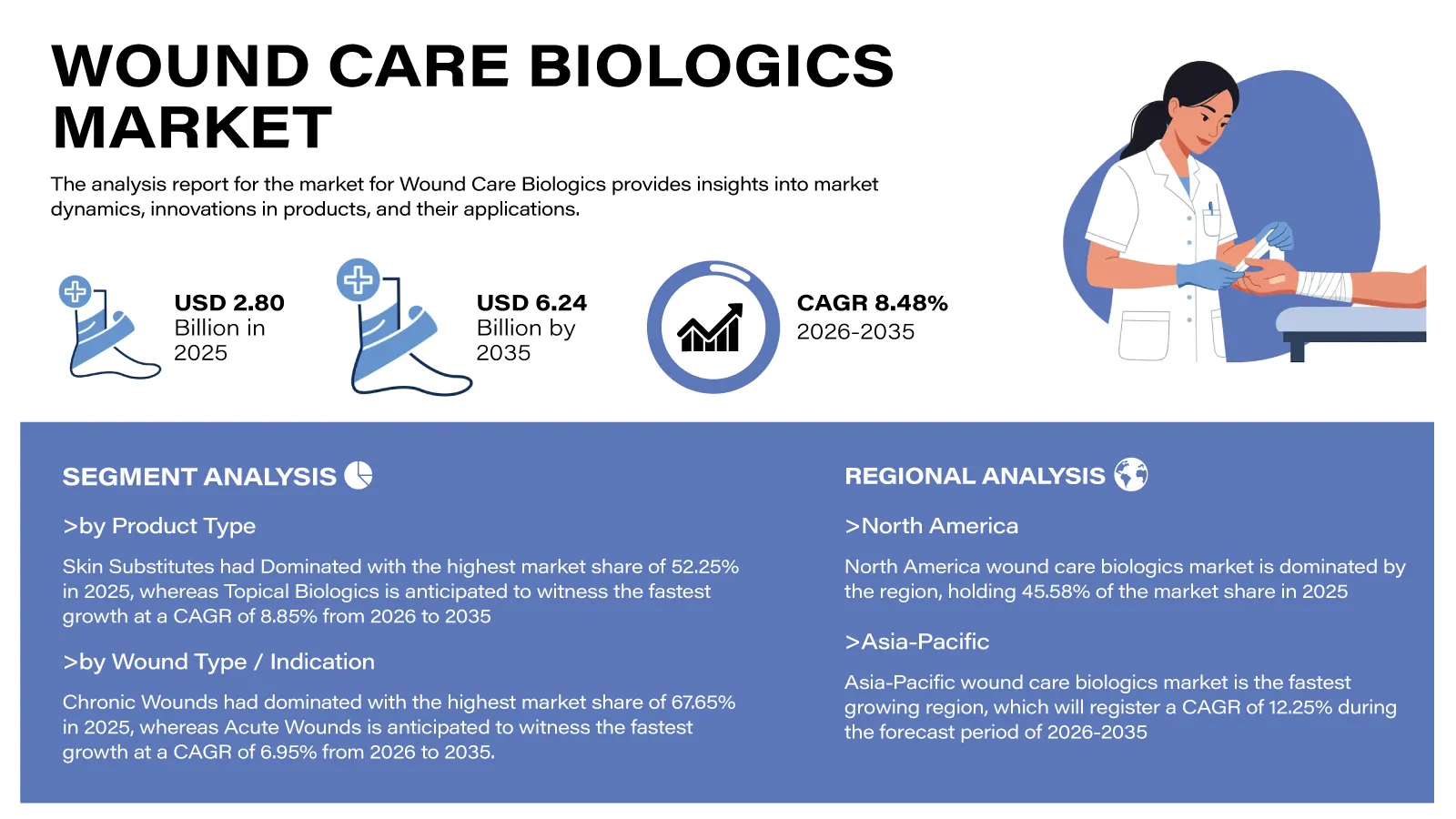
The global Wound Care Biologics Market is expected to experience significant growth over the coming decade as healthcare providers increasingly integrate regenerative treatment solutions into chronic wound management. “According to a recent study by SNS Insider, the global Wound Care Biologics Market size valued at USD 2.80 billion in 2025, is anticipated to grow to USD 6.24 billion by 2035, registering a CAGR of 8.48% over the 2026–2035 forecast period.”
Growing demand for effective therapies capable of improving tissue regeneration and reducing healing time is encouraging broader adoption of biologic wound care products across hospitals, specialty clinics, and outpatient care settings. As healthcare systems place greater emphasis on improving patient outcomes while reducing long-term treatment costs, advanced biologic solutions are becoming an increasingly important part of modern wound management.
The market is also benefiting from ongoing developments in regenerative medicine, expanded clinical applications, and continuous innovation in biologic technologies designed to support complex wound healing.
Regenerative Medicine Continues to Transform Wound Management
Healthcare providers are increasingly shifting toward biologically active therapies that promote natural tissue repair while addressing challenges associated with chronic and difficult-to-heal wounds. Advances in bioengineered materials, regenerative technologies, and next-generation biologic products are enabling clinicians to improve healing outcomes across a broad range of clinical settings.
The growing integration of regenerative medicine into routine wound care is creating new opportunities for manufacturers developing innovative therapies that enhance recovery, improve patient comfort, and support long-term tissue repair. Continued investments in research and product development are expected to strengthen the market's innovation pipeline throughout the forecast period.
 Key Market Findings Highlight Emerging Opportunities
Among product categories, skin substitutes accounted for 52.25% of global market revenue in 2025, reflecting their widespread adoption in advanced wound management and tissue regeneration applications.
Meanwhile, topical biologics are projected to register the fastest growth through 2035, expanding at a CAGR of 8.85%, supported by increasing demand for convenient, non-invasive treatment options across outpatient and home healthcare settings.
Based on wound indication, chronic wounds represented 67.65% of total market revenue in 2025, highlighting the significant clinical burden associated with long-term wound management. However, acute wound applications are expected to record the fastest growth at a CAGR of 6.95%, driven by increasing surgical procedures, trauma care, and advances in post-operative wound management.
From a technology perspective, acellular biologics held 55.85% of market revenue in 2025, maintaining their leadership due to broad clinical acceptance and ease of use. At the same time, cell-based biologics are anticipated to witness the fastest expansion, advancing at a CAGR of 9.16% through 2035, reflecting growing interest in regenerative therapies capable of supporting enhanced tissue repair.
Across end users, hospitals accounted for 63.39% of global market revenue in 2025, while wound care clinics are expected to experience the fastest growth at a CAGR of 8.86%, driven by increasing demand for specialized outpatient wound management services.
Healthcare Infrastructure Investments Support Market Expansion
Healthcare organizations worldwide continue to invest in specialized wound care programs aimed at improving clinical outcomes and reducing complications associated with chronic wounds. Expansion of dedicated wound care centers, greater availability of specialized treatment services, and increasing awareness among healthcare professionals are supporting broader adoption of biologic therapies.
The growing use of outpatient care models and home healthcare services is also creating opportunities for manufacturers developing easy-to-administer biologic products that improve accessibility while supporting patient-centered care.
Regional Markets Continue to Create Growth Opportunities
North America accounted for 45.58% of global market revenue in 2025, supported by advanced healthcare infrastructure, widespread adoption of regenerative wound care technologies, and strong clinical expertise in chronic wound management. Continued investment in advanced treatment solutions and specialized wound care programs reinforces the region's leadership position.
Meanwhile, Asia Pacific is projected to emerge as the fastest-growing regional market, registering a CAGR of 12.25% through 2035. Expanding healthcare infrastructure, rising awareness of advanced wound therapies, growing healthcare expenditure, and increasing access to specialized treatment services are creating substantial growth opportunities across the region.
Leading Companies Continue to Strengthen Innovation Strategies
The competitive landscape remains highly dynamic as manufacturers continue investing in regenerative medicine technologies, strategic partnerships, product innovation, and clinical research to address the evolving needs of healthcare providers.
Key companies operating in the global wound care biologics market include Smith & Nephew, Organogenesis Holdings, MiMedx Group, Integra LifeSciences, Mölnlycke Health Care, Coloplast, Convatec, Vericel Corporation, Kerecis, and Amnio Technology.
An SNS Insider analyst Parry Kardani commented, "Regenerative medicine continues to redefine the future of wound care by providing advanced treatment options capable of supporting faster tissue repair and improved clinical outcomes. Continued innovation in biologic technologies and increasing investment in specialized wound management are expected to drive sustained market expansion over the next decade."
About the Author

Get in touch




