
Book Reading Apps Market Report Scope and Overview:
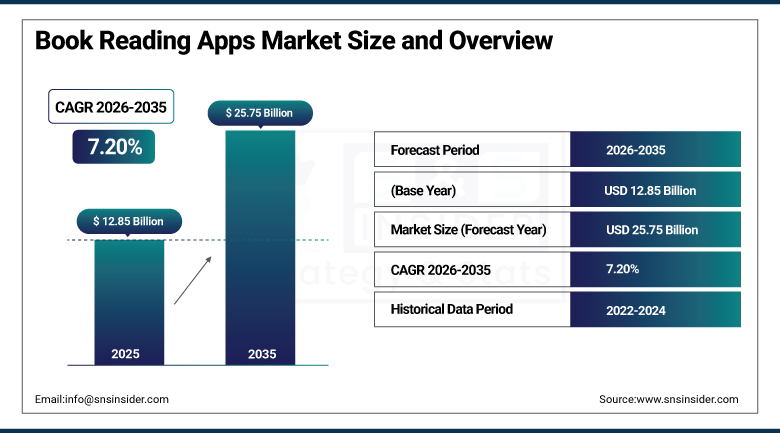
The Book Reading Apps Market was valued at USD 12.85 Billion in 2025 and is projected to reach USD 25.75 Billion by 2035, registering a CAGR of 7.20% from 2026 to 2035. The market continues expanding steadily.
The Book Reading Apps Market is steadily widening as smartphones, tablets and e-readers turn reading and listening into an anytime habit, with readers moving between e-books, audiobooks and serialized stories on the same account. The market is characterized by subscription bundles that mirror streaming services, heavy competition among device makers, audio platforms and independent apps, and growing use of artificial intelligence for recommendations, summaries and narration. Significant growth is being witnessed in audiobooks, synced reading and listening, and social reading communities, as publishers and platforms chase the roughly half of listeners who now use both formats. Accessibility rules, library lending partnerships and low-cost mobile data in emerging economies are also bringing new readers into app ecosystems, while creator tools are making it easier for independent authors to publish audio and text editions. Providers that combine large catalogs, fair pricing and polished mobile design are best placed to hold readers as habits keep shifting across formats and devices.
To Get more information On Book Reading Apps Market - Request Free Sample Report
⮞Spotify announced in February 2026 a Page Match feature that lets readers scan a physical book page with a phone camera and jump to the same spot in the audiobook, working in both directions across about 500,000 titles, together with a Bookshop.org partnership for buying print books inside the app, a sign of how platforms are blending formats into one reading experience.
Book Reading Apps Market Trends
-
Rising demand for audiobooks continues pulling reading apps toward integrated listening and reading experiences.
-
Growing use of AI for summaries, recommendations and narration continues reshaping how readers discover and use books.
-
Expanding subscription bundles continue replacing single-title purchases across e-book and audiobook platforms.
-
Increasing social features such as book clubs and reading challenges continue deepening user engagement and retention.
-
Rising smartphone adoption in emerging economies continues widening the base of mobile-first readers.
U.S. Book Reading Apps Market Outlook
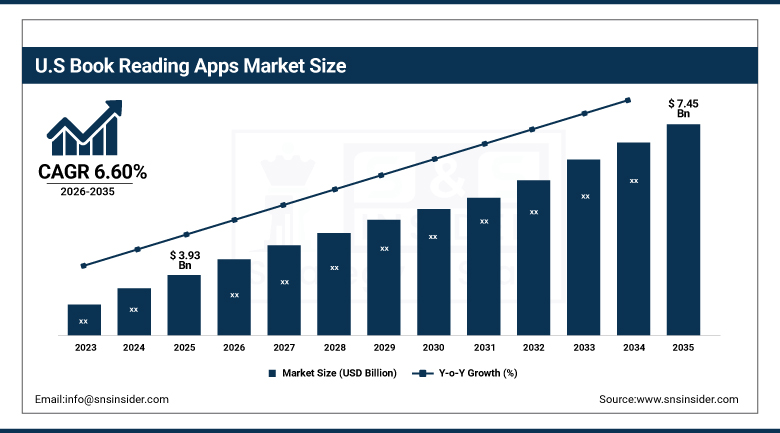
The U.S. Book Reading Apps Market was valued at approximately USD 3.93 Billion in 2025 and is projected to reach approximately USD 7.45 Billion by 2035, registering a CAGR of approximately 6.60% from 2026 to 2035.
Demand across the United States continued to be shaped by high smartphone and tablet penetration, deep subscription habits among consumers and one of the world's largest publishing industries. Readers in the country routinely combine purchased e-books, Kindle Unlimited style subscriptions, library lending apps and audiobook services, which has encouraged platforms to compete on bundles, price tiers and features rather than catalog size alone. Schools, universities and public libraries are important channels, with digital lending and e-textbook programs bringing millions of additional users into reading apps. Growing interest in audiobooks, strong author communities on social platforms and the adoption of AI-assisted reading tools have kept engagement high, and the United States remained the largest national market for reading apps. Competitive intensity is also rising, with music, video and e-commerce platforms adding books to their offers and pushing incumbents to sharpen pricing, discovery and loyalty programs.
⮞Amazon announced in October 2025 two AI-powered reading features for Kindle, called Story So Far and Ask This Book, that provide spoiler-free recaps and answers about characters and scenes, available first in the Kindle iOS app and then on 11th and 12th generation Kindle devices in early 2026 for titles in the U.S. store and Kindle Unlimited.
Book Reading Apps Market Segment Analysis
-
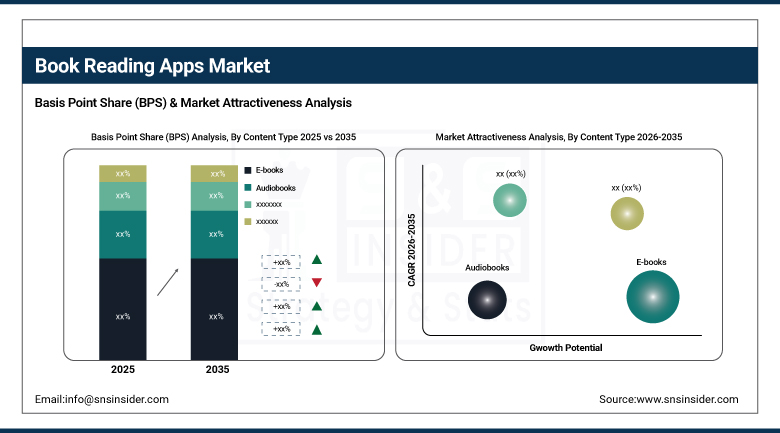
By Content Type, E-books segment dominated the Book Reading Apps Market in 2025 with 52.40% share; Audiobooks segment is the fastest growing segment with a CAGR of approximately 10.20%.
-
By Platform, Android segment dominated the Book Reading Apps Market in 2025 with 46.50% share; iOS segment is the fastest growing segment with a CAGR of approximately 8.10%.
-
By Business Model, Subscription segment dominated the Book Reading Apps Market in 2025 with 47.80% share; Freemium & Ad-supported segment is the fastest growing segment with a CAGR of approximately 8.70%.
-
By Genre, Fiction segment dominated the Book Reading Apps Market in 2025 with 49.60% share; Educational & Academic segment is the fastest growing segment with a CAGR of approximately 9.30%.
-
By End User, Individual Consumers segment dominated the Book Reading Apps Market in 2025 with 71.30% share; Educational Institutions segment is the fastest growing segment with a CAGR of approximately 8.90%.
By Content Type: E-books Leads, Audiobooks Grows Fastest
E-books lead the Book Reading Apps Market as text remains the most widely used format, supported by enormous catalogs, low data needs and familiar purchasing habits. Large retail ecosystems, library lending services and self-publishing programs keep millions of titles available at low prices. Readers value adjustable fonts, offline access, highlighting and syncing across devices, and these basic features work well on even entry-level phones. The format also pairs naturally with subscriptions, which allow platforms to reward heavy readers while keeping per-title costs low.
Audiobooks are the fastest growing content type as commuting, exercise and multitasking habits make listening easy to adopt. Subscription credits, bundled access inside music apps and improved narration, including AI-assisted voices, have lowered cost and production barriers. Many listeners now alternate between reading and listening, so platforms are building features that sync position across formats. Comics & Graphic Novels, including vertical scroll webcomics, add a third growth area, particularly among younger readers who prefer episodic, mobile-first content.
By Platform: Android Leads, iOS Grows Fastest
Android leads the platform segment on the strength of its large installed base, especially in Asia Pacific, Latin America and Africa, where affordable handsets bring first-time users into digital reading. Many reading apps are pre-installed or promoted through local app stores and carrier bundles, which helps reach readers who have not paid for digital books before. Developers also find it easy to release regional language versions, pricing plans and lightweight builds that run on older devices, giving Android a wide base of active reading accounts.
iOS is the fastest growing platform in revenue terms as users on Apple devices tend to spend more per account and are more willing to pay for subscriptions and audiobooks. Tight integration with the ecosystem, including Apple Books, in-app purchase and family sharing, simplifies payments and discovery. Premium hardware with high-quality displays and audio supports longer sessions. Web and other platforms, including e-ink devices with companion apps, remain important for library access, classroom use and readers who prefer larger screens.
By Business Model: Subscription Leads, Freemium & Ad-supported Grows Fastest
Subscription leads the business model segment as readers favor predictable monthly fees that unlock large catalogs of e-books and audiobooks. Platforms use bundles, credits and family plans to raise lifetime value, and publishers benefit from steady payouts and reader discovery. Streaming-style habits formed in music and video have made recurring payments feel natural, while features such as reading stats, personalized shelves and ad-free access add to perceived value. Retention improves as users build libraries, notes and reading history inside one service.
Freemium & Ad-supported models are the fastest growing as providers look to reach price-sensitive readers, particularly in emerging markets. Free tiers with limited titles, ads or coin-based unlocking of serialized chapters convert a portion of users to paid plans while building large audiences. Webnovel and webcomic platforms use this approach extensively. Pay-per-title purchases remain steady for readers who want ownership of specific books, but growth is slower as bundles and library access make single purchases less attractive for frequent readers.
By Genre: Fiction Leads, Educational & Academic Grows Fastest
Fiction leads the genre segment as novels, romance, mystery, fantasy and thrillers account for the highest volume of reading and listening time. Serialized and web fiction have extended this lead by giving mobile users short, regular installments. Reader communities around genres such as romantasy and crime fuel word-of-mouth discovery on social platforms, which pushes downloads and subscriptions. Publishers also release large fiction backlists in digital formats, giving apps deep catalogs that keep casual readers returning month after month.
Educational & Academic is the fastest growing genre as schools, colleges and other professionals use digital textbooks, study aids, and skills development books. Note sharing, text search, text-to-speech, and offline capabilities suit students perfectly, and institution-wide licensing makes it cheap. Fiction, consisting of biographies, business books, self-help titles, and more, has a large fan base, especially in audiobook and summary versions. Microlearning style book summaries and AI question tools are helping busy professionals consume more titles in less time.
By End User: Individual Consumers Leads, Educational Institutions Grows Fastest
Individual Consumers lead the end user segment since most reading apps are built around personal accounts, mobile habits and consumer subscriptions. Consumers use applications for entertainment, commutes, bedtime reading and education. They develop habits of retaining more than one application, as well as personal bookshelves, wishlists, and reading goals. Social functions help build reader community and link the users with their friends and writers. Reasonable prices and regular discounts make consumer acquisition affordable even for giant firms.
Educational Organizations become the most rapidly developing consumer group due to the implementation of electronic versions of textbooks and other forms of inclusive reading by schools and colleges. Dyslexic and visually impaired students demand text-to-speech and adjustable options in applications. Libraries & Enterprises add steady volumes, as public libraries expand digital lending through apps and companies buy summary and learning services for employees. These institutional channels give providers predictable contracts and bring new readers into app ecosystems.
Regional Analysis
|
Region |
Major Country |
Share within Region, 2025 (%) |
|---|---|---|
|
North America |
United States |
85.50% |
|
Europe |
United Kingdom |
23.70% |
|
Asia Pacific |
China |
34.20% |
|
Middle East and Africa |
Saudi Arabia |
27.40% |
|
Latin America |
Brazil |
38.60% |
North America Book Reading Apps Market Insights
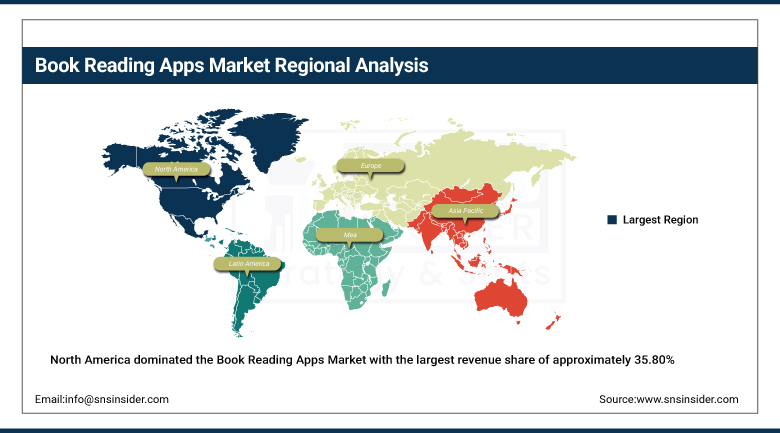
North America dominated the Book Reading Apps Market with the largest revenue share of approximately 35.80% in 2025. High smartphone and tablet penetration, strong consumer willingness to pay for subscriptions and the presence of major platforms such as Amazon, Apple, Audible and Scribd-owned Everand support leading revenue in the region.
The United States accounted for the substantial majority of regional revenue, helped by a large publishing industry, wide public library lending through apps and a large base of independent authors. Canada contributed through library programs, bilingual content and strong audiobook adoption among commuters, with Kobo, a Toronto-based company, adding to regional reading app activity.
Get Customized Report as per Your Business Requirement - Enquiry Now
Europe Book Reading Apps Market Insights
Europe held a meaningful share of global revenue, supported by a mature digital reading culture, strong library networks and regional platforms such as Storytel, Nextory and Bookbeat. Subscription services built around local languages are popular, and accessibility legislation, including the European Accessibility Act, has encouraged features such as synced highlighting and screen reader support.
The United Kingdom led demand at roughly 23.70% of European revenue, backed by a large English language market, high audiobook use and strong library lending. Germany and France followed with growing subscription adoption, while the Nordic countries stood out for high per-capita audiobook listening and early adoption of audio-first reading habits.
Asia Pacific Book Reading Apps Market Insights
Asia Pacific is advancing at the fastest pace, growing at a CAGR of approximately 9.40% from 2026 to 2035. Rapid smartphone adoption, low-cost data plans and a large population of students and young professionals are expanding the reader base, and webnovel and webcomic platforms have built large paying audiences across the region.
China held a substantial share of regional revenue, supported by large online literature platforms and serialized fiction apps with millions of daily readers. India is growing quickly through regional language catalogs and affordable mobile plans, while Japan and South Korea remain leaders in digital comics and webtoon style formats, and Southeast Asia adds demand through mobile-first reading.
MEA and Latin America Book Reading Apps Market Insights
The Middle East and Africa and Latin America both showed steady growth, driven by rising smartphone use, expanding digital payment options and growing interest in Arabic, Spanish and Portuguese language digital content.
Saudi Arabia led Middle East and Africa demand, supported by Vision 2030 programs on literacy, culture and digital services, while the UAE and South Africa contributed through affluent, connected readers and growing local publishing. In Latin America, Brazil accounted for the largest share of regional revenue, with Mexico and Argentina adding demand through Spanish language catalogs, library programs and growing audiobook interest.
Market Dynamics
Growth Drivers: Smartphone Reach and Audio-Led Subscription Growth
The industry is driven by wide smartphone and tablet adoption, which puts a full library in every reader's pocket, and by the strong rise of audiobooks, which attract commuters and multitaskers. Subscription bundles and credit models make heavy reading affordable, and publishers gain predictable income from them.
Improved personalization and AI tools continue reinforcing this driver, as better recommendations, summaries and synced reading and listening keep users engaged longer. Social features, including book clubs and shared progress, add stickiness and help platforms grow through word-of-mouth.
Restraints: Content Licensing Costs and Piracy
High licensing costs and complex rights agreements limit how many titles platforms can offer within a single subscription. Publishers and authors worry about royalty dilution, which has led to restrictions on catalog access, credit limits and uneven availability across regions.
Piracy, particularly in markets with limited legal options, and rising privacy and data protection requirements create a further restraint. Competition from social media, video and short-form content also takes time away from reading, and rising e-book prices can limit adoption among price-sensitive readers.
Opportunities: Emerging Market Mobile Readers and Educational Adoption
Emerging markets present a significant opportunity, as growing smartphone ownership and low-cost data create first-time digital readers. Local language catalogs, mobile wallet payments and freemium access can open large audiences that traditional retailers did not reach.
Educational and accessibility use cases offer a second substantial opportunity. Digital textbooks, read-aloud tools and institutional licensing bring stable, recurring demand, and AI tools that generate study aids or translate content can extend reading apps into learning platforms.
Recent Developments:
-
2026: Everand launched a combined subscription bundling e-books, audiobooks and social book clubs after acquiring Fable, giving about 5 million readers access to more than 1.50 million titles and roughly 200,000 online book clubs, with plans priced at USD 11.99, USD 16.99 and USD 28.99 per month in the United States.
-
2026: Audible introduced Immersion Reading, which highlights text as the audiobook narration plays inside the app for customers who own both the Kindle e-book and the Audible audiobook, with no change to publisher royalties.
-
2025: Storytel launched Synced Listening for users in Sweden, providing word-by-word text highlighting alongside narration, and linked the opt-in feature to accessibility and language learning needs.
-
2026: Spotify reported at its Investor Day that Audiobooks+ had passed 1.00 million subscribers, expanded Spotify for Authors to 10 additional languages and announced audiobook creation tools in beta from June 2026 using ElevenLabs voice technology.
-
2026: Rakuten Kobo and The StoryGraph announced native reading progress sync for eBooks and audiobooks, available from June 2026, making Kobo the first e-reader to offer the integration.
-
2026: WEBTOON and Marvel announced a new Marvel Comics app at New York Comic Con, scheduled to launch on November 16 with a catalog of about 35,000 titles.
Book Reading Apps Market key players are:
-
Amazon (Kindle)
-
Apple Books
-
Google Play Books
-
Audible (Amazon)
-
Rakuten Kobo
-
Everand (Scribd)
-
Storytel
-
Spotify
-
OverDrive (Libby)
-
Wattpad
-
WEBTOON Entertainment
-
Nextory
-
BookBeat (Bonnier)
-
Bookmate
-
Pocket FM
-
Kuku FM
-
Hoopla Digital
-
The StoryGraph
-
Fable
-
Libro.fm
Book Reading Apps Market Report Scope:
| Report Attributes | Details |
|---|---|
| Market Size in 2025 | USD 12.85 Billion |
| Market Size by 2035 | USD 25.75 Billion |
| CAGR | CAGR of 7.20% From 2026 to 2035 |
| Base Year | 2025 |
| Forecast Period | 2026-2035 |
| Historical Data | 2022-2024 |
| Report Scope & Coverage | Market Size, Segments Analysis, Competitive Landscape, Regional Analysis, DROC & SWOT Analysis, Forecast Outlook |
| Key Segments | • By Content Type (E-books, Audiobooks, Comics & Graphic Novels, Others) • By Platform (iOS, Android, Web & Others) • By Business Model (Subscription, Freemium & Ad-supported, Pay-per-title) • By Genre (Fiction, Non-fiction, Educational & Academic) • By End User (Individual Consumers, Educational Institutions, Libraries & Enterprises) |
| Regional Analysis/Coverage | North America (US, Canada), Europe (Germany, UK, France, Italy, Spain, Russia, Poland, Rest of Europe), Asia Pacific (China, India, Japan, South Korea, Australia, ASEAN Countries, Rest of Asia Pacific), Middle East & Africa (UAE, Saudi Arabia, Qatar, South Africa, Rest of Middle East & Africa), Latin America (Brazil, Argentina, Mexico, Colombia, Rest of Latin America). |
| Company Profiles | Amazon (Kindle), Apple Books, Google Play Books, Audible (Amazon), Rakuten Kobo, Everand (Scribd), Storytel, Spotify, OverDrive (Libby), Wattpad, WEBTOON Entertainment, Nextory, BookBeat (Bonnier), Bookmate, Pocket FM, Kuku FM, Hoopla Digital, The StoryGraph, Fable, Libro.fm. |

Frequently Asked Questions
Key players include Amazon (Kindle), Apple Books, Google Play Books, Audible, Rakuten Kobo, Everand, Storytel, and Spotify.
Key opportunities include emerging market mobile readers, educational and accessibility use cases, AI-assisted reading tools, and audio-led subscription bundles.
The market is driven by smartphone adoption, rapid audiobook growth, subscription bundling, and personalization powered by AI.
The E-books segment dominated the Book Reading Apps Market, accounting for approximately 52.40% market share.
The North America region dominated the Book Reading Apps Market in 2025 with approximately 35.80% share, driven by high device penetration and strong subscription adoption.
