
Infused Drugs Market Report Scope & Overview:
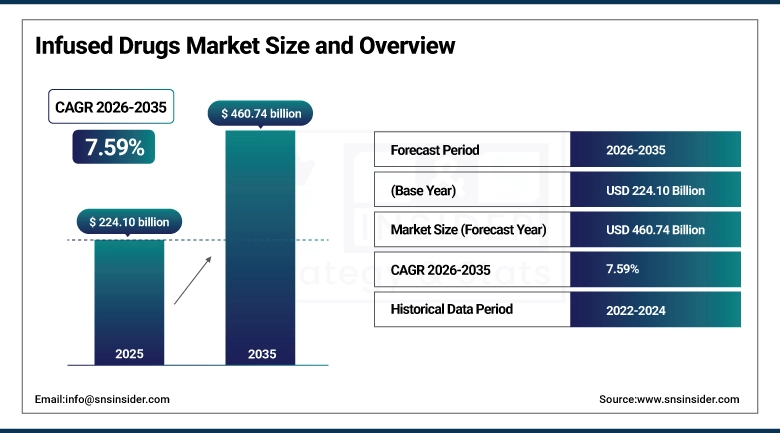
The Infused Drugs Market size is valued at USD 224.10 Billion in 2025 and is projected to reach USD 460.74 Billion by 2035, growing at a CAGR of 7.59% during the forecast period 2026–2035.
The Infused Drugs Market research report offers an extensive study on market dynamics, innovation in drugs, and uses of therapeutic drugs. The rising occurrence of chronic and life-threatening illnesses, growing need for biologic drugs and oncology, increase in home infusion therapy, and expansion in healthcare facilities are some factors that are boosting the market growth between 2026 and 2035.
Infusion treatment for drug delivery witnessed hundreds of million treatments during 2025, fueled by the growing use of such drugs in oncology, infections, and immune disorders.
Market Size and Forecast:
-
Market Size in 2025: USD 224.10 Billion
-
Market Size by 2035: USD 460.74 Billion
-
CAGR: 7.59% from 2026 to 2035
-
Base Year: 2025
-
Forecast Period: 2026–2035
-
Historical Data: 2022–2024
To Get more information on Infused Drugs Market - Request Free Sample Report
Infused Drugs Market Trends:
-
Rising prevalence of chronic and life-threatening diseases such as cancer, infections, and autoimmune disorders is driving increased demand for infusion-based therapies.
-
Growing adoption of biologics, biosimilars, and targeted therapies is boosting the use of infused drugs due to their higher efficacy and precision treatment capabilities.
-
Expansion of oncology and specialty care treatments is significantly increasing reliance on intravenous and subcutaneous infusion therapies.
-
Development of long-acting, ready-to-infuse, and subcutaneous formulations is improving patient convenience, reducing hospital stays, and enhancing treatment adherence.
-
Increasing shift toward home infusion services and outpatient care settings is expanding accessibility and reducing healthcare costs.
-
Advancements in infusion delivery technologies and digital monitoring systems are improving dosing accuracy, safety, and patient outcomes.
-
Strong pipeline of biologics and continuous R&D investments by pharmaceutical companies are accelerating innovation and market growth.
U.S. Infused Drugs Market Insights:
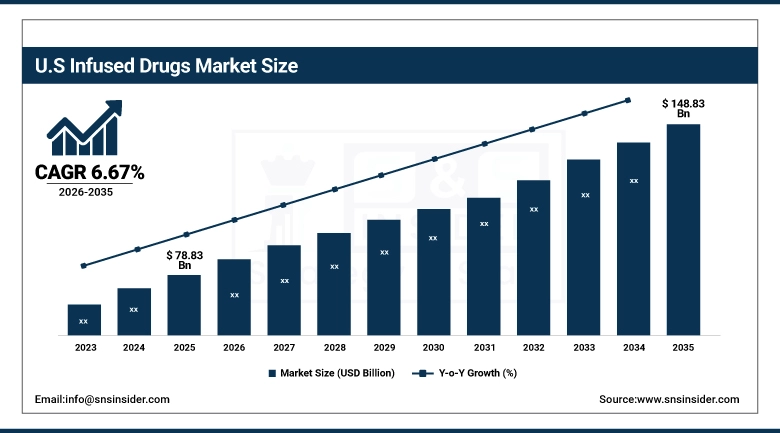
The United States Infused Drugs market is estimated to reach USD 78.83 billion to USD 148.83 billion from 2025 to 2035, growing at a CAGR of 6.67%. The growth can be attributed to the increasing prevalence of chronic diseases including cancer and infections, high uptake of biologic drugs and infusions, growing demand for home infusion therapy, and constant investment in novel IV and SC drugs formulations.
Infused Drugs Market Growth Drivers:
-
Rising prevalence of chronic diseases and increasing adoption of biologics driving demand for infusion-based therapies.
The increase in cases of cancers, infections, and auto-immune diseases is some of the significant factors that are positively impacting the Infused Drugs Market. Hospitals, specialty centers, and home-care facilities are using infusion therapies such as biologics, monoclonal antibodies, and anti-infective medicines to provide patients with more efficient and effective treatments. The evolution of intravenous and subcutaneous infusions, alongside advancements in the development of long-acting and ready-to-infuse drugs, is contributing positively toward increased safety, effectiveness, and patient compliance. Furthermore, the increase in home infusion and outpatient treatments is boosting market growth.
Over 62% of hospitals, specialty centers, and home infusion centers used infusion therapies in 2025 to treat various conditions.
Infused Drugs Market Restraints:
-
High cost of biologics and infusion-based treatment infrastructure limiting adoption in cost-sensitive markets.
Therapy cost and infrastructural demands still pose substantial barriers to the Infused Drugs Market. The costly nature of biologicals, monoclonal antibodies, and special infusion drugs adds to the cost of treatment, thereby reducing their adoption in smaller and mid-range hospitals, specialized centers, and healthcare setups in developing countries. Moreover, the requirement for equipment, skilled healthcare personnel, and clinical conditions results in increased operational costs. Lack of reimbursement, financial constraints, and high patient payments also work as inhibitors that reduce the likelihood of adoption in such cases, especially with regard to chronic treatment procedures.
Infused Drugs Market Opportunities:
-
Expansion of home infusion services and shift toward outpatient care creating strong growth opportunities for infusion-based therapies.
The rapid growth in the use of home infusions along with the preference for outpatient care facilities represents a number of opportunities for the Infused Drugs Market. Healthcare service providers have started shifting their patients from costly hospitals to home and ambulatory infusion care. This development is driven by the use of portable infusion equipment, advances in drug stability and simpler drug administration processes. The pharmaceutical industry can take advantage of the trend through the creation of patient-oriented drugs that are easy to administer while establishing collaborations with home healthcare services providers.
More than 49% of all infusions took place at the outpatient and homecare level in 2025.
Infused Drugs Market Segmentation Analysis:
-
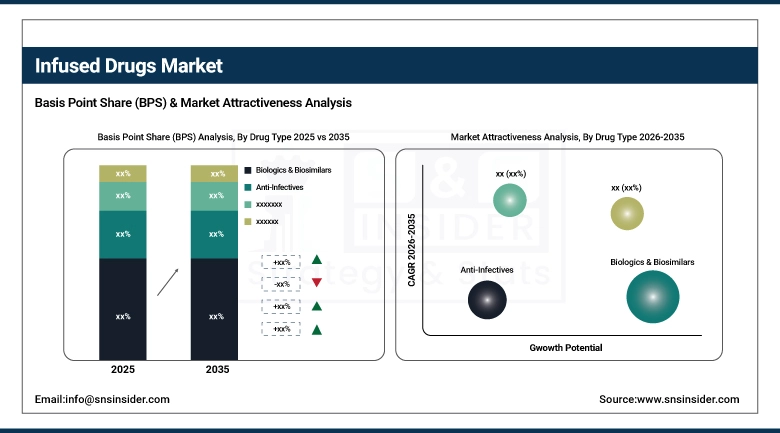
By Drug Type, Biologics & Biosimilars held the largest market share of 38.25% in 2025, while Biologics & Biosimilars are also expected to grow at a strong CAGR of 8.69% during 2026–2035.
-
By Therapeutic Application, Oncology dominated with a 32.25% share in 2025, while Immunology is anticipated to expand at the fastest CAGR of 7.79% through 2026–2035.
-
By Route of Administration, Intravenous (IV) Infusion dominated with a 70.23% share in 2025, while Subcutaneous Infusion is expected to grow at the fastest CAGR of 10.35% during the forecast period.
-
By End User, Hospitals held the largest share of 55.12% in 2025, while Home Care Settings are expected to grow at the fastest CAGR of 10.26% during the forecast period.
-
By Distribution Channel, Hospital Pharmacies accounted for the highest market share of 48.23% in 2025, while Online Pharmacies are projected to grow at the fastest CAGR of 10.25% through 2026–2035.
By Drug Type, Biologics & Biosimilars Dominate While Chemotherapy / Oncology Drugs Grow Rapidly:
The Biologics & Biosimilars segment was the leading market segment on account of high efficacy for treating complicated and life-threatening diseases and the wide usage of this product in hospitals and specialty infusion centers. In 2025, there were more than 160 million infusions due to the focus had shifted toward targeted therapy.
Whereas, the Chemotherapy / Oncology Drugs segment accounted for the fastest growth in the market segment on account of an increasing incidence of cancer and the requirement of precision oncology drugs. The number of infusions has already surpassed the limit of 70 million.
By Therapeutic Application, Oncology Dominates While Immunology Grows Rapidly:
The Oncology segment dominated the market share and was popular in hospitals and infusion centers for treating patients with cancer owing to the frequent administration of intravenous chemotherapy and biologics. More than 120 million infusions were administered in 2025, indicating heavy dependence on infusions for cancer therapy.
The Immunology is the fastest-growing segment due to rising incidences of autoimmune diseases and widespread use of biologics and monoclonal antibodies. More than 85 million infusions were administered in 2025, demonstrating quick adoption for chronic illness management.
By Route of Administration, Intravenous Infusion Dominates While Subcutaneous Infusion Grows Rapidly:
Intravenous infusion segment dominated the market due to its established use in hospitals for delivering high-dose and complex therapies with immediate systemic effects. In 2025, over 250 million infusion procedures were administered via IV route, demonstrating strong preference in acute and critical care settings.
Subcutaneous infusion is the fastest-growing segment, driven by increasing demand for convenient and patient-friendly administration methods, particularly in home care settings. Usage exceeded 60 million administrations in 2025, supported by advancements in portable infusion systems and growing adoption of outpatient treatment models.
By End User, Hospitals Dominate While Home Care Settings Grow Rapidly:
The hospitals segment Dominate the largest share of the market, since the hospital setting was mostly utilized for giving complex infusions such as oncology medicines and biologics. The number of infusion administration in hospitals was more than 300 million in 2025, which can be attributed to the excellent facilities, availability of expert personnel, and capability to deliver risky treatments.
The Home Care Settings segment accounted for the fastest growth in the market due to rising demand for an affordable option that focuses on the patient rather than hospital convenience. Home infusion administration accounted for more than 90 million in 2025.
By Distribution Channel, Hospital Pharmacies Dominate While Online Pharmacies Grow Rapidly:
The Hospital Pharmacies dominated was one of the major market segments, representing the main way to deliver infused drug products into the market. Thus, more than 270 million units of infused drug products were supplied through hospitals in 2025 owing to the integration of supply chains and prompt delivery of drugs.
Online Pharmacies was identified as one of the fast-growing market segments due to higher levels of digitalization, development of e-commerce, and increasing need for home infusion products. Thus, more than 80 million units of infused drug products were supplied through online channels in 2025.
Infused Drugs Market Regional Analysis:
North America Infused Drugs Market Insights:
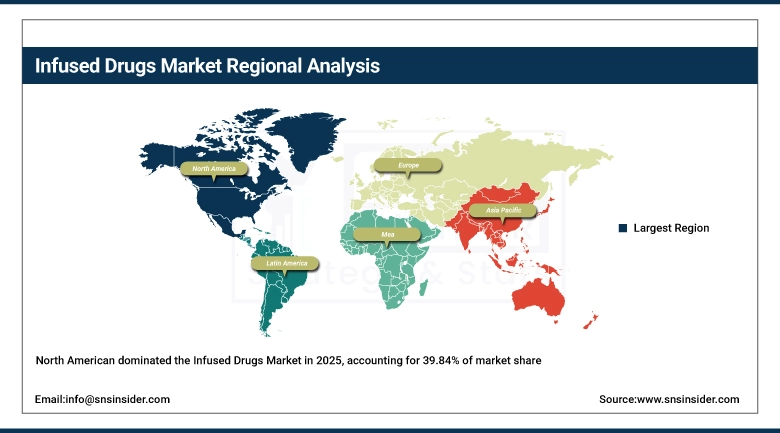
North America Infused Drugs Market holds a dominating position holding a share of 39.84% in 2025 owing to its sophisticated healthcare landscape and significant presence of prominent biopharmaceutical players in the U.S. and Canada. Extensive utilization of biologics, infusion therapy in oncology and anti-infective drugs in hospitals and specialty infusion centers is aiding the growth of the North America infused drugs market. Growing incidence rate of cancer and chronic diseases, along with rising preferences for outpatient and at-home infusion services, will contribute significantly toward future growth. Innovation in infusion delivery systems, sound reimbursement framework and presence of trained professionals makes North America an established player.
Get Customized Report as per Your Business Requirement - Enquiry Now
US Infused Drugs Market Insights:
US Infused Drugs Market is fueled by high adoption of advanced infusion devices, high cancer therapy volume, and widespread usage of biologics in hospitals and specialty clinics. Availability of sophisticated healthcare facilities, presence of numerous infusion centers and transition toward home infusions makes the region a dominant market. High prevalence of complex diseases, constant inflow of novel drugs and increasing focus on customized treatment methods is contributing toward the market performance.
Asia-Pacific Infused Drugs Market Insights:
The Asia-Pacific Infused Drugs Market is the fastest-growing region, projected to expand at a CAGR of 9.77% during 2026–2035.Due to increasing healthcare expenditure and increasing demand for advanced therapies from China, India, Japan and Southeast Asia countries. Incidence of cancer, infection and autoimmune disorders is leading to increase demand for infusion-based drugs. Increase in adoption of biologics, hospitalization along with investments toward healthcare expenditure is fueling the regional growth. Awareness, government initiatives toward better healthcare access along with increase in development of specialty clinics is further boosting growth momentum in the region.
China Infused Drugs Market Insight:
The market in China is expected to be influenced by rapid development of healthcare infrastructure, high incidence of cancer and infections along with increasing need for treatment modalities. Adoption of biologics, oncology infusion and anti-infection medicines is driving the growth of the market in the region. Government initiatives along with investment made in hospital infrastructure along with presence of local biopharma companies is further aiding in adoption of infusion therapy in the region.
Europe Infused Drugs Market Insights:
There are certain factors responsible for the growth of the Europe Infused Drugs Market that include a developed health system, increase in prevalence rate of diseases and higher demands for biologics and infusion-based drugs. Some countries such as Germany, France and United Kingdom have shown great efforts in the demand for the products as a result of greater adoption of oncology infusions, immunology and anti-infective products. Availability of a greater number of outpatient infusion centers, favorable policies for reimbursements and emphasis on home healthcare has increased access to the drugs. Innovation in terms of drugs, infusion and expertise helps in establishing the dominance of the market within the market.
Germany Infused Drugs Market Insights:
Germany is one of the important markets in the European Infused Drugs industry, backed by modern hospital facilities and high adoption rate of oncology and biologic infusion drugs. Factors such as extensive use of intravenous medicines, availability of specialty clinics, and growing use of biosimilars are fueling its growth. Growing investments in new care paradigms, efficiency in treatment procedures, and stringent regulations regarding safety and quality of drugs keep the market competitive.
Latin America Infused Drugs Market Insights:
The Latin America Infused Drugs Market is witnessing an increase owing to enhanced infrastructure and improved healthcare facilities along with increased demand for advanced therapies for cancer and infections. The increased adoption of biologics and infusion therapy is expected to support market growth in the Latin America Infused Drugs market. Hospital infrastructure expansion, rising knowledge about advanced therapies, and increasing establishment of specialty clinics are likely to drive the market growth in this region.
Middle East and Africa Infused Drugs Market Insights:
The Middle East & Africa Infused Drugs Market is witnessing an increase owing to improved healthcare facilities and rising demand for advanced therapies. Rising adoption of biologics, oncology infusions, and anti-infective drugs in hospitals and specialty clinics is likely to be responsible for fueling the market growth in this region. Increased hospital infrastructure, rising investment in healthcare, and increasing focus on specialized services are contributing toward gradual growth in this region.
Infused Drugs Market Competitive Landscape:
Pfizer Inc. is a major U.S.-based biopharmaceutical company with a significant role in the Infused Drugs Market, supported by its broad portfolio of injectable and infusion-based therapies, including anti-infectives, oncology drugs, and biologics. The company’s strong manufacturing capabilities, supply chain, and focus on biosimilars and complex generics enable wide accessibility of infusion therapies across hospitals, specialty clinics, and home care settings. Pfizer continues to invest in advanced biologics, targeted therapies, and innovative infusion-compatible formulations, reinforcing its competitive position in the infusion therapeutics landscape.
-
In June 2025, Pfizer expanded RUXIENCE (rituximab-pvvr) indications, strengthening its biosimilar infusion portfolio and enhancing access to monoclonal antibody therapies across oncology and immunology applications.
Roche Holding AG is a leader in the Infused Drugs Market, recognized for its dominance in oncology and biologics-driven infusion therapies. The company’s strong portfolio of monoclonal antibodies and targeted cancer treatments is widely administered via infusion across hospitals and specialty clinics. Roche’s integration of diagnostics with therapeutics enables personalized treatment approaches, improving patient outcomes in oncology and chronic diseases. Continuous innovation, extensive clinical research, and strong distribution networks reinforce its position as a key player in infusion-based drug delivery.
-
In October 2025, Roche received FDA approval for expanded use of Gazyva in autoimmune-related conditions, enhancing its infusion-based biologics portfolio and strengthening its presence in targeted therapy segments.
Novartis AG is a leading Swiss multinational pharmaceutical company with a strong presence in the Infused Drugs Market, particularly through its extensive portfolio of biologics, oncology infusion therapies, and immunological treatments. The company offers advanced monoclonal antibodies and targeted infusion therapies widely used across hospitals and specialty infusion centers. Its strong R&D pipeline, focus on precision medicine, and continuous innovation in biologics and cell-based therapies enhance treatment outcomes and reinforce its competitive position. Strategic investments in manufacturing capabilities, biosimilars, and expansion further strengthen Novartis’ leadership in infusion-based therapeutics.
-
In October 2025, Novartis reported positive Phase III results for ianalumab, a novel B-cell targeting monoclonal antibody, supporting expansion in infusion-based immunology therapies and strengthening its biologics pipeline.
Infused Drugs Market Key Players:
Some of the Infused Drugs Market Companies are:
-
Pfizer Inc.
-
Roche
-
Novartis AG
-
Sanofi
-
Amgen Inc.
-
AstraZeneca
-
Bristol-Myers Squibb
-
Johnson & Johnson
-
Eli Lilly and Company
-
Regeneron Pharmaceuticals
-
Teva Pharmaceutical Industries
-
Fresenius SE & Co. KGaA
-
Baxter International Inc.
-
B. Braun Melsungen AG
-
CSL Behring
-
Samsung Bioepis
-
Hikma Pharmaceuticals
-
Dr. Reddy’s Laboratories
-
Parenteral Drugs (India) Ltd
-
Intas Pharmaceuticals
| Report Attributes | Details |
|---|---|
| Market Size in 2025 | USD 224.10 Billion |
| Market Size by 2035 | USD 460.74 Billion |
| CAGR | CAGR of 7.59% From 2026 to 2035 |
| Base Year | 2025 |
| Forecast Period | 2026-2035 |
| Historical Data | 2022-2024 |
| Report Scope & Coverage | Market Size, Segments Analysis, Competitive Landscape, Regional Analysis, DROC & SWOT Analysis, Forecast Outlook |
| Key Segments | • By Drug Type (Biologics & Biosimilars, Anti-Infectives, Chemotherapy / Oncology Drugs, Parenteral Nutrition, Analgesics & Pain Management, Others) • By Therapeutic Application (Oncology, Infectious Diseases, Gastroenterology, Immunology, Neurology, Others) • By Route of Administration (Intravenous (IV) Infusion, Subcutaneous Infusion, Intramuscular Infusion, Others) • By End-User (Hospitals, Specialty Clinics, Home Care Settings, Ambulatory Infusion Centers, Others) • By Distribution Channel (Hospital Pharmacies, Retail Pharmacies, Online Pharmacies, Specialty Pharmacies, Others) |
| Regional Analysis/Coverage | North America (US, Canada), Europe (Germany, UK, France, Italy, Spain, Russia, Poland, Rest of Europe), Asia Pacific (China, India, Japan, South Korea, Australia, ASEAN Countries, Rest of Asia Pacific), Middle East & Africa (UAE, Saudi Arabia, Qatar, South Africa, Rest of Middle East & Africa), Latin America (Brazil, Argentina, Mexico, Colombia, Rest of Latin America). |
| Company Profiles | Pfizer Inc., Roche, Novartis AG, Sanofi, Amgen Inc., AstraZeneca, Bristol-Myers Squibb, Johnson & Johnson, Eli Lilly and Company, Regeneron Pharmaceuticals, Teva Pharmaceutical Industries, Fresenius SE & Co. KGaA, Baxter International Inc., B. Braun Melsungen AG, CSL Behring, Samsung Bioepis, Hikma Pharmaceuticals, Dr. Reddy’s Laboratories, Parenteral Drugs (India) Ltd, Intas Pharmaceuticals |

Frequently Asked Questions
North America dominated the market with a 39.84% share in 2025, while Asia-Pacific is the fastest-growing region expected to expand at a CAGR of 9.77% during 2026–2035, driven by expanding healthcare infrastructure and rising demand for advanced infusion therapies.
Biologics & Biosimilars dominated with a 38.25% share in 2025, while Biologics & Biosimilars are also projected to grow at the fastest rate of 8.69% during 2026–2035.
Growth is driven by rising prevalence of chronic diseases, increasing adoption of biologics and oncology therapies, expansion of home infusion services, and advancements in infusion delivery technologies.
The market is valued at USD 224.10 Billion in 2025 and is projected to reach USD 460.74 Billion by 2035.
The Infused Drugs Market is projected to grow at a CAGR of 7.59% during 2026–2035.
