
Intermodal Freight Transportation Market Report Scope & Overview:
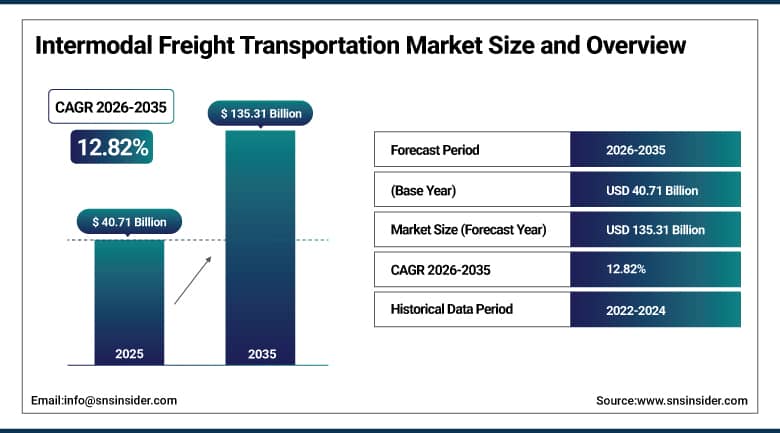
The Intermodal Freight Transportation Market size was valued at USD 40.71 billion in 2025 and is expected to reach USD 135.31 billion by 2035, growing at a CAGR of 12.82% from 2026–2035.
The intermodal freight transportation industry is experiencing growth as a result of increased global trade, containerized cargo traffic, and high demand for efficient logistics services. Companies are increasingly integrating railroad, road, and waterway transport modes to minimize fuel costs, minimize transport expenses, and optimize delivery speed. The increasing volume of cross-border trade, e-commerce, and production from the manufacturing industries will continue to drive higher freight traffic within intermodal transportation networks. In addition, government agencies and logistics companies are making significant investments in building dedicated freight routes, smart ports, AI cargo tracking technology, and terminal upgrades to enhance logistical resilience and alleviate road congestion.
Singapore’s logistics and port ecosystem is increasingly deploying AI-enabled cargo forecasting, automated terminal operations, and smart container management systems. These technologies are helping ports optimize vessel turnaround time, reduce empty container movements, improve operational efficiency, and strengthen large-scale intermodal freight handling capabilities.
To Get More Information On Intermodal Freight Transportation Market - Request Free Sample Report
Intermodal Freight Transportation Market Trends
-
Increasing adoption of rail-road-maritime integrated freight systems to reduce transportation costs and improve cargo efficiency.
-
Rising investments in smart ports, automated terminals, and AI-enabled cargo tracking technologies across logistics networks.
-
Rapid expansion of e-commerce and cross-border trade driving higher containerized freight transportation demand globally.
-
Growing focus on sustainable freight transportation solutions through greater utilization of rail and marine transport systems.
-
Development of inland freight corridors, digital logistics platforms, and cold-chain transportation infrastructure supporting future market expansion.
U.S. Intermodal Freight Transportation Market Size Outlook
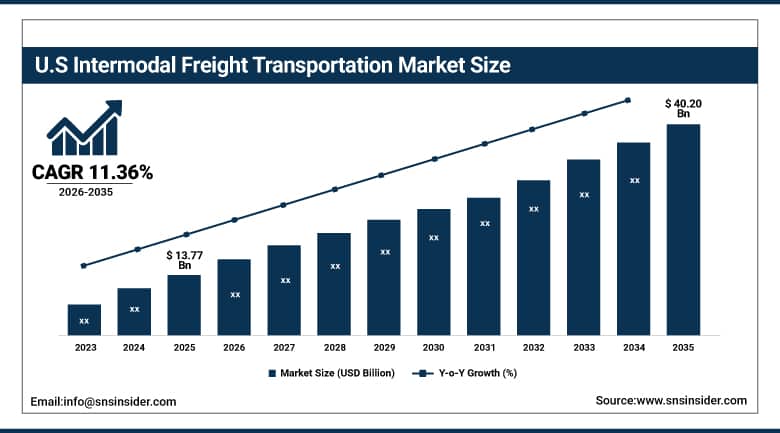
The U.S. Intermodal Freight Transportation Market was valued at USD 13.77 billion in 2025 and is expected to reach USD 40.20 billion by 2035 at a CAGR of 11.36%.
The growth rate in the intermodal transportation market of the U.S. is high because of several reasons. First of all, it is related to the rise of containerized freight movements, increasing investments into logistics infrastructure with rail connections, and an increase in the need for energy-efficient modes of transportation. Logistics service providers tend to use rail, trucking, ports, and inland terminals in order to decrease the cost of shipping, increase cargo processing efficiency, and enhance the resilience of the supply chains. The development of e-commerce distribution centers, upgrading of transport corridors, and using intelligent cargo tracking systems boost intermodal shipping in the US as well.
The Southern California freight network remains one of the most critical intermodal transportation hubs in North America, supported by extensive integration between ports, rail terminals, highways, and inland logistics facilities. The region handles nearly 19 million TEUs of containerized cargo annually while transporting approximately 598.3 million tons of freight through interconnected multimodal infrastructure. Growing trade volumes through the Ports of Los Angeles and Long Beach are increasing demand for rail-road freight connectivity, warehouse expansion, and advanced cargo handling systems to improve freight efficiency and reduce supply chain congestion.
Intermodal Freight Transportation Market Segment Analysis
-
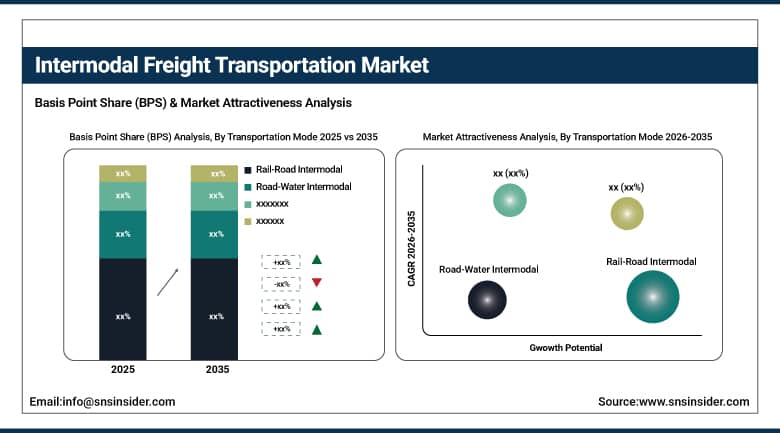
By Transportation Mode, Rail-road intermodal dominated with approximately 52.48% revenue share in 2025; Road-water intermodal is expected to be the fastest-growing type segment at approximately 13.84% CAGR from 2026 to 2035.
-
By Service Type, Domestic transportation dominated with approximately 46.82% revenue share in 2025; International transportation expected to be the fastest-growing type segment at approximately 13.82% CAGR from 2026 to 2035.
-
By End User Industry, Retail & e-commerce dominated with approximately 27.46% revenue share in 2025; and it is also expected to be the fastest-growing type segment at approximately 14.05% CAGR from 2026 to 2035.
-
By Container Type, Dry containers dominated with approximately 61.24% revenue share in 2025; Refrigerated containers are expected to be the fastest-growing type segment at approximately 14.24% CAGR from 2026 to 2035.
By Transportation Mode, Rail-road intermodal dominated and road-water intermodal fastest growing
The rail-road mode of intermodal transportation had the biggest share in the intermodal freight transportation market at around 52.48% in 2025 because of high efficiency in terms of costs, widespread rail network, and capacity to transport large volumes of cargo over long distances. The mode is highly popular among manufacturers, retailers, and industries owing to its fuel saving capability, efficient handling of cargo, and dependable transportation of freight.
Intermodal transport involving roads and water is forecasted to be the fastest-growing category within the intermodal freight transportation market, registering about 13.84% CAGR between 2026 and 2035. Increased investments in inland water transport, coastal shipping, and ports would aid the growth. Growing attention towards minimizing congestion on roads, cutting transportation emissions, and enhancing the efficiency of bulk cargo transport would drive the adoption of road-water intermodal freight transport solutions worldwide.
By Service Type, Domestic transportation dominated and international transportation fastest growing in the intermodal freight transportation market
Domestic mode of transport accounted for about 46.82% share of the revenues generated in the intermodal freight transport industry due to the growing amount of freight traffic, development in industries, and rise in online delivery services for businesses. Domestic intermodal transportation is being adopted by enterprises in order to enhance their efficiency, cut down on costs, and secure supply chains within their national boundaries.
International transport is set to register the highest growth rate of about 13.82% CAGR between 2026 and 2035 in the intermodal freight transport market. The increasing number of global trade routes, higher volumes of container shipments, and growing cross-border online shopping have increased the need for international intermodal transport. Smart ports and customizations efforts are among the initiatives that continue to support international intermodal transport growth.
By End User Industry, Retail & e-commerce dominated and fastest growing in the intermodal freight transportation market
The retail & e-commerce sector was the key driver behind the dominance of the intermodal freight transportation market with a revenue share of about 27.46% in 2025 because of the fast growth of the online commerce industry, development of new logistics centers and rising need for reliable cargo transportation solutions. More and more retailers are using intermodal transportation systems to manage their logistics operations and shipment costs efficiently.
The Retail & E-Commerce category is also anticipated to witness the fastest growth in the intermodal freight transport market at a CAGR of around 14.05% from 2026 to 2035. Increasing demands for fast deliveries, growing adoption of omnichannel retailing, and increased automation in warehousing are driving up the requirements of freight transportation services. Investment in logistics technologies, intermodal container shipping systems, and cargo tracking solutions will continue to bolster the use of intermodality in this sector.
By Container Type, Dry containers dominated and refrigerated containers fastest growing in the intermodal freight transportation market
The dry containers accounted for the largest share of about 61.24% in terms of revenue share in the intermodal freight transport market in 2025 because of their widespread use in carrying industrial materials, machinery, electrical appliances, consumer goods, and general cargos. The flexible nature of these containers makes them highly popular among logistics companies for use in intermodal transportation of freight.
Refrigerated intermodal transport boxes are anticipated to witness the highest CAGR of around 14.24% from 2026 to 2035 within the intermodal freight transport market. Increased need for the transportation of temperature sensitive commodities such as medicines, frozen foods, dairy goods, and fresh fruits is anticipated to propel the growth of the segment. Increasing cold chain logistics, food trade operations, and technology related to temperature monitoring will continue to boost the use of refrigerated intermodal box transport.
Regional Insights:
|
Region |
Major Country |
Share within Region,2025 (%) |
|---|---|---|
|
North America |
United States |
83% |
|
Europe |
Germany |
28% |
|
Asia Pacific |
China |
51% |
|
Middle East & Africa |
UAE |
24% |
|
Latin America |
Brazil |
41% |
North America Intermodal Freight Transportation Market Insights
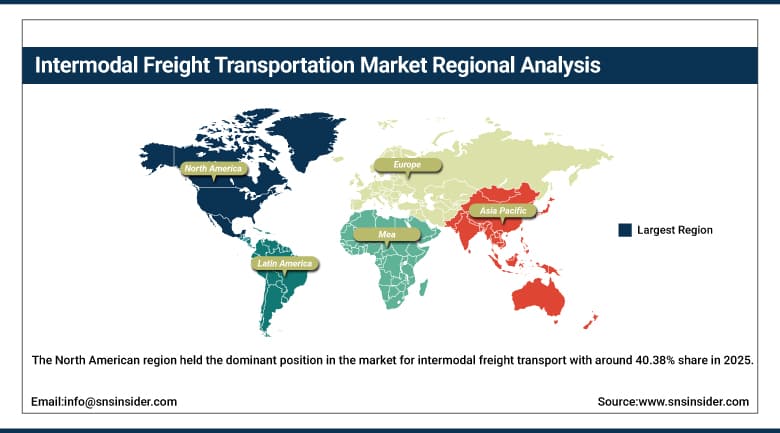
The North American region held the dominant position in the market for intermodal freight transport with around 40.38% share in 2025 due to the well-established rail freight network, strong containerized trade movement, and seamless connectivity between the ports, rail terminals, and trucking services in the region. The United States would emerge as the frontrunner in terms of regional development with strategic investments in freight transport corridors, advanced logistic practices, and inland transport hubs. Increasing e-commerce business, growing cross-border trade, and higher adoption of fuel-efficient freight transport solutions are also propelling market growth in this region.
Get Customized Report as Per Your Business Requirement - Enquiry Now
Europe Intermodal Freight Transportation Market Insights
There is a rise in the intermodal freight transportation industry in Europe because of the emphasis on sustainable freight movements, enhanced rail connections, and green logistics infrastructure investments. There is promotion of modal shift towards rail and water-based freight transport modes as a means of reducing emissions and improving the efficiency of cargo transport in various European nations. Cross-border transportation activities within the European logistics network have provided further impetus to the demand for integrated freight transportation systems. The use of advanced cargo transportation technologies such as smart ports and digital freight management systems has improved intermodal freight transport in various industries in Europe.
Asia Pacific Intermodal Freight Transportation Market Insights
Intermodal freight transport market is projected to experience the highest growth in the Asia Pacific region, with about 14.57% CAGR from 2026 to 2035. The high pace of industrialization, increased manufacturing operations, and rising international trade levels are some factors propelling the need for efficient freight transport systems. There have been heavy investments made by countries such as China, India, and Southeast Asian nations in port infrastructure, freight corridors, and logistics parks to increase the efficacy of cargo transport. The growing trend of containerized cargo, e-commerce, and infrastructural activities in Asia Pacific logistics are boosting intermodal transportation adoption.
Middle East & Africa and Latin America Intermodal Freight Transportation Market Insights
Growth is being witnessed in the intermodal freight transport industry in the Middle East and Africa as well as Latin America. This trend can be attributed to improvements in investments in port facilities, railway connections, and logistics development initiatives. In both regions, governments have been working towards enhancing their trade links, expanding capacities in container handling, and developing multimodal transport systems. This is being driven by the rising number of cross-border operations, increased mining and energy transportation needs, and the need to reduce costs involved in cargo transport.
Market Dynamics:
Growth Drivers: Expanding containerized trade and multimodal logistics integration accelerating market growth
The intermodal freight transport market is expected to witness significant growth driven by increasing international business transactions, container shipments, and high demand for economical freight transport solutions. Logistics firms are incorporating various modes of freight transport including railways, roadways, and maritime transport into their logistics processes in order to save on fuel and boost efficiency within the logistical process chain. High growth rates in e-commerce, industrial manufacturing, and foreign commerce have contributed significantly to the growth in cargo volumes in the multimodal transport chains. In addition, heavy investments in intelligent ports, freight corridors, automated facilities, and AI-based cargo tracking technologies by private logistics companies and governments are driving efficient transport of cargo over long distances.
The Association of American Railroads noted additional investments made in intermodal facilities, rail connectivity, and efforts toward modernizing freight infrastructure as methods of improving cargo-handling capacity and increasing container transportation capability across long distances.
Restraints: High infrastructure costs and operational complexities limiting market expansion
There are various problems that plague the intermodal freight transport market because of expensive infrastructure development, complex management coordination, and poor integration of transport networks in various regions. Construction of rail corridors, inland terminals, intelligent ports, and container yards involves costly investment and long-term planning. Moreover, delays involved in shifting the cargo from railways, roads, and waterways could reduce efficiencies and raise operating costs. Operational obstacles are posed by regulatory discrepancies among nations, lack of expertise in the logistics labor force, and congestion at ports and transport hubs. Variations in fuel prices and disturbances in the global transport channels have caused further problems in the logistics industry.
Opportunities: Smart logistics infrastructure and sustainable freight systems creating future growth potential
There are some major opportunities created by the intermodal freight transport market through developments in the smart logistics industry, adoption of sustainable freight transport systems, and investments in digital cargo management solutions. The rising environmental concerns are making the usage of rail and marine transportation systems popular because they are capable of cutting down carbon emissions and optimizing long-distance freight transport systems. Additionally, there are also some developments made in the sector through the establishment of inland freight corridors, automated cargo handling facilities, artificial intelligence-enabled routes, and shipment tracking technologies. Some major opportunities created for logistics and freight transport services by the growth of cross-border trade activities and cold-chain logistics are expected in the coming years.
According to the Bureau of Transportation Statistics, the North American land borders currently facilitate around USD 4 billion worth of freight flows each day between the US, Canada, and Mexico, thus providing ample scope for expanding intermodal corridors.
Recent Developments:
-
June, 2025: J.B. Hunt, BNSF Railway, and GMXT launched “Quantum de México,” a premium intermodal service focused on faster and more secure cross-border freight transportation between the United States and Mexico. The service was introduced to improve rail-based intermodal delivery efficiency for sensitive freight shipments and strengthen North American supply chain connectivity.
-
January, 2026; Schneider National reported weaker Q4 earnings due to freight market pressures; however, the company continued emphasizing investments in intermodal transportation, logistics optimization, and multimodal freight network expansion to strengthen long-term operational efficiency.
-
During 2026: Hub Group focused on strengthening multimodal logistics efficiency by improving real-time shipment tracking capabilities, expanding drayage operations, and enhancing customer-focused freight transportation solutions to support rising e-commerce and industrial shipment demand across the United States.
Intermodal Freight Transportation Companies are:
-
J.B. Hunt Transport Services, Inc.
-
Hub Group, Inc.
-
Norfolk Southern Corporation
-
Union Pacific Corporation
-
BNSF Railway Company
-
CSX Corporation
-
Canadian National Railway Company
-
XPO, Inc.
-
CMA CGM Group
-
A.P. Moller – Maersk A/S
-
DSV A/S
-
Kuehne + Nagel International AG
-
DHL Group
-
FedEx Corporation
-
C.H. Robinson Worldwide, Inc.
-
Knight-Swift Transportation Holdings Inc.
-
Expeditors International of Washington, Inc.
-
IMC Companies LLC
Intermodal Freight Transportation Market Report Scope:
| Report Attributes | Details |
|---|---|
| Market Size in 2025 | USD 40.71 Billion |
| Market Size by 2035 | USD 135.31 Billion |
| CAGR | CAGR of 12.82% From 2026 to 2035 |
| Base Year | 2025 |
| Forecast Period | 2026-2035 |
| Historical Data | 2022-2024 |
| Report Scope & Coverage | Market Size, Segments Analysis, Competitive Landscape, Regional Analysis, DROC & SWOT Analysis, Forecast Outlook |
| Key Segments | • By Transportation Mode (Rail-Road Intermodal, Road-Water Intermodal, Rail-Water Intermodal) • By Service Type (Domestic Transportation, International Transportation, Warehousing & Distribution) • By End User Industry Industry (Oil & Gas, Food & Beverages) • By Container Type (Dry Containers, Refrigerated Containers, Tank Containers) |
| Regional Analysis/Coverage | North America (US, Canada), Europe (Germany, UK, France, Italy, Spain, Russia, Poland, Rest of Europe), Asia Pacific (China, India, Japan, South Korea, Australia, ASEAN Countries, Rest of Asia Pacific), Middle East & Africa (UAE, Saudi Arabia, Qatar, South Africa, Rest of Middle East & Africa), Latin America (Brazil, Argentina, Mexico, Colombia, Rest of Latin America). |
| Company Profiles | J.B. Hunt Transport Services, Inc., Schneider National, Inc., Hub Group, Inc., Norfolk Southern Corporation, Union Pacific Corporation, BNSF Railway Company, CSX Corporation, Canadian National Railway Company, Canadian Pacific Kansas City Limited, XPO, Inc., CMA CGM Group, A.P. Moller – Maersk A/S, DSV A/S, Kuehne + Nagel International AG, DHL Group, FedEx Corporation, C.H. Robinson Worldwide, Inc., Knight-Swift Transportation Holdings Inc., Expeditors International of Washington, Inc., IMC Companies LLC |

Frequently Asked Questions
The Intermodal Freight Transportation Market is expected to grow at a CAGR of 12.82% from 2026 to 2035.
The Intermodal Freight Transportation Market was valued at USD 40.71 billion in 2025.
Domestic Transportation dominated the market in 2025 with approximately 46.82% of revenues.
Rail-Road Intermodal dominated the market in 2025 with approximately 52.48% of revenues.
North America dominated the Intermodal Freight Transportation Market in 2025 with approximately 40.38% of global revenues.
