
Radioligand Therapy Market Report Scope & Overview:
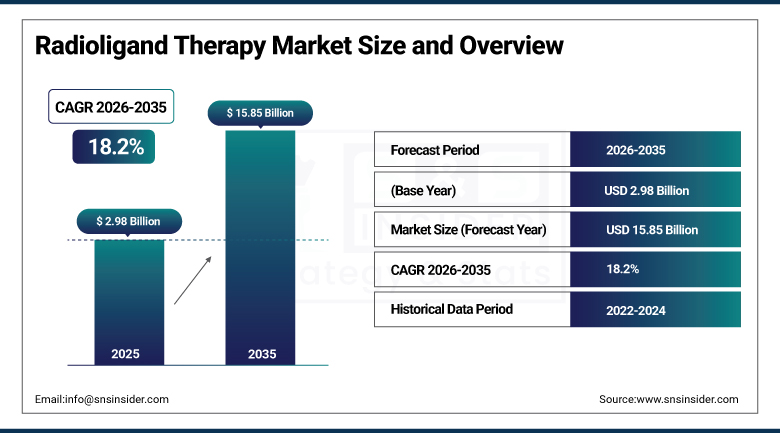
The Radioligand Therapy Market was valued at USD 2.98 Billion in 2025 and is expected to reach USD 15.85 Billion by 2035, growing at a CAGR of 18.2% from 2026 to 2035.
Radioligand Therapy Market growth is driven by the increasing incidence of prostate cancer and NETs, development of PSMA and SSTR-targeting drugs, and the success of recently introduced products, Pluvicto and Lutathera, having proved their survival benefits in late- and early-line treatment strategies. Increasing investments in infrastructure production, growing use of PSMA and SSTR PET diagnostics for selecting patients, and the robust clinical pipeline of alpha-, beta- and combined emitters are additional drivers that contribute to the adoption of the technology by academic centers, specialized nuclear medicine clinics, and community oncology practices globally.
In 2026, Pluvicto, now known as 177Lu-vipivotide tetraxetan, was approved by the U.S. FDA for an additional indication of earlier-line metastatic castration-resistant prostate cancer. This further extends the patient population who can benefit from this drug, thereby establishing PSMA-targeted radioligand therapy as a standard-of-care treatment option ahead of chemotherapy.
To Get more information On Radioligand Therapy Market - Request Free Sample Report
Radioligand Therapy Market Trends:
-
Rising adoption of PSMA-targeted alpha-emitter therapies is accelerating the shift toward earlier-line, biomarker-driven prostate cancer treatment.
-
Expanding Lutetium-177 and Actinium-225 production capacity is easing historical radioisotope supply constraints across major manufacturing regions.
-
Growing use of PSMA and SSTR PET imaging for patient selection is improving treatment precision and clinical outcomes.
-
Increasing strategic acquisitions of clinical-stage radioligand developers by large pharmaceutical companies are consolidating the competitive pipeline.
-
Expanding clinical exploration of radioligand combination regimens with immunotherapy is broadening the addressable oncology indication base.
The U.S. Radioligand Therapy Market Outlook:
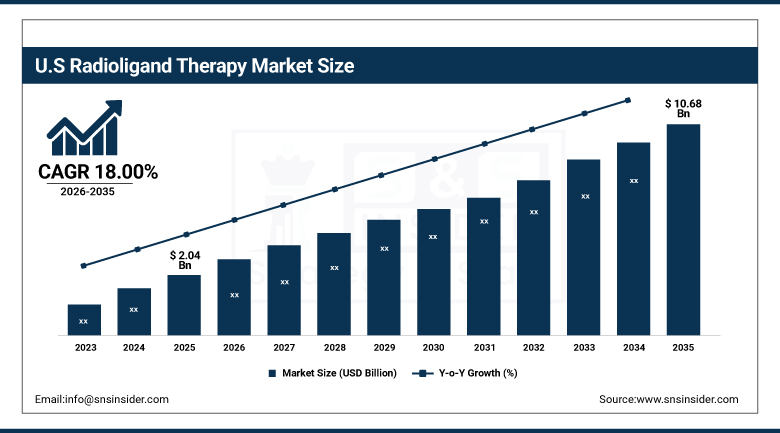
The U.S. Radioligand Therapy Market was valued at USD 2.04 Billion in 2025 and is projected to reach USD 10.68 Billion by 2035, growing at a CAGR of 18.00% during 2026-2035.
The U.S. remains at the forefront of radioligand therapy utilization globally, underpinned by an existing theranostics infrastructure, an extensive tertiary academic cancer center network, and favorable Centers for Medicare & Medicaid Services reimbursement frameworks for approved FDA radiopharmaceutical drugs. Increasing Lutetium-177 and Actinium-225 manufacturing capabilities, along with increasing radiopharmacy networks that can deliver doses on the same day, are continuing to address logistical issues that may hinder patient access to therapy in metropolitan and regional oncology facilities. The rising prevalence of prostate cancer, coupled with physician experience in PSMA-targeted therapy and ongoing clinical trials from the U.S. pharmaceutical firms, is driving robust double-digit growth in demand.
In 2026, Eli Lilly and Company advanced 177Lu-PNT2002, its PSMA-targeted radioligand candidate obtained through the POINT Biopharma acquisition, into a pivotal Phase 3 trial for biochemically recurrent prostate cancer, strengthening its U.S. late-stage radioligand pipeline.
Radioligand Therapy Market Segment Analysis:
-
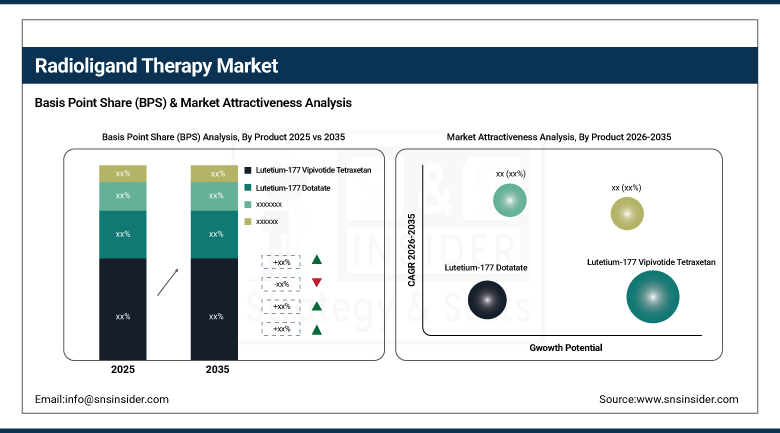
By Product, Lutetium-177 Vipivotide Tetraxetan (Pluvicto) dominated the Radioligand Therapy Market with a 52.30% share in 2025, while Lutetium-177 Dotatate is the fastest-growing product segment with a CAGR of 24.60% from 2026-2035.
-
By Indication, Prostate Cancer dominated the Radioligand Therapy Market with a 58.40% share in 2025, while Neuroendocrine Tumors is the fastest-growing indication segment with a CAGR of 19.60% from 2026-2035.
-
By Target Receptor, PSMA dominated the Radioligand Therapy Market with a 61.20% share in 2025, while SSTR is the fastest-growing target segment with a CAGR of 22.30% from 2026-2035.
-
By End User, Hospitals & Specialized Cancer Centers dominated the Radioligand Therapy Market with a 64.10% share in 2025, while Diagnostic & Imaging Centers is the fastest-growing end-user segment with a CAGR of 20.90% from 2026-2035.
By Product, Lutetium-177 Vipivotide Tetraxetan (Pluvicto) Led the Market, While Lutetium-177 Dotatate is Expected to be the Fastest-Growing Segment
Lutetium-177 Vipivotide Tetraxetan (Pluvicto) held the top spot in the Radioligand Therapy Market in 2025. The growth of Pluvicto is fueled by its already recognized status as the first and only FDA-approved PSMA-directed radioligand therapy for metastatic castration-resistant prostate cancer, backed by the solid belief of physicians in its benefits and real-world evidence. Growing clinical familiarity, expanding insurance coverage, and demonstrated overall survival benefit versus standard-of-care therapies continue to reinforce Pluvicto's leadership across major treatment centers globally.
The Lutetium-177 Dotatate is anticipated to grow as the fastest product segment within the radioligand therapy market owing to the rising prevalence of neuroendocrine tumors and adoption of radionuclide therapy. The specificity of Lutetium-177 Dotatate in selectively targeting the somatostatin receptor-positive tumors helps deliver radiation only to the tumor site without damaging other normal body tissues. Clinical evidence, identification of patients using SSTR imaging, wider availability of treatment in specialized nuclear medicine facilities, and research on combinations therapies are anticipated to boost demand for Lutetium-177 Dotatate during the forecast period.
By Indication, Prostate Cancer Led the Market, While Neuroendocrine Tumors is the Fastest-Growing Segment
The Prostate Cancer segment dominated the Radioligand Therapy Market in 2025. Prostate cancer continues to be the most common malignancy diagnosed in males throughout the world. Many patients progress to metastatic castration-resistant prostate cancer that is not responsive to standard therapies such as androgen deprivation therapy and chemotherapy. Clinical trials of radioligand therapy in hormone-sensitive disease stages will contribute to increasing the eligible population of patients through the forecast period. The proven survival benefit of PSMA-targeted radioligand therapy in this population, combined with expanding PSMA PET diagnostic infrastructure enabling accurate patient selection, continues to drive segment dominance.
The Neuroendocrine Tumors segment is forecasted to register the fastest CAGR over the forecast period 2026-2035. The increase in the incidence of gastroenteropancreatic and lung neuroendocrine tumors and the use of somatostatin receptors PET imaging will increase the eligible population of patients treated with somatostatin-receptor-targeted radioligand therapy. The rise in physician awareness about the treatment approaches using radioligands as retreatment options for neuroendocrine diseases contributes to high above-average segment growth compared to the overall market. Advancing pipeline candidates, such as RayzeBio's 225Ac-DOTATATE and ITM Isotope Technologies' 177Lu-edotreotide are broadening treatment options beyond currently approved therapies.
By Target Receptor, PSMA Led the Market, While SSTR is the Fastest-Growing Segment
PSMA emerged as the leading segment in the Radioligand Therapy Market in 2025. The prostate-specific membrane antigen is highly overexpressed on prostate cancer cells compared to healthy cells, thereby providing a very good target for radioligand binding specificity, which results in excellent tumor-to-background ratio of imaging and therapy. It is expected that the ongoing pipeline of next-generation PSMA-targeted alpha-emitters and combinations would help the segment maintain its dominance throughout the forecast period.
The Somatostatin Receptor (SSTR) segment is forecast to witness the highest growth among all target receptors segments in the radioligand therapy market, owing to the growing incidence of neuroendocrine tumors and the adoption of SSTR-targeted treatments. Clinical success of Lutetium-177 Dotatate along with its clinical utility will drive demand in the coming years. Adoption of SSTR PET imaging for patient selection, development of nuclear medicine facilities, increased clinical awareness, and next-generation SSTR-targeted radioligands are additional factors contributing to segment growth.
By End User, Hospitals & Specialized Cancer Centers led the market, while Diagnostic & Imaging Centers is the fastest-growing segment
The Hospitals & Specialized Cancer Centers emerged as the market leader in the Radioligand Therapy Market in 2025. The prominence of the Hospitals & Specialized Cancer Centers segment is driven by their well-established position as clinical trial facilities for emerging pipeline candidates. Their established role as clinical trial sites for pipeline radioligand candidates further reinforces this segment's leadership, as early access to novel therapies and specialized patient monitoring capabilities continue to concentrate treatment volume within comprehensive cancer centers and major hospital systems globally.
The Diagnostic & Imaging Centers segment is expected to register the highest CAGR during the forecast period of 2026-2035. With an increase in investments in the capacity of PET-CT procedures for outpatients and cooperation between imaging centers and oncologists, the process of selecting patients is being made easier, which is helping this segment sustain its high growth rate. Expanding PSMA and SSTR PET imaging adoption for treatment eligibility screening and post-therapy response monitoring is driving growing radioligand-related activity within dedicated diagnostic imaging networks.
Regional Analysis:
|
Region |
Major Country |
Share within Region, 2025 (%) |
|---|---|---|
|
North America |
United States |
85.20% |
|
Europe |
Germany |
24.30% |
|
Asia Pacific |
Japan |
29.80% |
|
Middle East & Africa |
UAE |
26.40% |
|
Latin America |
Brazil |
39.20% |
North America Radioligand Therapy Market Insights:
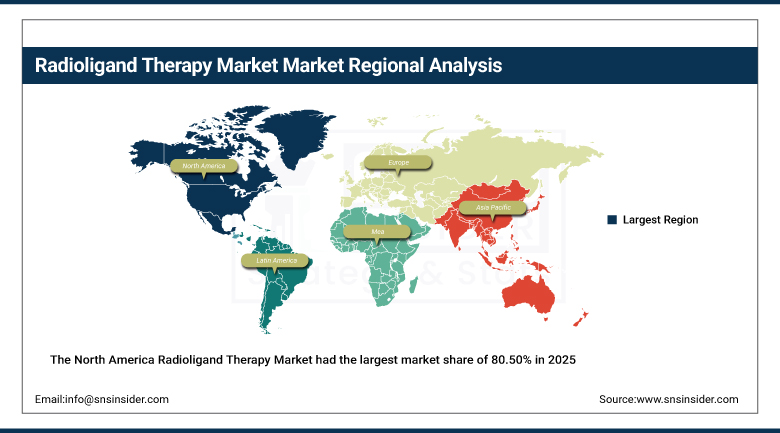
The North America Radioligand Therapy Market had the largest market share of 80.50% in 2025 owing to well-developed theranostic infrastructure, established PSMA and SSTR PET diagnosis systems, and good reimbursement pathways of FDA approved radioligand therapy through Medicare and other insurance providers. There is a heavy presence of academic comprehensive cancer centers and nuclear medicine centers equipped with radioligand treatment facilities.
The U.S. had the largest market share of 85.20% of the North America Radioligand Therapy Market in 2025 owing to highly developed domestic infrastructure for radiopharmaceuticals manufacture, a high prevalence of prostate cancer, and the physicians' familiarity with administration procedures of radioligands in hospitals. In addition, Canada is fueling the regional market with investment in infrastructure of nuclear medicine and increased federal support to domestic production of radioisotopes, particularly Molybdenum-99 and Lutetium-177 to reduce dependency on foreign suppliers of isotopes for diagnostic and therapeutic purposes.
Get Customized Report as per Your Business Requirement - Enquiry Now
Europe Radioligand Therapy Market Insights
Europe hold the significant share in the Radioligand Therapy Market in 2025 due to advanced infrastructure in nuclear medicine and regulatory harmonization through the European Medicines Agency as well as a strong presence of universities involved in radioligand research and trials. An increased government interest in developing the ability of the domestic producers to generate radioisotopes, especially Lutetium-177 and increasingly Actinium-225, will slowly decrease the dependency on imports.
Germany is one of the major players in Europe because of a strong academic research base and radiopharmaceuticals industry presence there with companies serving local and foreign customers. Other countries, such as France, Italy, and Spain, with their developing networks of theranostics clinical trials, have been contributing to the market growth through increased investment in PET-CT and SPECT-CT infrastructure needed for patient selection and monitoring after treatment.
Asia Pacific Radioligand Therapy Market Insights
The Asia Pacific Radioligand Therapy Market is expected to have the highest growth rate throughout the forecast period of 2026-2035, at a CAGR of 21.50%, due to increasing investments in the infrastructure development of nuclear medicine, increasing prevalence of cancer among the aged population across the region and increasing government activities for domestic production of radioisotopes. Increase in clinical trials carried out by multinational drug manufacturers and biotech companies, along with growing training activities in nuclear medicine and theranostics for physicians, are helping reduce the time taken in gaining regulatory approval for radioligands.
Japan is one of the primary reasons for the growth of the Asia Pacific Radioligand Therapy Market due to early regulatory approvals of PSMA radioligand therapies, presence of advanced nuclear medicine infrastructure and availability of a favorable health insurance coverage system. Significant contribution toward regional growth is being made by China and South Korea due to increased investments in domestic production of radiopharmaceuticals and PET-CT imaging capacity.
Middle East & Africa and Latin America Radioligand Therapy Market Insights
In Middle East & Africa and Latin America, Radioligand therapy would slowly see adoption due to the increasing investments into nuclear medicine facilities, which have been driven by government health reforms and collaboration between existing international radiopharmaceutical companies and those looking to enter new markets in the regions.
The country with great potential within Latin America is Brazil, owing to its growing research capabilities in terms of oncology from an academic perspective, and increased investments into specialized nuclear medicine treatment centers in major cities of the country. In terms of the Middle East & Africa region, countries, such as the UAE and Saudi Arabia are already investing in state-of-the-art nuclear medicine facilities that slowly increase the use of radioligand therapy.
Market Dynamics:
Growth Drivers: Rising Cancer Prevalence and Precision Oncology Adoption Driving Market Growth Globally
The increasing global prevalence of prostate cancer and neuroendocrine tumors along with the growing clinical acceptance of PSMA-targeted and SSTR-targeted radioligand-based agents is one of the key factors that will drive the Radioligand Therapy Market. Radioligand Therapy provides a targeted approach for delivering cytotoxic radioactivity to the biomarker-positive tumor cells without damaging the normal tissues around, providing a unique treatment for those patients who have failed the standard treatments of chemotherapy, hormonal therapy, and external beam radiotherapy.
The increasing development of manufacturing infrastructure for Lutetium-177 and Actinium-225 along with the growing imaging capabilities for selecting the right patients by PSMA and SSTR PET imaging are further boosting the growth of the market. Continued expansion of theranostic treatment networks across academic and community oncology settings is broadening patient access across the forecast period.
Restraints: Limited Isotope Supply and Specialized Infrastructure Requirements Restraining Market Expansion Globally
The Radioligand Therapy Market faces some of the biggest constraints through the limited global production of radioactive isotopes such as Lutetium-177 and Actinium-225, produced through special nuclear reactors or cyclotrons and available at only a few producers. The constraint of limited production makes this market susceptible to disruption in its supply chain. Furthermore, this therapy type requires specialized infrastructure, radiation safety and trained staff to deliver the procedure safely, limiting the places of this therapy to few academic and cancer hospitals globally.
The short physical half-life of certain therapeutic isotopes further complicates logistics, requiring precise coordination between manufacturing sites and treatment centers to ensure dose potency upon administration. High treatment costs and variable reimbursement frameworks across international markets, particularly in emerging economies lacking established nuclear medicine infrastructure, continue to constrain broader market penetration outside major developed markets.
Opportunities: Alpha-Emitter Innovation and Expanding Indication Pipeline Creating New Growth Avenues Globally
The development of more alpha-emitters radioligands in the form of Actinium-225 and Lead-212 isotopes that have a superior tumor-killing efficiency due to high linear energy transfer in comparison with standard beta emitters brings many promising growth prospects for the Radioligand Therapy Market. The increasing research of radioligand therapy for treatment beyond prostate cancer and neuroendocrine tumors such as breast, pancreatic, and lung cancers will significantly expand the addressable population of patients within the market in the upcoming years.
The increased investments in the production and separation of isotopes in biotechnology industry together with strategic partnership and acquisition deals made by major pharma companies will stimulate innovations in this field. Rising government funding for domestic nuclear medicine infrastructure development across emerging economies in Asia Pacific and Latin America, combined with growing physician training initiatives in theranostics, is expected to unlock substantial untapped demand across underserved regional markets throughout the forecast period.
Recent Developments:
-
2026: Positive dosimetry results from the Phase 3 ECLIPSE trial were disclosed by Curium Pharma for the lutetium-177 zadavotide guraxetan in development for the treatment of metastatic castration-resistant prostate cancer.
-
2026: Bayer reported encouraging results for its next-generation investigational targeted radionuclide therapy 225Ac-PSMA-Trillium 225Ac-PSMA-Trillium in advanced cancer, supporting continued development of alpha-emitting PSMA-targeted therapies.
-
2026: Bayer AG expanded U.S. manufacturing capacity for Xofigo (radium-223 dichloride) to strengthen supply for bone-metastatic castration-resistant prostate cancer patients.
-
2026: Novartis broke ground on a new radioligand therapy manufacturing facility in Indiana, expanding Lutetium-177 production capacity for Pluvicto and Lutathera.
Radioligand Therapy Market key players are:
-
Novartis AG
-
Eli Lilly and Company
-
Bayer AG
-
AstraZeneca plc
-
Bristol-Myers Squibb Company
-
Lantheus Holdings, Inc.
-
Curium Pharma
-
Telix Pharmaceuticals Limited
-
ITM Isotope Technologies Munich SE
-
Sanofi
-
Orano Med
-
RadioMedix, Inc.
-
Clarity Pharmaceuticals
-
Ariceum Therapeutics GmbH
-
Perspective Therapeutics, Inc.
-
Evergreen Theragnostics, Inc.
-
Radiopharm Theranostics Limited
-
Convergent Therapeutics, Inc.
-
AdvanCell Pty Ltd.
-
Molecular Partners AG
Radioligand Therapy Market Report Scope
| Report Attributes | Details |
|---|---|
| Market Size in 2025 | USD 2.98 Billion |
| Market Size by 2035 | USD 15.85 Billion |
| CAGR | CAGR of 18.2% From 2026 to 2035 |
| Base Year | 2025 |
| Forecast Period | 2026-2035 |
| Historical Data | 2022-2024 |
| Report Scope & Coverage | Market Size, Segments Analysis, Competitive Landscape, Regional Analysis, DROC & SWOT Analysis, Forecast Outlook |
| Key Segments | • By Product (Lutetium-177 Vipivotide Tetraxetan, Lutetium-177 Dotatate, Radium-223 Dichloride, Iobenguane I-131, Others) • By Indication (Prostate Cancer, Neuroendocrine Tumors, Thyroid Cancer, Others) • By Target Receptor (PSMA, SSTR, Others) • By End User (Hospitals & Specialized Cancer Centers, Diagnostic & Imaging Centers, Academic & Research Institutes) |
| Regional Analysis/Coverage | North America (US, Canada), Europe (Germany, UK, France, Italy, Spain, Russia, Poland, Rest of Europe), Asia Pacific (China, India, Japan, South Korea, Australia, ASEAN Countries, Rest of Asia Pacific), Middle East & Africa (UAE, Saudi Arabia, Qatar, South Africa, Rest of Middle East & Africa), Latin America (Brazil, Argentina, Mexico, Colombia, Rest of Latin America). |
| Company Profiles | Novartis AG, Eli Lilly and Company, Bayer AG, AstraZeneca plc, Bristol-Myers Squibb Company, Lantheus Holdings, Inc., Curium Pharma, Telix Pharmaceuticals Limited, ITM Isotope Technologies Munich SE, Sanofi, Orano Med, RadioMedix, Inc., Clarity Pharmaceuticals, Ariceum Therapeutics GmbH, Perspective Therapeutics, Inc., Evergreen Theragnostics, Inc., Radiopharm Theranostics Limited, Convergent Therapeutics, Inc., AdvanCell Pty Ltd., Molecular Partners AG |

Frequently Asked Questions
Key players include Novartis AG, Eli Lilly and Company, Bayer AG, AstraZeneca plc, and Bristol-Myers Squibb Company, among others.
Key opportunities include expanding indications, next-generation alpha emitters, theranostic integration, emerging-market adoption, and development of novel molecular targets.
The market is driven by rising prostate cancer and neuroendocrine tumor prevalence, growing clinical validation of PSMA- and SSTR-targeted radioligand agents, and continued advancement of isotope production infrastructure.
The Prostate Cancer segment dominated the Radioligand Therapy Market in 2025, accounting for approximately 58.40% market share.
The North America region dominated the Radioligand Therapy Market in 2025, holding an 80.50% market share, driven by mature theranostics infrastructure and favorable reimbursement pathways.
