
Menopause Management Platform & Hormone Therapy Market Report Scope & Overview:
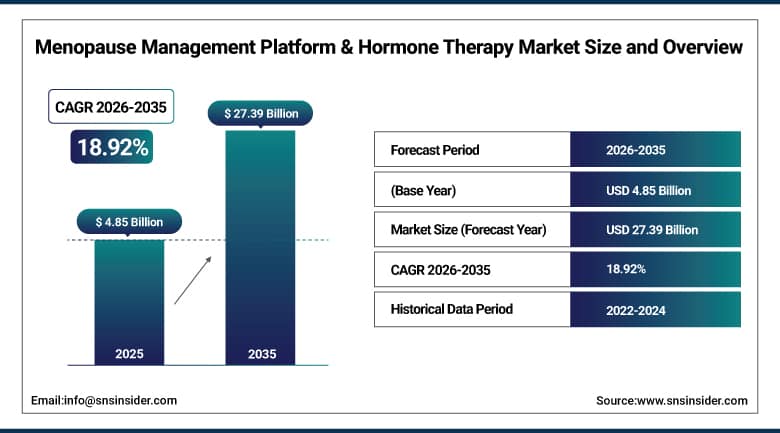
The Menopause Management Platform & Hormone Therapy Market was valued at USD 4.85 billion in 2025 and is expected to reach USD 27.39 billion by 2035, growing at a CAGR of 18.92% from 2026–2035.
The menopause management platform & hormone therapy market is witnessing steady growth in the global market owing to increasing awareness regarding women's midlife health. Rising adoption of digital healthcare platforms and telehealth services is supporting market expansion. Growing preference for personalized hormone replacement therapy and non-hormonal treatment options is driving demand. Companies are focusing on AI-enabled care platforms and remote patient monitoring solutions. Increasing healthcare investments and improving access to menopause care services are further accelerating market growth.
As per the WHO and UNFPA, the worldwide number of postmenopausal females has exceeded 1.1 billion by 2025, with almost 47 million females being at the stage of menopause each year. On the other hand, according to the ONC, more than 99% of the U.S. non-federal acute care hospitals and 91% of office-based physicians use certified electronic health records.
To Get More Information On Menopause Management Platform & Hormone Therapy Market - Request Free Sample Report
Menopause Management Platform & Hormone Therapy Market Trends
-
AI platforms have brought about personalized menopause care via predictive analysis, tailored treatments, and effective symptoms management.
-
The incorporation of wearables with digital platforms has enabled real-time monitoring and improved decision making for personalized medicine management.
-
Remote patient monitoring technology has enhanced follow-ups, adherence to medications, and ongoing assistance outside traditional healthcare facilities.
-
Increased investments into women’s health technologies have facilitated innovations in advanced management options for menopause worldwide.
-
Collaboration between healthcare facilities and digital health companies has ensured personalized menopause care and better effectiveness of treatments.
-
Increased consumer demand for convenient healthcare has promoted the adoption of AI platforms and remote menopause management programs.
The U.S. Menopause Management Platform & Hormone Therapy Market Outlook
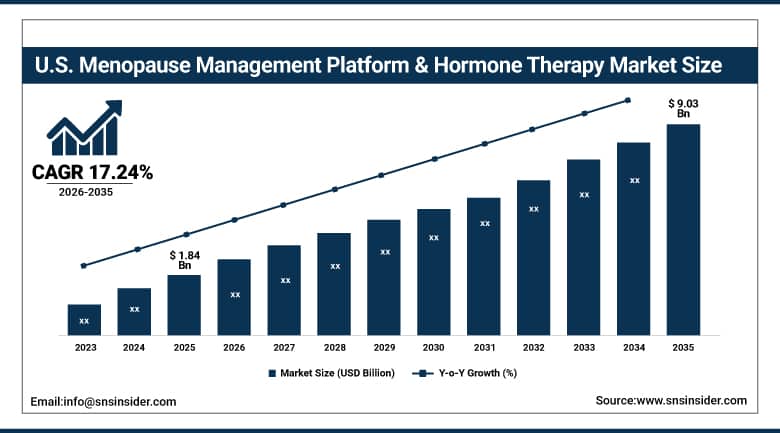
The U.S. Menopause Management Platform & Hormone Therapy Market was valued at USD 1.84 billion in 2025 and is expected to reach around USD 9.03 billion by 2035, growing at a CAGR of 17.24% from 2026–2035.
The U.S. menopause management platform & hormone therapy market is expanding steadily owing to rising awareness regarding menopause care. Increasing adoption of telehealth platforms and personalized hormone replacement therapy is supporting market growth. Growing preference for digital women's health solutions is driving service utilization across healthcare providers. Healthcare companies are focusing on AI-enabled platforms and remote patient monitoring capabilities. Rising investments in women's health innovation and preventive care programs are strengthening market penetration.
As stated by the U.S. Census Bureau and The Menopause Society, over 1.3 million women undergo menopause every year in the USA, and women between the ages of 45 and 64 years account for 26% of the total female population. The U.S. Food and Drug Administration approves the use of hormones in therapy, whereas the Centers for Medicare & Medicaid Services have offered telehealth flexibilities till 2026.
Menopause Management Platform & Hormone Therapy Market Segment Analysis
-
By Therapy Type, hormone replacement therapy (HRT) dominated the market with 46.80% share in 2025; while non-hormonal therapy is the fastest growing segment with CAGR of 22.30% during 2026 to 2035.
-
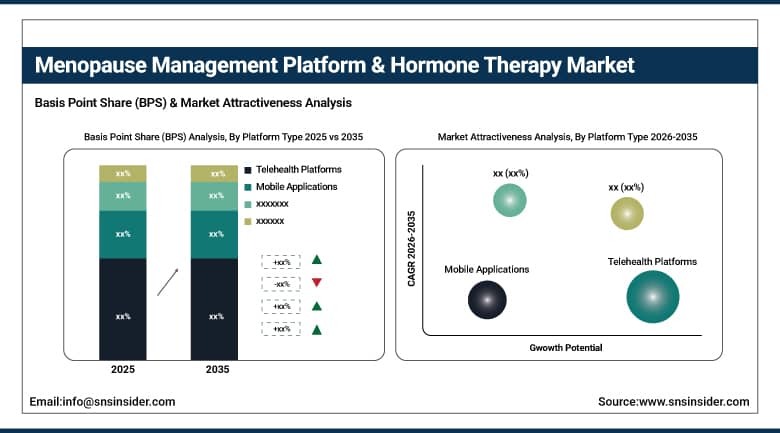
By Platform Type, telehealth platforms dominated the market with 37.60% share in 2025; while AI-enabled personalized care platforms are the fastest growing segment with CAGR of 25.28% during 2026 to 2035.
-
By Distribution Channel, retail pharmacy dominated the market with 39.80% share in 2025; while direct-to-consumer subscription platforms is the fastest growing segment with CAGR of 26.88% during 2026 to 2035.
-
By End User, general hospitals & obstetrics/gynecology clinics dominated the market with 49.30% share in 2025; while self-managed consumers are the fastest growing segment with CAGR of 25.36% during 2026 to 2035.
By Platform Type, telehealth platforms dominated the market, while AI-enabled personalized care platforms are the fastest growing segment.
Telehealth platforms accounted for the dominated market share of revenue in the menopause management platform & hormone therapy market in 2025. Adoption of virtual consultation platforms increased the accessibility of menopause experts in both rural and urban areas. The increasing integration with EHR systems facilitated a better continuity of care and treatment follow-up process. Reimbursement advantages, convenience, cost-effectiveness of virtual consultation sessions, and growing acceptance of remote care services have also boosted the position of this market segment.
The AI-enabled personalized care platforms segment will witness the fastest CAGR from 2026-2035. There is a growing need for personalized treatment advice, which is driving the adoption of artificial intelligence-powered health management solutions. The ability of such platforms to provide tracking of symptoms, predictive analytics, and personalized hormone therapy management for each patient drives their growth. Digital women’s health technology investment and continuous remote monitoring are also contributing significantly to this trend.
By Therapy Type, hormone replacement therapy (HRT) dominated the market, while non-hormonal therapy is the fastest growing segment.
The hormone replacement therapy (HRT) market segment led the menopause management platform & hormone therapy market in terms of high revenue share in 2025. The leadership was achieved due to high clinical efficacy for the management of vasomotor symptoms and hormonal deficiencies. Physician acceptance, clinical guidelines, and higher patient awareness played a crucial role in driving the segment demand. Availability of reimbursement and ongoing innovation in products further drove demand from hospitals, specialty centers, and digital menopause management platforms.
The non-hormonal therapy market segment is estimated to witness the fastest CAGR from 2026 to 2035. Growing preferences for non-hormonal therapy options among women opting for non-hormonal treatment owing to medical reasons contributed to the growth of the segment. Increasing availability of innovative drugs, behavioral therapy, and digital wellness programs is helping drive the demand for the segment.
By Distribution Channel, retail pharmacy dominated the market, while direct-to-consumer subscription platforms is the fastest growing segment.
The retail pharmacy segment held the dominated revenue share in the menopause management platform & hormone therapy market in 2025 owing to high customer trust and broad availability of prescription hormone therapies which ensured consistent supply of products throughout the region. The role of pharmacists, insurance, and healthcare alliances further helped in maintaining customer compliance. Availability of branded and generic menopause treatments also contributed to the dominance of the retail pharmacy segment.
The direct-to-consumer subscription platforms segment is expected to have the fastest CAGR between 2026 and 2035 owing to the growing preference for convenient home-based healthcare services and customized menopause management solutions. Increasing consumer interest in digital health consultations, regular delivery of medicines, and continuous monitoring of symptoms are also boosting subscription services.
By End User, general hospitals & obstetrics/gynecology clinics dominated the market, while self-managed consumers are the fastest growing segment.
General hospitals & obstetrics/gynecology clinics category held a leading position in the menopause management platform & hormone therapy market with the highest share in terms of revenue in 2025. This category led due to complete diagnosis of menopause condition, hormone therapies prescription, and consultations of multiple specialists in one place in the healthcare facility. High level of trust from patients, clear reimbursement policies, well-developed diagnostics infrastructure, and presence of highly skilled gynecologists boosted treatment volumes.
Self-managed consumers category would demonstrate the fastest growth rate in the form of CAGR from 2026 to 2035. Growing awareness about menopause symptoms and growing preference for convenient digital health solutions would increase the number of patients managing their conditions independently. Wide availability of AI-based platforms, wearable health trackers, and evidence-based educational materials would support decision-making process related to treatment options.
Regional Analysis
|
Region |
Major Country |
Share within Region, 2025(%) |
|---|---|---|
|
North America |
United States |
88.64% |
|
Europe |
Germany |
24.80% |
|
Asia Pacific |
China |
37.20% |
|
Middle East & Africa |
UAE |
15.40% |
|
Latin America |
Brazil |
43.10% |
North America Menopause Management Platform & Hormone Therapy Market Insights.
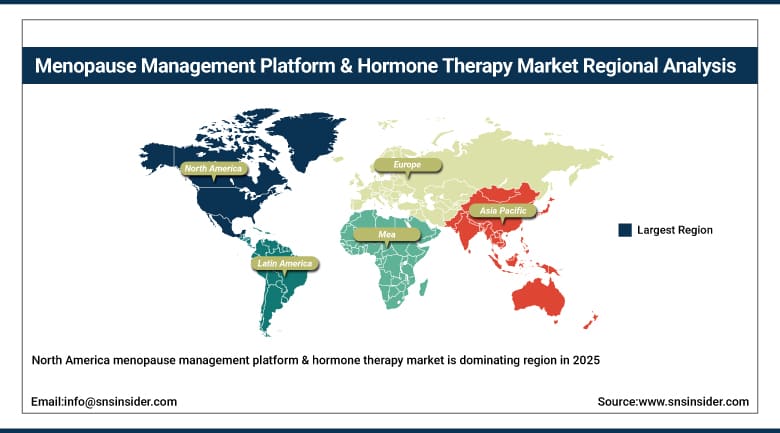
North America menopause management platform & hormone therapy market is dominating region in 2025, accounting for about 42.86% share, driven by widespread adoption of digital women's healthcare services and hormone therapy. The region benefits from advanced healthcare infrastructure and favorable reimbursement support. Increasing awareness regarding menopause management is significantly strengthening treatment adoption. Expansion of telehealth platforms is accelerating patient access. Strong investments in women's health technologies further reinforce the region's dominant position in the market.
According to the U.S. Census Bureau and The Menopause Society, there are more than 75 million women in the United States who have reached the age of 45 years, forming the key demographic for menopausal care. The FDA has been continuously approving new hormone therapy formulations according to the safety standards set forth. On the other hand, the CDC has reported continued telemedicine implementation within outpatient women's health clinics.
Get Customized Report as Per Your Business Requirement - Enquiry Now
Europe Menopause Management Platform & Hormone Therapy Market Insights.
Europe menopause management platform & hormone therapy market is characterized by stable growth in 2025 owing to strong healthcare infrastructure and increasing awareness regarding menopause care. Key countries include Germany, France, United Kingdom, and Italy. Rising adoption of personalized hormone therapy is driving market expansion. Increasing use of digital health platforms is boosting patient engagement. Supportive healthcare policies and women's health initiatives are encouraging innovation across menopause management solutions.
According to Eurostat and WHO European Region demographic data, the number of women aged 50+ years constitutes about 40% of all females living in Europe, which is an important source of patients seeking menopause assistance. According to OECD Health Statistics, more than 95% of primary care practices across European countries make use of EHRs. The Digital Decade project by the European Commission helps promote digital health access, contributing to the development of menopause platforms.
Asia Pacific Menopause Management Platform & Hormone Therapy Market Insights.
Asia Pacific is the fastest growing region in the menopause management platform & hormone therapy market, registering a CAGR of about 21.88% during 2026–2035. Rising healthcare awareness and expanding digital health infrastructure are driving strong demand across China, India, Japan, South Korea, and Southeast Asia. Increasing access to telemedicine services is boosting market growth. Growing investments in women's healthcare are further accelerating adoption.
The number of menopausal and post-menopausal women all over the world will be 1.2 billion according to the United Nations and health predictions. Nearly 60% of the total world population belongs to the Asia Pacific region, forming a substantial customer base for menopause care. WHO has backed the use of digital technology in health care in the region; hence, private firms can build menopause care platforms through telemedicine technology.
Middle East & Africa and Latin America Menopause Management Platform & Hormone Therapy Market Insights.
The Middle East & Africa along with Latin America regions are witnessing steady growth due to improving healthcare infrastructure and increasing awareness regarding women's midlife health. Key contributing countries include Brazil, Mexico, UAE, Saudi Arabia, and South Africa. Growing adoption of telehealth services is supporting patient access. Expanding investments in women's healthcare programs are strengthening regional market development.
As per the global healthy aging indicators and women’s health indicators, the number of postmenopausal women worldwide is estimated to be greater than 1 billion. Demographic statistics from United Nations indicate that Latin America and the Caribbean regions are greater than 81% urbanized, whereas in Africa and the Middle East regions there is rapid urban migration taking place. WHO reports on the development of digital health architecture that facilitates better access to healthcare, allowing private telehealth companies to offer their specialized services.
Market Dynamics
Growth Drivers: AI-enabled platforms and personalized therapies improve menopause outcomes and engagement.
Precision medicine innovations have revolutionized the management of menopause care by offering customized treatment solutions and consistent symptom tracking. Artificial intelligence-powered platforms offer treatment solutions after analyzing patient data. Remote patient monitoring innovations have contributed positively to patient follow-up care and medication compliance. Digital platform utilization is increasing by medical professionals for personalized wellness programs and behavioral therapy. Increased investment in women's health technologies is contributing positively to innovation within the healthcare industry. The integration of wearables with digital platforms facilitates better clinical decision-making. This is greatly enhancing market growth in the menopause management platform and hormone therapy market.
According to healthy aging and women's health metrics across the globe, there have been more than one billion post-menopausal women across the world. According to the International Menopause Society and World Health Organization, the menopausal hormone therapy is an evidence-based solution for the suitable candidates. The OECD research on digital health reveals that many countries within its membership have their national digital health strategies.
Restraints: Hormone therapy concerns and low awareness limit menopause treatment adoption globally.
Several women fail to know that there are treatment options for menopause since they lack proper educational information and cultural stigma is widespread. The fear of suffering from side effects of hormonal therapy hinders women from undergoing menopause treatment. Misunderstandings about menopause prevent people from consulting health professionals. There are some issues related to inconsistent practices of menopause treatment by clinicians in different areas. Moreover, there are few experts in menopause treatment which prevents quality treatment access. Inconsistent national guidelines for menopause treatment lead to inconsistent treatment.
Opportunities: AI-powered personalized platforms enhance menopause care through advanced remote monitoring solutions.
Artificial intelligence has made possible predictive symptom management and personalized treatments in digital health care ecosystems. Remote patient monitoring helps health care practitioners monitor patients’ progress beyond clinical settings. Wearable device usage keeps increasing and is making health care personalized and timely. Innovative technologies for managing menopause are regularly developed by technology companies. Partnerships between healthcare institutions and digital health providers keep growing for better patient results. Increased consumer demand for convenience in health care makes this market a promising area for growth.
As per UN forecasts on global population estimates, the number of women who have reached menopausal age or have already passed through the menopausal stage exceeds 1 billion worldwide. The ITU claims that there is more than 96% global mobile broadband penetration, while around 74% of individuals are connected to the Internet. The WHO emphasizes growing use of telemedicine and telehealth technologies, providing room for private entities to create AI-based solutions for managing menopause remotely.
Recent Developments
-
2026: Midi Health secured a 100-million-dollar Series D funding round to scale its AI-equipped virtual menopause platform.
-
2025: Bayer AG secured FDA approval for Lynkuet, a non-hormonal oral capsule treating moderate to severe menopause hot flashes.
-
2025: Elektra Health expanded its virtual care platform, driving its annual revenue growth to 3.9 million dollars.
-
2024: Evernow optimized its digital platform infrastructure by rolling out updated treatment tracking and user interface features.
Menopause Management Platform & Hormone Therapy Market Key Players are:
-
Astellas Pharma Inc.
-
Bayer AG
-
Organon & Co.
-
Pfizer Inc.
-
AbbVie Inc.
-
Abbott Laboratories
-
Novo Nordisk A/S
-
Viatris Inc.
-
Gedeon Richter PLC
-
Cipla Ltd.
-
Sun Pharmaceutical Industries Ltd.
-
GlaxoSmithKline PLC
-
Midi Health
-
Evernow
-
Gennev
-
Elektra Health
-
Winona
-
Alloy Women's Health
-
Vira Health
-
Joylux
Menopause Management Platform & Hormone Therapy Market Report Scope:
| Report Attributes | Details |
|---|---|
| Market Size in 2025 | USD 4.85 Billion |
| Market Size by 2035 | USD 27.39 Billion |
| CAGR | CAGR of 18.92% From 2026 to 2035 |
| Base Year | 2025 |
| Forecast Period | 2026-2035 |
| Historical Data | 2022-2024 |
| Report Scope & Coverage | Market Size, Segments Analysis, Competitive Landscape, Regional Analysis, DROC & SWOT Analysis, Forecast Outlook |
| Key Segments | • By Therapy Type (Hormone Replacement Therapy (HRT), Non-Hormonal Therapy, Psychological & Behavioral Therapy, Lifestyle & Wellness Programs, Nutritional Supplement Support, Others) • By Platform Type (Telehealth Platforms, Mobile Applications, Web-Based Platforms, Remote Patient Monitoring Platforms, AI-Enabled Personalized Care Platforms) • By Distribution Channel (Hospital Pharmacy, Retail Pharmacy, Online Pharmacy, Direct-to-Consumer Subscription Platforms, Others) • By End User (General Hospitals & Obstetrics/Gynecology Clinics, Specialty Menopause Clinics, Homecare Settings, Self-Managed Consumers, Others) |
| Regional Analysis/Coverage | North America (US, Canada), Europe (Germany, UK, France, Italy, Spain, Russia, Poland, Rest of Europe), Asia Pacific (China, India, Japan, South Korea, Australia, ASEAN Countries, Rest of Asia Pacific), Middle East & Africa (UAE, Saudi Arabia, Qatar, South Africa, Rest of Middle East & Africa), Latin America (Brazil, Argentina, Mexico, Colombia, Rest of Latin America). |
| Company Profiles | Astellas Pharma Inc., Bayer AG, Organon & Co., Pfizer Inc., AbbVie Inc., Abbott Laboratories, Novo Nordisk A/S, Viatris Inc., Gedeon Richter PLC, Cipla Ltd., Sun Pharmaceutical Industries Ltd., GlaxoSmithKline PLC, Midi Health, Evernow, Gennev, Elektra Health, Winona, Alloy Women's Health, Vira Health, Joylux |

Frequently Asked Questions
The major growth factors include menopause awareness, telehealth adoption, personalized therapies, AI-enabled solutions, remote monitoring, and increasing women's health technology investments.
North America dominated the menopause management platform & hormone therapy market in 2025.
The menopause management platform & hormone therapy market was valued at USD 4.85 billion in 2025.
