
Tumor Microenvironment Market Report Scope & Overview:
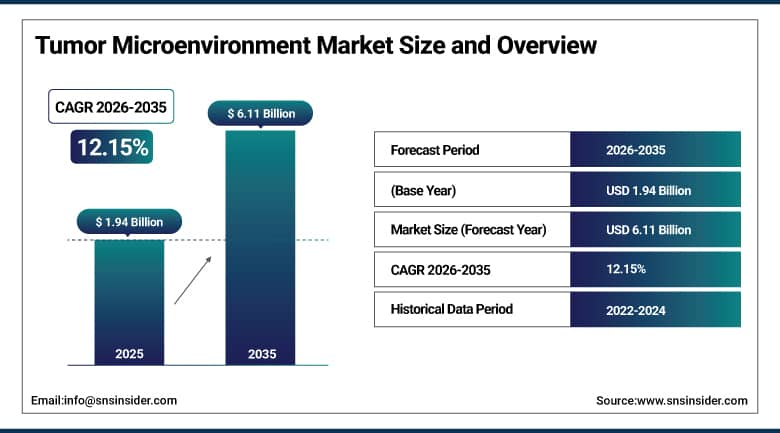
The Tumor Microenvironment Market was valued at USD 1.94 Billion in 2025 and is expected to reach USD 6.11 Billion by 2035, growing at a CAGR of 12.15% from 2026-2035.
The Tumor Microenvironment Market will see traction as oncology research shifts from tumor cells alone toward the surrounding immune cells, fibroblasts, vasculature, and signaling molecules that control disease progression and treatment response. Therapies, reagents, and analytical platforms that modulate or map this environment are gaining importance in drug discovery and precision oncology. Growing use of spatial biology, single-cell sequencing, and AI-based pathology is helping developers identify why many patients resist immune checkpoint therapy. Rising cancer incidence and heavy investment in combination immunotherapy programs continue to expand the commercial opportunity for companies serving this field. Strategic partnerships between tool makers and drug developers are strengthening this ecosystem further.
⮞In April 2026, 10x Genomics introduced its Atera platform at the AACR Annual Meeting, offering whole-transcriptome spatial analysis with single-cell sensitivity on fresh-frozen and FFPE tissue, with shipments planned for the second half of 2026.
To Get More Information On Tumor Microenvironment Market - Request Free Sample Report
Tumor Microenvironment Market Trends:
-
Rising use of spatial transcriptomics to map immune and stromal cell interactions inside tumors.
-
Growing development of PD-1 and VEGF bispecific antibodies that remodel the tumor environment.
-
Increasing focus on macrophage and fibroblast targeting to overcome checkpoint inhibitor resistance.
-
Expanding adoption of AI-driven digital pathology for immune-oncology biomarker profiling.
-
Rising investment in antibody-drug conjugates directed at stromal and microenvironment targets.
-
Growing pharma-academic research hubs dedicated to tumor immune environment discovery.
U.S. Tumor Microenvironment Market Outlook:
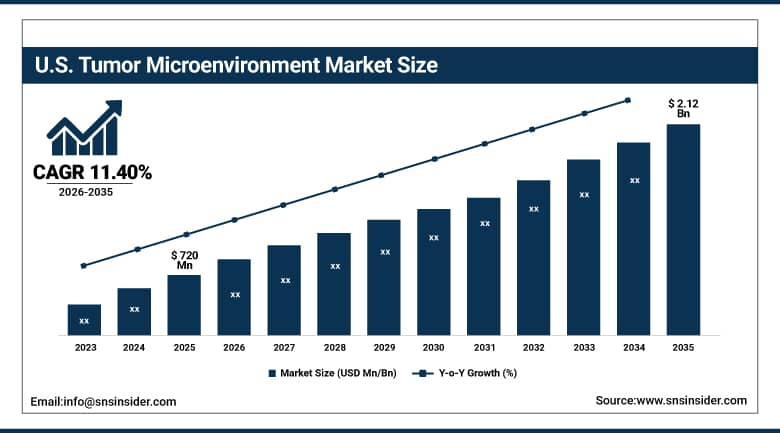
The U.S. Tumor Microenvironment Market was valued at USD 720 Million in 2025 and is expected to reach USD 2.12 Billion by 2035, growing at a CAGR of 11.40% from 2026-2035.
The U.S. Tumor Microenvironment Market is supported by the world's largest concentration of oncology clinical trials, leading cancer centers, and well-funded biotechnology clusters in Boston, San Francisco, and San Diego. National Cancer Institute grants and generous private capital sustain translational research into immune and stromal targets. Pharmaceutical sponsors increasingly pair therapeutic candidates with spatial and multiplex biomarker assays to select patients more precisely. Strong reimbursement for immunotherapy and early access to novel research instruments allow American laboratories to adopt new analytical tools quickly, which keeps demand for reagents, antibodies, and profiling services consistently strong. Venture funding keeps new immune-focused biotechnology start-ups well capitalized.
⮞In August 2026, Illumina expanded its DRAGEN secondary-analysis platform with new tumor microenvironment profiling pipelines for spatial and single-cell sequencing data, helping American biopharma researchers accelerate immune and stromal biomarker discovery.
Tumor Microenvironment Market Segment Analysis:
-
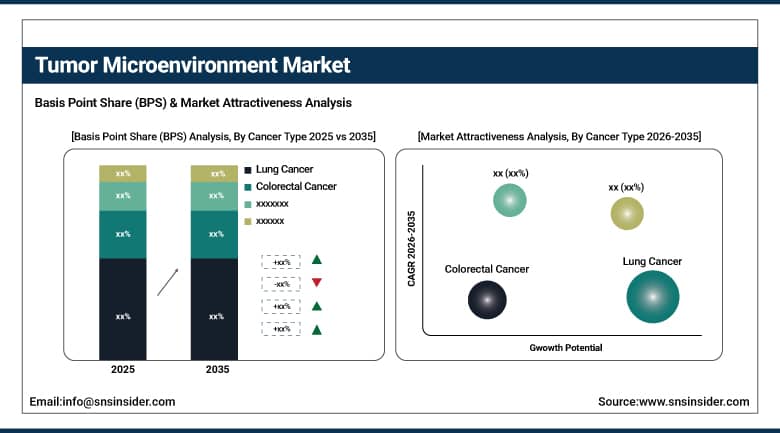
By Cancer Type, the Lung Cancer segment dominated the Tumor Microenvironment Market with approximately 27.60% share in 2025, while the Colorectal Cancer segment is the fastest growing with a CAGR of approximately 13.85%.
-
By Target, the T Cells segment dominated the Tumor Microenvironment Market with approximately 34.20% share in 2025, while the Tumor-Associated Macrophages segment is the fastest growing with a CAGR of approximately 14.90%.
-
By Therapy, the Monoclonal Antibodies segment dominated the Tumor Microenvironment Market with approximately 41.70% share in 2025, while the Adoptive Cell Therapies segment is the fastest growing with a CAGR of approximately 16.10%.
-
By End User, Pharmaceutical & Biotechnological Companies dominated the Tumor Microenvironment Market in 2025 with 43% share; Diagnostic Laboratories are the fastest-growing segment, projected to grow at a CAGR of 15.23% during the forecast period.
By Cancer Type, Lung Cancer Leads, While Colorectal Cancer Grows Fastest
Lung cancer dominated the Tumor Microenvironment Market in 2025, as it remains the most extensively studied tumor type for immune checkpoint therapy and microenvironment-directed combination regimens. Large patient populations, frequent biomarker testing, and a deep clinical pipeline give lung cancer programs a clear research advantage. Pharmaceutical developers use lung tumor samples heavily to test how T cell exclusion, macrophage infiltration, and stromal barriers influence response. Established treatment guidelines and wide reimbursement for immunotherapy also keep lung cancer at the center of both therapeutic development and the supporting reagent, antibody, and analytical platform demand. Regulatory familiarity further lowers development risk for sponsors entering this indication.
Colorectal cancer is the fastest-growing cancer type, driven by the need to improve outcomes in microsatellite-stable tumors that largely resist current immunotherapy. Researchers are focusing on fibroblast-rich stroma, suppressive myeloid cells, and gut microbiome influences that create an immune-excluded environment. New combination strategies and early-onset colorectal cancer trends are attracting fresh funding and clinical attention. As spatial profiling clarifies why these tumors stay cold, developers are advancing candidates aimed at reprogramming the surrounding environment, which supports rapidly rising research and therapeutic activity within this segment during the forecast period. Academic consortia are also generating large tissue atlases that guide target selection and trial design.
⮞In May 2026, EMD Serono initiated Phase III enrollment in the PROCEADE-CRC-03 trial of precemtabart tocentecan, an investigational CEACAM5-targeting antibody-drug conjugate for metastatic colorectal cancer, advancing a new therapeutic approach in a cancer type with substantial unmet treatment needs.
By Target, T Cells Lead, While Tumor-Associated Macrophages Grow Fastest
The T cells segment dominated the Tumor Microenvironment Market in 2025, because cytotoxic and helper T cell activity is the central mechanism behind checkpoint inhibitors, cell therapies, and most cancer vaccines. Predicting response to treatments relies on T cell phenotyping, markers of T cell exhaustion, and infiltration scoring. The availability of antibodies, flow cytometry panels, and sequencing assays has made the profiling of T cells a commonplace task in research laboratories and biotech companies. The continued approval of combinatorial checkpoint drugs and the growing use of tumor infiltrating lymphocytes make T cells the most commercially attractive target class of cells in development and reagents.
Tumor-associated macrophages are the fastest-growing target, as these abundant immune cells often promote tumor growth, suppress T cell activity, and support new blood vessel formation. Researchers are developing drug programs that inhibit macrophage infiltration, program them against tumor growth or use them to ingest cancer cells through CD47 signaling and beyond. Single cell or spatial studies have identified certain kinds of macrophages which are linked with bad prognosis, furthering the science behind myeloid therapies. The venture capital for biotech startups targeting myeloid cells is gaining momentum and this could mean that it has the potential to keep growing faster than the rest of the field.
⮞In December 2025, Belgium-based Spica Therapeutics nominated ST101, a monoclonal antibody designed to selectively deplete immunosuppressive CD163-positive tumor-associated macrophages, as its first clinical development candidate, highlighting pharmaceutical investment in macrophage-targeted strategies to address resistance to immunotherapy.
By Therapy, Monoclonal Antibodies Dominate, While Adoptive Cell Therapies Grow Fastest
Monoclonal antibodies segment dominated the Tumor Microenvironment Market in 2025, supported by the broad clinical use of PD-1, PD-L1, CTLA-4, and VEGF-directed antibodies that act on immune and vascular components of the tumor. These agents have established manufacturing, regulatory pathways, and commercial infrastructure, making them the preferred backbone for combination studies. Bispecific formats combining checkpoint and angiogenesis blockade are widening the opportunity further. Pharmaceutical companies continue to launch new antibody candidates against stromal and myeloid targets, keeping this therapy class the largest contributor to overall market revenue. Established supply chains and clinician familiarity also make antibodies the lowest-risk option for new combinations.
Adoptive cell therapies are the fastest-growing therapy segment, as developers work to extend cell treatments beyond blood cancers into solid tumors. Engineered T cells, tumor-infiltrating lymphocytes, and natural killer cell products are being redesigned with armoring features that resist the suppressive environment. Technological advances, quicker timelines in manufacturing and improved trafficking mechanisms are helping in breaking down adoption barriers within cancer centers that have been specially designed for treating cancer. Clinical performance data are accumulating, and these therapies have gained traction as a treatment option for melanoma while also showing encouraging results in other solid tumors, supporting continued rapid development through 2035.
⮞In July 2025, Dispatch Bio launched with $216 million raised to develop its Flare immunotherapy platform, which combines approaches intended to improve tumor targeting and overcome the immunosuppressive tumor microenvironment, strengthening commercial interest in next-generation cellular and immune-based treatments for solid tumors.
By End User, Pharmaceutical & Biotechnological Companies Dominate Tumor Microenvironment Market; Diagnostic Laboratories to Register Fastest Growth.
Pharmaceutical & Biotechnological Companies dominated the Tumor Microenvironment Market in 2025, accounting for an estimated 43% share. Their leadership is supported by increasing investments in oncology drug discovery, cancer immunotherapy development, and targeted treatment research. These companies utilize tumor microenvironment models to investigate interactions between cancer cells, immune cells, and surrounding tissues. Growing demand for personalized medicine, preclinical drug screening, and therapeutic efficacy assessment further strengthens adoption, while expanding pharmaceutical pipelines and biotechnology innovations sustain demand for advanced tumor microenvironment analysis solutions.
Diagnostic Laboratories are projected to register the fastest growth in the Tumor Microenvironment Market, with a CAGR of 15.23% during the forecast period. Growth is driven by increasing demand for advanced cancer diagnostics, biomarker identification, and molecular profiling to understand tumor biology. Laboratories are increasingly adopting multiplex assays, immunohistochemistry, spatial analysis, and molecular testing to evaluate tumor-immune interactions. Rising precision oncology adoption and the need for treatment selection biomarkers are expanding testing requirements. Improvements in diagnostic technologies and growing collaborations with pharmaceutical companies are expected to accelerate segment growth.
Regional Analysis:
|
Region |
Major Country |
Share within Region, 2025 (%) |
|
North America |
United States |
87.40% |
|
Europe |
Germany |
27.80% |
|
Asia-Pacific |
China |
38.60% |
|
Middle East & Africa |
GCC |
54.20% |
|
Latin America |
Brazil |
46.30% |
North America Tumor Microenvironment Market Insights
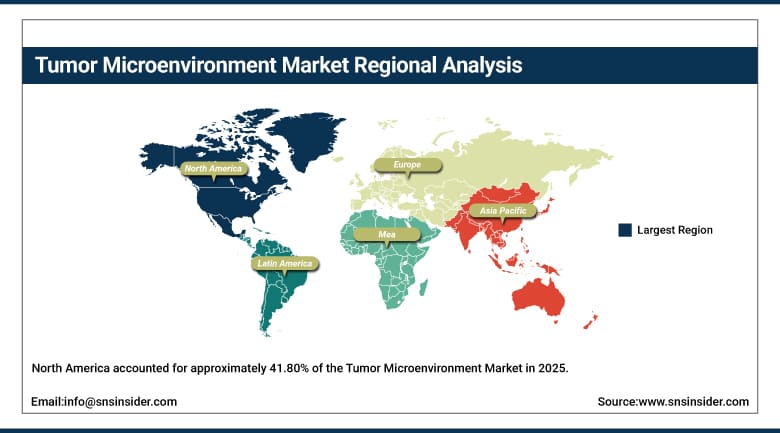
North America accounted for approximately 41.80% of the Tumor Microenvironment Market in 2025, the largest share among all regions, supported by dense oncology research activity, leading cancer centers, and robust biopharmaceutical funding. The United States hosts a large share of global immuno-oncology clinical trials, while established life science tool manufacturers supply the antibodies, reagents, and instruments used in microenvironment research. Early adoption of spatial biology platforms and AI-based pathology gives regional laboratories an advantage in generating high-quality translational data. Strong reimbursement for immunotherapy also reinforces sustained commercial demand across the region. Established regulatory clarity further speeds trial initiation across the region.
The support of cancer research by Canada is realized in public networks and in the emergence of clusters of biotechnology firms in such cities as Toronto, Montreal, and Vancouver. Collaboration of American drug firms and Canadian research centers across borders enables them to have broader access to patient samples and unique expertise. The support by the government of precision medicine programs and genomics initiatives is making the regional research infrastructure even more robust. Joint efforts of instrument suppliers, contract research organizations, and pharmaceuticals in their partnerships will keep advancing the use of profiling technologies and secure leadership of North America in drug development and technology deployment through the entire forecasted period.
⮞In April 2026, Quanterix announced its Content Innovation Engine, integrating Akoya Biosciences' spatial biology platform with Quanterix's ultrasensitive SIMOA immunoassay technology to support systematic cancer-biology investigation and advance tissue-based biomarker discovery toward translational and clinical applications.
Get Customized Report as Per Your Business Requirement - Enquiry Now
Europe Tumor Microenvironment Market Insights
Europe captured approximately 27.60% of the Tumor Microenvironment Market in 2025, supported by strong academic oncology research, collaborative consortia, and a well-established pharmaceutical industry. Cancer centers based in Germany, the United Kingdom, France, and Switzerland have their own immune/stromal biology-based departments and company research centers located in these countries. European funding projects stimulate the conduct of research on an international scale with the participation of patients from multiple countries and the exchange of biomarker-related data. National/local technologies include developments of companies in the fields of cell sorting, spatial techniques, and antibodies. There are also cross-border data sharing efforts that can contribute to the validation of biomarkers. Publicly-funded development fuels continuous growth in Europe.
Germany is the largest national market in the region, supported by pharmaceutical research and advanced diagnostics companies operating in the country and several top university hospitals. German firms work with the development of individualized cancer vaccines and bispecific antibodies and microenvironment biology plays a key role in the national oncology strategy. Another contributor is the United Kingdom with its genomics cancer programs and biotechnology investments. Supportive regulation regarding adaptive trial design together with widespread use of digital pathology in clinical research should maintain steady growth until 2035. Favorable industrial environment for translation and personalized medicine will attract more global players to develop R&D infrastructure.
⮞In February 2026, the German Cancer Research Center and HI-STEM researchers, working with Netherlands-based biotech company Xilis, reported a high-throughput method using three-dimensional microtumors to test treatment responses in colorectal cancer, supporting more individualized therapy selection and functional investigation of tumor biology.
Asia-Pacific Tumor Microenvironment Market Insights
Asia-Pacific held approximately 21.90% of the Tumor Microenvironment Market in 2025 and is the fastest-growing region with a CAGR of approximately 14.60%. A very large cancer patient base, rising healthcare spending, and expanding biopharmaceutical research capacity are driving adoption. China has become a major source of novel antibody and antibody-drug conjugate candidates, with many assets licensed to global companies. Governments across the region are funding precision oncology programs and cancer genomics projects, which increases demand for microenvironment profiling reagents, instruments, and contract research services among hospitals and drug developers. Growing local expertise in antibody engineering is also improving the region's global competitiveness.
Japan fosters drug research with the flowing example of Astellas Pharma having its own facility for studying the tumor microenvironment in Kashiwa. South Korea and Australia have been nurturing clinical trials ecosystem, whereas India is growing in oncology research and diagnostics. Low costs for trials, easy access to patients, and production of more research reagents locally make the region an attractive prospect for foreign sponsors. The region can expect a significant gain in market share due to the growth in innovation in the region through the forecast period. Cancer research initiatives supported by governments and aging populations ensure interest in innovative immunotherapy, while local manufacturers expand their production of antibodies and reagents.
⮞In June 2026, China's drug regulator approved CARsgen Therapeutics' satri-cel for stomach cancer, marking a major milestone for CAR T-cell therapy in solid tumors and highlighting the importance of developing cellular treatments capable of addressing the complex tumor microenvironment.
MEA & Latin America Tumor Microenvironment Market Insights
While the Middle East & Africa region is a relatively smaller market for the Tumor Microenvironment Market, there is significant activity taking place in the form of investments being made by the Gulf countries into oncology centers and programs related to genomic medicine, along with research collaborations. The development of specialized cancer hospitals in Saudi Arabia and the UAE, along with efforts being made to increase participation in clinical trials, is also driving the research market. The adoption of advanced immunotherapy and profiling technologies has been restricted to Gulf countries owing to costs and infrastructure issues. Modernization of the healthcare sector and collaborations with pharmaceutical companies from around the globe are expected to drive the research market in the coming years.
Latin America is witnessing stable growth in the Tumor Microenvironment Market with Brazil and Mexico leading the way with the increase in cancer centers and participation in international clinical trials. Brazil has an advantage due to its larger patient base and academic oncology programs, with Argentina and Colombia contributing through regional trial networks. Fluctuations in currency and non-uniform reimbursement for immunotherapies are restricting faster adoption. However, increasing incidence of cancers, public-private partnerships, and improved availability of imported research equipment will drive market growth in the forecast period. The approval process is also being streamlined by regulators in the region to attract more research sponsors.
⮞In April 2025, Abu Dhabi's Department of Health and Abu Dhabi Investment Office signed a memorandum of understanding with GSK to establish an oncology-focused multi-omics research institute, strengthening regional capabilities in genomic science, precision medicine, and cancer drug discovery.
⮞In September 2025, Brazil's health regulator ANVISA added a neoadjuvant and adjuvant treatment indication for Merck's pembrolizumab in eligible adults with locally advanced, resectable head and neck squamous cell carcinoma, demonstrating continued expansion of immunotherapy use in the country's oncology treatment landscape.
Market Dynamics:
Growth Drivers: Rising Cancer Burden and Immunotherapy Resistance
Growth in the Tumor Microenvironment Market is primarily attributed to the rising global cancer burden and the persistent challenge of resistance to immune checkpoint therapy. Many patients fail to respond because suppressive immune cells, fibroblasts, and abnormal vasculature shield tumors from attack. This has pushed pharmaceutical developers to invest heavily in agents that modify the surrounding environment. Large clinical programs combining checkpoint inhibitors with stromal, myeloid, and angiogenesis targets are expanding the demand for therapeutic candidates, reagents, and companion biomarker assays across both academic and commercial oncology research. Companion diagnostic development and sustained licensing activity around novel candidates add further dependable revenue streams for suppliers.
Technological progress in single-cell sequencing, spatial transcriptomics, and AI-powered pathology further accelerates market growth by making the environment measurable at cellular resolution. Researchers can now identify cell neighborhoods linked to treatment response and design targeted interventions with greater confidence. Falling sequencing costs and cloud-based analytics are widening access beyond elite research centers. Rising pharmaceutical licensing activity around novel antibody and antibody-drug conjugate candidates also confirms strong commercial interest, supporting sustained investment throughout the forecast period. Together, these advances shorten discovery cycles for both therapeutic and diagnostic developers, and they encourage drug companies to build internal spatial biology capabilities instead of relying solely on outside academic collaborators.
⮞In September 2025, the U.S. Food and Drug Administration approved Merck's Keytruda Qlex, a subcutaneous formulation of pembrolizumab with berahyaluronidase alfa-pmph, for eligible solid-tumor indications covered by intravenous pembrolizumab, broadening administration options for checkpoint immunotherapy.
Restraints: Biological Complexity and High Technology Costs
High biological complexity is a major challenge for the Tumor Microenvironment Market. There are many differences between different cancer types, between patients and even inside tumors, which makes it difficult to identify universally applicable targets. Preclinical success often does not turn into a clinical one due to the inability of animal models to mimic the human tumor microenvironment. In addition, clinical failures of drugs targeted to the tumor microenvironment at later stages of trials also make investors skeptical and prolong the time of drug development. These companies may also find it difficult to allocate resources for drug development in such a risky venture.
Furthermore, there are challenges connected to high costs of technologies and treatment. Technologies of spatial biology, single cell methods and production of cell therapies require significant investment and highly skilled workforce, preventing their use in small laboratories and hospitals in emerging markets. The problems with data analysis and lack of standardization of methods makes comparisons between different studies harder. Lack of reimbursement of novel combination regimens also discourages adoption of these technologies, restraining their growth – especially in price-sensitive markets – until these technologies become cheaper and better standardized. Training of bioinformaticians creates shortages of staff, while recurring costs of data storage and cloud computing are also present.
Opportunities: Spatial Biology Expansion and Novel Target Discovery
The expansion of spatial biology and multi-omics offers a major opportunity for the Tumor Microenvironment Market. Newly launched platforms deliver whole-transcriptome resolution at single-cell scale, allowing researchers to link cellular position with function and drug response. Pharmaceutical companies increasingly embed these tools in clinical trials to select patients and understand resistance. Instrument makers, reagent suppliers, and software providers can grow by offering integrated workflows, cloud analytics, and sample-processing services that lower barriers for laboratories lacking in-house expertise. Growing clinical validation of spatial signatures as predictive biomarkers could also open entirely new diagnostic revenue streams for companies that combine instruments, reagents, and software.
Novel target discovery creates further opportunity, with fibroblast proteins, myeloid receptors, and metabolic checkpoints emerging as attractive intervention points. Antibody-drug conjugates directed at stromal markers, engineered cell therapies built to survive suppressive conditions, and microenvironment-focused diagnostics are advancing through development. Growing collaboration among biotechnology firms, global pharmaceutical companies, and Asian developers is accelerating licensing and co-development agreements. Successful clinical validation of even one major new target class could unlock substantial commercial value across the forecast period. Emerging markets in Asia-Pacific also offer attractive entry points for suppliers seeking diversified long-term revenue growth beyond established Western research hubs. Such discoveries remain central to long-term industry growth.
⮞In February 2026, Bruker announced the CellScape XR spatial proteomics platform, featuring expanded multiplex assay options and increased throughput, alongside advances in its spatial biology portfolio, creating additional research capabilities for investigating cellular interactions and protein expression within complex tumor microenvironments.
Recent Developments:
-
February 2025, Zai Lab licensed MediLink Therapeutics' TMALIN antibody-drug conjugate platform to develop ZL-6201, a therapy directed at the stromal target LRRC15 in solid tumors.
-
October 2025, Bristol Myers Squibb entered a global collaboration with BioNTech to co-develop pumitamig (BNT327), a PD-L1 and VEGF-A bispecific antibody studied across multiple solid tumors.
-
March 2026, Miltenyi Biotec launched a new tumor-infiltrating lymphocyte isolation and expansion workflow compatible with its CliniMACS Prodigy platform, supporting faster manufacturing of cell therapies targeting the tumor microenvironment.
-
September 2026, Bio-Rad Laboratories introduced a new multiplex flow cytometry panel for profiling tumor-associated macrophages and regulatory T cells, expanding immune-oncology research capabilities for academic and biopharma laboratories.
Tumor Microenvironment Market Key Players:
-
Merck KGaA
-
Thermo Fisher Scientific Inc.
-
F. Hoffmann-La Roche Ltd
-
Bio-Rad Laboratories, Inc.
-
BioNTech SE
-
Bio-Techne Corporation
-
Miltenyi Biotec
-
10x Genomics, Inc.
-
Merck & Co., Inc.
-
AstraZeneca PLC
-
Illumina, Inc.
-
Danaher Corporation
-
Revvity, Inc.
-
BD Biosciences
-
Promega Corporation
-
QIAGEN N.V.
-
Sartorius AG
-
Abcam plc
-
Takara Bio Inc.
Tumor Microenvironment Market Report Scope:
| Report Attributes | Details |
|---|---|
| Market Size in 2025 | USD 1.94 Billion |
| Market Size by 2035 | USD 6.11 Billion |
| CAGR | CAGR of 12.15% From 2026 to 2035 |
| Base Year | 2025 |
| Forecast Period | 2026-2035 |
| Historical Data | 2022-2024 |
| Report Scope & Coverage | Market Size, Segments Analysis, Competitive Landscape, Regional Analysis, DROC & SWOT Analysis, Forecast Outlook |
| Key Segments | • By Cancer Type (Lung Cancer, Colorectal Cancer, Breast Cancer, Prostate Cancer, Bladder Cancer, Other Cancer Types) • By Target (T Cells, Tumor-Associated Macrophages, Cancer-Associated Fibroblasts, Myeloid-Derived Suppressor Cells, Regulatory T Cells, Other Targets) • By Therapy (Monoclonal Antibodies, Cytokines, Cancer Vaccines, Oncolytic Viruses, Adoptive Cell Therapies, Other Therapies) • End User (Pharmaceutical & Biotechnological Companies, Hospitals, Diagnostic Laboratories, Others) |
| Regional Analysis/Coverage | North America (US, Canada), Europe (Germany, UK, France, Italy, Spain, Russia, Poland, Rest of Europe), Asia Pacific (China, India, Japan, South Korea, Australia, ASEAN Countries, Rest of Asia Pacific), Middle East & Africa (UAE, Saudi Arabia, Qatar, South Africa, Rest of Middle East & Africa), Latin America (Brazil, Argentina, Mexico, Colombia, Rest of Latin America). |
| Company Profiles | Merck KGaA, Thermo Fisher Scientific Inc., F. Hoffmann-La Roche Ltd, Bio-Rad Laboratories, Inc., BioNTech SE, Bio-Techne Corporation, Miltenyi Biotec, 10x Genomics, Inc., Bristol Myers Squibb Company, Merck & Co., Inc., AstraZeneca PLC, Agilent Technologies, Inc., Quanterix Corporation, Bruker Corporation, Illumina, Inc., Danaher Corporation, PathAI, Inc., Zai Lab Limited, Revvity, Inc. |

Frequently Asked Questions
Key players include Merck KGaA, Thermo Fisher Scientific Inc., F. Hoffmann-La Roche Ltd, Bio-Rad Laboratories, Inc., and BioNTech SE, among others.
Key opportunities include spatial biology expansion, novel stromal and myeloid target discovery, antibody-drug conjugates, and engineered cell therapies built for solid tumors.
The primary growth factor is the rising cancer burden combined with resistance to immune checkpoint therapy, which drives investment in agents and tools that modify the tumor environment.
By therapy, the Monoclonal Antibodies segment dominates the Tumor Microenvironment Market with approximately 41.70% share in 2025.
North America dominates the Tumor Microenvironment Market with approximately 41.80% share in 2025, while Asia-Pacific is the fastest-growing region with a CAGR of approximately 14.60%.
