
Breast Pumps Market Report Scope & Overview:
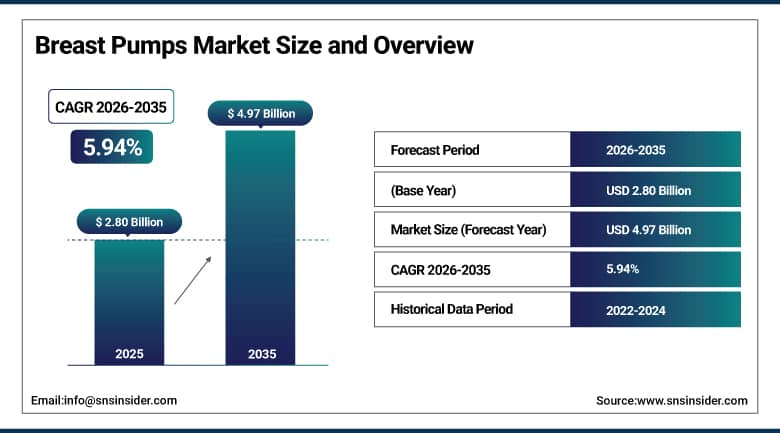
The Breast Pumps Market was valued at USD 2.80 Billion in 2025 and is projected to reach USD 4.97 Billion by 2035, expanding at a CAGR of 5.94% during 2026–2035.
The breast pumps market is growing due to increasing female workforce participation, rising awareness of the health benefits of breastfeeding and supportive government initiatives promoting maternal and infant care. Increasing demand for breast pumps that are wearable, hands-free, and portable and ongoing innovations in electric pumping technologies are driving adoption of products. Further supporting market growth across both developed and emerging economies is the expansion of e-commerce channels, improving healthcare infrastructure, favorable reimbursement policies in developed countries, and increasing preference for home-based breastfeeding solutions.
In 2025–2026, Anker, via its Eufy smart-home ecosystem, expanded its footprint in the breast pumps market by introducing the Eufy S1 and S1 Pro wearable breast pumps with integrated active warming technology that can reach up to 105°F, improving user comfort and milk expression efficiency.
To Get More Information On Breast Pumps Market - Request Free Sample Report
Breast Pumps Market Trends:
-
Growing adoption of wearable and hands-free breast pumps is improving convenience for working mothers and supporting greater breastfeeding continuity outside the home.
-
Rising female workforce participation is driving demand for portable, lightweight, and battery-powered breast pumps designed for flexible daily use.
-
Integration of smart technologies and mobile connectivity is enabling real-time pumping tracking, personalized settings, and enhanced user experience through connected applications.
-
Expansion of e-commerce platforms and direct-to-consumer sales is increasing product accessibility while supporting wider adoption across emerging and developed markets.
-
Increasing investments in maternal healthcare and breastfeeding awareness programs are creating opportunities for advanced breast pump technologies and premium product innovation.
U.S. Breast Pumps Market Outlook:
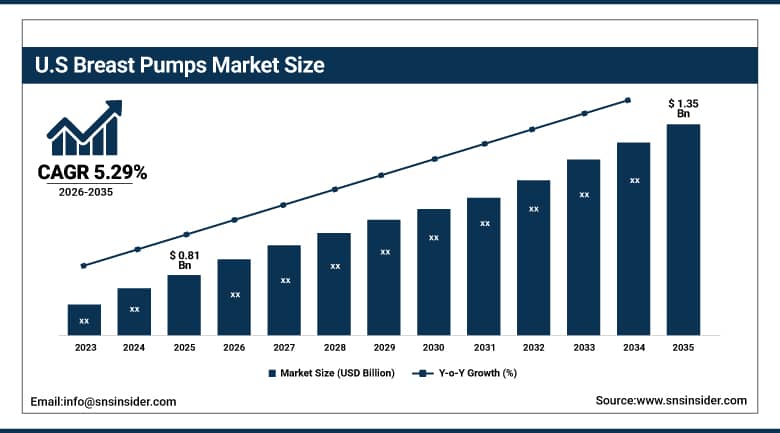
The U.S. Breast Pumps Market was valued at USD 0.81 Billion in 2025 and is projected to reach USD 1.35 Billion by 2035, registering a CAGR of 5.29% during 2026–2035.
The market growth is expected to be fueled by rising participation of women in workforce, increasing preference for wearable and hands-free breast pumps and growing awareness about health benefits of breastfeeding. Further adoption is also being driven by continued product innovation, growth of direct-to-consumer sales channels and integration of smart technologies such as app connectivity, milk tracking and personalized pumping settings. Supportive workplace breastfeeding policies and increasing investments in maternal and infant healthcare are bolstering market growth across the United States.
California-based wearable breast pump maker Willow Innovations bought U.K.-based wearable breast pump maker Elvie out of administration in March 2025, combining the two largest patent portfolios in the premium wearable breast pump market and solidifying its leadership in the smart maternal healthcare device market.
Breast Pumps Market Segment Analysis:
-
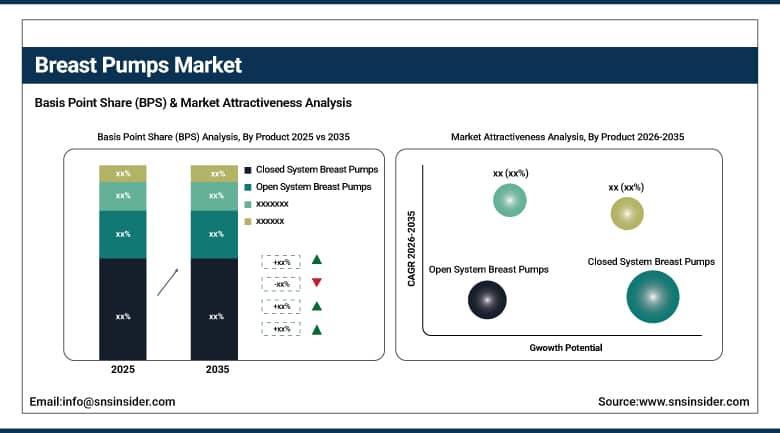
By Product, Closed System Breast Pumps dominated the breast pumps market with 68.30% share in 2025, while Closed System Breast Pumps are expected to maintain dominance with a CAGR of 6.52% from 2026–2035.
-
By Technology, Electric Breast Pumps dominated the breast pumps market with 52.60% share in 2025, while Battery-powered Breast Pumps are the fastest-growing technology segment with a CAGR of 9.88% from 2026–2035.
-
By End User, Homecare Settings dominated the breast pumps market with 72.40% share in 2025, while Healthcare Facilities are the fastest-growing end user segment with a CAGR of 7.57% from 2026–2035.
-
By Distribution Channel, Offline/Retail dominated the breast pumps market with 58.70% share in 2025, while Online channels are the fastest-growing distribution segment with a CAGR of 8.68% from 2026–2035.
By Product, Closed System Breast Pumps dominated the Breast Pumps Market, while Open System Breast Pumps are expected to grow during the forecast period 2026–2035
Closed System Breast Pumps held the dominant share of the breast pumps market, making up about 68.30% of the revenue. The segment is driven by improved safety in the milk expression process, improved hygiene and reduced risks of contamination. These pumps are favored by mothers and healthcare providers as they do not allow milk to enter the motor system. The market is growing due to rising awareness of breastfeeding, increasing demand for reusable pumping solutions and growing adoption in homecare and healthcare settings. The global closed system breast pumps market is witnessing continuous product innovations such as improved comfort features and efficient pumping mechanisms.
Open System Breast Pumps is expected to register the fastest CAGR of 4.57% during the forecast period 2026-2035. Growth is driven by affordability, easy availability and growing adoption among consumers looking for cost-effective breastfeeding solutions. Open system pumps are attractive in emerging markets because they are cheaper and easier to design. Manufacturers are concentrating on lightweight, portable and easy to use models to improve the convenience. The open system breast pumps market is expected to grow more in the forecast period as online distribution channel is growing and awareness about breastfeeding support products is increasing.
By Technology, Electric Breast Pumps dominated the Breast Pumps Market, while Battery-powered Breast Pumps are expected to register the fastest CAGR during the forecast period 2026–2035
Electric Breast Pumps dominated the breast pumps market with a revenue share of 52.60% in 2025. The segment remains ahead because it allows faster milk expression, has variable suction levels and is more efficient than manual alternatives. Electric pumps are widely used by working mothers and healthcare facilities as they are convenient and reliable. Smart features, wearable design and mobile connectivity are helping users’ experience. The strong adoption of electric breast pumps worldwide is likely to be driven by the growing demand for sophisticated breastfeeding solutions and continuous technological advancements.
Battery-powered Breast Pumps are projected to witness the fastest CAGR of 9.88% over the forecast period 2026-2035. The growth of the segment is attributed to the rising demand for portable, cordless and flexible breastfeeding solutions. Battery-powered pumps are more mobile and convenient, perfect for working mums and active lifestyles. Advancements in rechargeable battery systems, compact designs and hands-free pumping technologies are improving product performance. Growing consumer demand for wearable breast pumps and wider access through digital platforms are further driving the adoption of battery-powered breast pump solutions across global markets.
By End User, Homecare Settings dominated the Breast Pumps Market, while Healthcare Facilities are expected to register the fastest CAGR during the forecast period 2026–2035
Homecare Settings dominated the breast pumps market in 2025, representing approximately 72.40% revenue share. Increasing preference for breastfeeding at home, rising female workforce participation and growing demand for personal-use breast pumps drive the segment. Consumers are increasingly embracing convenient options that enable flexible milk expression outside of healthcare settings. The homecare adoption is being supported by increasing awareness on the benefits of breastfeeding, growth of e-commerce platforms and availability of inexpensive portable devices. The growing focus on maternal and infant health is also boosting the need for breast pumps in homes.
Healthcare Facilities are projected to witness the fastest CAGR of 7.57% during the forecast period 2026–2035. Increasing demand for hospital-grade breast pumps in maternity hospitals, neonatal care centers, and rehabilitation facilities is supporting the growth. Healthcare providers are stressing the importance of breastfeeding support programmes to enhance infant nutrition and maternal health outcomes. Higher birth rates in developing regions, rising investments in maternal care infrastructure, and adoption of advanced pumping technologies are driving growth of the segment. Hospitals are adding efficient breast pump systems to comprehensive maternal health care.
By Distribution Channel, Offline/Retail dominated the Breast Pumps Market, while Online channels are expected to register the fastest CAGR during the forecast period 2026–2035
Offline/Retail channels dominated the breast pumps market with an estimated revenue share of 58.70% in 2025. The segment is driven by high consumer trust and recommendations by healthcare professionals and availability of the product through pharmacies, specialty baby stores and medical equipment retailers. Many consumers prefer offline purchases as they get direct advice about the products, demonstrations and recommendations from experts. Retail channels continue to be a key touchpoint, especially for first time parents looking for guidance in selecting the right breast pump products. But the move to the digital is slowly changing the buying behavior of consumers around the world.
The online distribution channels are expected to record the fastest CAGR of 8.68% during the forecast period, 2026-2035. The growth drivers are expansion of e-commerce platform, direct-to-consumer strategies, availability of more products, competitive pricing and convenient home delivery options. Consumers can easily compare products, read reviews and purchase advanced wearable and smart breast pumps through online channels. Increasing smartphone penetration, adoption of digital payments and growing preference for online shopping among young parents are driving the global breast pumps market towards digital sales channels.
Regional Analysis:
|
Region |
Major Country |
Share within Region, 2025 (%) |
|---|---|---|
|
North America |
United States |
84.72% |
|
Europe |
Germany |
28.50% |
|
Asia Pacific |
China |
44.80% |
|
Latin America |
Brazil |
46.27% |
|
Middle East |
UAE |
25.11% |
North America Breast Pumps Market Insights
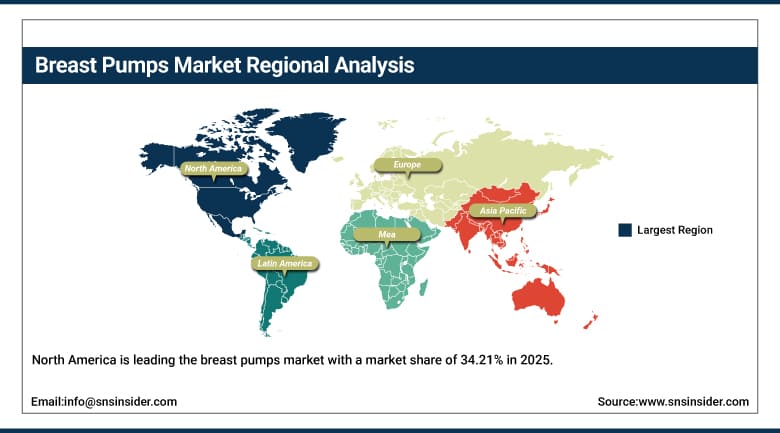
North America is leading the breast pumps market with a market share of 34.21% in 2025. The growth of the market is attributed to high awareness about breastfeeding, well-established infrastructure for maternal healthcare, and high adoption rate of electric, wearable, and smart breast pump technologies. The region is benefitting from presence of leading maternal care products manufacturers, favorable healthcare support systems, and increasing female workforce participation, among others.” The United States contributes around 84.72% of regional revenue, owing to strong demand for premium breastfeeding solutions, increasing adoption of innovative pumping devices, and increasing consumer preference for convenient home-based breastfeeding products.
The United States remains leading the way in regional growth due to rising awareness around the benefits of breastfeeding, increased availability of advanced breast pump products, and an increasing preference for portable and hands-free pumping solutions. Canada also contributes additional demand through improving maternal healthcare services, rising adoption of electric breast pumps, and increasing accessibility through online distribution channels. Government initiatives supporting maternal and infant health, along with increasing investments in healthcare technologies are anticipated to maintain North America’s stronghold during the forecast period.
Get Customized Report as Per Your Business Requirement - Enquiry Now
Europe Breast Pumps Market Insights
Europe is a significant market for breast pumps owing to the presence of well-established healthcare systems, rising awareness about breastfeeding, and increasing focus on maternal and infant health. The rising adoption of electric and wearable breast pumps, increasing demand from working mothers and the growing availability of technologically advanced breastfeeding solutions are some of the key factors bolstering the expansion of the market in the region. Some of the significant contributors to the market are Germany, the United Kingdom, France, and Italy, among others, due to their developed healthcare infrastructure, increased consumer awareness, and strong penetration of retail and online distribution networks.
Germany enjoys a significant position in the European market due to its advanced healthcare facilities, strong purchasing power of consumers and increasing adoption of premium maternal care products. The United Kingdom and France are also contributing substantially through breastfeeding support programmes and an increasing demand for convenient pumping solutions. During the forecast period, the market is driven by the rising preference for portable breast pumps, expansion of e-commerce platforms and continuous product innovation by manufacturers across Europe.
Asia Pacific Breast Pumps Market Insights
Asia Pacific is the fastest-growing region for the breast pumps market, with a CAGR of around 7.26% during 2026–2035, owing to rising birth rates, increasing awareness about breastfeeding, improving healthcare infrastructure, and increasing adoption of advanced breast pump technologies. The region is experiencing rising disposable incomes, rising female participation in the workforce and fast growth of online retail platforms. Moreover, the rising demand for portable, electric and wearable breast pumps among young mothers is further boosting market growth in emerging economies.
China commands a significant share in the Asia Pacific market in 2025, attributed to the growing maternal healthcare investments, increasing adoption of premium breastfeeding products, and robust growth of e-commerce channels. India, Japan and South Korea are also playing a key role in the regional development by improving the accessibility of healthcare, increasing awareness campaign, and growing demand for convenient breastfeeding solutions. The adoption of breast pumps across the Asia Pacific region is expected to be further bolstered by government initiatives supporting maternal and infant health.
Middle East & Africa and Latin America Breast Pumps Market Insights
The Middle East & Africa and Latin America breast pumps market is witnessing slow growth due to growing awareness about benefits of breastfeeding, improving maternal healthcare infrastructure and expanding availability to breastfeeding support products. Brazil’s significant contribution in Latin America is majorly attributed to rising healthcare investments, increasing adoption of personal-use breast pumps, and expanding availability through retail and online channels. The Middle East market is driven by healthcare modernization projects in the Middle East market, increasing demand for advanced maternal care products, and the growing adoption of electric and wearable breast pump solutions.
Growth in the Middle East & Africa and Latin America regions is also supported by increasing women’s participation in the work force, improving healthcare services, and growing consumer preference for convenient breastfeeding technologies. The development of e-commerce platforms is increasing product availability in developing markets. Countries like Brazil, Mexico, Saudi Arabia and the UAE are seeing a surge in demand as healthcare improves and awareness programmes are undertaken. Yet, factors such as affordability, lack of awareness in some regions and uneven access to sophisticated healthcare products may inhibit market penetration during the forecast period.
Market Dynamics:
Growth Drivers: Increasing breastfeeding awareness and advanced product innovation driving adoption
Increasing awareness about health benefits of breast feeding and increasing demand for convenient breast milk expression devices are expected to drive the breast pumps market globally. The growing number of women in the workforce has led to a surge in the use of electric, wearable and portable breast pumps which provide convenience for ongoing breastfeeding practices. Health-related initiatives to raise awareness of breastfeeding and maternal health are also helping to boost adoption. User satisfaction with breast pump technology is improving due to smart connectivity, adjustable suction strength, noiseless breast pump use, hands-free operation, and more.
Restraints: High product costs and accessibility challenges limiting adoption
High cost of advanced electric, wearable and smart breast pump solutions is a major restraining factor for the growth of the market, especially in developing and price-sensitive regions. The higher cost of premium products with features like mobile connectivity, automated controls and wearable designs means that some consumers can’t afford them. Moreover, limited uptake may be attributed to low awareness on advanced breastfeeding technologies, lack of reimbursement support and concerns over product maintenance and replacement cost. Regional differences in health care infrastructure, differences in access to maternal care services, also affect market penetration. These challenges are still impacting purchases especially among price sensitive consumers.
Opportunities: Expansion of smart breastfeeding solutions and emerging market growth
Breast pumps market offers lucrative opportunities owing to the rising adoption of intelligent, wearable, and connected breastfeeding products. There is increasing emphasis on manufacturing cutting-edge breast pumps that include monitoring via mobile apps, personalized settings, handsfree features, and better comfort design. The growing inclination towards convenience and efficiency in breastfeeding devices is driving companies to invest more in innovation of new products. Integration of digital health platform with the breast pumps will be another way to add value to the user experience.
Developing economies of Asia Pacific, Latin America, and the Middle East region are offering immense growth opportunities owing to improved healthcare facilities, disposable income levels, and awareness regarding the benefits of breastfeeding. Companies are entering these regions through cost-effective product range, online retail sales and healthcare provider partnerships. Rising government efforts aimed at improving maternal and infant health along with increased female labor force participation will boost the demand for innovative breast pump products.
Recent Developments:
-
2025: Annabella expanded its double-pump technology commercial footprint across European and Western consumer markets, supported by significant venture capital investments and growing demand for innovative breastfeeding solutions.
-
2025: Medela AG introduced its “Magic InBra” hands-free breast pump line featuring proprietary FluidFeel Technology, strengthening its position in the wearable breast pump segment through advanced sensor-driven pumping solutions.
-
2025: Closed-system breast pumps maintained dominant global adoption as healthcare institutions increasingly preferred hygienic pumping solutions due to strict infection-control guidelines and reduced contamination risks compared with open-system alternatives.
-
2025: Lilu advanced hands-free breast pump technology by combining automated breast massage with suction functionality, replicating manual compression techniques and improving milk expression efficiency for breastfeeding mothers.
Breast Pumps Market key players are:
-
Medela AG
-
Koninklijke Philips N.V.
-
Pigeon Corporation
-
Ameda AG
-
Willow Innovations, Inc.
-
Elvie
-
Spectra Baby USA
-
Lansinoh Laboratories, Inc.
-
Mayborn Group Limited
-
Tommee Tippee
-
Motif Medical
-
Hygeia Health
-
Evenflo Feeding, Inc.
-
Dr. Brown’s
-
Rumble Tuff
-
Zomee
-
BabyBuddha Products, LLC
-
Annabella
-
Lilu
-
NUK
Breast Pumps Market Report Scope:
| Report Attributes | Details |
|---|---|
| Market Size in 2025 | USD 2.80 Billion |
| Market Size by 2035 | USD 4.97 Billion |
| CAGR | CAGR of 5.94% from 2026 to 2035 |
| Base Year | 2025 |
| Forecast Period | 2026-2035 |
| Historical Data | 2022-2024 |
| Report Scope & Coverage | Market Size, Segments Analysis, Competitive Landscape, Regional Analysis, DROC & SWOT Analysis, Forecast Outlook |
| Key Segments | • By Product (Closed System Breast Pumps, Open System Breast Pumps) • By Technology (Electric Breast Pumps, Manual Breast Pumps, Battery-powered Breast Pumps) • By End User (Homecare Settings, Healthcare Facilities) • By Distribution Channel (Online, Offline/Retail) |
| Regional Analysis/Coverage | North America (US, Canada, Mexico), Europe (Eastern Europe [Poland, Romania, Hungary, Turkey, Rest of Eastern Europe] Western Europe] Germany, France, UK, Italy, Spain, Netherlands, Switzerland, Austria, Rest of Western Europe]), Asia Pacific (China, India, Japan, South Korea, Vietnam, Singapore, Australia, Rest of Asia Pacific), Middle East & Africa (Middle East [UAE, Egypt, Saudi Arabia, Qatar, Rest of Middle East], Africa [Nigeria, South Africa, Rest of Africa], Latin America (Brazil, Argentina, Colombia, Rest of Latin America) |
| Company Profiles | Medela AG, Koninklijke Philips N.V., Pigeon Corporation, Ameda AG, Willow Innovations, Inc., Elvie, Spectra Baby USA, Lansinoh Laboratories, Inc., Mayborn Group Limited, Tommee Tippee, Motif Medical, Hygeia Health, Evenflo Feeding, Inc., Dr. Brown’s, Rumble Tuff, Zomee, BabyBuddha Products, LLC, Annabella, Lilu, NUK |

Frequently Asked Questions
The Closed System Breast Pumps segment dominated the Breast Pumps Market in 2025, accounting for approximately 68.30% market share.
The major growth factor driving the Breast Pumps Market is increasing breastfeeding awareness, rising female workforce participation, growing demand for convenient milk expression solutions, and advancements in electric, wearable, and smart breast pump technologies.
The Breast Pumps Market is expected to grow at a CAGR of 5.94% from 2026 to 2035.
The Breast Pumps Market was valued at USD 2.80 billion in 2025.
North America dominated the Breast Pumps Market in 2025, accounting for approximately 34.21% market share.
