
Vegan Chocolate Confectionery Market Report Scope & Overview:
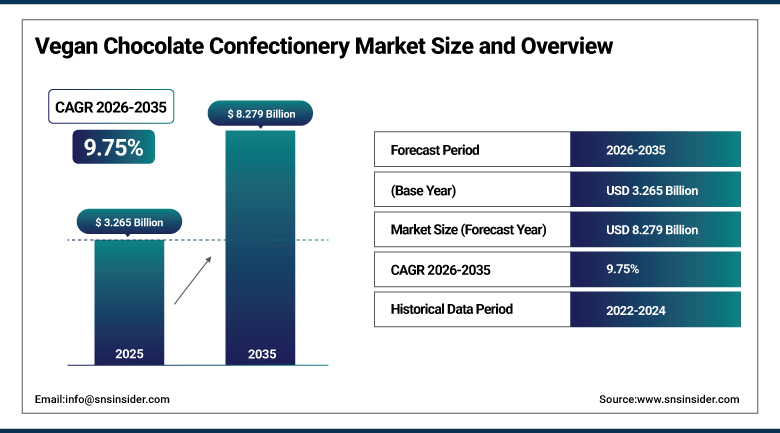
The Vegan Chocolate Confectionery Market was valued at USD 3.265 Billion in 2025 and is expected to reach USD 8.279 Billion by 2035, growing at a CAGR of 9.75% from 2026 to 2035.
The Vegan Chocolate Confectionery Market is witnessing rapid growth owing to the rising awareness among consumers regarding the welfare of animals, sustainability issues, and the fast adoption of plant-based diets. Vegan chocolate confectionery comprises a group of plant-based chocolate confectionery that does not contain any kind of animal ingredients such as dairy products, eggs, and honey but instead uses plant alternatives such as oat milk, almond milk, and coconut milk. In addition, the growth of the market can be attributed to innovations in dairy alternatives making vegan chocolates tastier and better in terms of their texture, thus attracting the masses rather than vegans only, growing vegan population around the globe, and increasing cases of lactose intolerance among people.
Awareness among people regarding the cruelty against animals and increasing environment protection initiatives are anticipated to be some of the key reasons behind the market growth, as vegan chocolate confectioneries are gaining preference among consumers following flexitarian or vegan diet or lactose intolerant people.
To Get more information Vegan Chocolate Confectionery Market - Request Free Sample Report
Vegan Chocolate Confectionery Market Trends
-
Rising manufacturer focus on premium ingredients such as oat milk, almond milk, coconut milk, and organic cocoa is enhancing taste and texture while meeting evolving dietary trends.
-
Growing vegan chocolate confectionery product availability across supermarkets, specialty stores, online retail platforms, and foodservice channels is expanding market accessibility beyond niche vegan retail.
-
Increasing continuous innovation in plant-based formulations, premium flavor combinations, and sustainable packaging solutions is broadening consumer appeal across mainstream confectionery categories.
-
Expanding advancements in dairy alternative formulation are improving taste and texture, making vegan chocolate products increasingly indistinguishable from conventional dairy-based alternatives.
-
Strategic partnerships among chocolate manufacturers, plant-based ingredient suppliers, and specialty retailers are supporting development of increasingly diverse, ethically sourced vegan chocolate portfolios.
U.S. Vegan Chocolate Confectionery Market Outlook
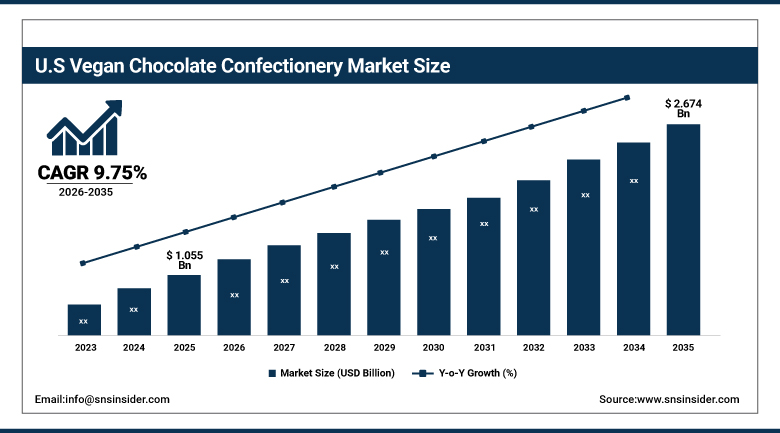
The U.S. Vegan Chocolate Confectionery Market was valued at USD 1.055 Billion in 2025 and is projected to reach USD 2.674 Billion by 2035, growing at a CAGR of 9.75% during 2026–2035.
Top producers of chocolate in the country are expanding their vegan product lines, owing to the growing demand for plant-based products, ethical consumption, and health-aware trends amongst consumers. The U.S. industry enjoys a substantial consumer base, wherein an increasing number of people following vegan, dairy-free, and lactose-intolerant diets will keep sustaining the demand for vegan chocolate confectionery in the retail and specialty food segments in the country.
The U.S. vegan chocolate market accounted for more than USD 161 million in 2024 and is projected to register a CAGR of 9.75% during the forecast period, backed by high demand for plant-based products, ethical consumption, and health trends amongst consumers.
Vegan Chocolate Confectionery Market Segment Analysis
-
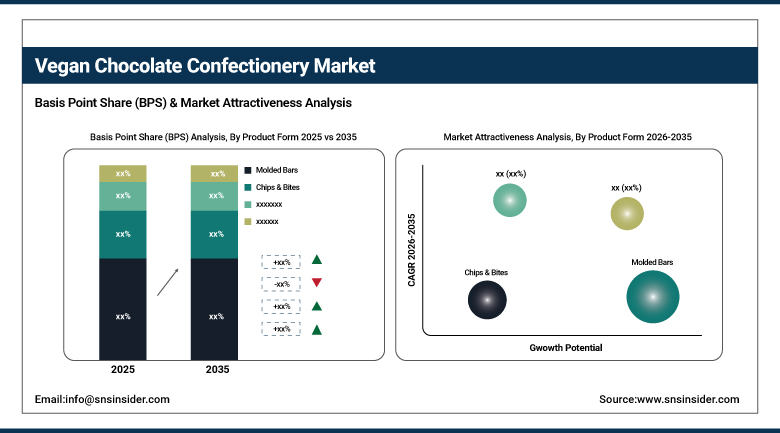
By Product Form, Molded Bars dominated the Vegan Chocolate Confectionery Market with a 42.30% share in 2025, while Chips & Bites is the fastest-growing product form segment with a CAGR of 16.20% from 2026–2035.
-
By Type, Milk Chocolate dominated the Vegan Chocolate Confectionery Market with a 48.60% share in 2025, while Dark Chocolate is the fastest-growing type segment with a CAGR of 17.60% from 2026–2035.
-
By Distribution Channel, Supermarkets/Hypermarkets dominated the Vegan Chocolate Confectionery Market with a 54.60% share in 2025, while Online Retail is the fastest-growing distribution channel segment with a CAGR of 18.60% from 2026–2035.
-
By Packaging, Boxed dominated the Vegan Chocolate Confectionery Market with a 46.80% share in 2025, while Individually Wrapped is the fastest-growing packaging segment with a CAGR of 15.80% from 2026–2035.
By Product Form, Molded Bars dominated the Vegan Chocolate Confectionery Market, while Chips & Bites is the fastest-growing segment.
In terms of product, the molded bars category held the largest revenue share of 42.3% in 2025. The most consumed chocolate form in the world is bar chocolates as molded bars continue to be the leading category in the product form category, primarily due to their popularity among consumers and the flexibility of use for snacking, gifting, and enjoyment purposes around the world.
The chips & bites category is projected to be the fastest-growing CAGR holder during 2026-2035 in the global market. Due to the easy to carry nature of these products along with their convenience to consume, they have gained huge popularity among vegan consumers who believe that these products not only make a perfect snack but are a must in various bakery products like cookies, brownies, cakes, and muffins.
By Type, Milk Chocolate dominated the Vegan Chocolate Confectionery Market, while Dark Chocolate is the fastest-growing segment.
Milk chocolate holds the largest market share within the vegan chocolate confectionery industry, because milk chocolate has a very pleasing taste that is popular among consumers around the world. Although milk chocolate is made of dairy products, increasing consumption trends of vegan products have forced the manufacturers to produce vegan milk chocolate confectionery which consists of plant-based milk products such as oat, almond, and coconut milk.
Dark chocolate is estimated to hold the highest CAGR over the projected timeframe. Dark chocolate already possesses a dairy-free nature along with being a health product which keeps contributing to its popularity among consumers through the natural compatibility of cocoa-based dark chocolate with vegan confectionery products.
By Distribution Channel, Supermarkets/Hypermarkets dominated the Vegan Chocolate Confectionery Market, while Online Retail is the fastest-growing segment.
Supermarket and Hypermarket were major contributors to market revenue in 2025, signifying their immense importance in the distribution of vegan chocolate confectionery. Supermarket and Hypermarket continue to dominate the distribution channel due to their extensive range of products and the convenience of buying everything in one trip that keeps them at the top of the retail channels list globally.
Online Retail is anticipated to see the highest CAGR of 18.60% in the forecast period 2026-2035. The vegan chocolate confectionery products are becoming popular through online retail due to the increased confidence of consumers in buying specialized plant-based products online.
By Packaging, Boxed dominated the Vegan Chocolate Confectionery Market, while Individually Wrapped is the fastest-growing segment.
The boxed segment dominates the global market. Boxed chocolates are highly popular for gifting purposes due to their attractive packaging and assortment of chocolates, remaining the preferred packaging format across premium and gifting-oriented vegan chocolate confectionery purchases worldwide.
The Individually Wrapped segment is expected to register the fastest CAGR of 15.80% during the forecast period 2026-2035. Growing consumer demand for portion-controlled, on-the-go vegan chocolate formats is driving rising segment growth, as individually wrapped products offer convenient, single-serving options suited to everyday snacking occasions.
Regional Analysis
|
Region |
Major Country |
Share within Region, 2025 (%) |
|---|---|---|
|
North America |
United States |
85.00% |
|
Europe |
Germany |
27.60% |
|
Asia Pacific |
South Korea |
38.60% |
|
Middle East & Africa |
UAE |
25.60% |
|
Latin America |
Brazil |
37.70% |
North America Vegan Chocolate Confectionery Market Insights
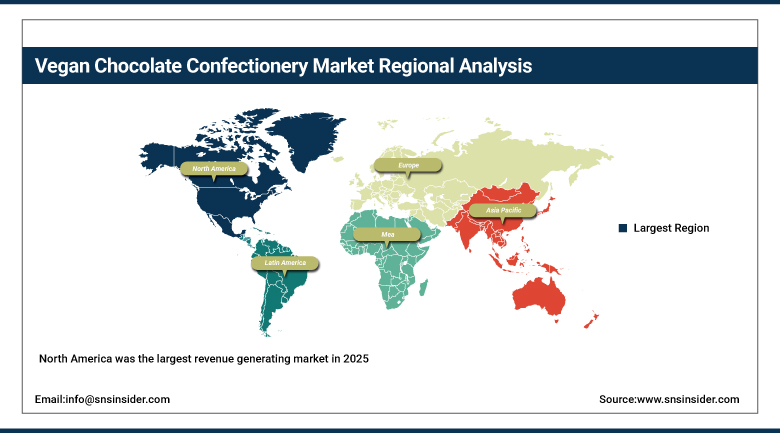
North America was the largest revenue generating market in 2025, driven by the increasing vegan population and the rising prevalence of lactose intolerance among individuals, creating notable growth avenues for manufacturers of vegan chocolate items across the region.
The US accounted for a dominant revenue share within North America in 2025, holding over USD 161 million in 2024 and projected to grow at an 9.75% CAGR. Canada is contributing to regional growth through its own expanding plant-based food retail sector and growing consumer interest in dairy-free chocolate products.
Get Customized Report as per Your Business Requirement - Enquiry Now
Europe Vegan Chocolate Confectionery Market Insights
The Europe Vegan Chocolate Confectionery Market has made substantial contributions during the year 2025. This is due to the presence of a long-standing plant-based foods culture, increasing consumer preference for clean-label and ethical chocolates and increasing retail penetration of vegan confectioneries in the region.
Germany is one of the major countries in Europe due to its strong base in plant-based foods manufacturing and growing consumer preference for dairy-free chocolate products. The United Kingdom, expected to have an 11.7% CAGR, and France are some of the other countries adding value to the growth of this market.
Asia Pacific Vegan Chocolate Confectionery Market Insights
Asia-Pacific is expected to hold a significant market share due to increasing disposable income and the presence of a large vegan population in countries like India and China, positioning the region for continued rapid growth during the forecast period.
South Korea is expected to be the fastest-growing market for vegan chocolate, with a projected CAGR of 12.5%. China and India are also contributing significantly to regional growth through expanding disposable incomes and large domestic vegan and flexitarian consumer populations.
Middle East & Africa and Latin America Vegan Chocolate Confectionery Market Insights
Middle East & Africa and Latin American regions are gradually expanding vegan chocolate confectionery adoption as plant-based food retail infrastructure develops and consumer awareness of ethical and health benefits grows across both regions.
Brazil is set to be a prominent Latin American market fueled by growing plant-based food manufacturing capacity and rising consumer demand for dairy-free chocolate alternatives. The Middle East & Africa region has UAE and Saudi Arabia investing in modern retail infrastructure that is gradually expanding access to premium vegan chocolate confectionery categories.
Market Dynamics
Growth Drivers: Rising plant-based diet adoption and animal welfare awareness driving market growth
Some of the key factors that are fueling growth in the Vegan Chocolate Confectionery Market include increasing consumer awareness about animal welfare, sustainability issues, and the fast adoption of a plant-based diet in developed and developing countries. Consumer awareness about animal abuse along with the increasing number of environmental protection campaigns is continuing to contribute to sustained demand in the market.
The innovation in dairy substitutes like oat milk, almond milk, and coconut milk has helped to improve their taste and texture, which has made vegan chocolates more desirable for the average consumer and not only vegans. Increasing number of vegans, prevalence of lactose intolerance, and usage of premium quality ingredients like organic cocoa are also contributing to growth in the market.
Restraints: Premium pricing and formulation challenges limiting market expansion
High costs involved in using the alternatives of the dairy plant as well as organic production of cocoa beans are the major barriers that hinder market penetration, since there is great consumer interest in chocolate that is vegan.
In addition, technical problems related to replicating the taste and texture of normal milk chocolate through the use of substitutes call for constant investments in research and development. Lack of consumer awareness regarding the vegan chocolates outside the core wellness markets is another barrier.
Opportunities: Expansion of dark chocolate positioning and mainstream retail penetration creating new growth avenues
The natural compatibility of dark chocolate with vegan products along with its healthy positioning provides a great market opportunity for manufacturers who can create differentiated dark chocolate products that can cater to health-conscious consumers.
There is significant growth potential in terms of further penetration of vegan chocolate confectionery products through various channels of distribution such as supermarkets, specialty shops, and online channels. Increased capacity in terms of plant-based food production as well as disposable incomes in emerging markets of Asia Pacific and Latin America will result in significant growth during the forecast period.
Recent Developments:
-
2025: Lindt & Sprüngli launched a new vegan chocolate product line under a dedicated plant-based sub-brand, expanding its portfolio to meet growing global demand for dairy-free premium chocolate options.
-
2025: Hu Chocolate expanded its organic vegan chocolate bar production capacity, strengthening its ability to supply growing consumer demand for clean-label, ethically sourced chocolate products.
-
2026: NOMO, part of No Moo Foods, launched an updated dairy-free chocolate product range for UK and European markets, offering consumers expanded flavor variety within its plant-based chocolate portfolio.
-
2026: Theo Chocolate expanded its fair-trade organic vegan chocolate manufacturing facility, strengthening its position supplying ethically sourced, certified organic chocolate to premium retail customers.
Vegan Chocolate Confectionery Market key players are:
-
Alter Eco Americas, Inc.
-
Enjoy Life Foods (Mondelez International)
-
Green & Black's (Mondelez International)
-
Lindt & Sprüngli AG
-
Pascha Chocolate Co.
-
Theo Chocolate, Inc.
-
Hu Chocolate (Hu Products Corp.)
-
Coco Polo
-
Mondelez International, Inc.
-
Mars, Incorporated
-
The Hershey Company
-
Barry Callebaut AG
-
Vego (Bombus Chocolate)
-
Moo Free Chocolates Ltd.
-
Plamil Foods Ltd.
-
No Whey Foods
-
Divine Chocolate Ltd.
-
Ombar Chocolate Ltd.
-
Endangered Species Chocolate, LLC
-
NOMO (No Moo Foods Ltd.)
Vegan Chocolate Confectionery Market Report Scope:
| Report Attributes | Details |
|---|---|
| Market Size in 2025 | USD 3.26 Billion |
| Market Size by 2035 | USD 8.27 Billion |
| CAGR | CAGR of 9.75% From 2026 to 2035 |
| Base Year | 2025 |
| Forecast Period | 2026-2035 |
| Historical Data | 2022-2024 |
| Report Scope & Coverage | Market Size, Segments Analysis, Competitive Landscape, Regional Analysis, DROC & SWOT Analysis, Forecast Outlook |
| Key Segments | • By Product Form (Molded Bars, Chips & Bites) • By Type (Milk Chocolate, Dark Chocolate) • By Distribution Channel (Supermarkets/Hypermarkets, Online Retail) • By Packaging (Boxed, Individually Wrapped) |
| Regional Analysis/Coverage | North America (US, Canada), Europe (Germany, UK, France, Italy, Spain, Russia, Poland, Rest of Europe), Asia Pacific (China, India, Japan, South Korea, Australia, ASEAN Countries, Rest of Asia Pacific), Middle East & Africa (UAE, Saudi Arabia, Qatar, South Africa, Rest of Middle East & Africa), Latin America (Brazil, Argentina, Mexico, Colombia, Rest of Latin America). |
| Company Profiles | Alter Eco Americas, Inc., Enjoy Life Foods (Mondelez International), Green & Black's (Mondelez International), Lindt & Sprüngli AG, Pascha Chocolate Co., Theo Chocolate, Inc., Hu Chocolate (Hu Products Corp.), Coco Polo, Mondelez International, Inc., Mars, Incorporated, The Hershey Company, Barry Callebaut AG, Vego (Bombus Chocolate), Moo Free Chocolates Ltd., Plamil Foods Ltd., No Whey Foods, Divine Chocolate Ltd., Ombar Chocolate Ltd., Endangered Species Chocolate, LLC, NOMO (No Moo Foods Ltd.) |
Frequently Asked Questions
Key players in the Vegan Chocolate Confectionery Market include Alter Eco Americas, Inc., Enjoy Life Foods (Mondelez International), Green & Black's (Mondelez International), Lindt & Sprüngli AG, Pascha Chocolate Co. among others.
Key opportunities include expanding plant-based product innovation, premium offerings, clean-label ingredients, and emerging markets.
The market is driven by increasing consumer awareness about animal welfare, sustainability concerns, and the rapid shift toward plant-based diets.
The Molded Bars segment dominated the Vegan Chocolate Confectionery Market, accounting for approximately 42.30% market share.
The North America region dominated the Vegan Chocolate Confectionery Market in 2025, driven by increasing vegan population and lactose intolerance prevalence.
