
Zoonotic Disease Treatment Market Report Scope & Overview:
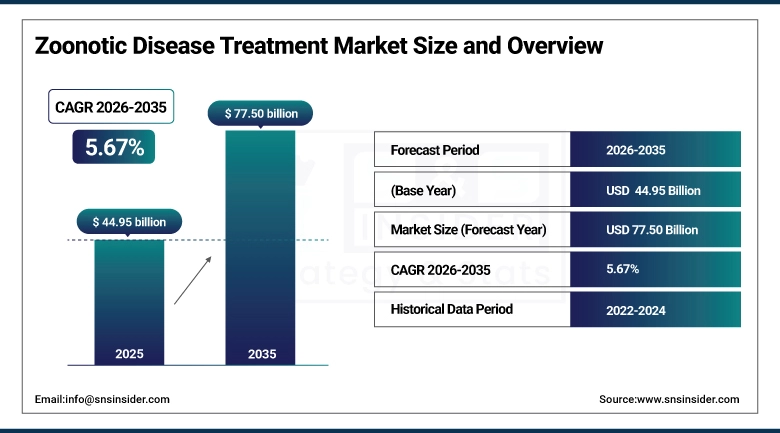
The Zoonotic Disease Treatment Market size is valued at USD 44.95 Billion in 2025 and is projected to reach USD 77.50 Billion by 2035, growing at a CAGR of 5.67% during the forecast period 2026–2035.
The Zoonotic Disease Treatment Market Analysis Report examines various aspects of market dynamics, drugs, and treatment. The growing occurrence of zoonotic diseases such as rabies, tuberculosis, malaria, leishmaniasis, and Ebola virus diseases, the growing contact between humans and animals, rising utilization of advanced anti-infective drugs, and expansion of healthcare facilities have driven market growth from 2026 to 2035.
Antibiotics and antibacterials represented over 65% of drug usage in 2025, reflecting the dominance of bacterial and viral zoonoses.
Market Size and Forecast:
-
Market Size in 2025: USD 44.95 Billion
-
Market Size by 2035: USD 77.50 Billion
-
CAGR: 5.67% from 2026 to 2035
-
Base Year: 2025
-
Forecast Period: 2026–2035
-
Historical Data: 2022–2024
To Get more information on Zoonotic Disease Treatment Market - Request Free Sample Report
Zoonotic Disease Treatment Market Trends:
-
Rising zoonotic outbreaks (rabies, tuberculosis, malaria, Ebola) are fueling demand for advanced treatments.
-
Vaccine adoption and mass immunization campaigns are expanding, especially for rabies and vector-borne diseases.
-
Innovation in anti-infective therapies (antibiotics, antivirals, antifungals, immunoglobulins) is reshaping treatment options.
-
Hospitals remain dominant end-users, but specialty clinics are gaining share with faster CAGR.
-
One Health initiatives integrating human, animal, and environmental health are strengthening surveillance and preparedness.
-
Pharma and biotech investments in biologics and monoclonal antibodies are accelerating pipeline development.
-
Market consolidation is underway, with large pharma companies acquiring smaller biotech firms to expand portfolios.
U.S. Zoonotic Disease Treatment Market Insights:
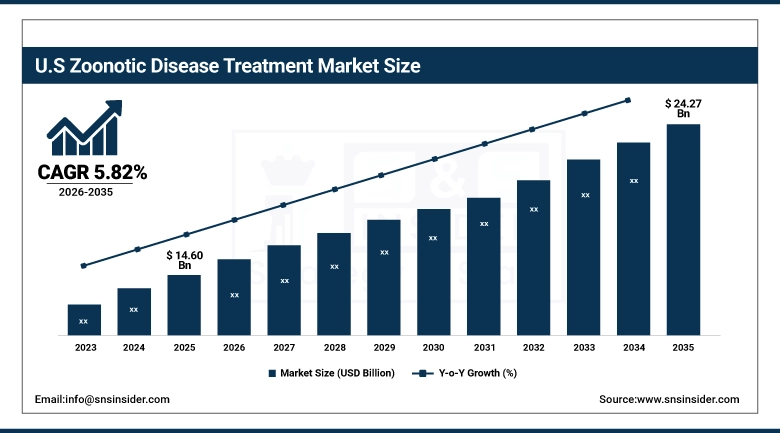
The U.S. Zoonotic Disease Treatment Market is projected to grow from USD 14.60 Billion in 2025 to USD 24.27 Billion by 2035, at a CAGR of 5.82%. The growth is propelled by the increasing occurrences of zoonotic infections like rabies, tuberculosis, malaria, leishmaniasis, and Ebola virus disease, increased preference for advanced anti-infection products like antibiotics, antiviral, antifungal drugs, and immunoglobulin, and growing infrastructure in health care facilities like hospitals, specialized clinics, and home-care centers.
Zoonotic Disease Treatment Market Growth Drivers:
-
Rising incidence of zoonotic infections and expanding vaccination programs driving demand for advanced treatment solutions.
The rising prevalence of zoonoses across the globe such as rabies, dengue fever, and others is one of the important factors fueling growth in the Zoonotic Diseases Treatment Market. The rise in use of innovative technologies for preventing and managing the spread of such zoonoses such as vaccinations, antiviral drugs, monoclonal antibodies, and combination products is expected to propel the demand in the market. The advent of innovative diagnostic tools and better delivery systems such as oral and intravenous forms is likely to boost the adoption rate in the market.
In 2025, over 60% of healthcare providers and public health organizations reported increased utilization of advanced zoonotic disease treatment and prevention solutions to manage infection risks and improve population health outcomes.
Zoonotic Disease Treatment Market Restraints:
-
Limited access to healthcare infrastructure and high treatment costs restraining market growth.
The lack of access to advanced healthcare systems along with the high costs associated with the treatment of zoonotic diseases is an important barrier in the Zoonotic Disease Treatment Market. There are many underdeveloped or developing areas that have a high prevalence of zoonotic diseases but cannot afford expensive diagnosis, vaccine, and treatment technologies. Hospitals, government health departments, and veterinary practitioners from such areas find it difficult to implement cutting-edge technology such as biologics, antiviral drugs, and immunotherapy techniques owing to their high costs.
About 40% of healthcare providers in developing regions reported challenges in accessing and implementing advanced zoonotic disease treatment solutions, highlighting a critical gap in global healthcare delivery.
Zoonotic Disease Treatment Market Opportunities:
-
Advancements in vaccine development and rapid-response therapeutics present significant market expansion opportunities.
Innovation is taking place in terms of development of vaccines and treatment systems that could help in the development of next generation vaccines and treatment platforms for zoonotic disease, which means that there are ample business opportunities available in the market for zoonotic disease treatment. Hospital organizations and research laboratories are now focusing on advanced solutions including mRNA vaccines, vector-based vaccines, monoclonal antibodies, and broad spectrum antiviral drugs to deal with zoonotic diseases.
In 2025, over 50% of healthcare providers and public health organizations reported increased adoption of advanced zoonotic disease treatment and prevention solutions, driven by the need for rapid containment and improved global health security.
Zoonotic Disease Treatment Market Segmentation Analysis:
-
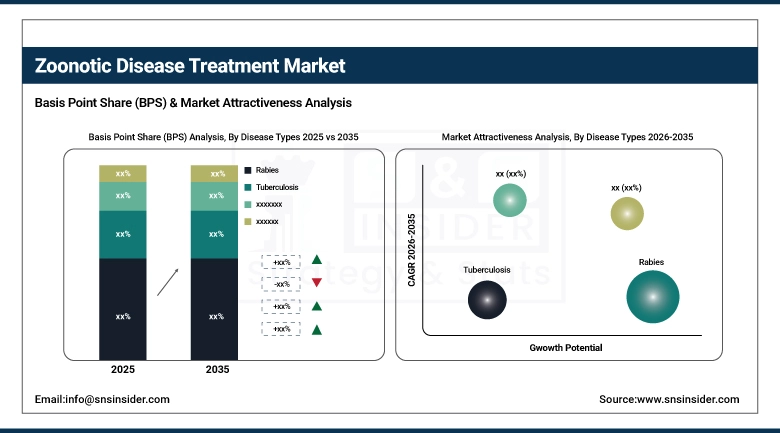
By Disease Type, Rabies held the largest market share of 31.42% in 2025, while Leishmaniasis are expected to grow at the fastest CAGR of 8.73% during 2026–2035.
-
By Causative Agent, Bacteria dominated with 41.25% market share in 2025, whereas Nematode are projected to record the fastest CAGR of 7.96% through 2026–2035.
-
By Drug Class, Antibiotics accounted for the highest market share of 36.58% in 2025, while Anti-fungal are expected to grow at the fastest CAGR of 6.83% during the forecast period.
-
By Route of Administration, Oral dominated with a 46.68% share in 2025, while Topical are anticipated to expand at the fastest CAGR of 8.45% through 2026–2035.
-
By End-Users, Hospitals held the largest share of 56.86% in 2025, while Specialty Clinics are expected to grow at the fastest CAGR of 6.55% during the forecast period.
By Disease Type, Rabies Dominates While Leishmaniasis Emerges as the Fastest-Growing Segment:
The Rabies market segment dominate the Zoonotic Disease Treatment Market because of its high mortality rate, prevalent incidence across developing countries, and significant government interest in vaccination and post-exposure prophylaxis. The use of vaccines and immunoglobulins for treating rabies is widespread among hospitals, public health departments, and animal healthcare centers, leading to a steady demand.
Leishmaniasis accounts for the fastest growth rate due to the growing incidence of the disease in the tropical and subtropical zones, increased awareness, and advancements in diagnosis technology. There is also increased investment in new drug treatments, combination drugs, and therapeutic advances that help speed up treatment uptake.
By Causative Agent, Bacterial Infections Dominate While Nematode Infections Grow Rapidly:
The Bacteria category makes up the dominant portion of the Zoonotic Disease Treatment Market owing to the frequent occurrence of zoonotic infections caused by bacteria and the presence of various solutions that are effective against these diseases. There is significant dependence on the available antibacterial solutions to treat zoonotic diseases such as tuberculosis and leptospirosis.
Nematode infections represent the fastest-growing segment, driven by increasing incidence of parasitic diseases, particularly in tropical and low-resource regions. Rising awareness, improved diagnostic capabilities, and expanding access to antiparasitic treatments are accelerating adoption.
By Drug Class, Antibiotics Lead While Antifungals Witness Rapid Growth:
The Antibiotics segment is the most dominant one because of the vast applications of antibiotics for the treatment of numerous zoonotic bacterial diseases. Antibiotics are widely preferred among health professionals because of their effectiveness, availability, and well-defined administration procedures, which make them an integral part of zoonotic disease treatments.
The Antifungals segment is experiencing fastest growth because of the growing prevalence of zoonotic fungal infections and increased understanding of some diseases that have been ignored before. The developments in the field of antifungal drug manufacturing and diagnostic processes facilitate the prompt and effective treatment of these diseases.
By Route of Administration, Oral Segment Dominates While Topical Gains Momentum:
Oral drug administration has captured dominant market share owing to factors such as convenience, economical, and higher compliance rate amongst others. The oral route of administration is the most common among all methods used in the management of several types of zoonotic infections.
Topical drug administration has emerged as the fastest growing category, fueled by its ability to treat localized infections while minimizing systemic adverse effects. Rising preference for more specific therapies coupled with product innovation has been a key driver of growth in this category.
By End-Users, Hospitals Dominate While Specialty Clinics Expand Rapidly:
Hospital institutions have become the dominant players in the market because of their well-equipped infrastructure, availability of professional medical staff, and ability to treat serious cases of zoonotic diseases. They have emerged as major diagnostic centers for these conditions, which has generated substantial demand for vaccines and drugs.
The specialty clinics market segment is expected to grow at the fastest CAGR because of rising consumer preference for specialized medical care. The growth in accessibility to specialized care, reduced waiting periods, and an increasing number of specialized clinics for infectious diseases and travel medicine are factors driving their growth.
Zoonotic Disease Treatment Market Regional Analysis:
North America Zoonotic Disease Treatment Market Insights:
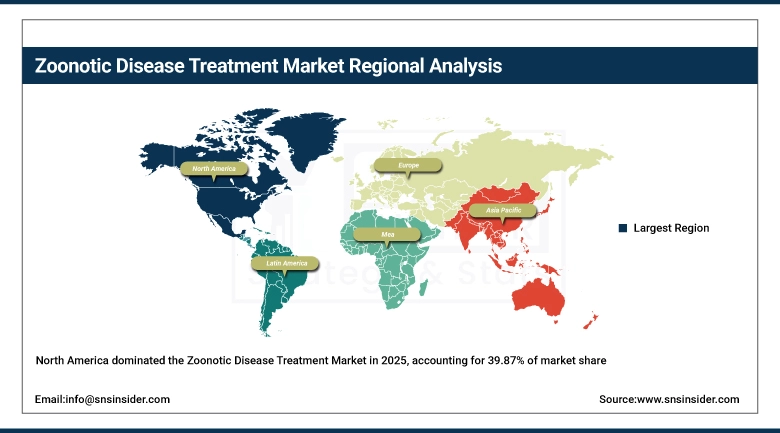
North America holds the dominant position in the worldwide market for zoonotic diseases, accounting for almost 39.87% market share by 2025. The market growth is fueled by increasing zoonotic cases, advanced health care facilities, and higher uptake of antibiotic, antiviral, and immunoglobulin drugs at hospitals and specialty medical centers. The USA takes the forefront with high levels of R&D and vaccines development, whereas Canada supports the growth by its active public health monitoring programs.
Get Customized Report as per Your Business Requirement - Enquiry Now
U.S. Zoonotic Disease Treatment Market Insights:
The US continues to be the biggest player in North America, contributing to major income generation in the region. The market’s growth is being driven by the presence of zoonotic infections, efficient diagnostic methods, and extensive use of anti-infective products. Lyme disease, rabies, and tuberculosis have been identified as the primary targets, and this has been made possible through the country’s One Health approach, which is backed by the government.
Asia-Pacific Zoonotic Disease Treatment Market Insights:
Asia-Pacific represents the region with the fastest growth rate, anticipated to grow at a compound annual growth rate (CAGR) of 7.05% until 2035. An increase in zoonotic diseases such as malaria, leishmaniasis, and rabies, alongside growing urbanization and animal farming, will lead to the development of vaccines. India and China play a crucial role, given their established vaccine manufacturing capabilities and advancements in biotechnology. Improved healthcare infrastructures, increased investments in surveillance and education efforts, as well as an accelerated use of treatments, propel the region's growth.
China Zoonotic Disease Treatment Market Insights:
The country of China is among the leading contributors to the growth trend within the region of Asia-Pacific, owing to the growing number of zoonotic diseases and increased vaccination campaigns. Strategic investments by the government into healthcare facilities and technological advancements are among the key factors contributing to the growth of the market. Among the existing diseases, rabies and tuberculosis are notable challenges, while new diseases such as avian influenza and Nipah virus pose serious concerns, increasing the demand for effective treatments.
Europe Zoonotic Disease Treatment Market Insights:
Europe commands a sizeable portion of the world market due to its government-sponsored zoonotic surveillance program and robust pharmaceutical industry. The key factors propelling market growth include the increase in the incidence of Lyme disease, rabies prevention campaigns, and antimicrobial resistance control strategies. The most prominent players in adopting innovative anti-infection solutions are Germany, France, and the United Kingdom. Hospitals are still the major end users, with specialty clinics experiencing steady growth.
Germany Zoonotic Disease Treatment Market Insights:
Germany is a major player in Europe owing to good healthcare infrastructure, diagnostic services, and government-funded zoonotic diseases control program. The main diseases of interest include Lyme disease and tuberculosis, as there is increasing demand for antibiotics and immunoglobulin. Treatment occurs mostly in hospitals, while specialized clinics are growing with new therapies. Leading pharmaceutical companies such as Bayer and Boehringer Ingelheim contribute significantly to Germany’s prominence; EU antimicrobial resistance initiative also helps.
Latin America Zoonotic Disease Treatment Market Insights:
The Latin American market for anti-infective agents is growing constantly due to the prevalence of rabies infections and vector-borne diseases like leishmaniasis and malaria. Among the countries leading the adoption process in the region are Brazil and Mexico, which are boosted by vaccination programs and better healthcare infrastructures. Hospital settings continue to be the major users of the product; however, specialist clinics are slowly making their way in.
Middle East & Africa Zoonotic Disease Treatment Market Insights:
The Middle East & Africa has a relatively high burden of zoonosis cases such as the Ebola virus, Rift Valley fever, and rabies. The region’s growth is fueled by the development of healthcare facilities, vaccination programs, and international assistance efforts. Hospitals play an important role in the provision of services, but there are limitations due to poor infrastructure in rural regions.
Zoonotic Disease Treatment Market Competitive Landscape:
Pfizer Inc.
Pfizer Inc. is one of the leading U.S. companies in the biopharmaceutical industry, which plays an important part in the market for Zoonotic Diseases Treatment. It focuses on efficacy and safety supported by a large body of clinical data. Investments in production facilities of biologicals, research and development of new anti-infectives, and other initiatives aimed at improving pandemic readiness provide a solid foundation for future growth and competitive advantage in key markets.
-
In September 2025, Pfizer advanced its vaccine pipeline targeting zoonotic viruses and expanded collaborations for rapid diagnostic tools, reinforcing its role in outbreak preparedness.
Merck & Co., Inc.
Merck & Co. is an American corporation that specializes in the development of medicines in both the human health and animal health sectors. It has a good reputation when it comes to zoonotic diseases such as rabies and Ebola as it manufactures different drugs such as vaccines and antivirals. This is because Merck & Co. has developed a strong strategy to ensure that its expertise in human health care complements that of animal health care.
-
In November 2025, Merck received expanded FDA approval for ERVEBO, its Ebola vaccine, extending use to individuals as young as 12 months. The company also reported strong animal health sales growth, reinforcing its leadership in zoonotic prevention and treatment.
Roche AG
Roche, a Swiss-based company, is a major player in the pharmaceutical and diagnostics industry and has been increasing its involvement in the field of zoonosis management. Some of the key capabilities of Roche include state-of-the-art molecular diagnostics, antiviral drugs, and biologics that enable faster diagnosis and improved therapeutic outcomes. Roche’s emphasis on precision medicine and artificial intelligence-based diagnostics makes it better equipped to tackle zoonotic infections.
-
In April 2025, Roche advanced innovations in molecular diagnostics and AI-driven outbreak forecasting tools, supporting faster detection of zoonotic pathogens. The company also expanded R&D in antiviral drugs targeting zoonotic coronaviruses, reinforcing its pandemic preparedness strategy.
Zoonotic Disease Treatment Market Key Players:
Some of the Zoonotic Disease Treatment Market Companies are:
-
Pfizer
-
Merck & Co.
-
Roche
-
GlaxoSmithKline (GSK)
-
Johnson & Johnson
-
Novartis
-
Sanofi
-
AstraZeneca
-
Bayer
-
Eli Lilly
-
Bristol-Myers Squibb
-
AbbVie
-
Amgen
-
Zoetis
-
Boehringer Ingelheim
-
CSL Behring
-
BioCryst Pharmaceuticals
-
Sun Pharma
-
Cadila Healthcare
-
Serum Institute of India
| Report Attributes | Details |
|---|---|
| Market Size in 2025 | USD 44.95 Billion |
| Market Size by 2035 | USD 77.50 Billion |
| CAGR | CAGR of 5.67% From 2026 to 2035 |
| Base Year | 2025 |
| Forecast Period | 2026-2035 |
| Historical Data | 2022-2024 |
| Report Scope & Coverage | Market Size, Segments Analysis, Competitive Landscape, Regional Analysis, DROC & SWOT Analysis, Forecast Outlook |
| Key Segments | • By Disease Type (Rabies, Tuberculosis, Malaria, Leishmaniasis, Ebola Virus Disease, Others), • By Causative Agent (Bacteria, Virus, Nematode, Rodents, Ticks, Others), • By Drug Class (Antibiotics, Anti-bacterial, Anti-fungal, Others), • By Route of Administration (Oral, Topical, Others), • By End-Users (Hospitals, Specialty Clinics, Homecare, Others) |
| Regional Analysis/Coverage | North America (US, Canada), Europe (Germany, UK, France, Italy, Spain, Russia, Poland, Rest of Europe), Asia Pacific (China, India, Japan, South Korea, Australia, ASEAN Countries, Rest of Asia Pacific), Middle East & Africa (UAE, Saudi Arabia, Qatar, South Africa, Rest of Middle East & Africa), Latin America (Brazil, Argentina, Mexico, Colombia, Rest of Latin America). |
| Company Profiles | Pfizer, Merck & Co., Roche, GlaxoSmithKline (GSK), Johnson & Johnson, Novartis, Sanofi, AstraZeneca, Bayer, Eli Lilly, Bristol-Myers Squibb, AbbVie, Amgen, Zoetis, Boehringer Ingelheim, CSL Behring, BioCryst Pharmaceuticals, Sun Pharma, Cadila Healthcare, and Serum Institute of India. |
Frequently Asked Questions
North America dominated with a 39.87% share in 2025, while Asia-Pacific is the fastest-growing region, expected to expand at a CAGR of 7.05% during 2026–2035.
Rabies dominated with a 31.42% share in 2025, while Leishmaniasis are projected to grow at the fastest CAGR of 8.73% during 2026–2035.
Growth is driven by Rising zoonotic outbreaks such as rabies, tuberculosis, Increasing human–animal interactions, Advancements in diagnostics and therapeutics.
The market is valued at USD 44.95 Billion in 2025 and is projected to reach USD 77.50 Billion by 2035.
The Zoonotic Disease Treatment Market is projected to grow at a CAGR of 5.67% during 2026–2035.
