
The global ambulatory surgical centers market is entering a period of sustained expansion as healthcare systems increasingly transfer eligible surgical procedures from traditional hospitals to specialized outpatient facilities. Rising healthcare expenditures, technological advancements in minimally invasive surgery, and growing patient demand for convenient treatment are accelerating this transition.
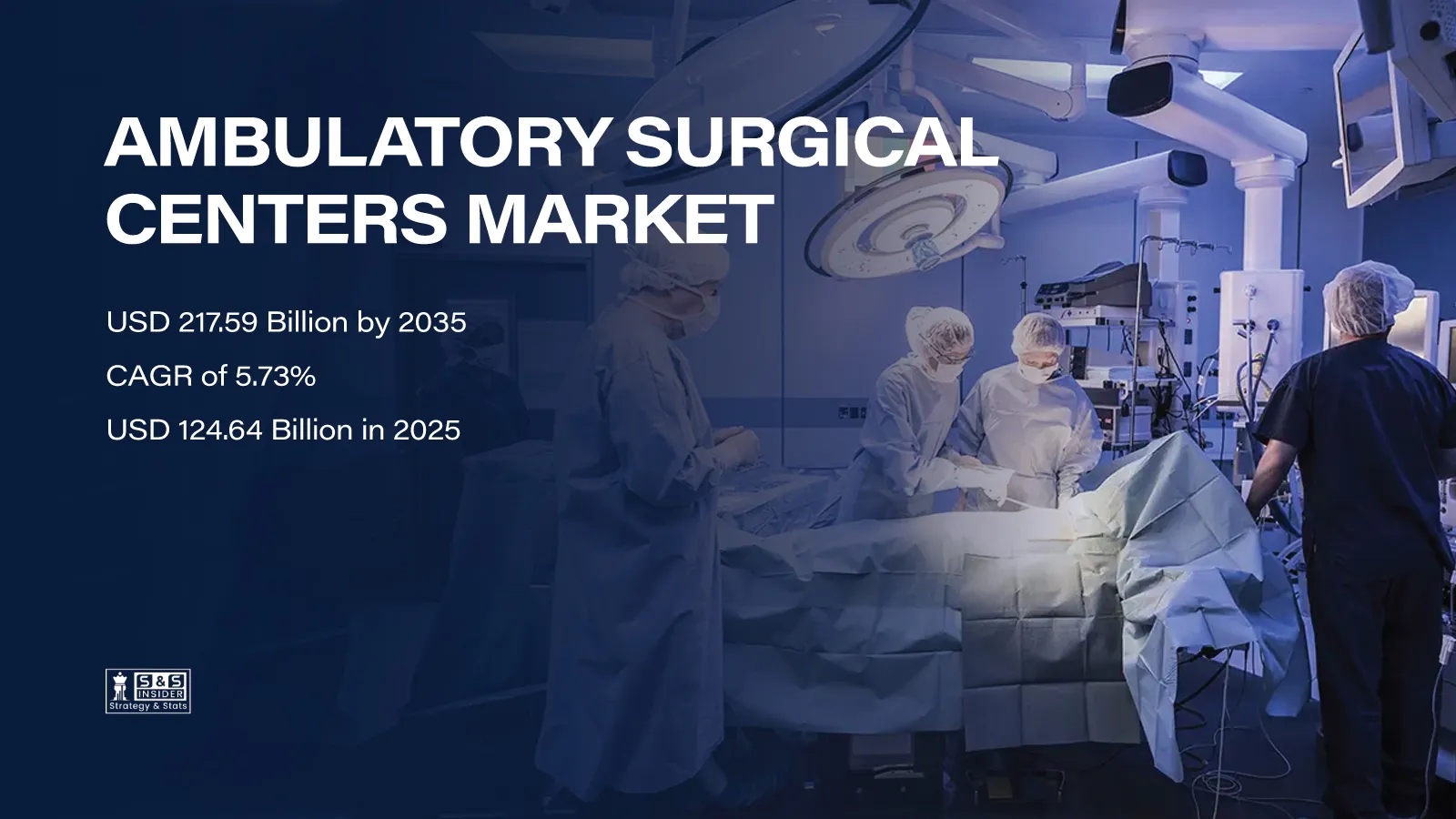
According to SNS Insider, the global ambulatory surgical centers market was valued at USD 124.64 billion in 2025, is estimated to reach USD 131.78 billion in 2026, and is projected to expand to USD 217.59 billion by 2035, registering a CAGR of 5.73% during 2026–2035.
The ambulatory surgical center (ASC) offers its services for same-day surgeries. With their special approach to the operating system, health care providers can maximize efficiency in conducting procedures, schedule procedures more effectively, and reduce associated costs of the medical institution.
The market undergoes structural changes due to the rise of competition between physicians' facilities and corporate or hospital-based surgical groups.
In addition, progress in anesthesia and imaging techniques used in surgery increases the list of the types of procedures, which are able to be performed within ASCs.
The North American region retains its position of being the largest market, while the Asia-Pacific region promises higher prospects due to the development of private health care facilities.
In the future till 2035, the competitiveness of the market will depend on the reimbursement policy, operational efficiency, cooperation with physicians, and access to special surgery services.
Demand Drivers and Constraints
Primary Demand Drivers
-
Growing preference for outpatient surgery: Patients increasingly favor same-day procedures that minimize hospitalization and support faster recovery.
-
Healthcare cost containment: Insurers and healthcare providers are encouraging suitable procedures in lower-cost surgical environments.
-
Advancements in surgical technology: Minimally invasive instruments, improved anesthesia, and enhanced recovery protocols support outpatient treatment.
-
Expanding reimbursement coverage: Broader insurance coverage for eligible outpatient procedures strengthens surgical center utilization.
-
Aging population: Increasing demand for orthopedic, ophthalmic, and cardiovascular procedures supports sustained surgical volumes.
-
Operational digitization: AI-enabled scheduling and digital workflow systems improve operating room utilization and administrative efficiency.
Potential Growth Constraints
-
Shortages of qualified surgical nurses, anesthesiologists, and perioperative personnel.
-
Significant initial investment requirements for surgical infrastructure and specialized equipment.
-
Reimbursement differences between ambulatory centers and hospital outpatient departments.
-
Regulatory licensing requirements and increasing scrutiny of healthcare consolidation.
-
Limited capacity to manage complex emergencies requiring intensive hospital-based treatment.
Demand Structure by Specialty
Orthopedics (2025 Market Share: 28.09%)
Orthopedics was the leading segment in the ambulatory surgical centers market in 2025, holding around 28.09% of the market share. The growth in the segment is attributed to the increase in outpatient joint replacement surgeries, arthroscopy procedures, sports injuries, and some types of spine surgery. The improvement in surgical implants, anesthesia, and rehabilitation processes enables eligible patients to recover without staying for long in hospitals. Also, health insurers prefer the reduced costs associated with outpatient orthopedic surgeries.
Current trend: Strong outpatient migration of orthopedic procedures.
Major trends: Same-day joint replacement, minimally invasive spinal surgery, advanced implants, and enhanced recovery protocols.
Cardiovascular (Forecast CAGR: 9.79%)
Cardiovascular procedures are growing at the highest pace within the market, with an anticipated CAGR of 9.79% from 2026 through 2035. This is supported by more extensive insurance coverage for eligible interventions performed via catheters, vascular procedures, and some cardiac procedures. Imaging and other advances have improved the possibilities for such procedures in the outpatient setting. However, when the ASCs start to venture into more high-acuity cardiovascular procedures, selecting the right patients and transfer options will be crucial.
Current trend: Increasing adoption of selected outpatient cardiovascular interventions.
Major trends: Catheter-based procedures, advanced imaging, vascular surgery expansion, and specialized cardiac facilities.
Demand Structure by Ownership
Physician-Owned Centers (2025 Market Share: 60.08%)
The share of facilities owned by physicians in 2025 stood at 60.08%, which underlined the importance of doctor-led outpatient surgery centers. The benefits of owning centers are greater involvement in the process of scheduling, selection of equipment and setting up of processes of workflow in the center. Good referral networks and emphasis on specialty procedures provide consistent utilization. Despite the increasing presence of corporate participants, physician-owned centers will remain important because of the alignment of their functions.
Current trend: Continued dominance of physician-led surgical facilities.
Major trends: Physician partnerships, specialized surgical services, streamlined operations, and localized referral networks.
Corporate-Owned Centers (Forecast CAGR: 10.35%)
Ownership segment with the highest CAGR is expected to be corporate-owned ambulatory surgical centers, with the projected value at 10.35% until 2035. Big companies in the healthcare sector are growing with help of mergers and acquisitions and investing in surgical center infrastructure. Corporate ownership provides advantages like standardized management systems, procurement, and relationships with payers. Independence may become less appealing for ASCs facing growing financial challenges.
Current trend: Accelerating consolidation and corporate investment.
Major trends: Strategic acquisitions, healthcare partnerships, centralized management, and network expansion.
Demand Structure by Center Type
Single-Specialty Centers (2025 Market Share: 61.09%)
The single-specialty centers occupied a major portion of the market by grabbing 61.09% of the market share. These centers focus on specific specialties such as orthopedics, ophthalmology, and gastroenterology. This allows for better utilization of equipment, staff, and procedures. It helps maintain a steady flow of surgeries and ensures efficient operating room turnovers. The single-specialty centers have relatively simpler structures compared to other centers.
Current trend: Strong demand for specialty-focused outpatient surgery.
Major trends: Dedicated operating rooms, standardized workflows, targeted equipment investment, and physician specialization.
Multi-Specialty Centers (Forecast CAGR: 7.37%)
Multi-specialty centers are forecast to grow at a CAGR of 7.37% during 2026–2035. These facilities accommodate several surgical disciplines within shared infrastructure, allowing operators to diversify procedural revenue and improve resource utilization. Hospital systems and corporate networks increasingly favor flexible center models that can respond to changing reimbursement policies and local treatment demand. Shared recovery facilities and administrative resources also support operational scalability.
Current trend: Growing adoption of integrated outpatient surgical facilities.
Major trends: Shared surgical infrastructure, diversified specialties, hospital partnerships, and flexible capacity management.
Demand Structure by Service
Treatment Services (2025 Market Share: 75.93%)
Treatment services represented 75.93% of market revenue in 2025, reflecting the central role of surgical procedures in ambulatory center operations. Orthopedic surgery, ophthalmic treatment, gastrointestinal interventions, and pain management contribute substantially to procedural demand. Expanding insurance coverage and improvements in minimally invasive techniques encourage further migration from hospital settings. Treatment services are expected to retain market leadership as outpatient surgical eligibility expands.
Current trend: Increasing volumes of same-day surgical treatments.
Major trends: Minimally invasive surgery, expanded insurance coverage, shorter recovery periods, and higher procedural efficiency.
Diagnosis Services (Forecast CAGR: 8.94%)
Diagnosis services are expected to expand at a CAGR of 8.94% through 2035. Growth is supported by increasing demand for endoscopy, screening procedures, imaging, and diagnostic evaluations performed in outpatient environments. Improved diagnostic equipment and coordinated referral networks allow eligible facilities to integrate assessment with treatment planning. Preventive healthcare initiatives and early disease identification are creating additional opportunities for centers offering diagnostic capabilities.
Current trend: Expansion of outpatient diagnostic services.
Major trends: Endoscopic screening, compact imaging technologies, preventive diagnostics, and integrated care pathways.
Regional Market Dynamics
North America (2025 Market Share: 41.18%)
North America dominated the global market with a 41.18% share in 2025, supported by established surgical infrastructure, widespread insurance coverage, and physician-led outpatient networks. The United States accounted for the majority of regional demand, with market revenue reaching USD 43.87 billion in 2025. Canada contributes through initiatives addressing surgical waiting times and outpatient service accessibility. Continued reimbursement expansion and operator investment support regional market leadership.
Direction: Sustained leadership through outpatient procedure migration and healthcare efficiency initiatives.
Europe (Second-Largest Regional Market)
Europe represents the second-largest market, supported by established day surgery practices and healthcare systems seeking to improve elective surgical capacity. Germany leads regional demand, while the United Kingdom, France, and Nordic countries maintain developed outpatient treatment networks. Public healthcare initiatives targeting shorter waiting lists, combined with investment in specialized surgical facilities, are encouraging broader adoption. Regulatory oversight and patient safety standards remain important considerations for operators.
Direction: Steady expansion through elective surgery modernization and outpatient capacity development.
Asia-Pacific (Forecast CAGR: 8.65%)
Asia-Pacific is the fastest-growing regional market, with a projected CAGR of 8.65% through 2035. Japan represents the largest regional country market, supported by established outpatient services and aging-related surgical demand. China, India, South Korea, and Australia are expanding private surgical infrastructure and minimally invasive treatment capabilities. Rising healthcare expenditure, medical tourism, and growing demand for accessible elective procedures create substantial development opportunities.
Direction: Fastest regional growth through healthcare infrastructure investment and increasing day surgery adoption.
Middle East & Africa
The Middle East and Africa market is expanding as healthcare providers invest in private surgical facilities and specialized outpatient services. Saudi Arabia leads regional demand, supported by healthcare transformation initiatives and private-sector participation. The United Arab Emirates and Qatar are developing modern surgical facilities serving domestic and international patients. South Africa contributes through its established private healthcare system, although workforce shortages and uneven insurance coverage constrain expansion elsewhere.
Direction: Emerging growth supported by healthcare modernization and private investment.
Latin America
Latin America's ambulatory surgical centers market is developing through expanding private healthcare networks and increasing demand for affordable elective procedures. Brazil leads the region, supported by its substantial private healthcare sector and specialized surgical services. Mexico benefits from medical tourism and cross-border demand, while Argentina, Colombia, and Chile contribute through private clinic development. Equipment costs and uneven reimbursement coverage remain important barriers.
Direction: Gradual expansion through private healthcare investment and medical tourism.
Competitive Landscape
The ambulatory surgical centers market remains fragmented, combining independent physician-owned facilities with national operators, healthcare systems, and corporate investment groups.
Representative participants include USPI, AmSurg, SCA Health, Surgery Partners, HCA Healthcare, NueHealth, Regent Surgical Health, Compass Surgical Partners, Constitution Surgery Alliance, Summit Spine & Joint Centers, and Solara Surgical Partners.
Competitive strategies increasingly emphasize acquisitions, physician partnerships, specialty expansion, operating room productivity, and favorable payer agreements.
Operators capable of combining high clinical standards with efficient facility management are positioned to benefit from increasing outpatient procedure volumes.
Market Outlook (2026–2035)
The global ambulatory surgical centers market is forecast to reach USD 217.59 billion by 2035, supported by expanding outpatient procedure eligibility, aging populations, and increasing pressure to reduce healthcare delivery costs.
Orthopedics will remain a major revenue contributor, while cardiovascular procedures present particularly strong specialty growth opportunities. Corporate ownership and multi-specialty facilities are expected to gain momentum as operators seek scale and operational flexibility.
Technological advancements in surgical equipment, anesthesia, and digital workflow management will support greater procedural efficiency. However, workforce shortages, capital requirements, and reimbursement uncertainty may influence investment decisions.
North America is expected to retain its leading market position, while Asia-Pacific will generate faster growth through private healthcare expansion.
Overall, market development through 2035 will be shaped by the ability of surgical center operators to deliver safe, accessible, and cost-efficient outpatient services while adapting to changing clinical and reimbursement requirements.



