According to the latest SNS Insider’s report, the anime merchandising market size is recording strong growth, as Japanese animation is turning into one of the leading consumer product industries globally. More fans of the art are appearing worldwide along with a growing number of collector communities and partnerships on merchandise production. All that results in the increased demand for toys, figurines, apparel and other officially licensed merchandise related to popular animation franchises.
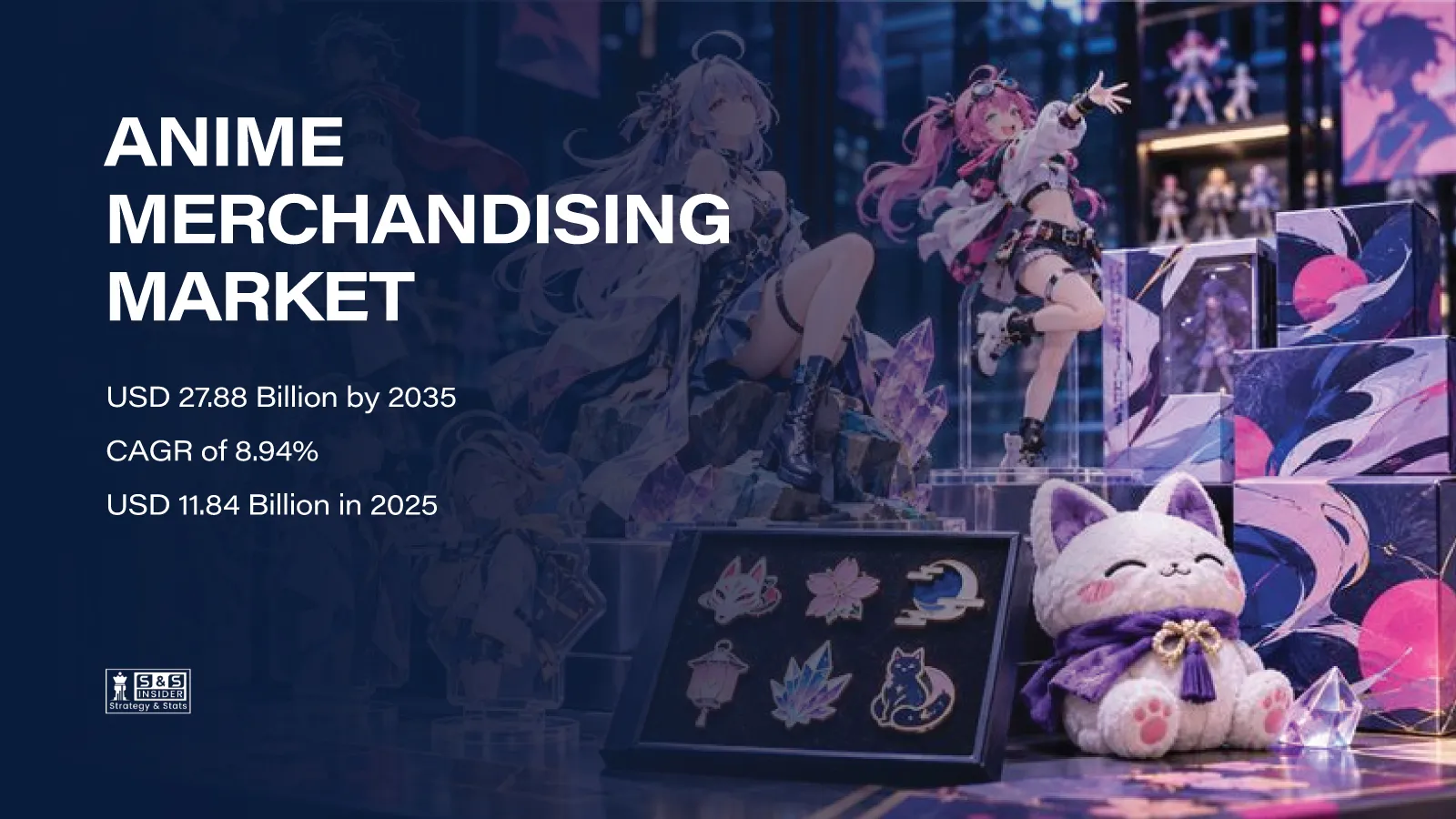
The global anime merchandising market was valued at USD 11.84 Billion in 2025, is estimated to reach USD 12.90 Billion in 2026 and is projected to achieve USD 27.88 Billion by 2035, expanding at a CAGR of 8.94% from 2026 to 2035.
Consumer purchasing behavior is evolving beyond traditional character toys toward premium display collectibles, limited-edition merchandise and fashion-oriented products. Established franchises benefit from recurrent demand, while newly launched anime creates opportunities to produce merchandise quickly. While e-commerce is still contributing to international merchandizing, conventions and pop-up stores have become the key players in the anime industry.
The Asia-Pacific region dominates in terms of the market size due to the well-established anime licensing infrastructure of Japan. The fastest-growing region of the global anime merchandising market is predicted to be North America as the audience of the region translates its love for anime to the consumption of the merchandise.
Market Size and Forecast
|
Market Indicator |
Value |
|---|---|
|
Market Size, 2025 |
USD 11.84 Billion |
|
Market Size, 2026 |
USD 12.90 Billion |
|
Market Forecast, 2035 |
USD 27.88 Billion |
|
CAGR, 2026–2035 |
8.94% |
|
Largest Regional Market |
Asia Pacific (49.86%) |
|
Fastest-Growing Region |
North America (10.14% CAGR) |
|
Leading Product Segment |
Figurines and Collectibles (37.60%) |
|
Leading Distribution Channel |
Online Retail (49.64%) |
Demand Drivers and Constraints
Primary Demand Drivers
-
Global anime streaming expansion: Increasing international availability of Japanese animation broadens franchise recognition and encourages purchases of licensed character merchandise.
-
Growing collector culture: Adult enthusiasts are purchasing premium statues, detailed action figures and limited-edition products, supporting higher spending per customer.
-
Expanding e-commerce accessibility: Online marketplaces and direct-to-consumer platforms enable international fans to purchase merchandise that may be unavailable locally.
-
Anime fashion collaborations: Partnerships involving apparel, footwear and lifestyle brands are bringing anime-inspired products into mainstream consumer markets.
-
Experiential retail development: Conventions, character stores and pop-up events attract dedicated fans through exclusive products and immersive shopping experiences.
-
Franchise licensing expansion: Entertainment studios and merchandise manufacturers are extending character intellectual property into additional product categories.
Potential Growth Constraints
-
Counterfeit and unauthorized products reduce legitimate merchandise revenue.
-
High import duties, shipping charges and premium collectible prices restrict affordability.
-
Dependence on successful franchises creates demand fluctuations.
-
Manufacturing delays and logistics disruptions affect product availability.
-
Complex licensing agreements and production requirements increase operating costs.
Demand Structure by Product Type
Figurines and Collectibles (2025 Market Share: 37.60%)
Figurines & Collectibles held the largest share of the market, accounting for 37.60% of the market in 2025. The demand will be driven by the presence of passionate collectors who require scale figures, action figures, character statues, and limited-production figures from popular anime franchises. Collectible products have potential buyers across two categories - children as well as adults with disposable incomes. Product manufacturers are continuously improving design, accessories, and packaging options in order to differentiate themselves from competitors. Moreover, pre-ordering helps product providers evaluate demand before manufacturing the goods.
Current trend: Strong purchasing activity for licensed character figures and limited-edition collectibles.
Major trends: Premium sculpting, exclusive editions, character model kits, collectible series and pre-order launches.
Apparel and Accessories (Forecast CAGR: 10.26%)
Apparel and accessories are anticipated to be the fastest-growing category in terms of the type of products, exhibiting a CAGR of 10.26% during 2026-2035. Street wear, graphic clothing, footwear, handbags, and other lifestyle accessories based on anime theme are beginning to resonate with consumers beyond the base collectors. The fashion industry is leveraging on popular characters and franchises for its seasonal line-ups. Growing presence on social media and collaborations between entertainment properties and apparel brands have resulted in increasing visibility of properties among younger consumers. While collectibles can only be used for display, apparel can be worn everyday.
Current trend: Growing mainstream acceptance of anime-themed fashion and lifestyle products.
Major trends: Limited clothing lines, streetwear collaborations, accessories of characters and seasonal merchandise launches.
Demand Structure by Distribution Channel
Online Retail (2025 Market Share: 49.64%)
The online retail segment had a market share of 49.64% in 2025, making it the dominant mode of distribution. The e-commerce portals offer access to international merchandise catalogs, early exclusive preorder offers and specialty collectibles not available through traditional physical stores. The increasing discovery of products by buyers through anime circles, creator endorsements, merchandise reviews and social media posts is evident. The direct-to-consumer portal helps brands control their product releases and develop stronger collector relationships. The international shipping facility and localized digital shop will continue driving growth until 2035.
Current trend: Greater buying through specialty sites that offer anime goods and international marketplaces.
Major trends: D2C selling, web-based ordering, social commerce, digital product launches and international sales.
Events and Pop-up Stores (Forecast CAGR: 11.36%)
The events and pop-up stores distribution channel segment is projected to experience the fastest growth rates, growing at a CAGR of 11.36% during the period between 2026 and 2035. Anime conventions and pop-up stores for characters in particular offer consumers an amalgamation of merchandise purchase and the sense of participating in the community. Exclusive products offered through events encourage consumer attendance and interest via their posting on the Internet. Such spaces can be used by licensing corporations to launch new lines of merchandise and watch consumer preferences.
Current trend: Increasing popularity of exclusive merchandise sold through conventions and temporary retail locations.
Major trends: Franchise-themed stores, convention exclusives, collaboration events and experiential merchandise launches.
Demand Structure by Price Tier
Low Price Tier (2025 Market Share: 43.10%)
Low-priced category, involving items priced under $25, accounted for the maximum market share of 43.10% during the period of 2025. Inexpensive products, such as stickers, key chains, posters, trading cards, and miniature collections, appeal to students and other buyers who have a tight budget and thus help in attracting impulse buys, frequent releases of new characters, and wide availability through convenience stores and the Internet. Their cheap pricing leads customers to make purchases of merchandises of different franchises regularly.
Current trend: Continued demand for inexpensive, frequently purchased character merchandise.
Major trends: Capsule toys, collectible keychains, trading cards, affordable accessories and impulse-buy products.
Premium Price Tier (Forecast CAGR: 10.94%)
The Premium product category, which includes those priced above $100, is expected to grow at a CAGR of 10.94% till 2035. Growth factors will include adult collectibles looking for premium statues, exclusive figures, numbered collection and premium display products. The premium goods generally make use of high-end technology, unique packaging, and limited availability. Additionally, collectors may also be interested in the premium aspect of authenticity and resale in the secondary market, even though prices are unpredictable.
Current trend: Rising consumer expenditure on high-quality licensed collectibles.
Major trends: Limited-edition statues, premium scale models, numbered collectibles and authenticated merchandise.
Regional Market Dynamics
Asia Pacific (2025 Market Share: 49.86%)
Asia Pacific led the anime merchandising market with a 49.86% share in 2025. Japan remains the regional center of anime production, licensing, collectibles manufacturing and specialized retail. It represented 52.74% of Asia Pacific revenue. Demand is also created by China, South Korea, India, and Southeast Asia via streaming, expansion of fan bases, and online merchandising. There are existing stores for characters, capsule toys and collectibles that encourage frequent purchases. Increased international interest in Japan's entertainment industry will boost its production and exports.
Direction: Continued regional leadership supported by established anime intellectual property, collector culture and merchandise manufacturing.
North America (2025 Market Share: 26.74%; Forecast CAGR: 10.14%)
North America accounted for 26.74% of global revenue in 2025 and is expected to expand at the fastest regional CAGR of 10.14% through 2035. The United States dominates regional demand, supported by large streaming audiences, conventions, specialty retail stores and expanding merchandise availability through mainstream retailers. The U.S. market generated USD 2.65 Billion in 2025. Canada contributes through established anime communities and conventions. Growing demand for premium figures, licensed apparel and exclusive retail experiences is expected to support market expansion.
Direction: Fastest regional growth driven by streaming engagement, expanding retail distribution and premium merchandise demand.
Europe (2025 Market Share: 15.12%)
Europe represented 15.12% of global anime merchandising revenue in 2025. France leads the regional market, accounting for 24.78% of European demand, supported by established manga readership and Japanese pop-culture events. Germany, the United Kingdom, Italy and Spain also demonstrate demand for collectibles, printed merchandise and licensed apparel. Specialty retailers and online distributors provide access to imported products, while conventions strengthen consumer engagement. Import costs and product safety requirements influence retail strategies and regional inventory management.
Direction: Steady expansion supported by established fandom, organized retail networks and character merchandise accessibility.
Latin America (2025 Market Share: 4.88%)
Latin America held a 4.88% market share in 2025, with Brazil accounting for 44.62% of regional revenue. Mexico, Argentina, Chile and Colombia represent additional markets supported by long-standing anime viewership and active fan communities. Regional conventions, independent hobby shops and digital marketplaces are important sales channels. Increasing availability of licensed merchandise and branded retail experiences creates opportunities for manufacturers and distributors. However, import costs and currency fluctuations remain important constraints on purchasing power.
Direction: Gradual expansion through stronger regional distribution, fan events and affordable licensed products.
Middle East & Africa (2025 Market Share: 3.40%)
The Middle East & Africa represented 3.40% of global market revenue in 2025. Saudi Arabia accounted for 29.16% of regional demand, while the United Arab Emirates, Egypt, Turkey and South Africa contribute to developing anime merchandise consumption. Young digital audiences, anime streaming availability and entertainment investments are supporting awareness of Japanese franchises. Retail malls, conventions and specialty stores provide emerging opportunities for licensed merchandise suppliers. Expanding e-commerce infrastructure could improve product accessibility across underserved markets.
Direction: Emerging growth supported by entertainment investment, younger audiences and expanding merchandise distribution.
Competitive Landscape
The global anime merchandising industry features established Japanese manufacturers, entertainment companies, licensing businesses and international merchandise distributors.
Prominent participants include Bandai Namco, Good Smile Company, Takara Tomy, Kotobukiya, Toei Animation, SEGA, Crunchyroll, Kadokawa and MAG.NET.
Competition is influenced by franchise licensing rights, merchandise quality, manufacturing capabilities, product exclusivity and international distribution reach. Companies are strengthening direct retail operations, developing limited-edition collections and expanding partnerships with entertainment platforms and fashion retailers.
Market Outlook (2026–2035)
The global anime merchandising market is projected to reach USD 27.88 Billion by 2035, supported by broader international fandom, expanding licensed product categories and increasing consumer spending on character-related goods.
Figurines and collectibles are expected to remain commercially important, while apparel and accessories offer faster growth opportunities. Online retail will continue to provide international reach, complemented by rapidly expanding experiential shopping formats.
Premium merchandise offers opportunities for higher-value sales, while affordable products remain essential for attracting younger consumers and generating frequent purchases.
Overall, sustained market expansion will depend on franchise popularity, innovative product development, authentic licensing, effective pricing and the ability to connect entertainment audiences with merchandise purchasing opportunities.