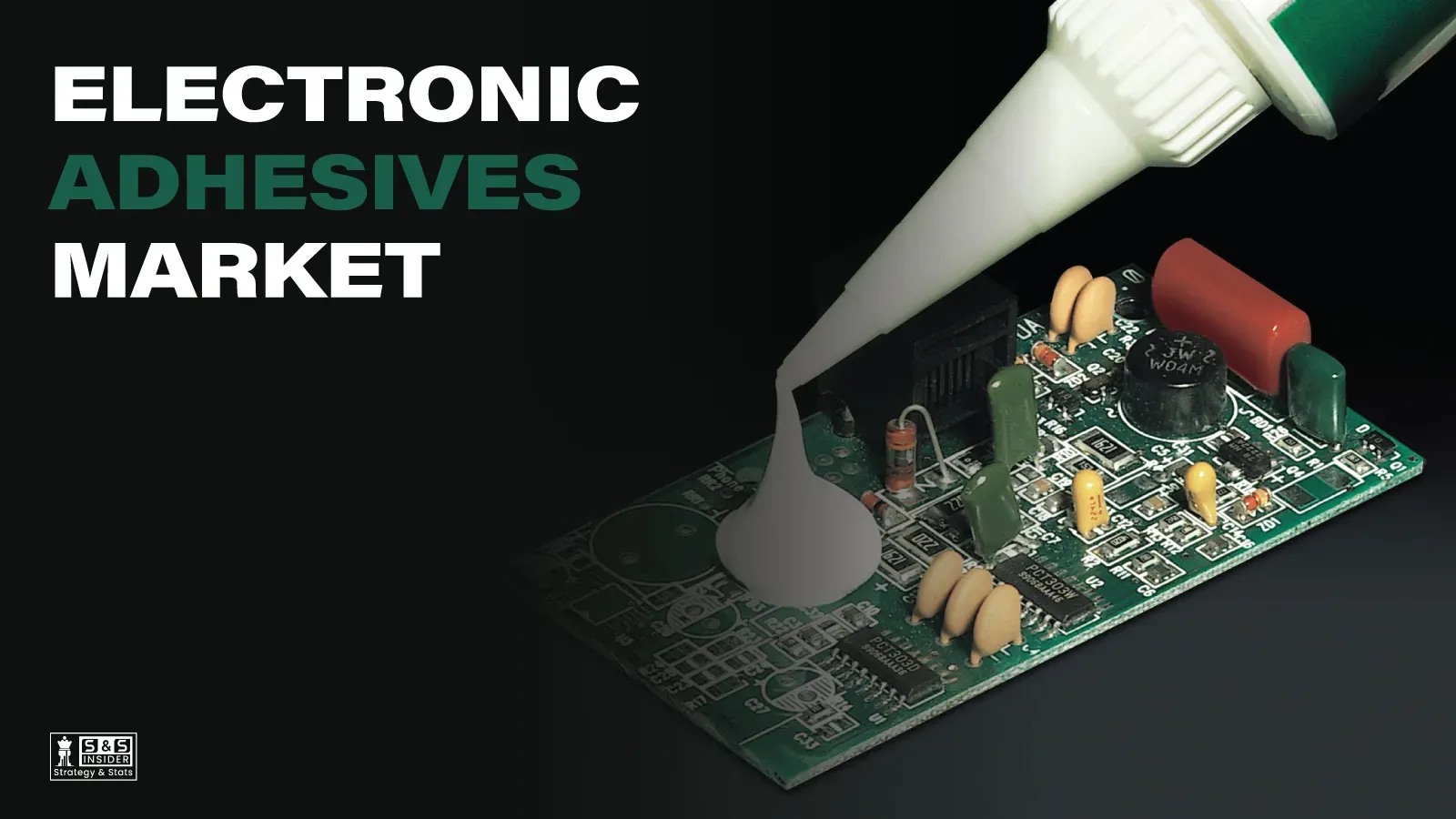
The Electronic Adhesives Market is witnessing growth because of the need for high-performance bonds, insulation, heat dissipation and conductivity in smaller and more complex devices from electronics firms. Growth in electronic products such as smartphones, wearables, electric cars, high-performance semiconductors, 5G applications, and internet-of-things products is driving the need for adhesives that can work in challenging environments.
The global market of Electronic Adhesives is estimated to be valued at USD 5.11 billion in 2023 and is expected to rise to USD 9.30 billion by 2032 with a CAGR of 6.89% during 2024-2032. The market growth will be driven by innovation in adhesive compositions, curing techniques, eco-friendly materials, and specialized products for the production of electronics. The U.S. market of Electronic Adhesives is forecasted to be valued at USD 0.27 billion in 2023 and is anticipated to reach USD 0.39 billion by 2032 at a CAGR of 3.99%.
Gain Actionable Intelligence on the Electronic Adhesives Market - Request a Sample Report
Key Players
Major companies contributing to the development of electronic adhesive technologies include Arkema, BASF, Bostik, Dow, Dymax, H.B. Fuller, Henkel, Indium Corporation, Master Bond, Sika, 3M, Mitsui Chemicals, Evonik, Permabond, and Parker Hannifin, among others. These organizations are developing epoxy, electrically conductive, thermally conductive, UV-curable, and specialty adhesive technologies for electronics, automotive, semiconductor, and industrial applications.
Strategic Developments & Industry Innovations
The competition within the industry is being influenced by investments made in manufacturing, automotive electronics, sustainability and adhesive bonding solutions. Henkel enhanced its operations in India by opening a new Application Engineering Centre and a factory dedicated to producing high-end adhesives for electronics in February 2025.
LG Chem and HL Mando joined forces in February 2025 to create innovative materials for adhesives used in automotive electronic components such as thermal gap fillers for ADAS. This partnership emphasizes the importance of thermal management for the next generation of vehicles. In May 2023, Arkema made an acquisition of Polytec PT to boost the development of technology products related to electronics and batteries.
Top Players Driving Innovation in the Electronic Adhesives Market
1. Henkel: Advancing High-Performance Electronic Bonding
 Henkel is a dominant player in electronic adhesives that manufactures products meant for use in semiconductor packages, circuit assemblies, heat dissipation and component protection. Henkel's Loctite brand is able to provide products that facilitate reliable bonding and efficient electronic manufacture. Increased investments in India further help Henkel in serving growing electronics manufacture centers.
2. Dow: Developing Materials for Next-Generation Electronics
 The Dow Company is improving its electronic adhesives technology with its specially formulated silicone and polymer-based products suited for difficult electronic conditions. DOWSIL brand of products by the company has features that make them appropriate for uses needing stability, electrical properties, flexibility, and durability. The company is well-placed to take advantage of increased demand for adhesives.
3. 3M: Enabling Flexible and Electrically Advanced Electronics
 Adhesive technology is still being developed by 3M for electronic assemblies, thermal management, and electrical conductivity purposes. These products provide assistance in achieving lighter and smaller designs as well as meeting high-performance standards set by the manufacturers. New possibilities for adhesives emerge due to their growing use in consumer electronics, automotive and flexible electronics.
Advancing Electronics Manufacturing Through Adhesive Innovation
The future of the market for electronic adhesives is likely to be shaped heavily by such factors as miniaturization, flexible electronics, electric vehicles, semiconductor technology, 5G, and sustainable manufacturing. The epoxy resins segment held the biggest share in the market, amounting to about 50.3%, due to high bonding properties, insulating capacity and heat and moisture resistance.
The electrically conductive adhesives segment was the most prominent among all product categories, making up 45.5%, thanks to wide application in circuit boards, semiconductors, displays, and parts of electric vehicles. The surface mounting segment held the biggest share, equal to 35.6%, while the consumer electronics segment led end-users, accounting for 47.3%.
With the advent of miniaturization, weight reduction, high efficiency, and increasing connectivity of electronic devices, adhesives are becoming a very important part of their assembly and operation. Customized formulation, thermal management properties, conductive qualities, flexibility, and environmentally friendly materials will play a key role in future development.