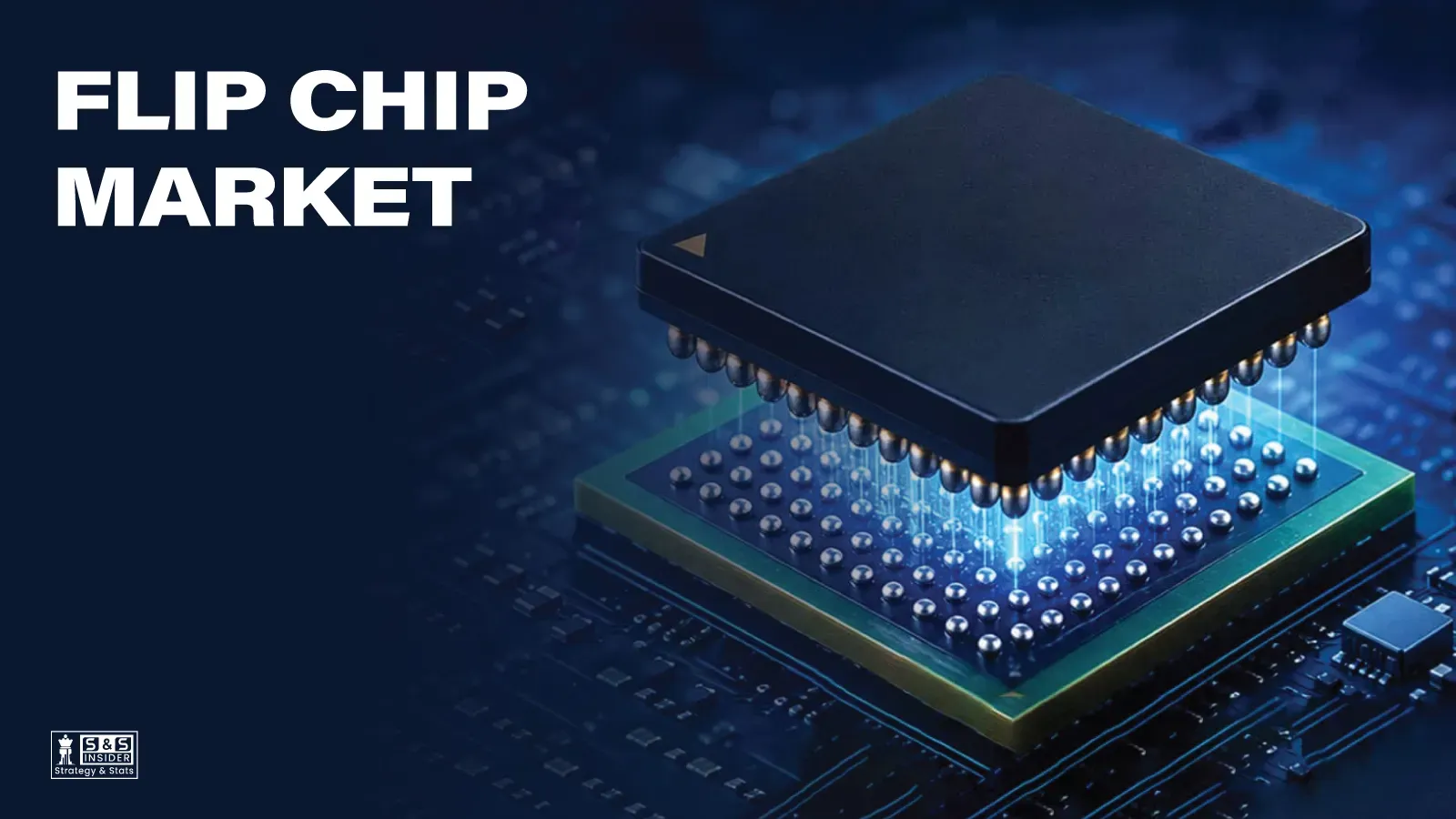
The Flip Chip Market is gaining significant importance within the global semiconductor industry because of the increasing demand for advanced electronics that are small and energy-efficient. The flip chip technique allows direct electrical connection between semiconductor chips and substrates and is known to offer better input/output density, superior electrical performance, and better heat dissipation as compared to the traditional packaging technique.
The Flip Chip Market was valued at USD 30.61 billion in 2023, and it is projected to reach USD 48.70 billion by 2032, at a CAGR of 5.40% between 2024 and 2032. Growth in the market will be driven by the constant trend of semiconductor miniaturization, rise in processing demand, and innovation in 2.5D and 3D packaging technology. The rising use of artificial intelligence, connected devices, 5G networks, and advanced automotive electronics will also lead to increased demand for packaging technologies that can offer high performance with compact device architecture.
To Get More Information on Flip Chip Market – Request Free Sample Report
Top 4 Flip Chip Market Companies
1. Intel Corporation
 Intel Corporation has developed several advanced semiconductor packaging technologies. These include the Foveros 3D Packaging Technology and Embedded Multi-die Interconnect Bridge (EMIB). The advanced semiconductor packaging technologies provide the capability for packaging multiple semiconductor dies in a single package, as well as the support the implementation of complex processor designs. Advanced packaging forms part of Intel Corporation’s semiconductor production and technology strategy, where the company provides packaging solutions for high-performance computing applications.
2. Fujitsu
 Fujitsu has been part of the development of next-generation electronic and computer technologies, having expertise in semiconductor packaging, such as FC-BGA and high-density flip-chip interposer technologies. Such technologies aim to cater for compact and high-performance electronic systems. The semiconductor and electronic expertise provided by Fujitsu has been useful in applications which have a need for advanced component integration and interconnection technologies. The company is still active in the field of high-performance computing and electronic systems, where advanced semiconductor packaging plays a key role.
3. Texas Instruments Incorporated
 The firm specializes in manufacturing analog and embedded processing semiconductor devices used in various industries like industrial, automotive, consumer electronics and communications. The company utilizes various types of semiconductor packaging technology, such as flip chip, in certain semiconductor devices and integrated circuits. The firm has a wide array of products like processors, power management devices, microcontrollers and analog devices that need semiconductor packaging and interconnection techniques. Texas Instruments concentrates on advancing semiconductor technologies that promote performance and reliability.
4. Samsung
 Samsung possesses great expertise in semiconductor manufacturing, memory, processors, and advanced packaging technologies. Samsung's packaging technology includes technologies like fan-out panel-level packaging and advanced flip-chip interconnect technologies which are meant for high density semiconductors. The company also has advanced package designs for processors and memories. In 2025, Samsung's Exynos 990 system-on-chip was associated with a 3D package-on-package architecture featuring flip-chip interconnect technologies, allowing shorter interconnection distances and better power efficiency.
What is Driving the Growth of the Flip Chip Market?
The rising requirement for high performance and small-sized electronics continues to be one of the main drivers behind market growth. High performance along with enhanced functionalities and energy efficiency of devices such as smartphones, laptops, tablets, wearables, and computing systems is required despite their small physical size. The increased need for powerful yet compact components used in electronic devices is driving the further development of technology.
Flip chip packaging meets these needs by providing direct chip-to-substrate interconnections that permit more efficient and compact semiconductors designs. This architecture can provide higher input/output density, better electrical performance and improved signal transmission, while reducing the limitations of traditional wire bonding. As electronic devices continue to incorporate more functionality, greater processing power and advanced features in increasingly smaller spaces, the need for advanced semiconductor packaging technologies is expected to grow for a variety of high-performance electronic applications.
Market growth is also being fueled by the advancement of AI, IoT, and data-intense solutions. The use of these systems involves the need for highly efficient processors and memory devices, which are capable of dealing with highly complex, data-intensive, and high-performance workloads. This is necessitating the increasing adoption of advanced packaging solutions that have higher bandwidth capabilities, fast data transfer abilities, better communication across several semiconductor devices, and power efficiency.
The Road Ahead
The future development of the Flip Chip Market is expected to be affected by increasing sophistication of semiconductor products and packaging technology’s significance as an element that influences the performance of the entire system. AI, 5G, automotive electronics, cloud computing, and connectivity will generate a need for packaging technology that would provide better performance, higher density, and greater efficiency.
The flip-chip technology is set to grow steadily in the coming future, driven by growing demand for high-performing, small, and power-efficient semiconductor devices. Companies that are able to develop and innovate heterogeneous integration, thermal management, high-density connections, and efficient packaging technologies will prove important in the next stage of development of semiconductors. This will support improved performance, greater functionality, enhanced reliability, and continued device miniaturization.